Table of Contents (click to expand)
The yellow stain on your white shirt is not the sweat itself, which is essentially colourless. It mainly comes from aluminum salts in antiperspirants (aluminum chlorohydrate, aluminum chloride) reacting with proteins in your sweat to form a yellow precipitate that bonds to the fabric. Skin bacteria breaking down protein- and lipid-rich apocrine sweat also contribute, especially if the stain is left to sit. Plain deodorants with no aluminum don’t cause this.
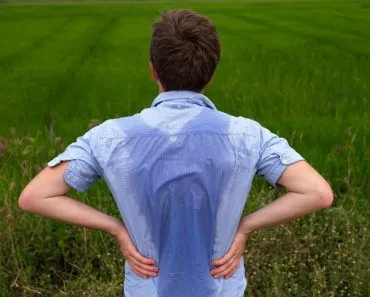
Have you ever wondered why your clothes develop those pesky yellow stains after you’ve been sweating and the moisture has dried? It’s a peculiar phenomenon, considering that sweat itself is colorless. What’s behind this unwanted transformation?
What Is Sweat And Why Is It Colorless?
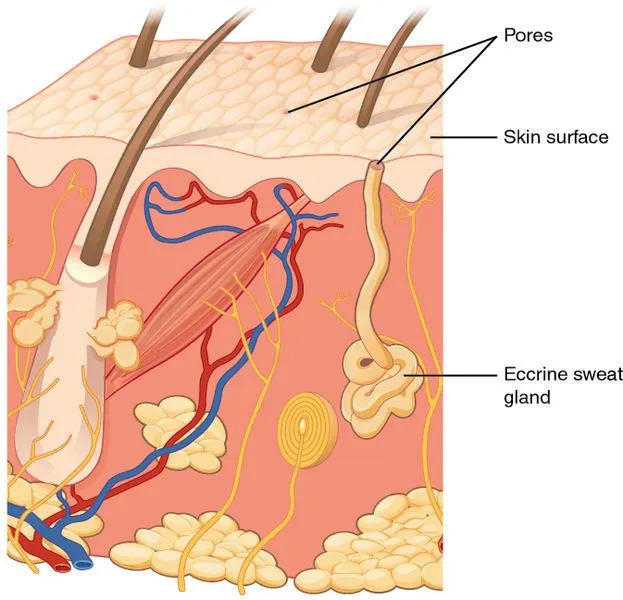
Sweat is a way for the body to cool off. There are two types of sweat, produced by different sweat glands. Eccrine glands, found all over our body, produce sweat that’s mainly made of water. Apocrine glands are mainly found in our armpits and groin area, and these produce sweat that contains fat droplets, ammonia, and proteins. Both of these types of sweat, upon secretion, are odorless and colorless.
So… why does that colorless secretion leave yellow stains when it dries up?
Bacteria And Fungi On The Skin
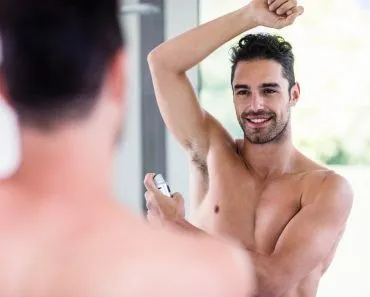
The single biggest culprit isn’t actually the bacteria, it’s your antiperspirant. Most antiperspirants are built around aluminum salts (typically aluminum chlorohydrate or aluminum chloride), which work by temporarily plugging your sweat ducts. When those aluminum compounds meet the proteins in your sweat, especially the protein- and lipid-rich apocrine sweat from your underarms, they form a yellow precipitate that bonds tightly to fabric and is notoriously hard to wash out. (A quick clarification: an antiperspirant blocks sweating with aluminum salts, while a deodorant just masks odor. Aluminum-free deodorants generally do not cause yellow stains.)
Bacteria do play a supporting role. The salt, urea, and ammonia in sweat feed the microbes that live on your skin, and as they break down protein- and lipid-rich apocrine secretions they release new compounds, some of which have a yellow tint. The moisture and nutrients in sweat are ideal for your skin’s microbes, and the longer a sweat patch sits on fabric, the more time those bacterial reactions have to deepen the colour.
Types Of Clothing
Certain fabrics, like polyester and nylon, can trap sweat and bacteria against our skin. This can lead to yellow stains on lighter clothes. This is especially common in areas where sweat tends to accumulate, like our underarms.
To prevent this from happening, try wearing clothing made from breathable fabrics, such as cotton or bamboo. These fabrics will help wick sweat away from your skin and allow it to evaporate more easily. This helps in preventing yellow sweat stains from developing.
Some Medical Conditions That Cause Yellow Sweat
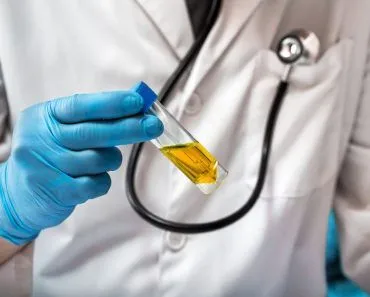
- Chromhidrosis: Individuals with chromhidrosis have yellow, green, blue, brown, or sometimes black sweat, due to the deposition of a pigment called lipofuscin in their sweat glands. It mainly affects the face and underarms.
- Pseudochromhidrosis: It causes unusual sweat color after coming in contact with chemicals, dyes, or bacteria (chromogenic bacteria).
- Hematohidrosis: In this condition, a person’s sweat contains blood
In the case of any of these medical conditions, one should immediately consult a healthcare professional.
Is Yellow Sweat Dangerous, Or Is It Normal?
Let’s clear up the worry first, because it’s the question most people are really asking: in the vast majority of cases, yellow on your clothes is not a health problem. If the yellow shows up as a stain on light fabric, especially around the underarms, it is almost always the harmless chemistry we’ve already covered, namely aluminum salts from antiperspirant reacting with the proteins in your sweat, with skin bacteria deepening the colour over time. The sweat leaving your pores is still colourless, so a faint yellow ring on a white shirt is cosmetic, not medical.
The picture is only different when the sweat itself comes out coloured, soaking through to tint clothing in spots that have nothing to do with deodorant. That points to one of the conditions above. The reassuring news is that even true coloured sweat is usually benign. Apocrine chromhidrosis, the lipofuscin-driven type, is described in the medical literature as a benign, chronic condition that may regress with time, with no direct physical complications, though it can cause real embarrassment. It is also genuinely rare, and tends to appear only after puberty, once the apocrine glands switch on.
Plenty of everyday, non-disease triggers can tint eccrine sweat too, and they all clear up on their own. Certain medications and dyes are excreted in sweat, including rifampicin, clofazimine, quinine, tartrazine-coated laxatives, and methylene blue, as can copper exposure or a diet very heavy in beta-carotene. Remove the cause and the colour fades. Pseudochromhidrosis, where ordinary sweat is tinted on the skin surface by pigment-producing bacteria, is likewise usually symptom-free and responds to a short course of an antiseptic wash or antibiotic.
So when should you actually see a doctor? Book a dermatology visit if your sweat is genuinely coming out coloured (yellow, green, blue, or brown), if it appears suddenly, or if there’s any pink or red tinge that could mean blood. A clinician will want to rule out the small number of more serious causes, such as infection, excess bilirubin from the liver, or, rarely, poisoning, before reassuring you. For a plain yellow underarm stain, though, you can relax: it’s your laundry that needs attention, not your health.
Conclusion
So, there you have it! The reason why your light-colored clothing has yellow stains is just basic science: aluminum-based antiperspirants reacting with the proteins in your sweat, helped along by the bacteria on your skin and the fabric you wear. Yellow stains on your shirt are essentially harmless. If your sweat itself is coming out yellow, however, that is a different story (see the chromhidrosis section above), and is worth a visit to a dermatologist. All these factors could be the reason why you have yellow stains on your clothes. The best way to avoid them is to clean yourself regularly, wear light cotton clothes, and use aluminum-free deodorant. And next time you notice those yellow sweat stains, remember that it’s not the sweat itself, but the chemical interactions at play. Stay cool and stay fresh!
References (click to expand)
- Wilkes, D. Chromhidrosis. StatPearls Publishing. NCBI Bookshelf.
- Eccrine chromhidrosis. DermNet (DermNet New Zealand).
- Pseudochromhidrosis. DermNet (DermNet New Zealand).
- Yellow pseudochromhidrosis in a young female. Indian Dermatology Online Journal. PMC, NCBI.
- Chromhidrosis (Colored Sweat). International Hyperhidrosis Society.
- Hyperhidrosis: 6 tips dermatologists give their patients. American Academy of Dermatology.
- Koley, S., & Mandal, R. (2016). Red and black pseudochromhidrosis. Indian Journal of Dermatology.