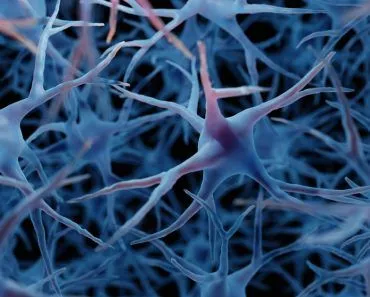
Riverdale plot-writers included a “serial killer gene” that’s responsible for Betty Cooper occasionally murdering people. This isn’t entirely fiction. Lawyers have used this argument in the past to get their clients reduced sentences. However, what does the scientific evidence say? Well, the molecule MAO-A may be behind it.
While the Archie Comics spinoff, Riverdale, isn’t famed for its plot or logic, it does offer a healthy dose of pseudoscience in each episode. One particular outlier is the now-famous “serial killer gene”, which seems to answer our question about some of these horrific killers. In the show, this gene in one of the main characters’ DNA causes her to regularly enter into a fugue state and do bad things, like commit murder.
Believe it or not, this isn’t completely fiction.

The “Serial Killer” Gene
Italy, 2010. Abdemalek Bayout, charged with murder, had his life imprisonment sentence reduced to only nine years. His lawyers claimed that he was mentally unsound and was therefore only partly responsible for his actions. Yes, he did confess to stabbing a man to death. Later, his lawyers and a team of scientists had his sentence further reduced by another year, claiming that he was “genetically predisposed” to being a criminal.
Tennessee, 2006. Bradley Waldroup murdered both his wife and her friend, in cold blood, seemingly having to do with Waldroup’s drinking habit and anger issues. It was an open-and-shut case… until they had Waldroup’s DNA tested. He too was found “genetically predisposed” to be a murderer. In this case, however, the defense did not hold up, and Waldroup was handed a life sentence.

Upon further research, it was gathered that such a gene does exist, but its name was changed to increase its appeal for the show’s purposes.
The infamous “serial killer gene” is the monoamine oxidase-A gene, also known as the MAO-A gene or the warrior gene. It codes for an enzyme that metabolizes neurotransmitters, such as dopamine, norepinephrine, and serotonin.
Dopamine and serotonin are the famed “happy hormones.” They are secreted when the reward centers of our brain are active. Norepinephrine (also called noradrenaline; not the same as adrenaline/epinephrine, though closely related) is a key driver of our “fight or flight” response in the face of danger.
The issue arises when the expression of the MAO-A gene is low. Without enough MAO-A enzyme to break down the neurotransmitters, the neurotransmitters accumulate. As the saying goes, all things are good in moderation. Higher levels of even these “happy” hormones in our body have the opposite effect. The effect may be as minor as social awkwardness, but in more severe cases, it may lead to the person developing hostile demeanors and even homicidal tendencies.
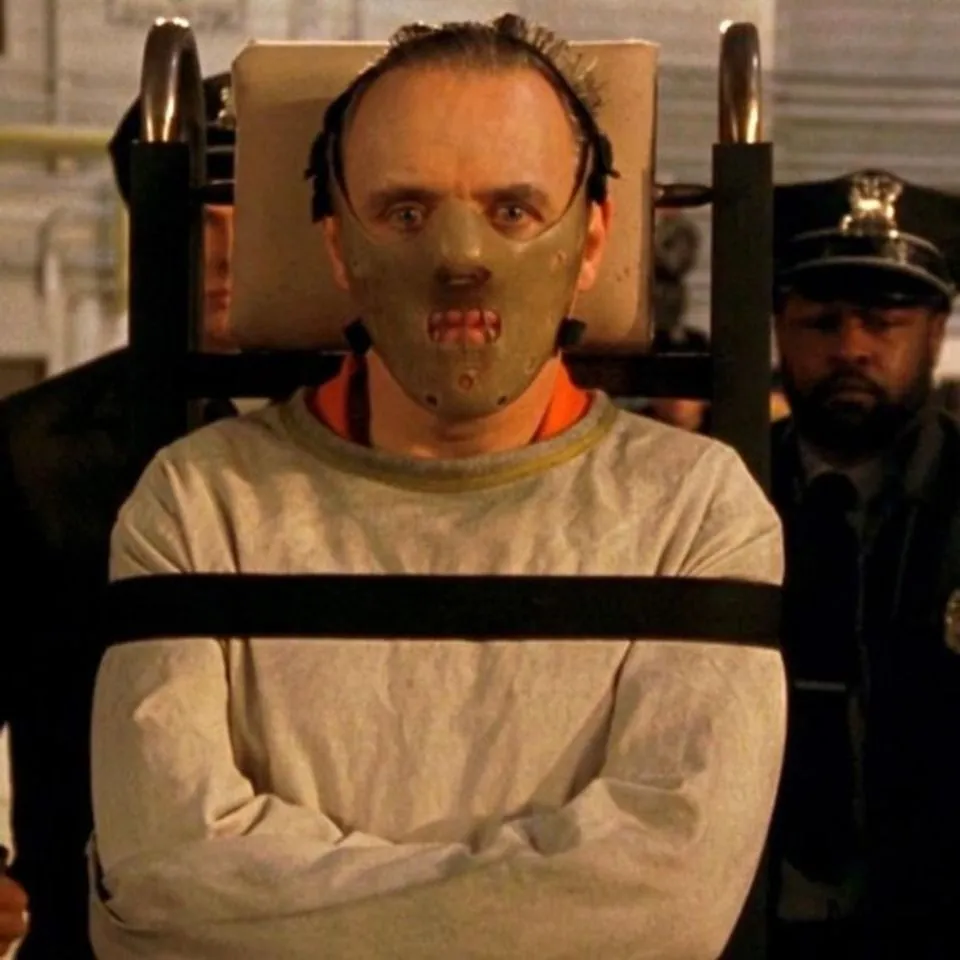
Is There Evidence Of A Serial Killer Gene?
A 1993 study by Han Brunner and colleagues of a large Dutch family revealed that several male family members carried a rare mutation that effectively knocked out the MAO-A gene, a condition now known as Brunner syndrome. They all seemed to display abnormally violent behavior. The ones that did not carry the mutation were relatively normal.
Provocation among men with lowered MAO-A activity resulted in more violent reactions than in men with higher levels of activity.
This is different in females. The MAO-A is a sex-linked gene and is present on the X chromosome. Males have a single X-chromosome and, therefore, only a single variant of the MAO-A gene. Females have two X chromosomes. This makes predicting the effects of an MAO-A allele in females more challenging; the X chromosome with the “normal” MAO-A gene may override the X chromosome carrying low activity MAO-A gene.
Studies have found that low MAO-A expression causes women to be happier, which is the opposite of what is observed in men. And in another study, females with the high-activity MAO-A gene were found to be more aggressive. These sex-related differences could be due to differences in hormones, socialization, and brain development.
However, the link between genes and aggression in males is also tenuous.
Research conducted in New Zealand reported that there was no direct connection between lower MAO-A levels and aggression, but there was a link between childhood abuse and aggression.
When Caucasian males were tested for this study, the results revealed that the males showed violent dispositions only if they had experienced trauma during their formative years and not only because they possessed a gene.
This was confirmed with further research. Scientists and psychologists ran profiles on serial killers and found that childhood abuse and trauma were common denominators among their subjects. This is due to habituation and the tolerance for pain inflicted on them. This clearly implies that, regardless of whether or not these individuals possessed a gene mutation, the root cause of their tendencies was the trauma they faced in their early years.
Childhood abuse has also been identified as a contributing factor in how abused individuals process information, which leads to erratic and hostile behaviors, aggression, and emotional instability.
Is MAO-A The Only Suspect? Meet The CDH13 Gene
MAO-A grabs all the headlines, but it isn't the only gene scientists have put in the line-up. In 2014, a team led by Jari Tiihonen at the Karolinska Institutet in Sweden analyzed the DNA of 895 Finnish offenders, drawn from two independent groups, and compared violent criminals with non-violent ones. Two genes stood out. One was the familiar low-activity version of MAO-A. The other was a gene called CDH13, which carries the instructions for a neuronal membrane adhesion protein, essentially a molecule that helps brain cells link up with one another.

Both genes were linked to what the researchers called "extremely violent behavior," which they defined strictly: at least 10 committed homicides, attempted homicides, or batteries. CDH13 showed the strongest association with repeat offending, and, tellingly, neither gene stood out among the non-violent offenders. So this wasn't simply a marker for crime in general.
Before anyone reaches for a cheek swab, though, read the fine print. The authors estimated that these genotypes might explain only about 5 to 10 percent of severe violent crime in Finland, and they were unusually blunt about the limits of their own work, stating that the findings "are not specific or sensitive enough for screening purposes on an individual level, and cannot be used for crime prevention or in legal proceedings." In other words, even the scientists who found the link refuse to call it a "serial killer gene."
How Common Is The “Warrior Gene”?
The “serial killer gene” has a punchier nickname that you may have heard: the warrior gene. The label first surfaced in the media around 2004 to describe the low-activity variants of MAO-A, most often a short, three-repeat stretch of DNA sitting in the gene's control region. It sounds rare and sinister. It is neither.
Here is the detail the Riverdale writers conveniently skipped: this “warrior” variant is remarkably common. Population studies put the low-activity allele in roughly a third of men of European descent, and in some other populations more than half of men carry it. If carrying it were enough to turn someone into a murderer, a sizable chunk of humanity would be behind bars. Clearly, it isn't, and they aren't.
That math alone sinks the idea of a single gene flipping a person into a killer. It lines up with a landmark 2002 study by Avshalom Caspi and colleagues, which found that people with the low-activity variant who were not abused as children were no more antisocial than anyone else. The gene seems to matter only when it is paired with severe early trauma, nudging the odds rather than sealing a fate. So if you are wondering how many serial killers “have the gene,” the honest answer is that nobody can put a clean number on it, because the variant is far too widespread and the overwhelming majority of carriers never harm a soul.
Does Betty Cooper Really Have The Serial Killer Gene In Riverdale?
Back to the show that sent half the internet Googling this question. In Riverdale, Betty's half-brother Charles, an FBI agent, teaches that the killers he has studied all carried the MAO-A and CDH13 genes, which he nicknames “the serial killer genes.” Betty's mother, Alice, then drops a bombshell: Betty tested positive for them as a child. A grown-up Betty gets retested, a doctor confirms she is a carrier, and she spirals, especially after her childhood diary reveals that she once killed a cat. She later remembers the fuller story, that the cat had been hit by a car and her father told her to end its suffering. The real killer in the family, it turns out, is her father, Hal Cooper, not a line of code in Betty's DNA.
So does the science back up Betty's supposed fate? Not really, and the show actually gets the biology backwards for her specifically. MAO-A sits on the X chromosome, and because women carry two X chromosomes, a normal copy can mask a low-activity one. On top of that, a 2012 study found that low-activity MAO-A is linked to greater happiness in women, the opposite of the menacing effect the show imagines. A real-life Betty carrying this variant would be likelier to be cheerful than homicidal. Great television, shaky genetics.
A Final Word
Criminals should not be absolved of their crimes purely based on a gene mutation in their bodies. We now understand that it is not an accurate measure to determine whether or not a person has psychopathic tendencies.
Most importantly, there is no such thing as a “serial killer” gene. If possessing a certain gene was the only thing that made a person a serial killer, the world would not have its poster boy for serial killing, Ted Bundy.
Despite being one of the most notorious criminals to walk the face of the earth, Ted Bundy did not possess the MAO-A gene mutation.

This brings us back to our point. Serial killers are not born. They are the result of circumstance and, more often than not, unchecked childhood trauma that manifests in horrifically sociopathic ways. Blaming a gene for an individual’s violence and crime is a very convenient way of overlooking accountability and personal responsibility.
References (click to expand)
- McSwiggan, S., Elger, B., & Appelbaum, P. S. (2017, January). The forensic use of behavioral genetics in criminal proceedings: Case of the MAOA-L genotype. International Journal of Law and Psychiatry. Elsevier BV.
- The Truth About the Serial Killer Gene – SQ Online.
- Sohrabi, S. (2015, January). The criminal gene: the link between MAOA and aggression (REVIEW). BMC Proceedings. Springer Science and Business Media LLC.
- Can Your Genes Make You Murder?.
- Marono, A. J., Reid, S., Yaksic, E., & Keatley, D. A. (2020, January 2). A Behaviour Sequence Analysis of Serial Killers’ Lives: From Childhood Abuse to Methods of Murder. Psychiatry, Psychology and Law. Informa UK Limited.
- Gene Expression.
- Brockdorff, N., & Turner, B. M. (2015, March). Dosage Compensation in Mammals. Cold Spring Harbor Perspectives in Biology. Cold Spring Harbor Laboratory.
- Ted Bundy | Serial Killers | Crime Library.
- Tiihonen, J., et al. (2015). Genetic background of extreme violent behavior. Molecular Psychiatry. Nature Publishing Group.
- Genes linked to repeated violent crime. Karolinska Institutet.
- Caspi, A., et al. (2002). Role of Genotype in the Cycle of Violence in Maltreated Children. Science. PubMed, NCBI.
- Sabol, S. Z., Hu, S., & Hamer, D. (1998). A functional polymorphism in the monoamine oxidase A gene promoter. Human Genetics. Springer.
- Chasing the ‘warrior gene’ and why it looks like a dud so far. Genetic Literacy Project.
- Betty Cooper Has the Serial Killer Gene on Riverdale, but Is That a Real Thing? Distractify.