Table of Contents (click to expand)
Some people look like their grandparents because they inherit a similar genetic makeup as that of their grandparents. This has to do with the Law of Dominance.
We have all experienced those moments when someone approaches us at a family party and instantly relates us with our grandparents. There are also times when someone casually tells you that you don’t look like your parents, but then another time they’ll mention that you look more like your grandmother or grandfather! Well, this resemblance is not uncanny; it is actually quite scientific. Don’t worry, by the end of this article, you will know why!

Our genes contribute significantly to our physical appearance. Genes are hereditary; that is, they are passed from one generation to the next, and each individual is a product of his or her genetic composition. A person gets his or her genes from both parents in different combinations. Their parents, in turn, get their genes from their parents. What’s interesting is that this transmission never eliminates any genes; only the combination varies. So, if your genetic combination is similar to that of your grandparents, you end up looking more like them than your parents!
What Are Genes And Heredity?
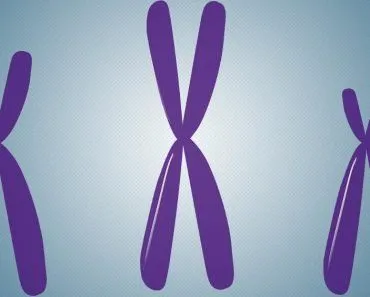
Every living being on earth is a product of its unique genome. Scientifically, genes are small sections of DNA that contribute to the coding of proteins. They are not randomly arranged but specific to each protein an organism needs to function. In human cells, the DNA on the chromosomes is located in the nucleus.

An easy way to understand what genes do is to look at yourself as an example. Are your eyes green? If so, then either or both of your parents have green eyes. Do you have blond hair? If the answer is yes, then someone from your paternal or maternal family must also be blond. Besides physical characteristics, genes are also responsible for transmitting diseases. A prime example of such a condition is a disease called hemophilia, which runs in the family of Queen Victoria.
Every organism acquires genetic information from its parents. This transmission of traits from parents to their offspring is called inheritance. From this, it can be concluded that genes are the functional units of inheritance. It is this interplay of genes and inheritance that has led to the diverse world we see today. However, the pattern in which genes are inherited could explain that we sometimes resemble our grandparents!
What Are The Laws Of Inheritance?
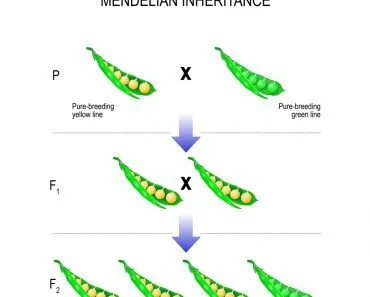
Interestingly enough, genes are passed down from generation to generation in certain patterns, which were first studied by Gregor Johann Mendel. Mendel was originally a priest, but his keen and observant eye drove him to study the characteristics of pea plants. He spent years studying the differences in their height, the color of their flowers, the type of seeds, etc., based on the pairings of their reproduction, and his praiseworthy research earned him the title by which he is now known: the father of modern genetics.
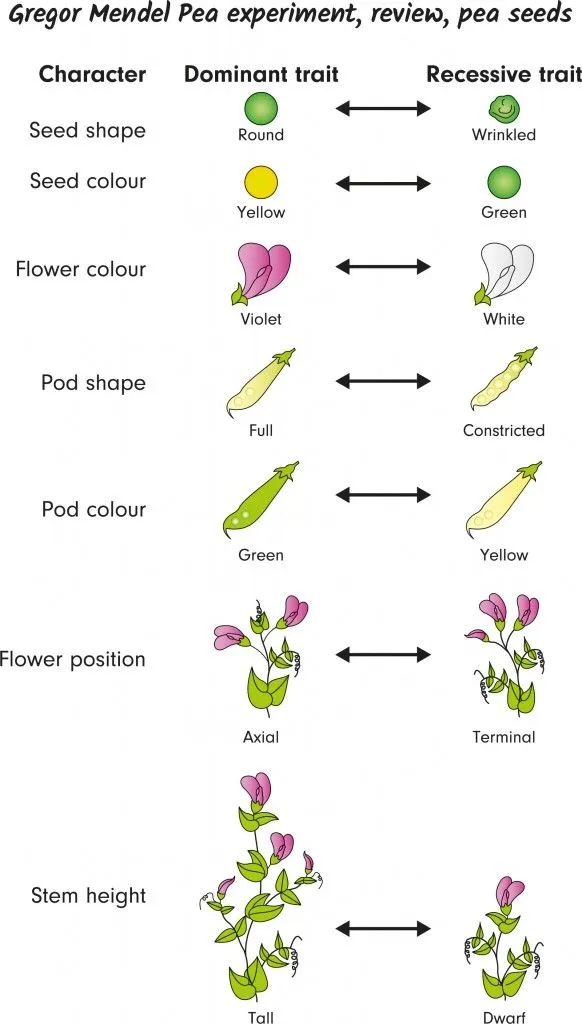
Before we deal with the laws of inheritance, let us take a look at alleles: an allele is, in simple terms, an alternative form of a gene. Any gene can have several alleles. For example, a gene for height will have two alleles, short and tall. A gene for color can also have two alleles, such as red and white. Alleles in a certain combination result in a trait!
According to Mendelian genetics, there are three laws of inheritance. The Law of Dominance states that in one gene, one allele is dominant over the other. This “other” allele is called a recessive allele. Generally, a pea offspring with one tall allele and one dwarf allele proves to be tall. This means that the tall allele is dominant over the other.
The Law of Segregation states that alleles separate during the formation of the male and female gametes, which means that only one allele for height comes from the father, while the other allele comes from the mother. These alleles combine randomly when the sperm and ovum fuse. Finally, the Law of Independent Assortment states that alleles of one gene do not mix with alleles of another gene. For example, an allele for height won’t mix with an allele for eye color!
Why Do Some People Look Like Their Grandparents?
Now that you understand the basic laws of inheritance, you may be able to find the answer to this article’s question. The Law of Dominance is mainly responsible for such an occurrence. In Mendel’s pea plants, two plants were made to reproduce; a process called “cross”. One plant was tall and the other short. After crossing, the next generation of plants contained only tall plants. Therefore, one could conclude that the allele for tall height was dominant, and therefore hid the effect of the dwarf allele.
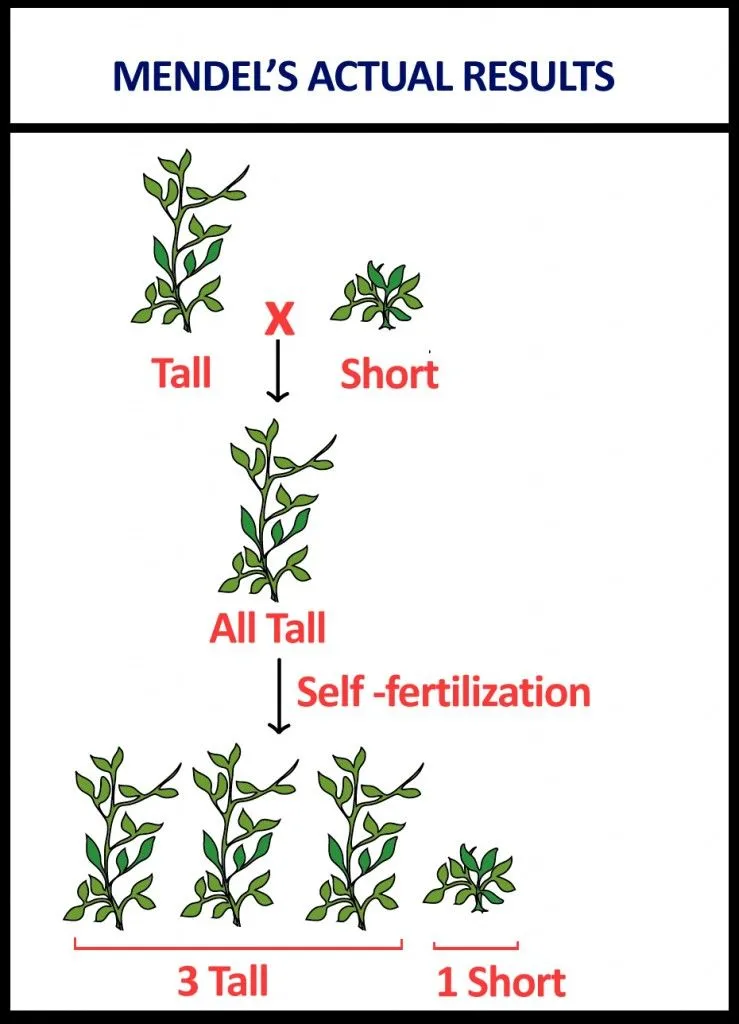
Interestingly, when this generation of tall plants was crossed amongst themselves, the next generation came up with both tall and dwarf plants. How did this happen when both the parent plants were tall? Well, the answer lies in the genes. Although the previous generation was all tall, the generation possessed the alleles of dwarf height. When recombined, it formed genetic combinations that produced both short and tall plants in the new generation. Even more intriguingly, this phenomenon occurred in precisely defined ratios – 3:1!
This example can also be applied to the human case. Even if your parents may look a certain way, their genes still have the alleles of their parents. In your case, a similar pathway can be observed; the alleles in you must have recombined in such a way that they represent those of your grandparents! This can lead to you either looking physically similar or possibly having a disease that one of your grandparents has experienced.
The next time someone tells you that you look exactly like your grandparents, you can blame it on your genes!
Does Your Height Come From Your Parents Or Your Grandparents?
Height is one of the traits people most often link back to a tall grandfather or a petite grandmother, and there is real science behind that hunch. Unlike the simple one-gene examples Mendel studied in his pea plants, height is a polygenic trait, meaning it is shaped by many genes working together rather than a single dominant or recessive allele. According to the US National Library of Medicine’s MedlinePlus, scientists have already identified more than 700 gene variants that influence how tall a person becomes, and many more are still being discovered.
Just how much of your height is written into your DNA? MedlinePlus estimates that roughly 80% of an individual’s height is determined by inherited DNA, while the remaining share comes from the environment, especially childhood nutrition, sleep, and general health. Because so many genes are involved, children usually grow to be approximately as tall as their parents, but not always. The particular mix of height-raising and height-lowering variants you inherit can land you taller or shorter than both parents, and sometimes that combination looks a lot more like a grandparent’s.
This is exactly why height can seem to “skip” a generation. A tall grandparent may pass several height-boosting variants to a child who turns out average, and that child can then pass an extra-rich combination on to the next generation. The grandchild reaches back toward the grandparent’s stature, even though the parent did not. So when relatives say you got your height from your grandmother, they may be closer to the truth than they realize, though it is the spread of many polygenic variants doing the work, not one tidy gene.
Are You More Genetically Similar To Your Grandparents Than To Your Parents?
A popular quiz claim goes something like this: “True or false: you are more genetically similar to your grandparents than to your parents.” It is a tempting idea, especially when you feel you resemble a grandparent more than your mum or dad. Scientifically, though, the answer is firmly false.
You inherit exactly half of your DNA from each biological parent, so you share 50% of your DNA with your mother and 50% with your father. Each parent, in turn, passed on a mixture of the DNA they received from their parents. As The Tech Interactive science museum explains, that means you share, on average, about 25% of your DNA with each of your four grandparents. By the numbers alone, you are always twice as genetically similar to a parent as to any single grandparent.
So how can you look more like a grandparent than a parent? Resemblance is not the same as overall genetic similarity. A handful of strongly visible traits, such as a particular nose shape, eye color, or hairline, can come from the specific quarter of your DNA that traces back to one grandparent, even while the other three-quarters of your genome is busy doing things you cannot see in a photograph. The Tech Interactive also notes that the 25% figure is only an average; thanks to the reshuffling of genes during reproduction, one grandchild may inherit a bit more than 25% from a given grandparent and a bit less from another. That extra slice can be just enough to stamp a familiar family face onto the next generation.
Can A Child Look Like A Great-Grandparent?
If a trait can resurface in a grandchild, can it reach even further back to a great-grandparent? Yes, it can, and recessive inheritance is usually the reason. As the National Human Genome Research Institute (NHGRI) explains, a recessive trait only appears when a person inherits two copies of the same recessive allele, one from each parent. A person who carries just one copy is called a carrier; they show no sign of the trait themselves, yet they can quietly pass that allele on.

This is why a recessive trait can stay invisible for a generation or two and then suddenly reappear. Imagine a great-grandparent with a recessive feature. Their children and grandchildren may each inherit a single hidden copy, looking nothing like it, until two carriers eventually have a child who receives two copies and shows the trait again. MedlinePlus notes that when two unaffected carriers have a child, there is a 25% chance with each pregnancy that the child will inherit both recessive copies and display the trait. To onlookers, it can look as though the feature leapfrogged straight from a great-grandparent to the youngest generation.
There is a limit to how literally this works, though. On average you carry only about 12.5% of your DNA from each great-grandparent, half again of what you get from a grandparent, because the genome is split roughly in half with every generation. You almost always inherit at least some DNA from each great-grandparent; according to The Tech Interactive, the odds of getting none are only around 0.01%, and inheriting nothing from an ancestor does not really become likely until you reach much more distant generations. So a striking great-grandparent resemblance is real but selective: it shows up in a few inherited features rather than in your whole face. It is the same dance of dominant and recessive alleles we saw reshuffling between siblings, simply playing out across more generations.
References (click to expand)
- What role do grandparents play in the traits of their .... The Tech Interactive
- Mendel as the Father of Genetics :: DNA from the Beginning. dnaftb.org
- What is a gene? - YourGenome. yourgenome.org
- What Is a Gene? (for Kids) - Nemours KidsHealth. kidshealth.org
- Is height determined by genetics? MedlinePlus Genetics, U.S. National Library of Medicine
- How much DNA do you inherit from each grandparent? The Tech Interactive
- What are the odds of inheriting no DNA from a distant ancestor? The Tech Interactive
- Autosomal Recessive Disorder. National Human Genome Research Institute (genome.gov)
- If a genetic disorder runs in my family, what are the chances my children will have the condition? MedlinePlus Genetics