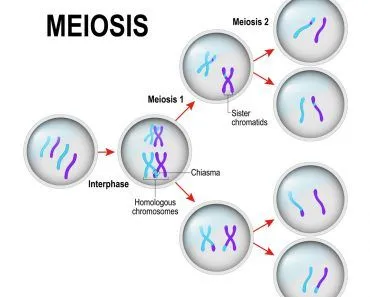
Monogenic traits are traits like face freckles or a cleft chin, which result from the product of a single gene. Polygenic traits are traits such as height or eye color that result from the product of multiple genes.
We already know that our genes play an important role in determining our physical traits, such as the color of our hair, eyes and skin. They are passed down from one generation to the next, which is why you look like a mashup of your parents. But how are these genes passed down? And are all genes inherited in the same way?
Let’s find out!
Mendelian Or Monogenic Traits
Mendelian traits are those that are controlled by a single gene. They’re also known as monogenic traits.
While a single gene may be responsible for a particular physical trait, that gene can occur in multiple forms or alleles. Each parent passes down one allele for each gene in the organism.
If both parents pass down the same allele for a certain gene, then the offspring is said to be homozygous (“homo” meaning “same”) for that allele. Otherwise, the offspring is heterozygous (“hetero” meaning “different”) for that allele. This type of inheritance is called Mendelian Inheritance.
Try a single-gene cross below. The Punnett square handles complete, incomplete, and codominant inheritance, with presets for Mendel's peas, snapdragons, and ABO blood type.


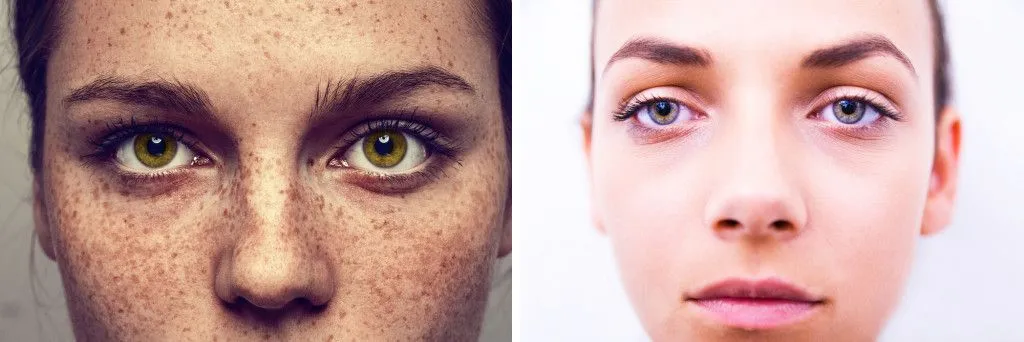



Cleft chin, cheek dimples, face freckles and widow’s peaks are some monogenic traits. The presence of these characteristics is dominant, which means that even if the offspring is heterozygous for that allele, the trait will still express itself physically. On the other hand, traits such as hitchhiker’s thumb or attached earlobes are phenotypes (physical versions of a trait) that are recessive. In heterozygous offsprings, only the dominant phenotype will be apparent.
Non-Mendelian Or Polygenic Traits
Non-mendelian traits are those that are influenced by more than one gene. They are also known as polygenic traits. Many times there is also an environmental or lifestyle factor associated with such traits.
Consider human height as an example. Hundreds of genes are involved in the presentation of this trait. Not only that, but it’s also dependent on other factors, such as nutrition.
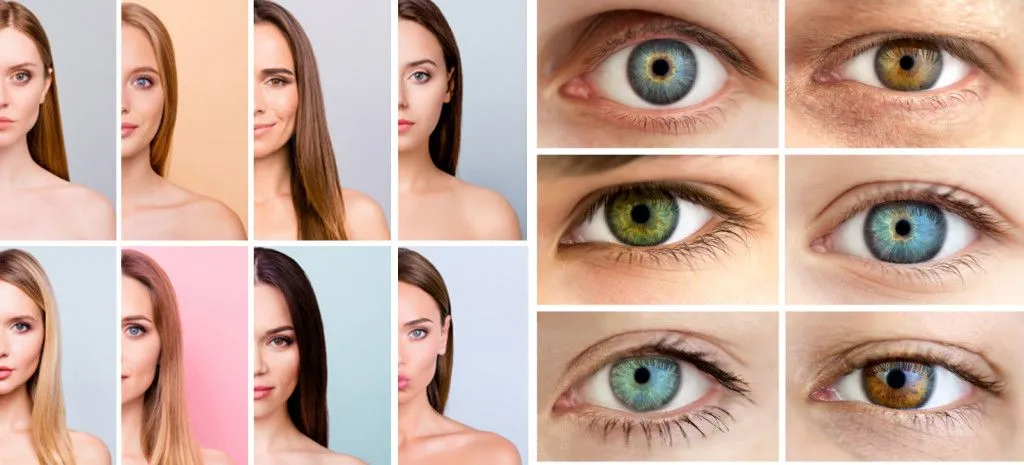
Eye color and hair color are both polygenic traits. That is why there are more than just two types of eye and hair color. The inheritance of these traits cannot be easily tracked like monogenic traits.
However, most traits in humans and other organisms are polygenic. Although monogenic traits have a simple inheritance pattern, they are still a rarity.
Is Eye Color A Polygenic Trait?
You may have learned in school that brown eyes are dominant and blue eyes are recessive, as if a single gene decided the matter. It turns out that this tidy story is too simplistic. Eye color is a polygenic trait, shaped by the combined effect of many genes rather than just one. That is exactly why two blue-eyed parents can, in some cases, have a brown-eyed child, something the old one-gene model could never explain.

So how many genes are we talking about? At least 10 different genes are known to influence eye color, and the two with the largest effect are OCA2 and HERC2, which sit next to each other on chromosome 15. OCA2 carries the instructions for a protein involved in making and storing melanin, the pigment that gives the iris its color. HERC2 contains a small switch-like region that turns the OCA2 gene up or down. More melanin in the front layer of the iris produces brown eyes, while less melanin leaves us with green, hazel or blue eyes.
Because so many genes contribute small amounts, eye color falls along a continuous spectrum rather than into a few neat boxes. A 2021 genome-wide study of nearly 195,000 people even uncovered 50 new genetic regions tied to eye color, underscoring just how polygenic this everyday trait really is.
Skin Color: Another Classic Polygenic Trait
Skin color is one of the textbook examples of polygenic inheritance, and the National Human Genome Research Institute uses it (alongside height) to define what a polygenic trait even is. Like height and eye color, skin tone varies along a smooth, continuous range rather than coming in a handful of fixed categories, which is the tell-tale signature of many genes acting together.

The color itself comes from melanin, produced by specialized cells called melanocytes. These cells make two forms of the pigment: eumelanin, which gives darker, brown-to-black tones, and pheomelanin, which leans toward red and yellow. The balance between these two is the same chemistry behind hair color. People who make mostly eumelanin tend to have darker skin that tans easily, while those who make mostly pheomelanin tend to have lighter skin, freckles and a higher risk of sunburn.
Several genes set that balance. The MC1R gene, for example, acts like a dial that tells melanocytes whether to make eumelanin or pheomelanin, while genes such as SLC24A5, TYR and OCA2 also influence the final shade. With dozens of genes (and a healthy dose of sun exposure) feeding into the result, skin color is a beautiful illustration of how polygenic inheritance produces gradual, blended variation rather than simple either-or outcomes.
Monogenic Disorders
Each gene is responsible for making a specific protein. These proteins are required to perform several different tasks around the body. For example, your nails and hair are made of a protein called keratin, which is formed due to the expression of various keratin genes in the body.
Even a slight change in a gene can affect its expression.
Thus, if the protein produced is defective, then it can’t perform its function properly, which can lead to illness. Such diseases that are caused by mutations in a single gene are called single-gene diseases or monogenic diseases, and they too can be inherited.
Sickle cell anaemia, cystic fibrosis, and Huntington’s disease are a few examples of monogenic disorders. However, perhaps the most famous example could be hemophilia B, also known as the ‘royal disease’.
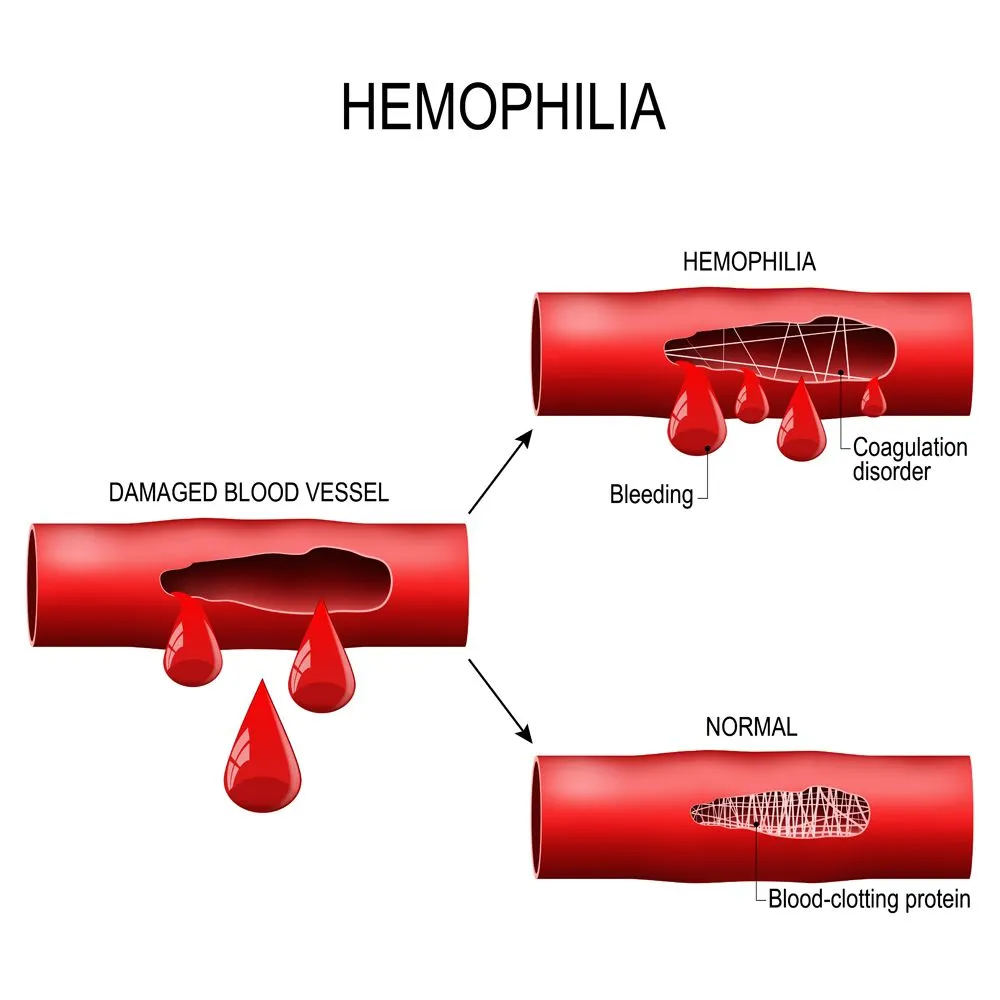
Hemophilia B (The Royal Disease)
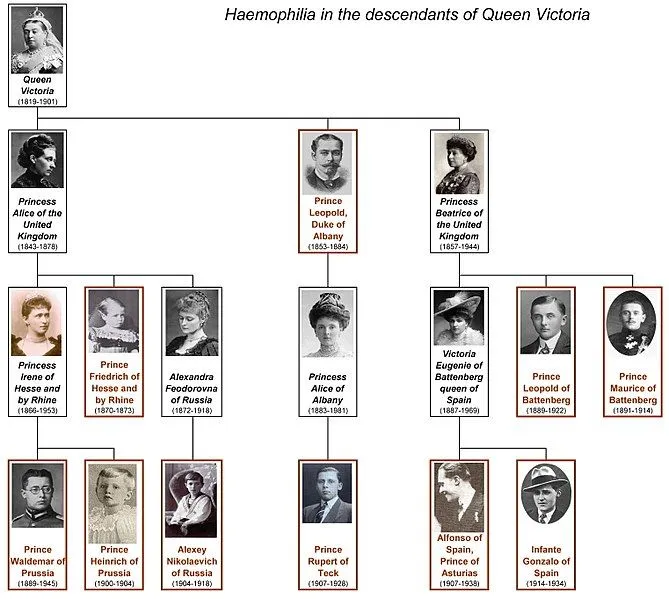
Hemophilia B earned this moniker in the 19th century due to its prevalence in the European royal family. It occurred due to a sudden mutation in the F9 gene, which is located on the X-chromosome. The gene produces a protein called Factor IX, which plays a role in blood clotting after a wound. With deficient levels of Factor IX in the blood, blood cannot clot properly, leading to excessive bleeding.
The condition spread to the royal families of Germany, Russia and Spain in the 19th and 20th centuries. After causing fatalities for three generations, the disease finally disappeared from the bloodline.
Polygenic Disorders
Common diseases, such as arthritis, cancer, heart disease, Type 2 diabetes and many neurodegenerative diseases are caused by mutations in a number of genes. The contribution of each of these genes is different, but their cumulative effect brings about the illness.
Genome-wide association studies (GWAS) are used to identify these disorders. In GWAS, genomes (the entire DNA sequence of a person) of multiple people are scanned to find genetic mutations associated with a certain disease.
With polygenic disorders, things are more complicated. Multiple genes play a role in such diseases, and each gene can cause different degrees of disruption. Furthermore, other factors of age, sex, nutrition, and others can also play a role in such diseases.
Consider a commercial crop, say, cotton growing in two different fields. One is unable to grow and dies. Now, there could be many reasons for this—inadequate irrigation, bad quality soil, or inferior seeds. It could be one of these reasons, a combination of a few or all of them, but all we know for sure is that the crop was unable to grow.
Similarly, even though a DNA test can identify specific mutations in a polygenic disorder, it is difficult to pinpoint the severity of the disease and an individual’s overall susceptibility to it.
Even though a DNA test can identify the mutations, it is difficult to predict the overall susceptibility for a given disease. This is mainly due to the varying degrees in which the multiple factors affect the presentation and manifestation of polygenic disorders.
Fortunately, there is a recent invention, called a polygenic risk score, that can tackle this problem once and for all!
Polygenic Risk Score
A polygenic risk score (PRS) is a single number that reflects the chances of a person developing a certain disease. You can think of it as a report card that tells you how likely someone is to get a disease like cancer, diabetes, schizophrenia and others. It essentially gives the probability of someone getting a disease.
PRS is an elegant solution that can aid in the early detection of disorders. PRS can, in the near future, prevent blindness caused by common eye disorders, such as glaucoma, by encouraging those with high PRS for testing. Early intervention in such cases can prevent otherwise irreversible blindness.
It is also a promising preventive healthcare strategy, since one can detect the likelihood of a disease before it happens. Imagine someone with a high PRS for coronary artery disease (a polygenic disorder) after undergoing testing in early adulthood. The person may now be motivated to make the necessary lifestyle changes to be healthier, thereby decreasing their lifetime risk for the disease.
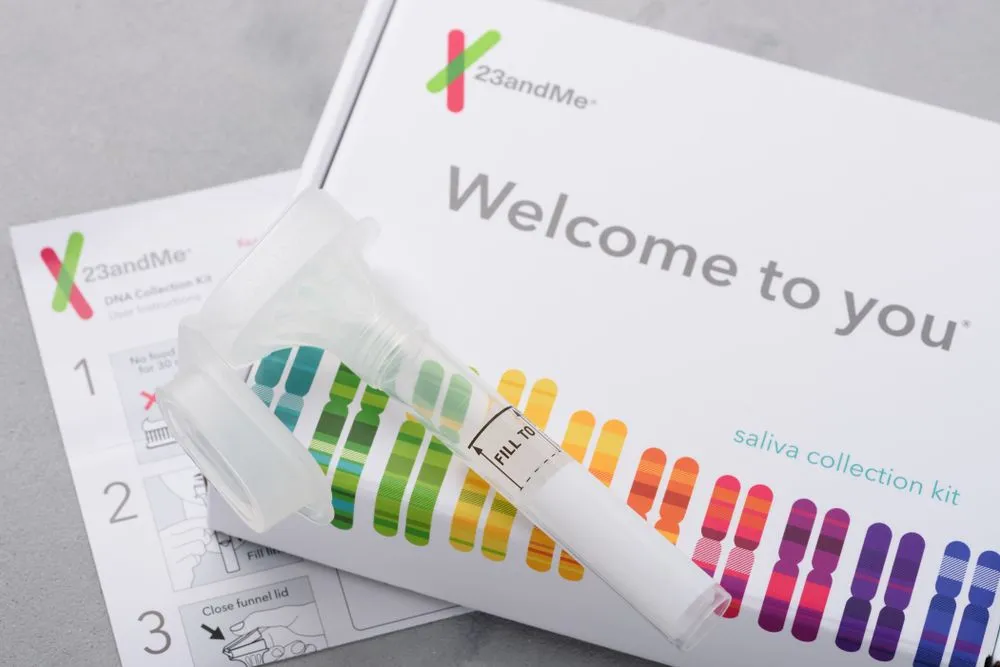
DNA testing companies like 23andMe feature a PRS score. The technology, as well as the laws around the technology, aren’t mature enough yet, but as technology improves, such tools could prove to be powerful in framing individual and large-scale healthcare strategies.
Our bodies (and indeed of most our life) isn’t made of simplistic 1 gene-to-1 trait ratios. The concept can oftentimes seem bewildering, yet its marvel lies in how complex, yet functional it truly is!
References (click to expand)
- Polygenic Traits - Video - JoVE. The Journal of Visualized Experiments
- Inheritance of Traits by Offspring Follows Predictable Rules. Nature
- (2012) A Polygenic Approach to the Study of Polygenic Diseases - PMC. The National Center for Biotechnology Information
- Human Genetic Disorders: Studying Single-Gene ... - Nature. Nature
- LANNOY, N., & HERMANS, C. (2010, June 14). The ‘royal disease’- haemophilia A or B? A haematological mystery is finally solved. Haemophilia. Wiley.
- Lewis, C. M., & Vassos, E. (2020, May 18). Polygenic risk scores: from research tools to clinical instruments. Genome Medicine. Springer Science and Business Media LLC.
- Is eye color determined by genetics? MedlinePlus Genetics. National Library of Medicine (NIH).
- MC1R gene. MedlinePlus Genetics. National Library of Medicine (NIH).
- Polygenic Trait. Talking Glossary of Genomic and Genetic Terms. National Human Genome Research Institute.
- Simcoe, M., et al. (2021). Genome-wide association study in almost 195,000 individuals identifies 50 previously unidentified genetic loci for eye color. Science Advances.