Table of Contents (click to expand)
A drowned body usually sinks at first, but as it decomposes, gases produced by bacteria inflate the body and the corpse becomes buoyant enough to rise back to the surface.
Imagine that you’re going for a swim down at your local watering hole. The summer sun is shining, and the weather is perfect for a dip in the lake. However, when you arrive, to your absolute horror, you find a dead body floating in the middle of the water!
As terrifying as this would be, there are a few interesting observations there. The first of which is that the corpse is floating. When this happens in your favorite crime drama, and the TV detectives always find the corpse floating in the water… but why?
Corpses Drown Immediately After Death
Immediately after death, whether the cause is drowning or otherwise, a corpse will sink to the bottom. We don’t sink to the bottom when we’re alive because of the air in our lungs. Our body’s density differs from seawater (the case is different for freshwater), so it’s easier for someone to float, especially if that water is the Dead Sea!
When one drowns, the struggle usually knocks all the air from the lungs, allowing them to fill with water. This causes a drowned corpse to sink to the bottom. The cause of drowning, though, is asphyxiation or the lack of oxygen because the airways are blocked by water. Water usually enters the lungs when the individual can no longer hold their breath, and they reflexively gasp out for air.
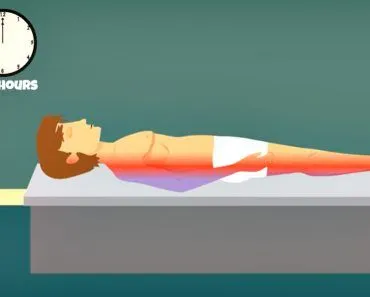
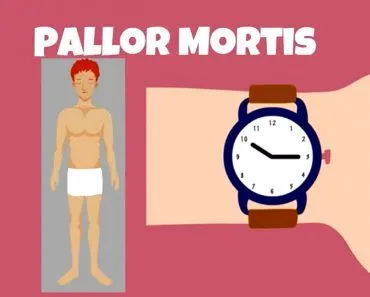
After death, the body begins to decay. Without oxygen, cells begin to die and break down which results in a host of physical changes, such as changes in pH, color of the skin, and rigidity of the body. It starts with pallor mortis, followed by algor mortis, rigor mortis, and livor mortis.
After these initial four stages, which occur in the first 24 to 72 hours post-mortem (after death), the body begins putrefying.
Corpses Float Because Of The Build Up Of Gases Due To Decomposition
Millions of microorganisms reside on and within our bodies, primarily bacteria. Some of these bacteria can cause disease, but most of them are harmless, and some are even useful to us. The immune system keeps a check on these residents, preventing them from going rogue and infecting us. Still, without the immune system, many of these peaceful microorganisms begin to infect the body and consume it. This is when a corpse begins to putrefy, a series of physical, chemical, and biological processes that will eventually fulfill the whole “ashes to ashes, dust to dust” destiny of all life.
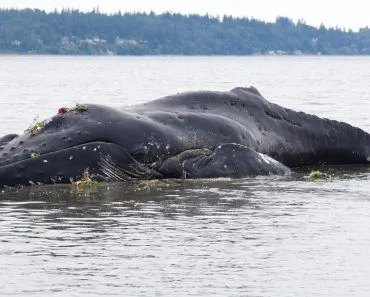
As the bacteria (and even some fungi) eat away at the body’s tissue, their metabolic activity produces gases, such as carbon dioxide, ammonia, and methane. As decomposition progresses, these gases will build up within the body, but this gas has nowhere to go, so the body will begin to bloat.
The bloating makes the corpse more buoyant, eventually causing it to rise to the surface. Because the gases trapped inside are far less dense than water, the average density of the bloated body drops below that of the surrounding water, and the body floats.
The volume of the body will notably increase, but the person’s weight will not, thus making it easier for the body to float.
Why Do Corpses Float Face Down?
Most corpses are seen floating face-down.
When a corpse drowns, it does so head first as the head is heavier (or has a high specific gravity) than the feet. This results in what is called the “drowning position.” The head faces down, with the arms and legs forward. When the body begins to rise from the bloating, this posture results in the least drag through the water as the corpse rises. The corpse will remain in the position since the body’s center of gravity and center of buoyancy (the point at which the buoyant forces are equal). When these two forces are aligned, the body will remain in a stable position.
There are cases when the body can float face up, either due to the body composition, injury, or how the currents in the water alter the position of the body.
With the body exposed to the air, the decomposition rate increases due to higher levels of oxygen in the air. Other decomposers, such as insects, also have access to the corpse, further increasing the rate of decomposition. The corpse may rupture due to the build-up of decomposition gases inside, or the gas will simply escape gradually through the natural orifices.
It is difficult to determine how long it will take for a body to float to the surface and how long it will stay there. The type of water body, the seabed, and the temperature are just a few factors that affect the decomposition rate and floating time of a corpse. A paper published in 2014 found that barnacles were a useful indicator to determine floating time. They also commented in their paper that floating time hasn’t been scientifically explored as broadly as many other taphonomic (the study of how life decays) elements.
Corpses Floating Can Be An Indicator Of Time Of Death
In criminal and forensic investigations, it’s crucial to know the estimated time of death or post-mortem interval (PMI). This helps investigators understand when a crime might have occurred, helping them in their investigation. It also helps explain the conditions the corpse might have been exposed to before or after death, which might serve as helpful clues.
Ecologists and marine biologists use several indicators when studying factors that could lead to the mortality of an aquatic animal and the role its decomposition plays in the aquatic food chain. This might also help them understand whether a disease or certain natural disasters might be responsible for the unusual death of any marine life.
For paleontologists, decomposition and the resultant bloating can often be found in fossils. How an animal dies and decomposes can offer many indications about its life experience on Earth. A fossil of the tetrapod (a four-legged animal) Ichthyosaur was found with broken ribs and an embryo fossil beside it. Many paleontologists concluded that the Ichthyosaur had bloated, and the forceful expulsion of gases caused the skeleton to disassemble, leading to the embryo being expelled.
How Long Does It Take A Body To Float After Drowning?
There is no single number, and anyone who promises one is guessing. A drowned body sinks almost immediately, then refloats only once decomposition has produced enough gas to make it buoyant again. Because that gas is made by bacteria, and bacteria work faster when it is warm, the timeline is governed mostly by water temperature rather than by the calendar.
Forensic scientists make this concrete using accumulated degree days (ADD), which simply multiply the number of days submerged by the average water temperature in degrees Celsius. The body does not care whether it has been one warm day or several cold ones, only about the total thermal budget it has soaked up. A study of a multiple-drowning accident published in Forensic Science International estimated that the victims regained buoyancy and resurfaced at roughly 104 to 191 degree-days, with the water sitting around 14.5 to 16 °C (about 58 to 61 °F). In rough terms, that is a postmortem submersion interval of about a week to a week and a half in cool-but-not-freezing water.
Translate that into everyday weather and the spread is wide. The same thermal budget of roughly 130 degree-days is reached in only a few days in warm summer water near 25 °C (77 °F), but it can stretch to several weeks in cold winter water near 5 °C (41 °F), and far longer in genuinely frigid conditions. This is also why the popular notion that a body always floats "after 24 hours" is a myth: 24 hours is far too soon in most real-world water, which is why the corpse in a crime drama has usually been missing for days.
Does A Corpse Always Float? Cold And Deep Water
Not necessarily. Floating depends on putrefaction outrunning everything that slows it down, and cold, deep water is very good at slowing it down. A nineteenth-century rule of thumb known as Casper's dictum still holds up well: a body decomposes in open air about twice as fast as it does submerged in water, and roughly eight times as fast as it does buried in soil. Water already buys time, and cold water buys far more.

Cold suppresses bacterial activity, so the gases that lift a body are generated only sluggishly, if at all. Bacterial growth slows dramatically near 4 °C (39 °F), and in deep lakes or the open ocean the water at the bottom can hover close to that year-round regardless of the season at the surface. A body resting in such cold, oxygen-poor depths may take a very long time to refloat, and some never do. Bodies lost in cold, deep water are sometimes not recovered until they have skeletonized.
There is a second twist. In cold, low-oxygen water, ordinary putrefaction can stall and the body's own fats slowly convert into adipocere, a waxy, soap-like substance also known as "grave wax." A study of remains in a cold-water environment found early-stage adipocere forming rapidly and reaching an intermediate stage within roughly two months of submersion. Because adipocere preserves rather than inflates the body, it can lock the remains into the depths rather than releasing them to the surface. The "always floats" assumption, in other words, really only applies to reasonably warm water.
Do Human Bones Float?
No. Once the soft tissue is gone, the gas-filled bloating that floated the body is gone with it, and what remains is bare bone, which is one of the densest tissues we have. Roughly two-thirds of bone by weight is a mineral called hydroxyapatite, a form of calcium phosphate with a density of about 3.1 to 3.2 g/cm3, more than three times that of water. The dense outer shell of a long bone, the compact cortical bone, has a wet density in the range of about 1.6 to 2.1 g/cm3. Anything denser than water's 1 g/cm3 sinks, so fresh, defleshed bone goes straight to the bottom. (For why density alone decides what floats and what sinks, see our explainer on why ice floats on water.)

There is one curious exception. If a bone is cremated or calcined, intense heat burns away the organic collagen and water and leaves a brittle, white, porous mineral fragment that shrinks, warps, and cracks. By stripping out the lighter organic material yet riddling the fragment with air-filled pores, calcination can lower a small fragment's overall density toward that of water, so the densest, sink-every-time character of fresh bone no longer strictly applies. A whole, unburnt skeleton, however, stays firmly on the bottom.
Last Updated By: Salama Yusuf
References (click to expand)
- Magni, P. A., Venn, C., Aquila, I., Pepe, F., Ricci, P., Di Nunzio, C., … Dadour, I. R. (2015, February). Evaluation of the floating time of a corpse found in a marine environment using the barnacle Lepas anatifera L. (Crustacea: Cirripedia: Pedunculata). Forensic Science International. Elsevier BV.
- Reisdorf, A. G., Bux, R., Wyler, D., Benecke, M., Klug, C., Maisch, M. W., … Wetzel, A. (2012, February 1). Float, explode or sink: postmortem fate of lung-breathing marine vertebrates. Palaeobiodiversity and Palaeoenvironments. Springer Science and Business Media LLC.
- Anderson, G. S., & Hobischak, N. R. (2004, May 29). Decomposition of carrion in the marine environment in British Columbia, Canada. International Journal of Legal Medicine. Springer Science and Business Media LLC.
- Hydrodynamics Supplemental Notes:.
- Caruso, J. L. (2016, March). Decomposition Changes in Bodies Recovered from Water. Academic Forensic Pathology. SAGE Publications.
- Armstrong, E. J., & Erskine, K. L. (2018, March). Investigation of Drowning Deaths: A Practical Review. Academic Forensic Pathology. SAGE Publications.
- Haglund W. D. & Sorg M. H. (2002). Advances in forensic taphonomy : method theory and archaeological perspectives. CRC Press.
- Gunn A. (2019). Essential forensic biology (Third). John Wiley & Sons. Retrieved December 21 2023 from https://search.ebscohost.com/login.aspx?direct=true&scope=site&db=nlebk&db=nlabk&AN=2002087.
- Mateus, M., & Vieira, V. (2014). Study on the postmortem submersion interval and accumulated degree days for a multiple drowning accident. Forensic Science International.
- Postmortem Changes. StatPearls. NCBI Bookshelf.
- Zioupos, P., Cook, R. B., & Hutchinson, J. R. (2008). Some basic relationships between density values in cancellous and cortical bone. Journal of Biomechanics.
- Hydroxyapatite. Wikipedia.
- Forbes, S. L., Wilson, M. E. A., & Stuart, B. H. (2011). Examination of adipocere formation in a cold water environment. International Journal of Legal Medicine.