Table of Contents (click to expand)
If you swallow gum, it will not stay in your stomach for seven years; that is a myth. Your body cannot digest the gum base, but the gum still travels through the digestive tract by normal muscular contractions (peristalsis) and is passed in your stool within a day or two, like other indigestible material. Swallowing one piece is harmless.
There can be many reasons why a particular thing is named in a particular way; but I think that chewing gum has its particular name because of the one thing that you do as soon as you unwrap it and pop it in your gum-deprived mouth… chew it.
Chewing gum is chewed a lot! For many people, it’s actually great jaw exercise, and other people can’t seem to bear the idea of spitting out a stick of gum unless they’ve been chewing it all day! Such people insist on chewing a piece of gum endlessly, until the gum seems like a bland piece of rubber.
Also, there is a third category of gum-lovers. These are the people who swallow it, either accidentally or on purpose. We are here to talk about those people. What happens if you swallow a piece of chewing gum, rather than spitting it out?
Chewing Gum
Chewing gum is built around a gum base, depending on which chewing gum you choose to pop in for a burst of flavor and some good jaw exercise. In most modern brands that base is largely synthetic, a blend of food-grade rubbery polymers (elastomers), resins, softeners and waxes. Around it, the manufacturer adds artificial sweeteners, flavoring, coloring and preservatives. The flavor is water-soluble and dissolves as you chew, which is why the gum turns bland after a while, but the base itself is designed to stay intact in your mouth, and that is exactly why your gut can't digest it either.
A Terrifying Myth
There is also a frightening myth that frequently makes the rounds in schoolyards, claiming that if you happen to swallow a piece of gum, it stays there in your stomach for seven years! As one might expect, it terrifies not only kids, but even adults who accidentally swallow a piece of gum.
Let me clarify this loud and clear: this is a myth. There is no enzyme in your gut that can break down the gum base, but a swallowed piece does not park itself in your stomach. It keeps moving down the digestive tract and is usually passed in your stool within a day or two, roughly 40 hours after you swallow it, just like other things your body can't digest, such as corn kernels or seeds. Gastroenterologists who routinely look inside the stomach with a camera (an endoscopy) say they simply never find old wads of gum sitting there. The number seven, it turns out, has nothing to do with biology.
What Harm Does It Do?
Although it’s true that your digestive system cannot digest a piece of gum as it would digest other types of food, it’s unlikely that a swallowed piece of chewing gum will cause a great deal of harm to your body.
A piece of chewing gum is indigestible because its gum base is a mixture of elastomers, resins, softeners and waxes that your digestive enzymes have no way to break apart. The thing is, every now and then, we happen to swallow plenty of stuff that is indigestible, from corn kernels to popcorn hulls and seeds. The stomach cannot digest those, and it cannot digest the gum base either, but it has another, much simpler way of dealing with all of them.
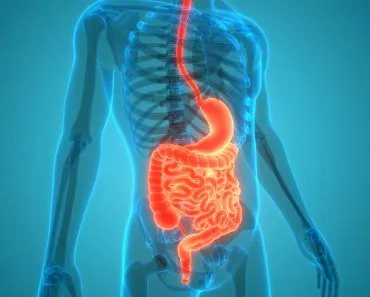
A piece of gum that you swallow is moved through the digestive tract by normal ‘pushing’ actions (called peristaltic motion) of the gut. It is pushed and handed over to the intestines, which gets rid of it through excretion. This means that the piece of gum you swallowed finds its way to the lavatory after a day or two thanks to your digestive system!

A Word Of Advice
So an occasional swallowed piece is harmless, and there is no need to panic. The one real risk is rare and comes from doing it over and over. If a lot of gum is swallowed in a short span, or gum is swallowed daily along with other indigestible bits, it can clump together into a sticky mass called a bezoar that is too big to move on and blocks the digestive tract. The handful of documented cases are almost all in young children. A 1998 report in the journal Pediatrics described three young children who needed the mass removed: two had been given gum as a reward, swallowed each piece, and grew badly constipated as the gum built up into a taffy-like lump, while in an 18-month-old girl a wad of gum had glued four swallowed coins together in her esophagus. That is exactly why kids under about five, who don’t reliably tell chewing from swallowing, should skip gum altogether.
Chewing gum is meant to be dealt with in the way its name suggests, so ‘chew’ it, and avoid swallowing it if you can.
So You Swallowed Gum, Now What Should You Do?
Here is the reassuring part: if you have just swallowed a single piece of gum, the honest answer is that you don't need to do anything at all. There is no trick to "remove" gum from your stomach, and nothing you can swallow or drink will dissolve the gum base or noticeably speed it up. Your gut already has the only tool the job needs, which is the steady push of peristalsis, and it will move the piece along on its own. Drinking water and eating normally certainly won't hurt, but the gum is going to leave the same way it does for everyone else, in your stool a day or two later. The same goes for bubble gum; it is built around the same indigestible gum base as ordinary chewing gum, so a swallowed bubble of it is treated by your body in exactly the same way.

So when, if ever, should you actually worry? Doctors point to symptoms rather than to the gum itself. The warning signs to watch for are the classic signs of a blocked gut: persistent abdominal pain, a feeling of extreme fullness or swelling, constipation that won't pass, severe cramping, and vomiting. If those show up, that is your cue to see a doctor rather than to wait it out. They are not signs of one harmless piece working its way through; they are the kind of symptoms a clinician would check for an obstruction. The risk is genuinely rare and, as we have seen, is tied to swallowing a lot of gum at once or day after day rather than to the occasional accidental gulp. For a young child who has swallowed gum, the smart move is the same: don't panic over a single piece, but watch for those gut symptoms and call your pediatrician if any appear.
References (click to expand)
- What Really Happens When You Swallow Gum - Cleveland Clinic
- Myth or Fact: It Takes Seven Years to Digest Chewing Gum - Duke Health
- Physiology, Peristalsis - StatPearls. NCBI Bookshelf
- Milov DE, et al. Chewing gum bezoars of the gastrointestinal tract. Pediatrics (1998). PubMed
- Swallowing gum: Is it harmful? - Mayo Clinic
- Does Swallowing Gum Cause Intestinal Problems? - Nemours KidsHealth