Table of Contents (click to expand)
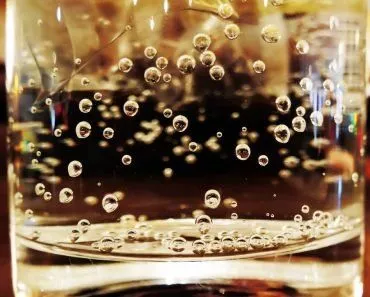
Beer makes you burp for the same reason every fizzy drink does: it is packed with dissolved carbon dioxide. The CO2 added during brewing comes out of solution in your stomach, building up gas that your body vents as a burp. The more carbonated the beer, and the faster you drink it, the more you burp.
If there’s one time and place where an unexpectedly boisterous burp isn’t met with an embarrassed grimace, it’s at the bar, drinking a few beers with your friends!
The burping gets even worse when later, at some vague and forgotten hour, you chug another pint while your “friends” cheer you on. However, have you ever wondered what causes this belching phenomenon?
Why Do We Burp?
Let’s be honest… a burp is only inconvenient to other people. Personally, it can be quite liberating and satisfying.
We’ve all taken some pleasure in burping, more formally called belching or “eructation”. This slightly indecorous behavior is a natural repercussion of something that we must do to survive: eat!
While eating, we don’t just swallow food and drink, but also a certain volume of air. One swallows even more air when eating rapidly, or when talking while eating. The air accumulates in the stomach, causing the stomach to expand and resulting in discomfort.
Air has no business being in our stomach, and the gastrointestinal system desperately wants to get rid of it. As gas and fluid slosh through the gut, they can produce a rumbling, gurgling noise called borborygmus.
The stretched stomach from the gas sets off a reflex. First, the lower esophageal sphincter (LES) relaxes, allowing the gas to travel up the esophagus. This is a muscle located at the junction of the esophagus and the stomach; it is responsible for keeping food and gas within the stomach, and normally remains contracted.
The air now reaches the top of the esophagus, causing it to stretch. The stretching of the upper esophagus begins a second reflex, which relaxes the upper esophageal sphincter (UES). This sphincter separates the throat from the esophagus. What exits the mouth is the gas and a distinctive, croaky sound (a burp, or what a doctor would call a gastric belch).
In some cases, air remains in the esophagus and can be distracting or annoying if one is not able to burp it out.
Humans aren’t the only animals that burp. Many animals, especially ruminants like cows, are expert belchers. Their guts are the perfect fermentation chamber, creating lots of gas (about 30 to 50 liters per hour), such as methane and carbon dioxide through the process of digestion. It is imperative for these animals to burp out the gas. Unfortunately, this is also why cattle aren’t great for the environment.
Why Does Beer Make You Burp?
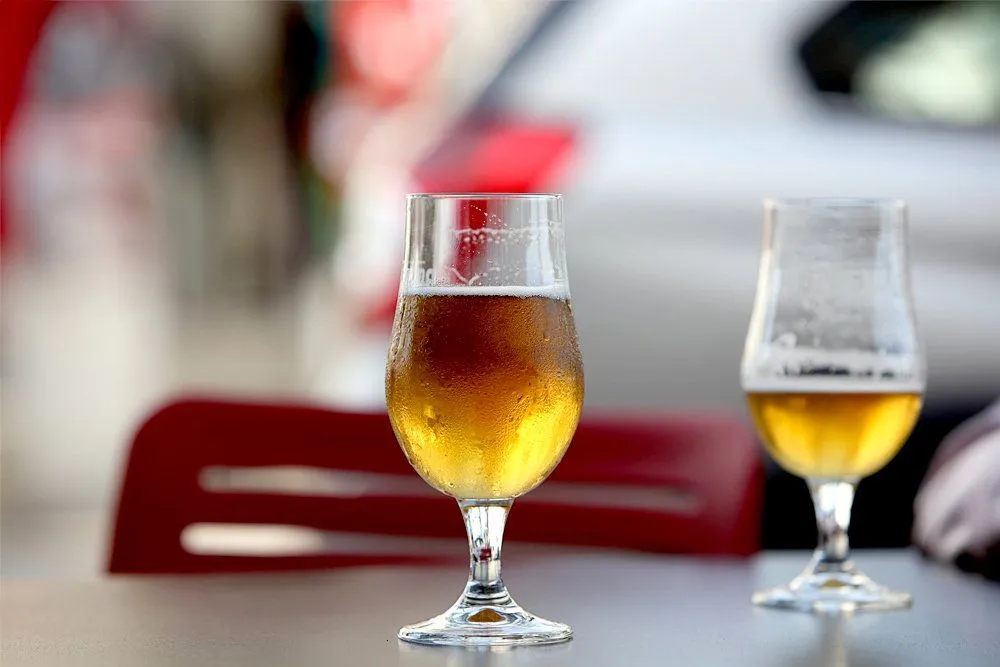
Beer makes you burp for the same reason that all fizzy beverages do: they contain an excess of gas, specifically carbon dioxide. Beer is carbonated while being brewed, which is what inflates the tiny bubbles in the brew and produces the sharp, fizzy sensation on our tongue. That dissolved gas comes out of solution in the warmth of your stomach, so the burp you let out is mostly carbon dioxide. The more vigorously a drink fizzes (heavily carbonated beers, sodas, sparkling water and root beer alike), the more gas your stomach has to vent, which is why a fizzy pint can have you burping so much.
Now, if burping intensifies when we swallow quickly, imagine the magnitude by which it worsens when we swallow a substance that already has a surplus of gas! This is why people, particularly those with sensitive stomachs, are recommended not to “chug” beers or drink them too quickly, despite how badly you want to win a pint race.
For some people, drinking beer might trigger gastroesophageal reflux disease (GERD), which occurs when stomach contents are pushed upwards into the esophagus. Burping is a symptom of GERD, and is sometimes the only symptom, while at other times it may also be accompanied by heartburn and some difficulty in swallowing food.
Is It The Carbonation Or The Alcohol?
Here’s a question worth chewing on: swap your beer for a tall glass of root beer, cola or sparkling water and you’ll find yourself burping just as enthusiastically, without a drop of alcohol involved. That’s the giveaway. The belching is driven overwhelmingly by the carbon dioxide dissolved in the drink, not the alcohol. As gastroenterologists describe it, belching results from swallowed air or from the gas generated by carbonated beverages. Whether that fizz comes from a brewery or a soda fountain, the gas escapes in the warmth of your stomach all the same, which is exactly why root beer and soda make you burp too.

Alcohol does play a supporting role, though. Ethanol relaxes the lower esophageal sphincter, the ring of muscle we met earlier that normally keeps the contents of your stomach where they belong. Studies of how the esophagus behaves after a drink show that acute alcohol consumption can relax this sphincter and lower its resting pressure, leaving the door propped open for gas (and sometimes acid) to travel back up. So a fizzy alcoholic drink is a double act: the bubbles supply the gas, and the alcohol makes it easier for that gas to slip out as a burp. Reach for a still, uncarbonated drink instead and the belching largely fades.
Does Beer Also Make You Fart?
Burping vents gas from the top of your digestive tract, but beer has a habit of catching up with you at the other end too. Ask around and you’ll find plenty of people wondering why beer leaves them gassy and bloated, and the answer lies further down the gut. Not all of the carbohydrates in beer are used up during brewing. Alongside the sugars that yeast turns into alcohol, beer carries leftover carbohydrates called dextrins, chains of glucose that brewer’s yeast simply cannot ferment, so they linger in the finished pint. Your small intestine can’t fully absorb them either.

When these undigested carbohydrates reach your large intestine, the bacteria living there fall upon them and ferment them, and fermentation makes gas. This microbial feast churns out hydrogen, carbon dioxide and, in some people, methane, and these gases make up the bulk of what eventually escapes as flatulence. Add the swallowed carbon dioxide that wasn’t burped away and instead travels downstream, and beer earns its gassy reputation honestly. Just how much it affects you comes down to your own population of gut bacteria, which is why one person can enjoy a few pints untroubled while another is left decidedly windy.
How To Stop Burping
To avoid this common embarrassment, the obvious solution is to avoid drinking beer or any carbonated drinks. However, let’s not deny ourselves the occasional brew or soda. Fortunately, there are a few things you can do to abate the burping. First, drink slowly, or at least don’t chug the beer. Second, avoid using a straw, since that narrow tool vacuums up air and worsens your belching. Third, talking too much while drinking or chewing gum can also lead to swallowing gas. Smoking isn’t advisable either!
Or you can simply change your brand. Different manufacturers infuse their beer with different volumes of carbon dioxide to achieve different levels of froth and fizz.

Beer is one of the oldest beverages in human history. The oldest evidence of beer made from barley dates all the way back to the 5th millennium B.C. Along with tea, coffee and wine, beer has been a staple for many civilizations, as records found in Egypt and Mesopotamia tell us. In fact, the Sumerians had a Goddess of brewing, Ninkasi, who would bless their beer-making endeavors. The Sumerians loved beer so much that some researchers think they might have harvested barley not as a food grain, but chiefly to make beer!
It might make us burp and cause our stomachs to rumble, but as history shows, we’ve enjoyed this fizzy treat for centuries. So, the next time you go out for a drink with a client or date you’d like to impress, perhaps you should hold off on the fizzy and burp-inducing pleasure of beer!
References (click to expand)
- (1949) Gastro-intestinal Gas: Observations on Belching - NCBI. National Center for Biotechnology Information
- Rumen Physiology and Rumination - Vivo.Colostate.edu. Colorado State University
- Cave, N. (2013). Gastrointestinal Gas. Canine and Feline Gastroenterology. Elsevier.
- Katz, S. H. & Maytag, F. Bread and Beer: The Early Use of Cereals in the Human Diet. Expedition Magazine. Penn Museum, University of Pennsylvania
- Chen, S.-H., Wang, J.-W. & Li, Y.-M. (2010). Is alcohol consumption associated with gastroesophageal reflux disease? Journal of Zhejiang University Science B. - PMC
- Gas-Related Symptoms (Belching, Bloating, Flatulence) - MSD Manual Professional Edition
- Dextrins - The Oxford Companion to Beer. Craft Beer & Brewing