Table of Contents (click to expand)
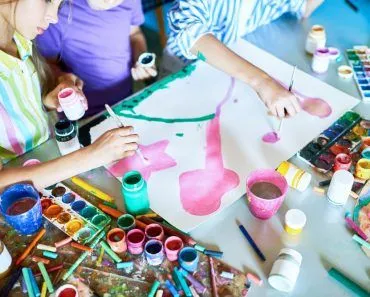
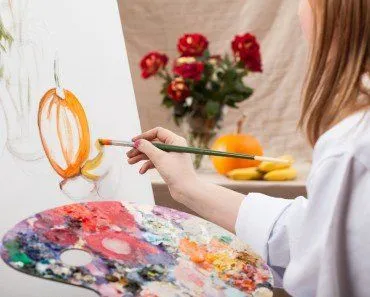
Art therapy is a mental health profession in which a credentialed therapist uses art-making, such as painting, drawing or sculpting, to help people explore emotions that are hard to put into words. By pairing creative expression with psychological guidance, it can ease anxiety and depression, help process trauma, and support patients in hospitals, clinics, schools and senior living facilities.
Have you ever found yourself lost in an art museum, mesmerized before a masterwork that seems to freeze time all around you, as though everything else about reality has fallen away? Or perhaps you’ve felt the overwhelming relief that can come through completing a painting, or even just taking part in the process of creation.
Throughout history, humanity’s relationship to art has been a cornerstone of our social, historical, religious, cultural and existential understanding. There are those people who may not think that they are an overly “artistic” person, but that doesn’t mean that you cannot connect with visual art, nor benefit from its inclusion in your life.
More specifically, there is a subfield of psychotherapy that taps into this cathartic and seemingly universal power of art, a field aptly named art therapy. Many people have heard of this therapeutic approach, but it often comes across as abstract and difficult to define, which is what we’ll attempt to do in this article!
What Is Art Therapy?
The basis of art therapy, as a means of supporting mental and emotional health, comes from the unique effect of the creative process. While traditional talk therapy involves a back-and-forth between a trained therapist and a patient in need of advice or help, art therapy adds a facilitating tool for honest expression and analysis of personal issues. There is still a trained art therapist involved in most art therapy sessions, but the form is far more flexible than traditional therapy. In fact, art therapy is a recognized mental health profession: in the United States, practitioners typically hold a master’s degree and earn credentials such as Registered Art Therapist (ATR) or Board Certified Art Therapist (ATR-BC) through the Art Therapy Credentials Board.
Through the creation of art (whether that is painting, drawing, doodling or photography), patients are able to tap into deeper feelings, perhaps things that are difficult to express in words.

Every single person is unique, and therefore problems with mental health are similarly personal, but art is known to grant access to different parts of the mind, making it easier to explore a huge variety of issues, ranging from childhood trauma or repressed memories to identity confusion, career struggles or relationship woes.
Art therapy first appeared on the psychotherapy scene in the middle of the 20th century. The British artist Adrian Hill, recovering from tuberculosis in a sanatorium, coined the term "art therapy" in 1942, while in the United States the educator Margaret Naumburg was developing her own approach around the same time. The idea was regarded with some skepticism at first, but it caught on quickly. Today the field is represented by professional bodies such as the American Art Therapy Association (founded in 1969).
How Does Art Therapy Work?
For a long time, art therapy leaned heavily on anecdotal evidence from patients and clinicians, along with the testimony of artists, thinkers and creators around the world. That picture has been changing: a growing body of peer-reviewed research, including randomized controlled trials and meta-analyses, now backs its use, even if many studies remain small and call for larger, higher-quality trials. The evidence is strongest for reducing anxiety and depression and improving quality of life, rather than for curing any underlying illness.
Combining fundamental principles and techniques of artistic creation with modern-day knowledge of psychology and human development, art therapy can help patients probe deeper into their psyche and get more out of their time in therapy. Art therapy is now widely offered in hospitals and psychiatric clinics around the world, in addition to senior living facilities, rehabilitation centers, halfway houses, crisis centers, academic institutions and private psychological practices. The potential benefits of this therapy extend from the very young to the very old, and are unrestricted by culture, language, religion, race, gender or sexual preference.
Potential Benefits Of Art Therapy
The benefits of this more creative form of therapy are as numerous and varied as any other form of therapy. The human mind and experience is incredibly complex, but there are a handful of common issues or therapeutic areas that are consistently helped by art therapy, including the following.
Depression And Anxiety
When someone is battling depression or managing an anxiety disorder, speaking to people is often the last thing they want to do. It can be a crippling and alienating struggle, but the low-stakes and low-pressure nature of art therapy can be far more comfortable. Furthermore, the simple act of making art appears to calm the body’s stress response. In one Drexel University study, around three-quarters of participants showed lower levels of the stress hormone cortisol after just 45 minutes of art-making, and the effect held regardless of artistic skill or experience. That lowered physiological arousal can make it easier to engage with difficult feelings.
Overcoming Trauma
One of the most common responses to trauma is to repress it, allowing the pain and hurt to bottle up inside. However, as you likely know, this can be a dangerous form of self-management. Art therapy provides a release valve, a way to visually express complex emotions and tap into memories from your past that may be negatively affecting your mental health. Consequent analysis or discussion of your art can help start conversations that may be challenging, but also essential for long-term wellness.
Terminal/Serious Medical Diagnoses
Receiving bad news from your doctor can be a devastating blow, particularly for people who have been battling disease or illness for a long time. In particular, art therapy has been used in cancer wards and intensive care units for patients of all ages, where studies show it can ease anxiety and depression and improve quality of life, even if it does not treat the underlying disease. Cancer isn’t the only condition where it has shown promise; research has linked art therapy to reduced anxiety, agitation and depression in people with dementia and Alzheimer’s, lower anxiety and better quality of life in children with persistent asthma, and greater control over one’s emotions in response to pain or discomfort.
Improving Communication And Family Relations
For some people, words are never their first means of expression. Communication may be a severe block for some people, particularly children, those with cognitive developmental disorders, and even estranged or separated families. Whether art therapy is used to help a child express their feelings about a divorce, or clue in other family members to the depth of a person’s suffering, the creative process is a language unto itself that can be very revealing.
Personal Insight
An ancient Greek maxim cautions “Know Thyself”, but that is often easier said than done. Even if we feel a strong sense of self-awareness, there are some secrets that we even keep from ourselves. Art therapy can provide personal revelations about issues and problems we may not even know about. Having the professional assistance of a trained art therapist can help guide patients towards clarity and self-realization.
Providing Healthy Outlets For Expressions
When the world is overwhelming you and your emotions seem like they’re swirling out of control, there are countless negative outlets for your emotions and expressions. If you are someone who struggles to handle the pressure or channel energy in a healthy way, art therapy can be a rewarding, safe and supported space for you to unpack some of your most challenging issues.
Behavioral Changes
Art therapy has also been used to support behavior change. Whether the patient is a younger child who is acting out, or an older individual with addictive or destructive tendencies, the combination of creation and analysis can help redirect and reshape behaviors and habits in a healthier direction.
A Final Word
The potential benefits outlined above are far from an exhaustive list, and new breakthroughs in art therapy happen all the time. Despite knowing as much as we do about the human brain, with all its hormones and neural pathways, it still remains largely a mystery. Art therapy has established itself as a valuable tool for facilitating self-exploration and is widely seen as a credible, unique and potentially revelatory therapeutic approach.
References (click to expand)
- The benefits art therapy can have on mental and physical health. Michigan State University
- About Art Therapy. American Art Therapy Association
- Art Therapy. StatPearls. NCBI Bookshelf.
- Reduction of Cortisol Levels and Participants’ Responses Following Art Making. Art Therapy. PMC.
- The effects of art therapy on quality of life and psychosomatic symptoms in adults with cancer: a systematic review and meta-analysis. PMC.
- Art therapy for Alzheimer’s disease and other dementias. Journal of Alzheimer’s Disease. PubMed.
- A randomized trial to test the effectiveness of art therapy for children with asthma. Journal of Allergy and Clinical Immunology. PubMed.
- Rubin, J. A. (Ed.). (2012). Approaches to Art Therapy. Routledge.