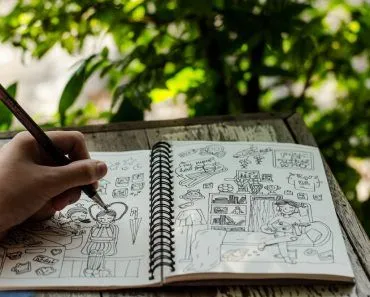
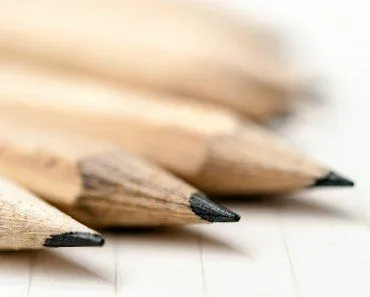
An artistic medium is the material an artwork is made from. The most common mediums in painting and drawing are oil paints (slow-drying, blendable, used since the 15th century), watercolors (translucent, unforgiving), acrylics (fast-drying, water-based, introduced commercially in 1946), graphite pencils and charcoal for drawing, and oil or chalk pastels. Each medium has its own drying time, texture and best-use cases.
Think back to the days in kindergarten when art meant coloring books and crayons. As you got older, you traded your crayons for pencils and coloring books for your own creations. Soon, art teachers might have encouraged you to experiment with oil pastels and paints. If you were really interested in art, you might dabble in watercolors, acrylics, charcoal or more to broaden your artistic horizons.
What Is An Artistic Medium?
An artistic medium refers to the material used to create a work of art. If you visit art museums, you will probably find next to a piece a small display card beside a piece which states the title of the work of art, the name of the artist and the medium from which the work of art was made.
For example, a painting like Van Gogh’s “Starry Night” would be accompanied by a listing of “oil on canvas,” while a sculpture like the Venus de Milo would write “marble.”
The term “medium” was first used specifically to mean different materials used to create art in 1861, 90 years after the German writer Gotthold Ephraim Lessing first mentioned the term in his 1766 essay Laocoön, in which he dissected the differences between poetry and painting.
Earlier, art was described in terms of the substance mixed with each pigment to produce color. Oil and water, for example, are different media into which color is mixed to make pigment. Today, the term “medium” is used to convey what material art is made of.
Various Media In Art
Oil Paints
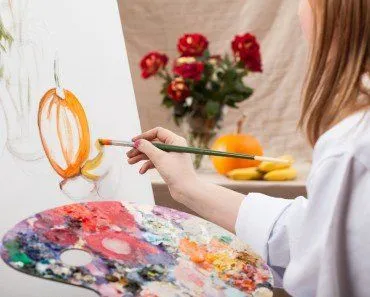
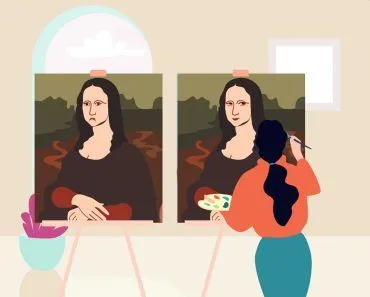
Oil painting is one of the oldest mediums still regularly used in art. Probably the most famous oil painting in the world is the Mona Lisa by Leonardo Da Vinci.
Over the centuries, oil paints have been a favorite of many famous painters, from Picasso to Botticelli. As the name suggests, they are oil-based paints with turpentine or linseed oil.
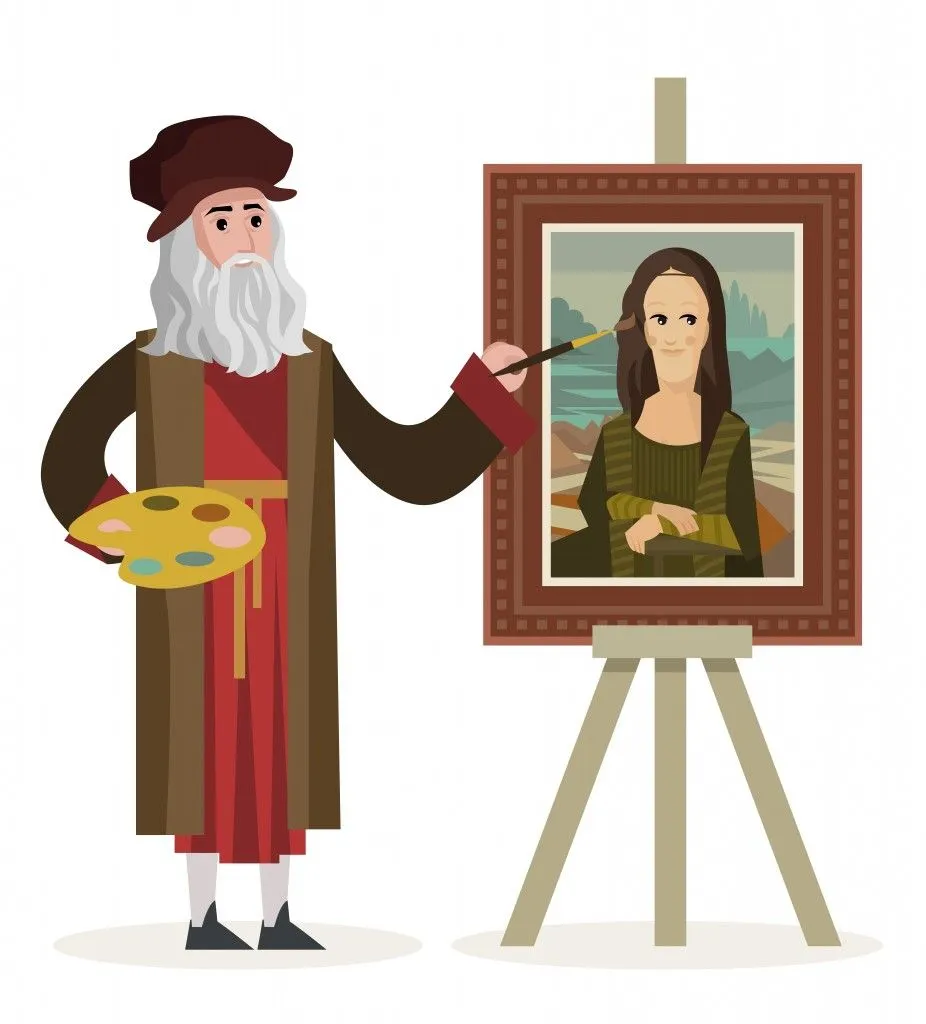
Oil paintings take a lot of time to dry because they are oil-based, so start with this medium only if you are a patient person!
The value of an oil painting depends on the age of the painting. Oil paintings age like wine – the older the better!
Oil paintings also test your problem solving skills. If you do not like what you have painted, you must decide to either obscure the mistake by covering it with paint or make something completely different from it. Oil painting is perfect if you want more blend in your colors. Oil paintings are generally used to make portraits.
Watercolors
Watercolors are difficult to work with; once the paint is on paper, there is very little you can do to change it. However, once you master them, there are several advantages. Watercolors are comparatively inexpensive. One tube of color goes a long way since the paint is diluted with a lot of water to achieve its signature translucent effect, meaning that you can see the texture of the paper that lies beneath.
Watercolor allows light to bounce off the paper and gives the color its effect rather than bouncing off the paint. This gives such paintings a mesmerizing clarity. Watercolors are generally used to paint landscapes, abstract works or other subtle subjects that don’t require too much precision.
Some watercolor techniques include wet on wet, dry on wet, color lifting and flat washes.
Acrylic Paints
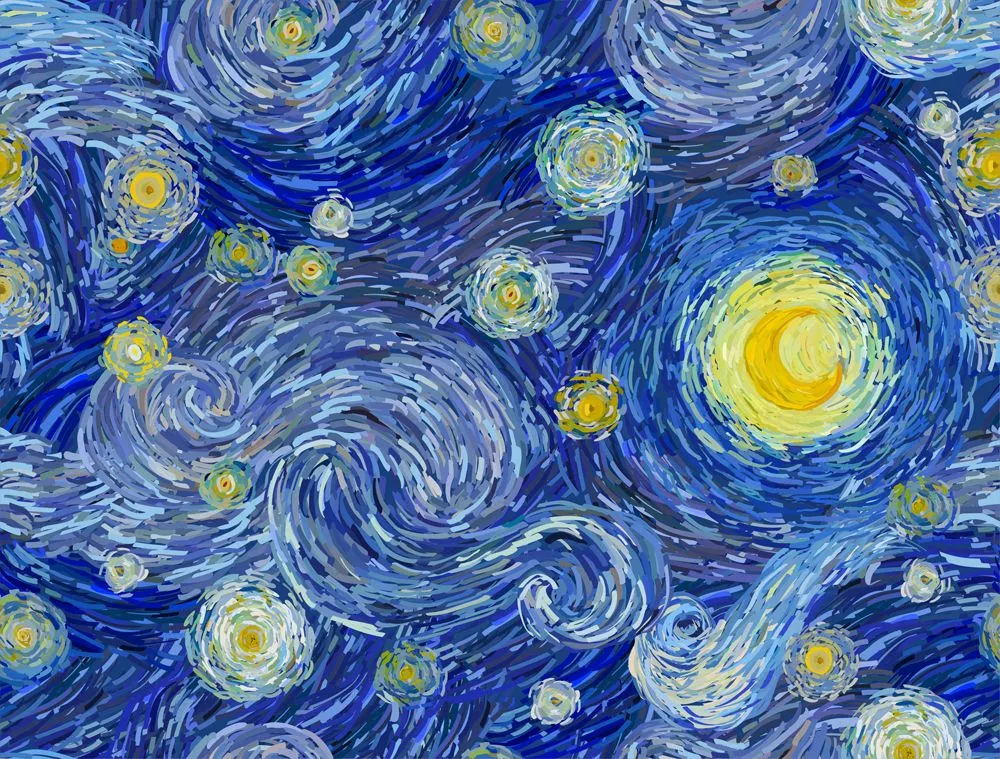
Acrylic is the newest of the painting mediums. The first usable acrylic resin was developed by Rohm and Haas in 1934, but the first acrylic paint marketed to artists, Magna, was introduced by Leonard Bocour and Sam Golden in 1946; water-based acrylics (Liquitex) followed in 1955. Compared to watercolors and oil paints, it has many advantages. Unlike oil paints, it dries quickly, is also very versatile and durable. It also creates less mess and is easy to scrape off when you spill it on the floor; it can be peeled off by hand like glue!
Pop artists of the 1970s used this medium; in particular, Andy Warhol used acrylic in his legendary “Campbell Soup Can.”
Acrylic Pour
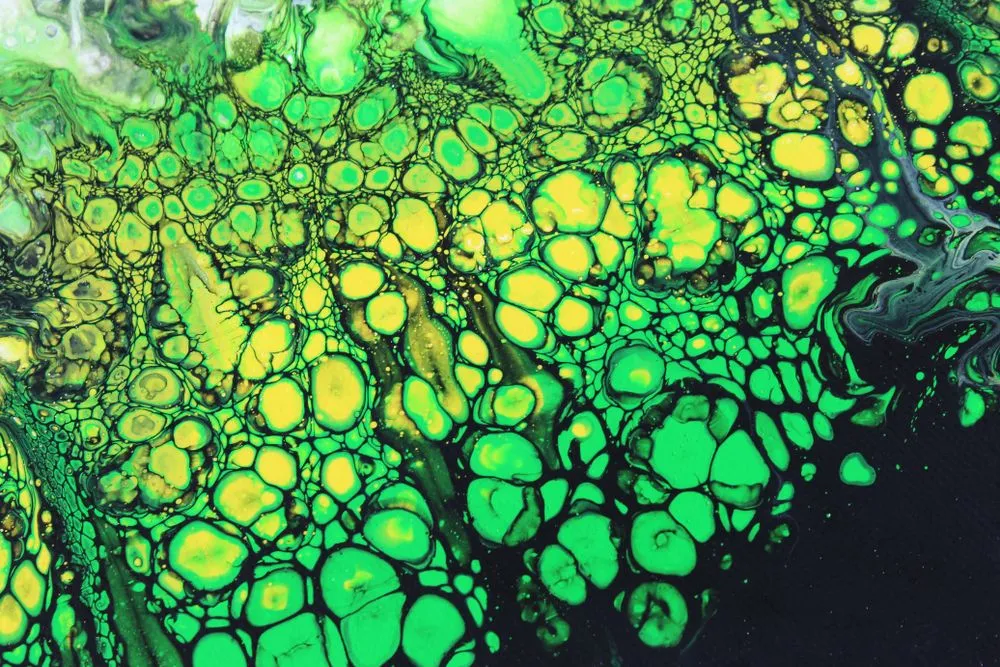
Another recently developed technique, where you do not need to be a trained artist, is ‘Acrylic Pour’. Acrylic pour is a technique in which layers of different acrylic paints are poured onto a canvas. To achieve a pourable consistency, you need to mix the paint with a pouring medium.
You can add silicone oil and after pouring and then use a heat gun or a lighter for even more fun. You will see the paint separate from the oil (since acrylics are water-based) and form beautiful bubbles on the painting. Although it is a simple technique, the painting does depend on the way you pour and the layered colors.
Graphite Pencil
“Paint me like one of your French girls…”
If you’ve seen Titanic, then you know which scene this quote comes from. Jack uses graphite pencils to sketch Rose in this legendary blockbuster. These pencils are similar to normal pencils, but they come in different intensity levels. The ‘H’s are the lightest, whereas the pencils marked ‘B’s like 4B or 6B are the darkest.
Because graphite pencils are less messy than paint and easier to use, they are often used by children. Mastering this medium requires sketching, shading and blending.
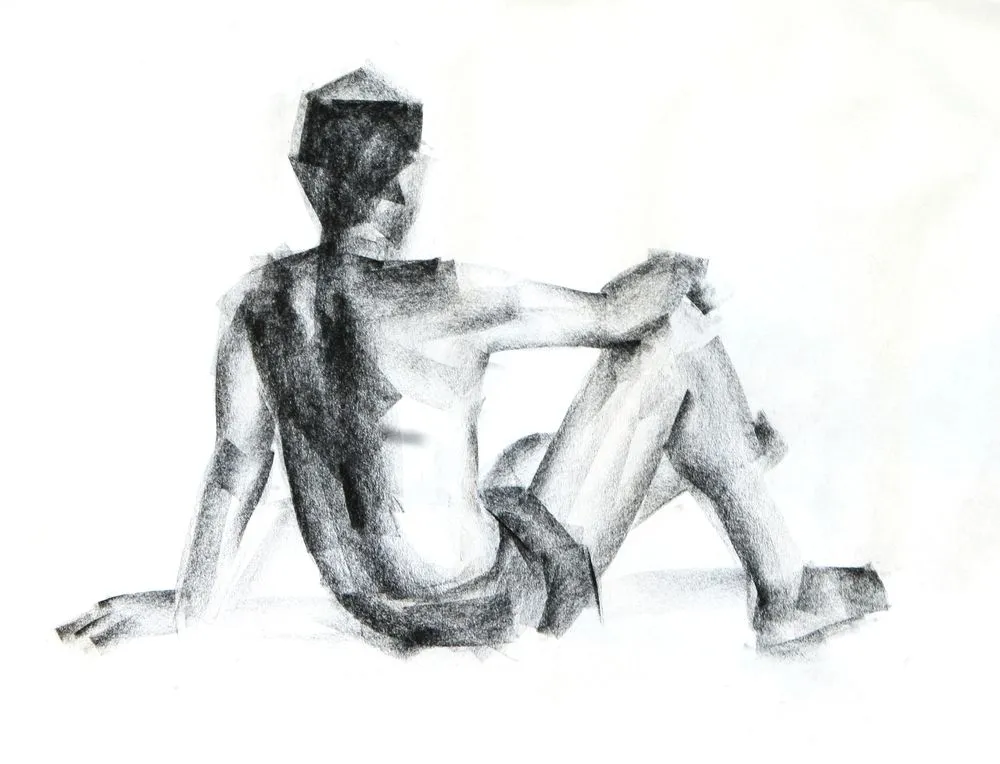
Like graphite pencils, charcoal is darker in color, cannot be erased easily, and requires more hand control. Charcoal comes in two types: soft charcoal for blending and hard charcoal for sketching. Charcoal is used for drawing figures and quick sketches.
Pastels
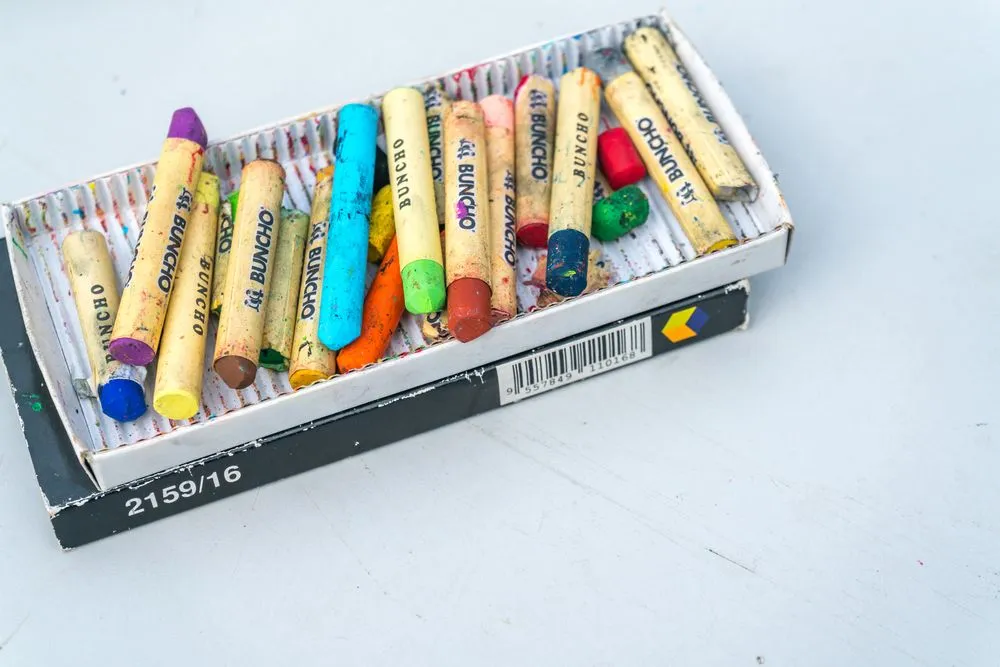
Pastels come in two forms: oil pastels (commonly used by children for coloring) and chalk pastels, which are similar to charcoal, but they come in all colors. Pastels are ideal for blending and layering. The tip, cut and side can all be used to create different textures.
Sculpture: Mediums You Can Walk Around
So far, every medium we have met sits flat on paper or canvas. But not all art is two-dimensional. Remember the Venus de Milo from earlier, labelled simply as “marble”? Sculpture is three-dimensional art, and according to the Tate, it is made by one of four basic processes: carving, modelling, casting and constructing. The medium is whatever material the sculptor shapes, and each one behaves very differently.

Carving is subtractive, which is a fancy way of saying you start with a solid lump and cut away everything that is not the sculpture. Stone, wood, ivory and bone are all carved this way. Michelangelo carved his David from a single large block of Carrara marble between 1501 and 1504, and once a piece of marble is gone, there is no putting it back.
Modelling is the opposite, an additive process in which a soft material such as clay or wax is built up by hand. Fire that clay in a kiln and you get terracotta, one of the oldest sculptural mediums on Earth. Casting lets an artist reproduce a form in metal. The classic method is lost-wax casting (also called cire perdue): a wax model is coated to make a mould, the mould is heated so the wax melts and runs out, and molten metal is poured into the empty cavity. The metal of choice is usually bronze, an alloy of mostly copper with around 12% tin, prized because it is strong, durable and captures fine detail. Finally, constructing, a twentieth-century arrival, means assembling a sculpture from separate parts by welding, bolting or bending, often using found objects rather than a single raw material. Knowing exactly which medium an artwork is made from is also how experts uncover art forgery.
Printmaking: One Image, Many Originals
What if you want more than one copy of your artwork? That is where printmaking comes in. The Tate defines a print as “an impression made by any method involving transfer from one surface to another.” The artist works an image onto a plate, block or screen, inks it, and presses it onto paper, so every pull counts as an original rather than a photocopy. There are four main families.

Relief printing is the oldest. The artist cuts away everything that should stay blank, inks the raised surface that remains, and prints from it. Hokusai’s The Great Wave off Kanagawa, one of the most reproduced images in the world, is a colour woodblock print made exactly this way. Intaglio works in reverse: the image is incised into a metal plate (usually copper or zinc) so the grooves hold the ink, then the surface is wiped clean and pressed hard onto damp paper. Engraving, etching, drypoint and aquatint all belong to this family.
Lithography is the odd one out, because nothing is carved at all. It was invented by the German actor and playwright Alois Senefelder in 1796 and relies on a simple chemistry lesson: oil and water do not mix. The image is drawn on a flat stone or metal plate with a greasy crayon, the surface is dampened, and greasy ink then sticks only to the drawing while the wet blank areas repel it. Lastly, screenprinting forces ink through a fine mesh screen with a rubber squeegee, using a stencil to block out the areas that should stay blank. Andy Warhol, whom we met earlier, turned this humble poster technique into pop-art history.
Digital And New Media: Art Without A Drop Of Paint
The newest mediums do not involve paint, pencils or chisels at all. The Tate describes digital art simply as “art that is made or presented using digital technology,” and that covers a huge range: computer-generated work, scanned images, drawings made with a tablet and stylus, and manipulated video footage.

Most digital artists today draw straight onto a pressure-sensitive graphics tablet using software such as Photoshop, Procreate or the free program Krita. The stylus behaves like a brush, a pencil or an airbrush at the tap of a button, and mistakes vanish with an undo command rather than a fresh covering coat of paint. Digital art is older than it sounds, though. As far back as the early 1980s, artist Harold Cohen built a computer program called AARON that produced large drawings on its own, and by the 1990s artists were editing video on home computers. Some recent digital works are even interactive, handing the audience a little control over the final piece, something no oil painting could ever do.
As we all know, beauty comes in all sizes, and since art is a form of beauty, it is no wonder that it comes in various mediums. There is no perfect medium for a particular type of painting, it depends on what an artist is comfortable with, what you like, your budget and availability. And above all, do not forget that the beauty of art lies in the eyes of the beholder!
References (click to expand)
- Artistic Medium | Internet Encyclopedia of Philosophy. The Internet Encyclopedia of Philosophy
- Different art mediums bring unique benefits - The Leaf. shsleaf.org
- Historical Painting Techniques, Materials, and Studio Practice. The Getty Center
- Sculpture - Art Term. Tate
- Print - Art Term. Tate
- Digital art - Art Term. Tate