Synovial fluid is the thick, slippery liquid inside the joint cavity of synovial joints (like the knee and hip). It reduces friction between the bones, lets them glide over each other, and stops them from scratching, wearing down, or squeaking. Its slipperiness comes mainly from hyaluronan and the lubricating protein lubricin.
If you’ve ever seen how hinges work, you have a basic knowledge of how our joints work too! Before we dig in to that, let’s review what we mean by “bones” and “joints”.
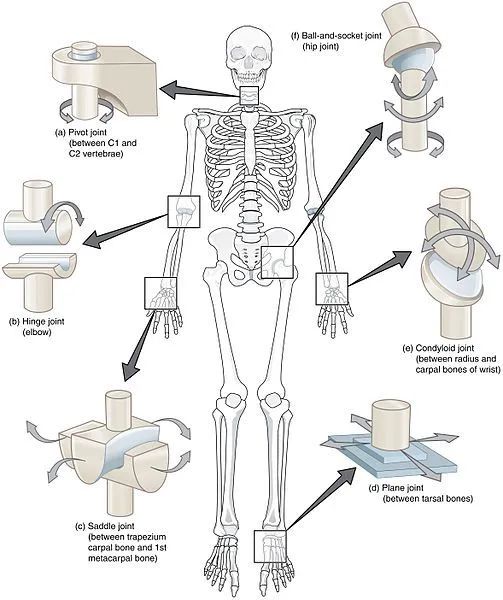
Bones are solid parts of the body, rigid and strong due to the calcium phosphate and collagen of which they’re made. Bones are not flexible, and cannot bend or move about. Their main function is to provide stability, not movement.
So… how do we move? The answer is with the help of joints. Joints, as their name suggests, are where two or more bones “join” together. This part holds these bones together and, depending on the type, may or may not allow some movement between them.
Are All Joints The Same?
Based on their function, there are three major types of joints.
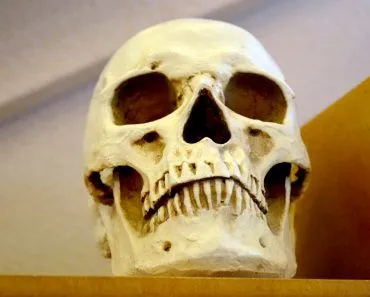
Some joints only work as a “glue” for the adjacent bones. These are synarthrosis joints, and do not allow any kind of movement. The bones are locked together by strong fibrous connective tissue, like the sutures that fuse the bones of the skull.
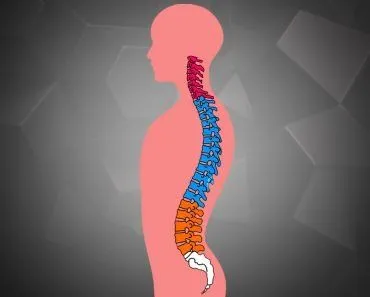
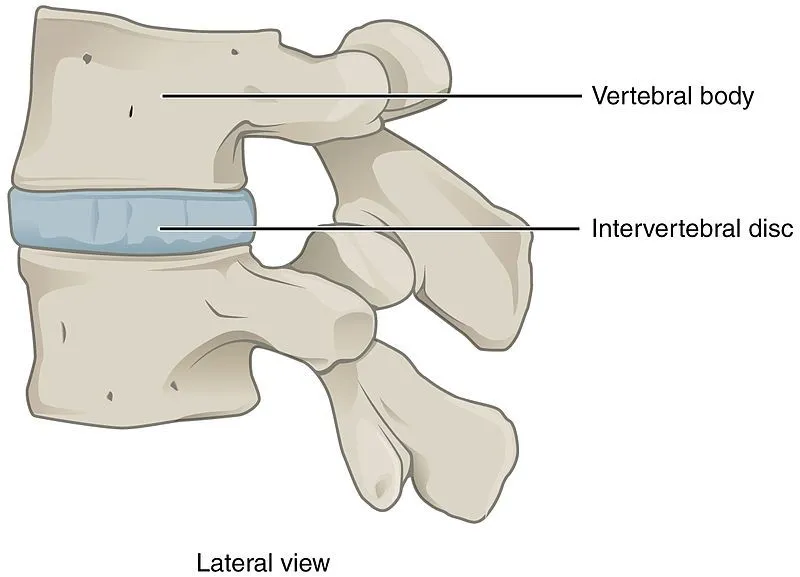
The second kind of joint is amphiarthrosis, which are slightly movable. This allows only restricted movements and is present in the vertebral column. Amphiarthrosis joints are padded with fibrocartilage, a tougher, more flexible material (the intervertebral discs between your spinal bones are a good example).
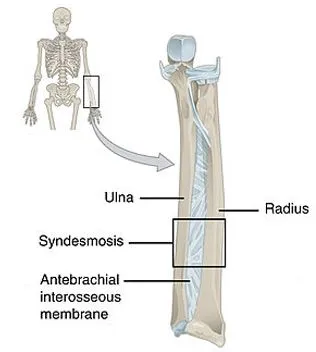
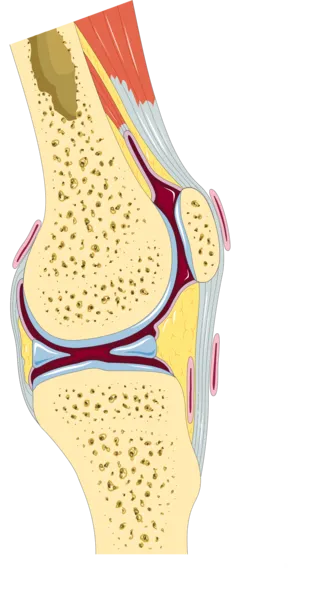
The main type of joint that allows the majority of movement is the diarthrodial joint. These joints allow movement either across one plane (the knee joint) or across many planes (the hip joint). Diarthrodial joints allow the bones to bend along the point of attachment. Thus, they provide the required motion within the body.
How Do Joints Help Us Move?
The diarthrodial joint is a complex system and consists of special structural features. Firstly, the two (or more) bones involved in diarthrosis do not touch each other. Instead, the joint cavity is the point of contact for the bones.
The cavity is covered by a fibrous membrane and is connected to the bone by cartilage. Furthermore, the cavity contains a viscous liquid known as “Synovial Fluid”. Since all diarthrodial joints must have synovial fluid for movement, they are also known as synovial joints.
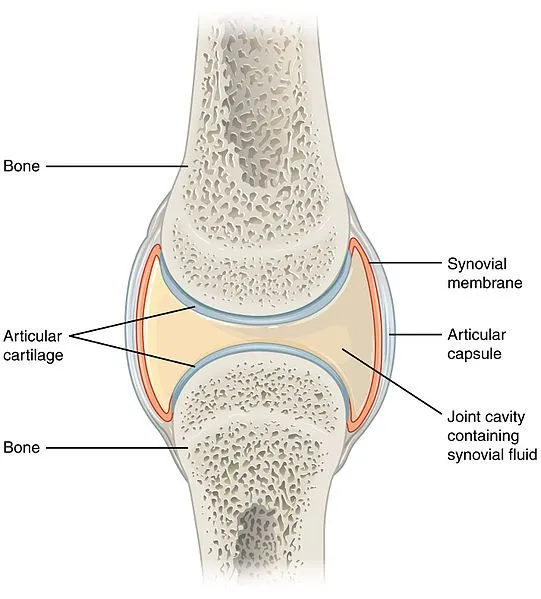
The fact that two bones don’t touch each other while moving helps in the smooth movement of the skeletal system. Additionally, the viscous synovial fluid helps the bones glide over each other. This not only provides easy movement, but also prevents the degradation of bones. Since the bones are not rubbing against each other, they don’t incur damage.
No Squeaking When You Have Ample Grease!
If you think about hinges, you’ve probably encountered some hinges that make noise. They squeak while moving the joint. However, put in some oil and the door closes without a noise! This is because the oil works as grease for the hinge parts.
Coming to our initial question, you can probably guess the answer! It is because of synovial fluid. Even when hinges are old and rusty, if you add a little bit of grease, they are back to working without any noise. Similarly, the joint cavity and synovial fluid act as grease for the bones. The fluid helps the joint maintain both shape and function over time.
How Does The Synovial Fluid Grease Your Joints?
Synovial fluid is present in the joint cavities of synovial joints. In these joints, it prevents friction between the two bones.
Its thick viscosity helps lubricate the joints. The molecules in the fluid contribute to these properties. Hyaluronan, also known as hyaluronic acid (which you may find in skin creams) is an organic compound with a very high molecular weight.
Because of its high molecular weight, hyaluronan gives the fluid its thick, slippery, gel-like consistency, which keeps the joint surfaces apart and cushioned. The fluid also contains a protein called lubricin, which coats the cartilage surfaces and acts as the main boundary lubricant when the joint is under load. Since the fluid prevents direct contact and reduces friction between the bones, the synovial fluid also helps prevent general wear and tear on the tissues.
Additionally, synovial fluid is the site of deposition for a number of biomolecules and nutrients. These nutrients help maintain the health of the cartilaginous membrane. Along with nutrients, it also has anti-inflammatory molecules, which help maintain healthy cartilage and bones.
Why Do Joints Hurt As You Get Older?
As a person gets older, the cartilage in their joints gradually wears down, and the synovial fluid can change too, becoming thinner and less effective at lubricating. With worn cartilage and less effective fluid, the joint surfaces no longer glide as smoothly, which leads to discomfort and pain. The cushioning nutrients and anti-inflammatory molecules carried by the fluid also become less able to keep the cartilage healthy.
These changes are central to osteoarthritis, the most common form of arthritis. It is not simply the fluid “drying up”, though; osteoarthritis is mainly a breakdown of cartilage driven by years of mechanical wear together with inflammatory and biochemical changes inside the joint. As the cartilage thins, the bones may start to rub against each other in advanced cases, leaving joints that are stiff, noisy, and painful.
Conclusion
Bones are rigid structures in the body that move only because of joints. Of the three types of joints, only diarthrodial joints are capable of major movement. However, the other two are almost non-flexible.
Diarthrodial joints are also known as synovial joints, due to the presence of synovial fluid in the joint cavity. This fluid handles the smooth and seamless movement of one bone over the other. Since synovial fluid works as a lubricant, our bones don’t “squeak” when we move.
The lubricating property of the synovial fluid is due to a compound called hyaluronan, along with the protein lubricin and other components that make up the viscous solution. With age, the cartilage wears down and the synovial fluid becomes less effective, and this combination of changes lies behind common joint problems such as osteoarthritis.
References (click to expand)
- 9.4 Synovial Joints - Anatomy and Physiology 2e | OpenStax. OpenStax
- How do joints work? - InformedHealth.org - NCBI Bookshelf. The National Center for Biotechnology Information
- Synovial Fluid Analysis: MedlinePlus Medical Test. MedlinePlus
- Tamer, T. M. (2013, September 1). Hyaluronan and synovial joint: function, distribution and healing. Interdisciplinary Toxicology. Walter de Gruyter GmbH.
- Ageing - muscles bones and joints - Better Health Channel. betterhealth.vic.gov.au
- Recent Advances in Understanding the Role of Cartilage Lubrication in Osteoarthritis. Molecules. NCBI PMC.