Table of Contents (click to expand)
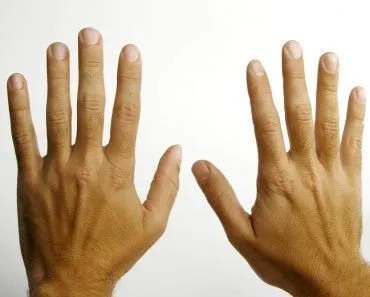
No, your fingers don’t contain any working muscles, only bones, tendons, ligaments, blood vessels and nerves. Every finger movement is driven by muscles in your palm and forearm, which pull on long tendons that run into the fingers and tug the bones like puppet strings. The only “muscles” fingers do have are microscopic arrector pili that make finger hair stand on end.
We use muscles for everything that we physically do. When we move any of our body parts in any way whatsoever, muscles are involved in accomplishing that motion. Indeed, we couldn’t imagine our daily lives without the 600+ muscles in different parts of our body that facilitate a myriad of physical motions and actions.
However, you might be surprised to know that fingers, which are involved in almost all movements of the hands, don’t contain muscles to facilitate movement!
So… how do we extend, flex or curl our fingers if there are no muscles there in the first place?
When we say that fingers have no muscles, that isn’t 100% true. The only muscles fingers have are completely unrelated to motion; they are tiny arrector pili muscles that help make the hair on your fingers stand out straight. Also, we aren’t trying to imply that there is no involvement of muscles in the movement of fingers, only that fingers themselves don’t contain any muscles that control the movement.
Movement in your fingers – which is quite precise – is brought about by the concerted actions of the tendons, bones and muscles that are present in the palms of our hands. Let’s take a look at how it works.
The Human Hand
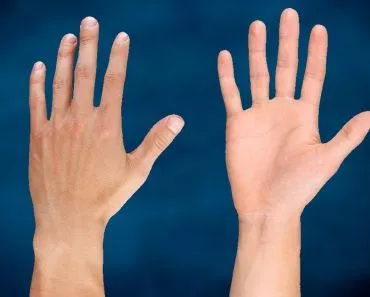
The human hand is a very complex structure in itself; it contains a total of 27 bones, which means that almost one-quarter of all the bones in the human body are found in our two hands. Other than bones, the human hand also contains 34 muscles, along with many tendons, nerve fibers and blood vessels, all of which are covered by a thin layer of skin.
Bones
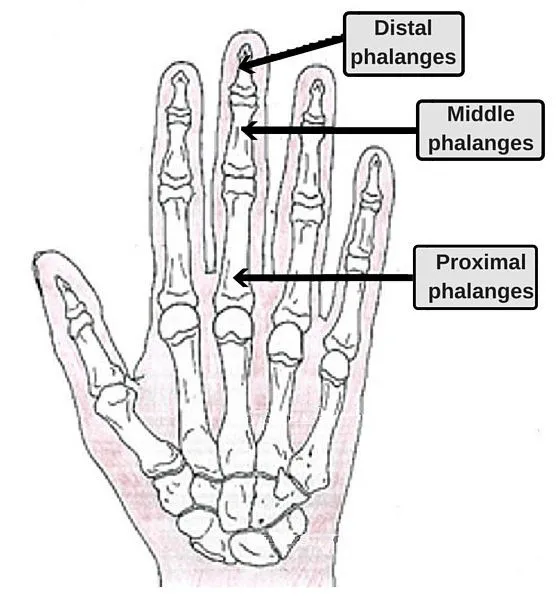
Each finger consists of three bones called phalanges, named in order of their distance from the palm: the proximal phalanx (closest to the palm), the middle phalanx, and the distal phalanx (the fingertip). The thumb is the exception, as it has only two phalanges, a proximal and a distal one, with no middle.
Tendons
Tendons connect muscles to bones, whereas ligaments connect bones to other bones. Standard anatomy texts count roughly 34 muscles that control the hand: about 19 intrinsic ones sitting inside the palm itself (thenar, hypothenar, lumbricals and interossei) plus around 15 extrinsic ones tucked into the forearm, whose long tendons reach into the fingers. The two major finger actions (flexing and extending) are powered by the flexor and extensor muscles of the forearm, respectively.
This is the raw information regarding various components of our hands, but now let’s look at how they actually work together to make us do things, such as grip an object, lift a dumbbell or simply point a finger at someone (no pun intended).
The brain is obviously at the helm of every function of the body, so nothing happens unless it’s approved by the brain.
When you decide to point a finger at something, for example, the brain sends a message (an electric impulse) that travels through the nerves, which connect to the muscles present in the palm and forearm. This electric signal commands specific muscles to relax and others to flex/tighten.
Upon contraction of a muscle, a tendon is pulled. Since tendons are connected to muscles on one end and bones on the other, a pulled tendon causes a bone to move and perform specific actions. Therefore, when you want to point a finger at something, the tendons pull on the bones in the index finger, which become taut. And…

… this happens.
Every kind of possible action that fingers perform is controlled/regulated by muscles present in the palm and forehand. That’s the reason you can so strongly ‘feel’ those muscles when you grip something tightly or lift something heavy. Fingers may not have muscles of their own, but thanks to the pudgy palm and the firm forearm, they certainly never feel the pang of their absence, do they?
What Are the Names of the Five Fingers?
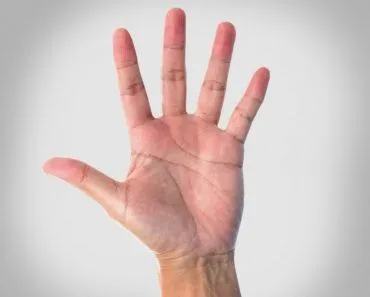
We have just talked about the bones inside the fingers, but what about the fingers themselves? Each hand has five digits, and anatomists number them from the thumb across to the side of the palm. Digit 1 is the thumb, digit 2 the index finger (the one you point with), digit 3 the middle finger (also called the long finger), digit 4 the ring finger, and digit 5 the little finger, better known as the pinky and the smallest of the set.

Each finger is anchored to the wrist through a long bone in the body of the palm called a metacarpal, and there are five of them, one feeding into each digit. So when you count the 27 bones in a hand, you are adding up the 8 carpals in the wrist, the 5 metacarpals in the palm, and the 14 phalanges in the fingers and thumb. The four fingers each carry three phalanges (proximal, middle and distal), while the thumb makes do with just two, which is exactly why the thumb looks and behaves a little differently from the rest. If you have ever wondered why babies have more bones than adults, the answer lies in how many of these small bones slowly fuse as we grow.
How Do Fingers Move: Flexion, Extension, Abduction and Adduction?
Now that we know fingers are pulled by muscles in the palm and forearm, it helps to put names to the movements those muscles produce. Anatomists describe four main finger motions. Flexion curls your fingers inward to close the angle of the joints, the action you use to make a fist. Extension does the opposite, straightening the fingers and increasing that angle, which is what happens when you flatten your hand into a straight line on a table.

The other two motions are the ones people often ask about. Abduction is the movement that spreads your fingers apart, fanning them out away from an imaginary line running down the middle finger. Adduction reverses it, drawing the fingers back together toward that same middle line. These two are powered by small muscles inside the palm itself: the dorsal interossei spread the digits (a handy memory aid is DAB, dorsals abduct), while the palmar interossei close them again (PAD, palmars adduct). The middle finger sits on the reference axis, which is why it is the digit those muscles fan the others away from.
Two more terms round out the picture. Opposition is the prized human trick of swinging the thumb across the palm to touch the tip of each finger, driven by the thenar muscles at the base of the thumb, and it is what makes a precise pinch grip possible. And when you straighten your wrist, hand and fingers into a single flat line, that is the work of the extensor muscles of the forearm, chiefly the extensor digitorum, whose tendons run across the back of the hand. All of these movements pivot at the small joints between the finger bones, the same kind of synovial joints found elsewhere in the body.
References (click to expand)
- Finger - Wikipedia. Wikipedia
- Interesting facts about hands - Eaton Hand Surgery. eatonhand.com
- The Muscular System - citadel.sjfc.edu:80
- Anatomy, Shoulder and Upper Limb, Hand Bones. StatPearls. NCBI Bookshelf.
- Anatomy, Shoulder and Upper Limb, Hand Interossei Muscles. StatPearls. NCBI Bookshelf.
- Anatomical Terms of Movement. TeachMeAnatomy.