Table of Contents (click to expand)
Foot binding became a symbol of beauty in ancient China because it tied together class, marriage prospects and Han Chinese identity. The practice likely began in the 10th-century court of Southern Tang emperor Li Yu, whose concubine Yaoniang danced on a lotus platform with bound feet. Elite Song-dynasty families copied the look, the "three-inch golden lotus" turned into a marriage-market asset, and the deformity persisted until the Republic of China outlawed it in 1912.
Foot Binding As A Cultural Paradox
In a small village in ancient China, a girl was born into a family that prided itself on tradition. As she grew older, the women in her family gathered to initiate the rite of foot binding, a practice they believed would guarantee her a prosperous marriage and honor the family.
With each wrap of the bandage, her toes curled closer to her heel, and even as tears welled in her eyes from the sharp pain, she dared not cry out, understanding the importance of this moment.
Over time, her steps became delicate and her movements more restrained, the golden lotus feet signifying her elevated status. Years later, her petite steps carried her through her husband’s household, her bound feet a silent testament to her family’s adherence to tradition. More viscerally, they are a personal reminder of her enduring sacrifice for beauty and acceptance in a culture that valued the appearance of small feet as the epitome of femininity and allure.
Origins Of Foot Binding: A Historical Enigma
Historians do not agree on a single origin, but the most widely repeated account points to the 10th-century court of Li Yu, the last ruler of the Southern Tang kingdom (937-975 CE), just before the Song dynasty. According to a 12th-century retelling by Zhang Bangji, Li Yu had a six-foot gilded lotus flower built as a stage for his favorite concubine, Yaoniang, who bound her feet with strips of silk into the shape of a crescent moon and danced on it. The look caught on among court women, then spread to elite Song-dynasty families (960-1279 CE), with the earliest archaeological evidence of bound feet coming from two Southern Song tombs (Huang Sheng, died 1243; Madame Zhou, died 1274).
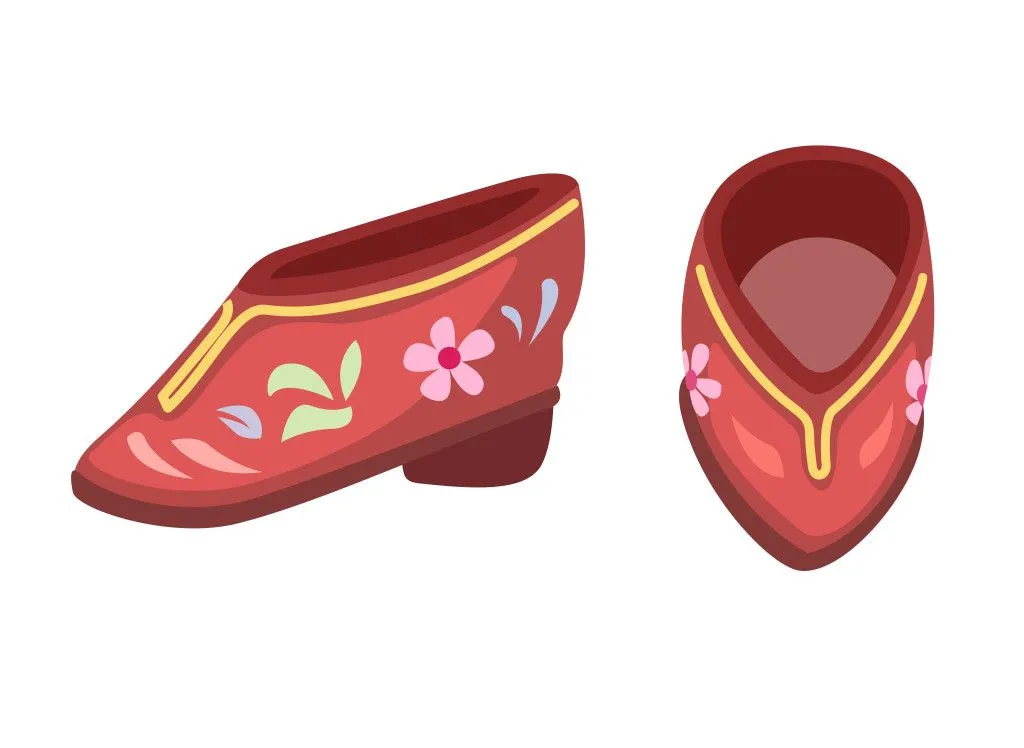
By the Ming and Qing dynasties, the practice had filtered down from the imperial court to peasant households across northern and central China. The Manchu rulers of the Qing dynasty (1644-1912) actually tried to stamp it out: Hong Taiji issued the first edict against it in 1636, and the Kangxi Emperor tried again in 1664 before abandoning enforcement in 1668. Manchu women did not bind their feet; they wore distinctive raised "flower-bowl" shoes that mimicked the swaying gait without the mutilation. Foot binding was finally outlawed by the new Nationalist government of the Republic of China in 1912, though it persisted in isolated rural areas, especially Shandong and Yunnan, for several more decades.
How Was Foot Binding Actually Done?
Foot binding was not a single event but a slow, painful remaking of the foot that began in early childhood. It usually started before a girl turned eight, while the bones of her feet were still soft and pliable enough to reshape. The timing was deliberate: once the bones hardened, they could no longer be forced into the desired shape.

The feet were first soaked in a warm bath, sometimes mixed with herbs, to soften the skin, and the toenails were trimmed back so they could not cut into the flesh. Then every toe except the big toe was curled under and pressed into the sole. The small bones of these four toes were deliberately broken, and the arch of the foot was forced upward until the heel and the front of the foot were drawn closer together.
Long cotton strips, dampened so they would tighten as they dried, were wound around the folded foot to hold it in its new crescent shape. The bindings were unwrapped and reapplied every day or two, each time a little tighter, and the shaping continued for years, throughout much of the girl’s childhood. The prized result was the “three-inch golden lotus” (san cun jin lian), a foot around three Chinese inches long. A slightly larger, four-inch foot was known as the “silver lotus,” though in practice most women never got smaller than four or five inches.
Cultural Symbolism: The Lotus In The Mud
Moreover, foot binding was imbued with erotic overtones. The small, bound foot (especially the “golden lotus” of a mere three inches) was a potent symbol of femininity. The peculiar gait it caused was thought to strengthen the thigh and pelvic muscles, thereby linking a woman’s desirability to her physical deformation.
By rendering women less able to move freely, foot binding also served as a method of enforcing traditional gender roles. It kept women confined to the domestic sphere, physically embodying the cultural values of submissiveness and dependence. A woman with bound feet was a woman controlled, her diminished capacity for movement reflecting her prescribed societal position.
For families, the practice of foot binding became a strategic investment in the future. In the marriage market, a small foot could increase a girl’s matrimonial prospects significantly, potentially allowing her to marry into a higher social class. This aspect of foot binding reveals the harsh economic realities and the commodification of women’s bodies within the ancient Chinese matrimonial system.
Socioeconomic Dimensions: Mobility, Class, And Labor
The implications of foot binding on labor, particularly for agricultural work, are complex. In southern China, women who did not bind their feet were more capable of participating in the demanding tasks of wet rice cultivation. In contrast, bound feet were feasible in the drier wheat fields of the north, though the modification often necessitated an adapted, seated method of labor.
This division of labor suggests that foot binding was more than a personal or familial choice; it was shaped by the agricultural economy of different regions.
Reports from travelers and political reformers highlight regional disparities in the practice of foot binding, with some areas, especially in the south, resisting the trend. This regional variation underscores the fact that foot binding was not monolithic; local customs, economic conditions, and social attitudes all influenced whether and how foot binding was practiced.
Ethnicity And Han Identity
It has been posited by scholars that during the Qing Dynasty, the Manchu rulers’ attempts to ban foot binding may have inadvertently made it a symbol of Han Chinese identity. This reaction against foreign rule shows how the practice of foot binding became intertwined with ethnic and national identities.
In modern times, foot binding has been condemned as a practice that was detrimental to women’s health and autonomy. The nationalist movements of the 20th century, seeking to forge a new identity for China, often highlighted foot binding as an emblem of the country’s “feudal” past, a remnant to be discarded in the march towards progress.
The Health Toll Of Bound Feet
The beauty of the golden lotus came at a steep physical price. Because the toes were broken and the flesh was bound tightly for years, infection was common, and the poor blood circulation in the crushed foot could cause the tissue to waste away. The muscles of the lower leg, robbed of normal use, gradually atrophied, and most women with bound feet could never again walk without a slow, unsteady, swaying gait.

The damage did not end when a woman grew up; it lasted a lifetime, and the evidence is still measurable today. In a study of older women in Beijing published in the American Journal of Public Health, researchers S.R. Cummings, X. Ling and K. Stone found that 38% of women aged 80 and older, and 18% of those aged 70 to 79, still had bound-foot deformities decades after the practice had ended.
Compared with women whose feet had never been bound, those with bound feet had about 5.1% lower hip bone density and 14.3% less functional reach, a standard test of balance. They fell more often and were far less able to squat or to rise from a chair without help. The researchers concluded that foot binding had caused “substantial disability” that remained visible in many elderly Chinese women long after the last feet were bound.
Conclusion
The paradox of foot binding lies in its multifaceted role as a symbol of both oppression and beauty. It was a practice deeply embedded in the social fabric of ancient China, reflecting and reinforcing the prevailing values and structures. While it may have started as a symbol of grace among court dancers, it evolved into a complex social signal with implications for gender roles, social status, and economic mobility.
References (click to expand)
- Footbinding: History, Culture & Effects. Encyclopedia Britannica.
- Foot-Binding. World History Encyclopedia.
- Bound to Be Beautiful: Foot Binding in Ancient China. McClung Museum of Natural History and Culture, University of Tennessee.
- The Shifting Meanings of Footbinding in Seventeenth-Century ....
- TURNER, C. L. (1997, December). Locating Footbinding: Variations across Class and Space in Nineteenth and Early Twentieth Century China*. Journal of Historical Sociology. Wiley.
- The "golden lotuses": bound feet.
- Foot binding. New World Encyclopedia.
- Foot Binding in China. Chinasage.
- Foot-binding. Body Arts. Pitt Rivers Museum, University of Oxford.
- Cummings, S. R., Ling, X., & Stone, K. (1997). Consequences of foot binding among older women in Beijing, China. American Journal of Public Health.