Table of Contents (click to expand)
China’s one-child policy was a population-control law in force from 1980 to 2015 that limited most urban Chinese families to a single child, with fines, forced sterilizations and forced abortions used to enforce it. It was replaced by a two-child policy on 1 January 2016, a three-child policy in May 2021, and within weeks all penalties and limits were effectively removed. China’s population has since started shrinking, and in 2023 India overtook China as the world’s most populous country.
A country’s greatest strength is its manpower i.e. the population. But if an account is not kept that whether the population is an asset or becoming a liability (happens when overpopulation occurs along with an increment in the unskilled population), the same manpower can become a challenging problem for the government and the country.
So let us take an example – A house having a place for twenty people in total with water supply, space for living, etc. all designed to accommodate and fulfill the needs of a maximum of twenty people. But as time passes by and the families living in the house start to expand from two members to four or five members, the total number of people living in the house becomes twenty-five.
There is a shortage of water and, most notably the space in the house forcing people to sleep on the floor, drink less water (due to limited availability). The income of the family was limited and hence feeding also becomes very difficult thereby making the individuals malnourished and disturbing the family budget too.
In the above example, we see that due to “overpopulation” everything, be it the availability of natural resources, basic amenities, accommodation space, the financial status, and the standard of living of the families everything went down to the lowest. This is what was happening in China until when in 1980 the one-child policy came into existence in China. It was taken as a temporary measure by the Chinese government to counter the population explosion.
History Of The One-child Policy
Overpopulation is a threat to a country’s natural resources and the sustainability of a large population is a challenging and difficult task for any government. The visionary leaders of China saw this coming long back and started promoting the use of contraceptives way back in 1953.
Aware of the problems that overpopulation would create in the future, between 1955 and 1957 the Chinese leader Mao Zedong, after discussing the issue with the economist Ma Yinchu (then president of Peking University and author of the “New Population Theory” presented in 1957), allowed a national family-planning commission to be set up.
But due to the Great Leap Forward Movement in the year 1958, the Supreme leader reverted to his policy of “more people means more power” and the family planning commission was dissolved and the focus went towards the rapid transformation of the country from an agriculture-based economy to a socialist society through industrialization and collective farming.
In 1962, the family planning commission was established nationwide but this movement was halted due to the Cultural Revolution in China then. In the year 1966, the average fertility rate in China went up to 6.4!!
By the early 1970s, the population of China had reached 800 million which affected the economy the most and this brought down and deteriorated the living standards of the Chinese due to overpopulation and thereby becoming a hindrance to the country’s goal of becoming an economic superpower. To counter this the government began a serious family planning commission in 1971. Since exponential population growth drew the attention of the authorities towards itself, as a result, the one-child policy was introduced in 1980.
Outcomes Of The One-child Policy
There was a mixed response towards the one-child policy. Some think that this decision was taken in a rush and was completely political and was based on a very little demographic understanding. To prove this a team of scholars from various leading institutions of China (for the study of population growth) was formed in the year 2001. According to the research of the team if the policy was not discontinued it would have serious aftereffects as it was harming the demographics of the country in the worst possible manner (as already the demographics of the country had become worse).
People also say that the policy was discriminatory against women as they were forced for sterilization and abortions which is the epitome of gender discrimination. China has one of the highest suicide rates among girls of reproductive age. Some part of the Chinese population even believes that the step to force the one-child policy had generated discontent and anxiety amongst the families with multiple children (before the policy) and such discontent could lead to negative consequences. According to research, 90% of the children living in urban areas in China do not have siblings and it’s the same for 60% of the children living in rural areas.
But looking only at the negative aspects of anything is not fair. The one-child policy also had some positive aspects like the population growth was reduced up to 250 million and hence the reduction in fertility rates which have eased at least some of the pressure on communities, state, women, and most importantly the environment to some extent.
Conclusion
China’s one-child policy was effective at slowing the population explosion but always drew mixed reviews. The Chinese government claimed it prevented around 400 million births over three and a half decades, although demographers dispute the exact number. Either way, the working-age population began shrinking, fertility kept falling, and the share of elderly Chinese rose sharply. To counter that, the government replaced the one-child policy with a two-child policy on 1 January 2016, then with a three-child policy on 31 May 2021, and within a month, on 26 June 2021, the State Council removed all penalties for exceeding the limit, effectively ending birth restrictions altogether.
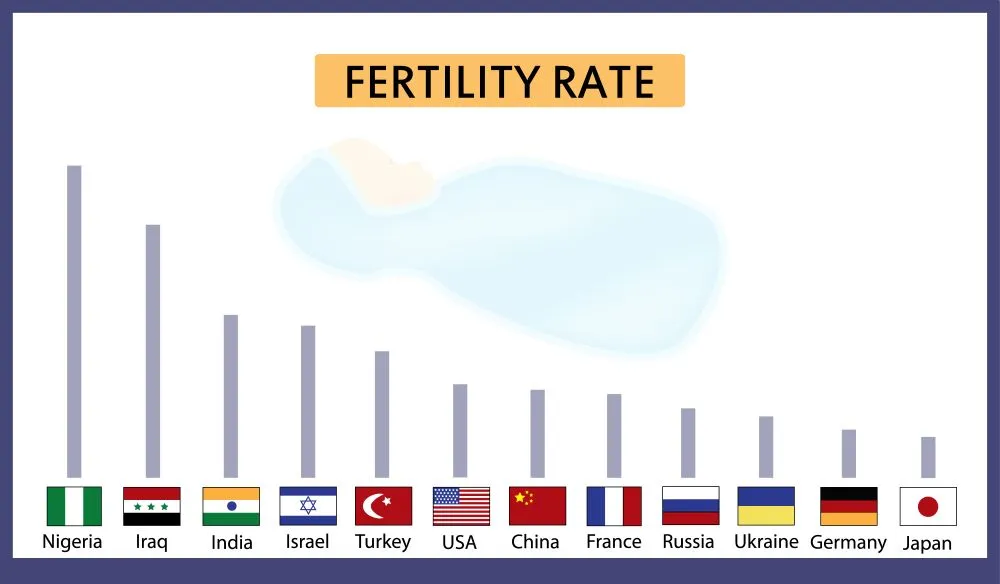
Even so, China’s population has continued to decline. The total fertility rate fell to roughly 1.0 by the mid-2020s, well below the 2.1 needed to keep the population stable. In 2022 the country recorded its first population drop since 1961, and in 2023 India overtook China as the world’s most populous country. Chinese provinces have since shifted from penalising large families to offering tax breaks, housing subsidies and cash bonuses to encourage more births, with limited success so far.

References (click to expand)
- Kane, P. and Choi, C. Y. (1999). China's one child family policy. BMJ.
- One-child policy. Encyclopaedia Britannica.
- Zhang, J. (2017, February 1). The Evolution of China’s One-Child Policy and Its Effects on Family Outcomes. Journal of Economic Perspectives. American Economic Association.
- The End of China's One-Child Policy. The Brookings Institution.
- Three-child policy. Wikipedia.