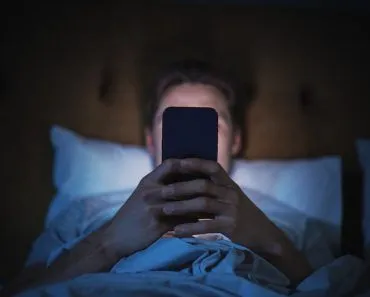
You feel sleepy in a boring lecture because the setting mimics the cues your body links with sleep: a dim, warm room with little blue light to keep the brain's master clock alert, and a static, one-directional talk that offers almost no physical or mental stimulation. With nothing demanding your attention, your brain conserves energy and drifts off.
A professor in a tweed jacket is standing at the front of the lecture hall, rambling on about chromosomes, the Neoclassic period, or geometric theorems. Several heads around the classroom begin to bob and jerk within the first fifteen minutes. An hour later, before the dismissal bell rings, nearly half the class is in a state of stupor – some sleeping, others holding their heads up, fighting back their drooping eyelids.

This can’t be encouraging for the professor doing his best to educate his students, and probably isn’t good for the learning process either. The question is, why is fatigue such a common companion to boring lectures?
All About Environment
There’s no denying that we humans are creatures of habit, and one of our favorite daily habits involves cuddling up in a warm, dimly lit room and laying our heads down for a good chunk of sleep. No, that isn’t a reference to your college lecture hall, we’re talking about our bedroom. Our body gets used to certain environmental cues and responds to them naturally, so when we’re sitting slouched down in a comfy chair, near the dimly lit rear of an auditorium, our body associates this with our typical sleep pattern, and lets our body drift off to dreamland.
However, there is a more scientific element as well. Research has shown that blue light naturally stimulates our mind and tells our body to wake up. This is no accident: it is tied to the color of the sky in the morning, the daily flood of light that starts our day. Special light-sensing cells in the retina, packed with a pigment called melanopsin, are tuned to blue light and wire directly to a tiny region of the brain called the suprachiasmatic nucleus (SCN). This bundle of roughly 20,000 neurons sits in the hypothalamus and acts as our body's master clock, regulating the sleep-wake cycle like a built-in alarm. When blue light hits those retinal cells, they tell the SCN that the sun is up, and it stimulates that area of the brain much like a strong cup of coffee.
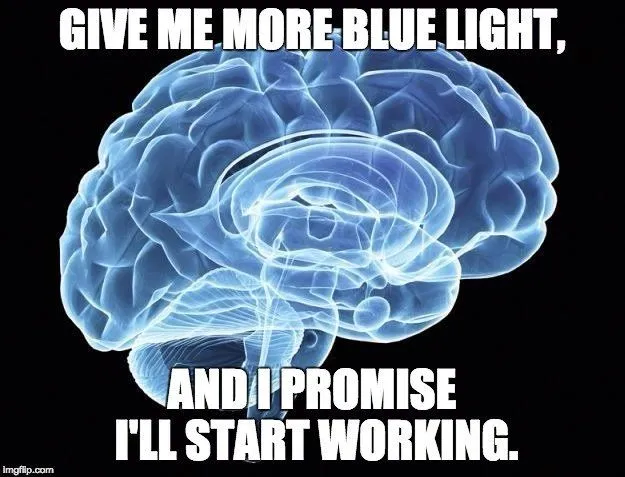
In an artificial light situation, however, like a lecture hall, the lights are typically low or dimmed, and certainly not blue in nature. If you’re being lectured with a projector in a darkened room, the situation is even worse. You may as well bring a blanket and a pillow, because you’re almost bound to feel drowsy in a lecture hall, even if the material is interesting to you.
The Science Of Stimulation And Boredom
Our initial question was concerned with boredom’s relationship to fatigue, but that isn’t the only factor in play, as we saw above. That being said, suprachiasmatic nucleus stimulation is only one way to “wake up” our brain and body. Physical and mental stimuli are crucial to prevent unexpected naps; for example, when you’re driving in a car, opening the window or blasting music are two ways to prevent fatigue when the long, endless road stretches out before you like a one-way trip to boredom.
Similarly, physical stimulation in an academic setting, such as interaction with the professor or other students, keeps our minds alert and engaged. Think about it, how often have you fallen asleep in the middle of gym class? Or while you are having a heated debate with another classmate during a seminar? However, in a lecture hall, you are typically static – not moving, speaking, or interacting. Your pencil may be lazily scribbling down notes, but a lecture hall presents a weak, uni-directional source of stimulus for the brain, with the lecturer’s voice bordering on “white noise” for some students.
When our brain activity is diminished, our body is more likely to feel sluggish and easily distracted. When nothing is directly “happening”, our bodies have evolved to embrace that period of inactivity and sleep in order to conserve energy. We see the same thing happen when we sit down to watch a movie, read a book, or take a long drive.

More specifically, researchers led by Thomas Goetz have classified boredom into five different types: Indifferent, Calibrating, Searching, Reactant, and Apathetic. Studies have found that some personalities link directly to certain types of boredom, which can explain a great deal of our behavior. In their 2014 study, roughly 36% of the high school students sampled reported “apathetic boredom”, an especially draining state marked by low arousal in which a person fails to feel either positive or negative emotions. In other words, you may not hate learning about history, but you might not also love it, and when you’re in a static position without any physical, emotional, or mental stimulation, sleep is almost inevitable.
Why Do Afternoon Lectures Hit The Hardest?
If your 2 pm class feels like a personal battle against gravity, you are not imagining it. Beyond the dim room and the droning voice, your own body clock is quietly working against you. Most people go through a natural slump in alertness in the early afternoon, roughly between 2 pm and 4 pm, that sleep researchers call the “post-lunch dip.” The tempting explanation is that a big lunch is dragging you down, but the science says otherwise: the dip turns up even in people who skipped lunch entirely and have no idea what time of day it is. It is baked into the circadian rhythm, the roughly 24-hour internal clock we met earlier. In the early afternoon, the clock’s wake-promoting signal briefly eases off, and it is no longer strong enough to hold back the sleep pressure that has been quietly building since the moment you woke up.

Now stack that biological dip on top of a darkened lecture theatre, and it is little wonder heads start to nod. Encouragingly, the same research points to a simple counter-move: light. In one 2021 study of undergraduates, exposure to bright, blue-enriched light (around 1,000 lux) during the post-lunch window left students feeling noticeably less sleepy and sharpened their accuracy on a working-memory task, compared with ordinary dim indoor lighting. It is the same suprachiasmatic-nucleus trick the morning sky plays on us, only deployed at the worst hour of the day. So if your timetable insists on parking an important lecture right after lunch (and it usually does), a seat by the window is not laziness, it is chronobiology.
Can Lifestyle Changes Help?
No matter what physical, light-based or mental stimulation you are experiencing (or lacking), fatigue almost always arises from a genuine deficiency of sleep. Student life (particularly at secondary school and college levels) is characterized by high levels of excessive studying, new responsibilities, social demands and interests, extracurricular activities, and a feeling of invincibility (“Sure, I can stay up for three days partying and then make it to my 9am lecture on time”).
Drinking coffee and relying on stimulants to perk you up can also be dangerous, because there is an inevitable crash back to Earth (and exhaustion) when you artificially elevate your energy levels. Once that initial rush wears off, the sudden lack of caffeine attaching to our nerve cells seems intensified, and as those nerves bind with adenosine (a sleep-inducing connection), the effects seem magnified.
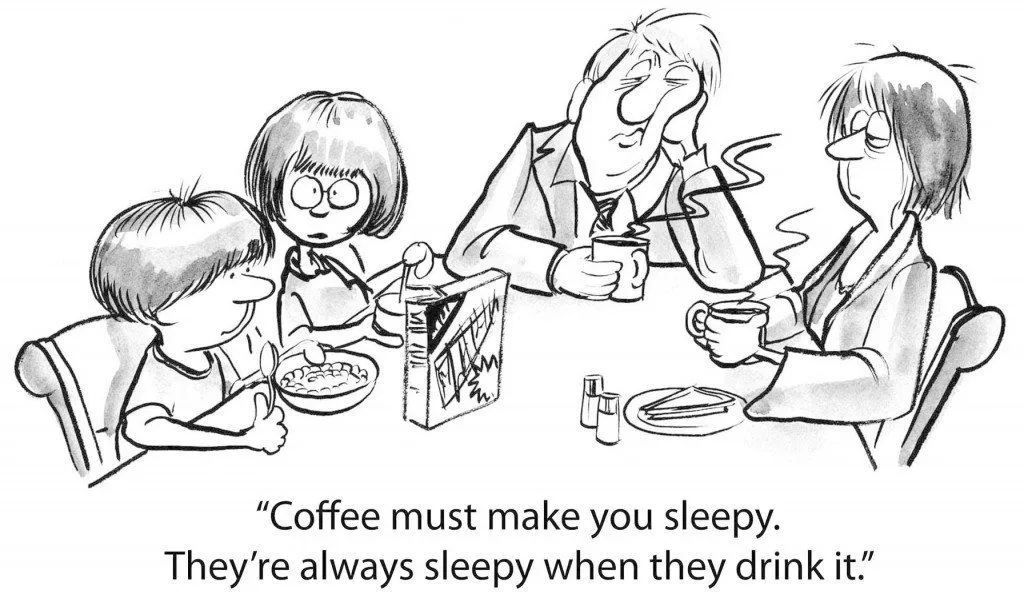
If you constantly find yourself nodding off to sleep in your lectures, don’t be too quick to blame it on a lack of stimulation, blue light, or interest in the subject matter. You may just need to grab an extra hour or two of sleep each night so your body isn’t craving rest, and cut down on your caffeine dependence. This will keep your body from snatching any available downtime for some shut-eye, particularly if your professor is watching!
How Can You Stay Awake During A Boring Lecture?
Fixing your sleep schedule is the long game, but what about the next 50 minutes, when the lecturer is three slides deep into the appendix and your eyelids are staging a mutiny? A handful of small, evidence-backed tactics can buy you genuine alertness in the moment.

Start with the things you can actually control. Given everything we now know about blue light and the body clock, the best seat in the house is the one nearest a window or under the brightest lights, not the cosy, dim corner at the back. Keep your brain in the game by making the input less one-directional: take notes actively in your own words, sketch quick diagrams, and, where the setting allows, ask a question, since interaction is one of the surest antidotes to that “white noise” effect. Even chewing gum has been shown to nudge alertness upward during attention-demanding tasks, and staying hydrated helps too, because even mild dehydration can deepen that sluggish, heavy-lidded feeling.
Caffeine still works, as long as you respect it. Health guidance puts a sensible ceiling at roughly 400 milligrams a day for adults (about two to four cups of coffee), and it is worth keeping the last cup well away from the evening so it does not wreck the very sleep you are trying to protect. The sharpest move of all is timing. A short nap of just 10 to 20 minutes before class can measurably cut sleepiness and lift performance, while a longer sleep tends to leave you groggy. Drink a coffee immediately before that quick nap and you get a double payoff: the nap itself clears out some of the sleep-signalling adenosine in your brain, and the caffeine then blocks whatever receptors are left, so you wake up sharper than either trick manages on its own.
References (click to expand)
- Circadian Rhythms. National Institute of General Medical Sciences (NIGMS), NIH
- Goetz, T., et al. (2014). Types of boredom: An experience sampling approach. Motivation and Emotion (Springer)
- Adenosine, caffeine, and sleep-wake regulation. Journal of Sleep Research. NCBI PMC
- Does Bright Light Counteract the Post-lunch Dip Among Undergraduate Students? Frontiers in Public Health (2021)
- How to Not Fall Asleep in Class. Sleep Foundation
- What Is a Coffee Nap? Sleep Foundation