The post-meal sleepiness known as a food coma (or postprandial somnolence) is driven by three overlapping mechanisms. Carbohydrate-heavy meals spike insulin, which helps tryptophan enter the brain and become the sleep-promoting neurotransmitter serotonin. The accompanying glucose surge silences the orexin and ghrelin neurons that normally keep you alert and hungry. And the parasympathetic rest-and-digest response diverts blood and energy to the gut, leaving the brain a little under-resourced. The combined effect typically peaks 30 minutes to two hours after a large meal.
*Yaawwnnnn*
Feeling tired and sleepy after a meal, especially a heavy or large one, is a common occurrence, but what makes this happen?
Scientists have not been able to pinpoint a single process to explain post-meal sleepiness, popularly known as a “food coma”. Several overlapping explanations have been found, from evolutionary adaptations to small signaling molecules that control hunger, satisfaction after meals, and the sleep-wake cycle.
A Few Hours Ago To A Few Millennia Ago
Understanding post-meal behavior requires us to first understand our mannerisms before a meal. Before lunch, we may be hungry and a little tired from any work we’ve done, but on the whole, we’re still alert. After the meal, however, lethargy and drowsiness take over. Then, a few hours later, after your gut has processed your lunch, you feel more alert again.
One theory suggests that we have this kind of cycle because of how our hunter-gather ancestors feasted. Since they were dependent on hunting and foraging for food, our prehistoric ancestors needed to be alert to find or catch food. However, after they’d eaten, a slew of different hormones took over, many of which promoted rest. They saw a meal, they conquered a meal, and they had survived. At that point, they could relax until they began to feel hungry again.
It’s Them, It’s The Hormones!
While this theory made sense to explain prehistoric humans, it didn’t sit right with scientists in relation to current human nature. We are not dependent on hunting for survival; food is accessible to us at almost any time of the day, throughout the year, in most parts of the world. We even have set routines around meals, so the desperation for seeking food is absent in this modern era.
When they dug deeper, they found that hormones and their effects on the activity of the brain enter the picture.
Some hormones responsible for hunger and feeding, such as orexin and ghrelin, also seem to control wakefulness. Orexin increased vigilance in a hungry person, and ghrelin has been shown to play a role in reducing energy expenditure (or ATP molecules consumed) during times of hunger. Such a correlative observation seems to extrapolate directly from the theory pertaining to the hunting-and-foraging human.
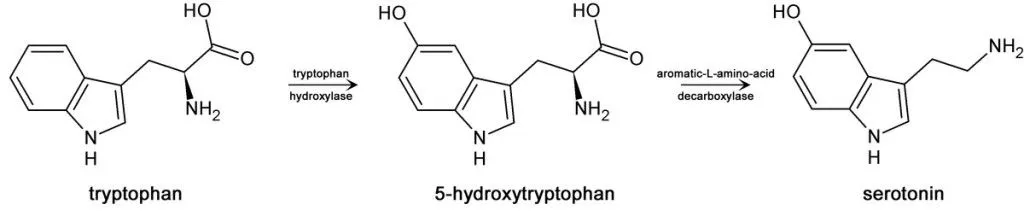
Other studies hint at the involvement of serotonin in this process. Serotonin is a neurotransmitter (a chemical that passes messages along neurons) that promotes sleep. Its precursor is tryptophan, an amino acid that can only be supplemented via our diet. However, tryptophan in the bloodstream doesn’t simply get converted into serotonin.
Studies have shown that a heavy meal helps in this step, but how? The spike in blood glucose levels helps in the uptake of tryptophan, which is otherwise not possible in a normal-sized meal. The serotonin that is produced helps in short-term satiety, along with an urge to nap after the heavy meal.
Additionally, the large amounts of glucose have a reversing effect on the neurons that were previously affected by orexin and ghrelin; while they were previously making the person feel alert, the presence of glucose molecules countered this. A higher amount of glucose switches off the neurons that respond to those two hormones. This cuts off the vigilance they promote, which encourages sleep.
Digestion: A Priority
Eating a large meal diverts the blood, energy and attention of the body towards the gut. This is because, as soon as we ingest food, the process of digestion begins. Subsequently, there is the release of digestive juices from the stomach, pancreas, and the intestines, and the remodeling of the gut to enable digestion, all of which are processes that require a lot of energy. Lastly, sustaining these steps until the end of digesting a large meal increases and prolongs the energy requirements.
In a bid to divert more resources to digestion, the body reduces its blood supply to the brain and other organs, which leaves you feeling a little groggy.
This is the opposite of “fight or flight.” This is “rest and digest.”

In fact, we feel satisfied only after our food reaches the small intestine. A message of “nutritional satisfaction” of the body is immediately sent across to the brain, and the body stops being in vigilant mode due to hunger. This is why we don’t feel sleepy immediately after we eat, but after a short gap of about half an hour.
But Why Do You Feel Sleepy When You’re Hungry, Too?
Here’s the flip side that confuses a lot of people: you can feel just as drowsy before a meal, when your stomach is growling and you’ve skipped lunch. If a big meal makes you sleepy, why would an empty one do the same? The answer comes down to the one organ that really hates running low on fuel: your brain.

Your brain is only about 2% of your body weight, yet it burns through roughly 20% of the glucose-derived energy your body uses, which makes it the single largest consumer of glucose you have. It also depends on glucose as its main fuel and keeps almost nothing in reserve, since glycogen is the brain’s only stored energy and there isn’t much of it. In other words, the brain needs a steady, minute-by-minute delivery of sugar from the blood. As the Cleveland Clinic puts it, without enough glucose your brain simply can’t function properly.
So when you go hours without eating and your blood sugar drifts downward, the brain is the first to feel the pinch. Low blood sugar (hypoglycemia) commonly brings on extreme hunger, fatigue and weakness, and the brain is the organ that suffers the fastest and most noticeably when glucose drops. That foggy, heavy-eyed, “I could nap right now” feeling on an empty stomach is your under-fueled brain easing off the accelerator. (For reference, blood sugar is generally treated as low below about 70 mg/dL (3.9 mmol/L) in people with diabetes, and below roughly 55 mg/dL (3.1 mmol/L) in those without.)
It’s a neat symmetry. A huge meal floods the brain with the neurotransmitter chemistry that nudges it toward sleep, while skipping meals starves it of the glucose it needs to stay sharp. Either way the brain ends up dialing itself down, and you end up yawning.
Is It Normal, Or Should You See A Doctor?
For most of us, the occasional post-lunch slump is completely normal and nothing to worry about. It tends to be worse after a large, carb-heavy meal and fades on its own within an hour or two. The picture changes, though, if you feel wiped out after almost every meal, including normal-sized ones, or if the drowsiness regularly derails your day.

Frequent, heavy sleepiness after eating can occasionally be a clue to something underlying. Conditions that doctors link to excessive post-meal tiredness include type 2 diabetes, insulin resistance, sleep disorders such as sleep apnea, an underactive thyroid (hypothyroidism), and anemia. Fatigue can be a symptom of both high and low blood sugar, which is why a frequent slump is worth mentioning to a healthcare professional.
One specific culprit is reactive hypoglycemia, a dip in blood sugar that shows up within a few hours of eating (typically about two to five hours afterward) and is defined by glucose falling to roughly 55 mg/dL or lower, along with symptoms that ease once your blood sugar recovers. It can leave you feeling tired, shaky, sweaty, hungry and foggy after a meal rather than refreshed.
As a rule of thumb, see a doctor if the sleepiness is frequent or severe, if you feel dizzy or faint after meals, if you get shaky, sweaty or confused a couple of hours after eating, or if you also notice classic signs of diabetes such as excessive thirst, frequent urination or blurred vision. In those cases a simple blood-sugar check, and sometimes a longer glucose tolerance test, can sort out whether a food coma is just a food coma.
References (click to expand)
- Benton, D., Bloxham, A., Gaylor, C., Brennan, A., & Young, H. A. (2022, September 21). Carbohydrate and sleep: An evaluation of putative mechanisms. Frontiers in Nutrition. Frontiers Media SA.
- Gallagher, T., & You, Y.-J. (2014, January). Falling asleep after a big meal. Worm. Informa UK Limited.
- Nicolaidis, S. (2006, October). Metabolic mechanism of wakefulness (and hunger) and sleep (and satiety): role of adenosine triphosphate and hypocretin and other peptides. Metabolism. Elsevier BV.
- Spring, B. (1984, January). Recent Research on the Behavioral Effects of Tryptophan and Carbohydrate. Nutrition and Health. SAGE Publications.
- VanItallie, T. B. (2006, October). Sleep and energy balance: interactive homeostatic systems. Metabolism. Elsevier BV.
- Morselli, L. L., Guyon, A., & Spiegel, K. (2011, November 19). Sleep and metabolic function. Pflügers Archiv - European Journal of Physiology. Springer Science and Business Media LLC.
- Burdakov, D., & Adamantidis, A. (2020, June). Diet and sleep: is hypothalamus the link?. Current Opinion in Physiology. Elsevier BV.
- Does a large meal make you tired, and if so, why?.
- Mergenthaler, P., et al. (2013). Sugar for the brain: the role of glucose in physiological and pathological brain function. Trends in Neurosciences. PMC, NCBI.
- Hypoglycemia (Low Blood Sugar): Symptoms & Treatment. Cleveland Clinic.
- Hypoglycemia. Nemours KidsHealth.
- Food Coma (Postprandial Somnolence). Cleveland Clinic.
- Why You Get Sleepy After Eating. Sleep Foundation.
- Altuntaş, Y. (2019). Postprandial Reactive Hypoglycemia. The Medical Bulletin of Sisli Etfal Hospital. PMC, NCBI.