Table of Contents (click to expand)
A cold does not actually damage your taste buds; it blocks your nose. What we call "taste" is really flavor, which is taste plus smell. When mucus blocks aromatic molecules from reaching the olfactory receptors high in the nasal cavity (and through the retronasal passage during chewing), the brain only gets the five basic taste signals (sweet, sour, salty, bitter, umami) and food ends up tasting flat.
All of us know that annoying feeling when your nose turns into a faucet, the sneezes never cease, and you feel like your head could roll off your body at any moment. All those signs point to one truth…. you have a cold! Many people feel that relief will come in the form of warm beverages, soup, and bedrest, but colds dig a bit further into your misery and even make your food taste like nothing!
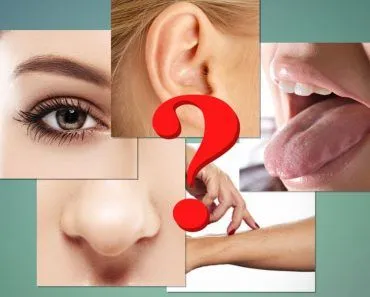
Understandably, you won’t be able to smell things due to all the mucus in your nose, but why does a cold steal away your sense of taste too? The answer to that question lies in knowing how our senses of smell and taste are closely interlinked. However, let’s first begin by identifying how we taste anything at all.
The Anatomy Of Taste
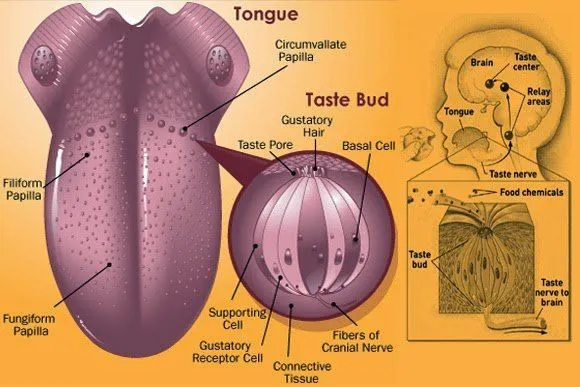
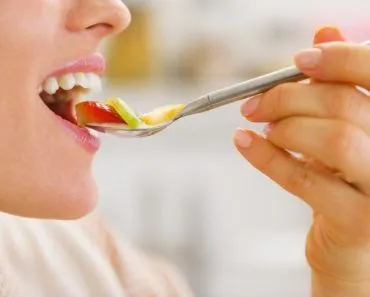
Our sense of taste is derived from the interaction of stimuli (such as food) with the sensory receptors in our mouth and throat. Within the mouth, the tongue and the palate (the roof of the mouth) are responsible for tasting most of that delicious pepperoni pizza you ordered.
If you closely observe your tongue, you will see that it is not smooth, but rather rough and bumpy. These tiny protuberances on your tongue are called papillae, which is where your taste buds reside. Our taste buds can contain as little as a single taste receptor or as many as 50 to 150 receptor cells.
When you put food on your tongue, the molecules in the food bind to and thereby stimulate the gustatory (taste) receptors. There are different receptors for different types of tastes that we associate with the five common tastes: sweetness, sourness, bitterness, saltiness, and umami (although there is recent research to identify taste receptors that also detect fattiness).
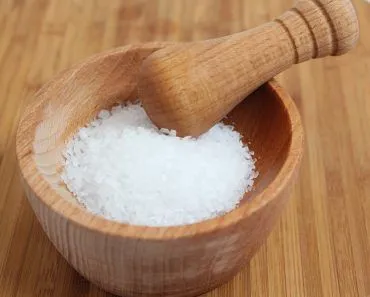
Receptors that detect sweetness, for example, will get activated when glucose, or some other similar carbohydrate, like fructose or sucrose, binds to it. Receptors that sense saltiness respond to the ions in salt: sodium and chloride ions. In this way, the millions of sensory receptors in the mouth create a taste profile of that topping-packed slice.
These taste receptors are connected to neurons that carry the taste of our hypothetical pepperoni pizza to the brain through one of three cranial nerves: the facial nerve (VII), the vagus nerve (X), and the glossopharyngeal nerve (IX). This information finally reaches the gustatory cortex in the frontal lobe of the brain. Here the brain deciphers that what you ate was a pepperoni pizza.
Smell Affects The Taste And Flavor Of Food
However, this is only the taste of food, not its flavor. What we colloquially considered “taste” is actually the flavor of food. During a cold, it is the perception of flavor that is compromised.
This connection is called the retronasal passage.
Consider our pepperoni pizza.
Before you take a bite, the familiar waft of bread, cheese and meat tingle the olfactory receptors in the nose. Even as you chew the pizza, molecules travel up the nasal cavity, further stimulating them, called retronasal olfaction. The information from the olfactory receptors in the nose reaches the olfactory lobes in the brain. The texture and temperature of the pizza, the so-called “mouth feel” is also registered.

All this information gets integrated to provide the “flavor” of the pizza. This integration occurs in a part of the brain lying just above the eye socket: the orbitofrontal cortex. This is why hot tea tastes fantastic, but the moment it’s cold, it just doesn’t provide the same pleasure!
So, Why Do We Lose The Sense Of Taste During A Cold?
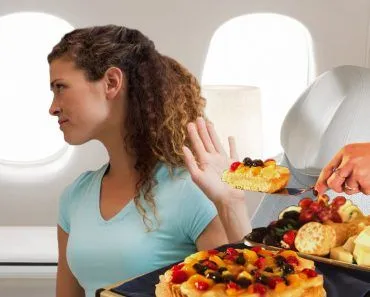
During a cold, mucus blocks the passage to the nasal cavity, preventing odor molecules from interacting with olfactory receptors in the nose. Without the sense of smell, the flavor profile of the food is incomplete.
That’s why food tastes “off” or “wrong” without our sense of smell.
One can have a total loss of smell (medically called anosmia) or a partial loss of smell, referred to as hyposmia. It can take a while for the sense of smell to come back after a cold or any viral infection in the upper respiratory tract, a condition called “postviral olfactory dysfunction.” The same mechanism became famous during the COVID-19 pandemic, when sudden loss of smell (and the loss of flavor that comes with it) emerged as one of the earliest and most distinctive symptoms of SARS-CoV-2 infection. In a few rare cases, the loss of smell can be permanent.
Certain medication taken during colds can also cause a loss of smell. In 2009, the FDA warned against zinc products applied to the nose, as they induced a loss of smell.
We don’t know what we’ve lost until we’ve lost it. This is certainly true for smell. We rarely consider the importance of smell in our everyday life, but it makes our food come to life, and provides some of the simplest, and most readily missed, sensory experiences.
Why Does Food Taste Bad, Bitter, Or Just “Off” When You’re Sick?
It is one thing for food to taste like cardboard, but plenty of people report something stranger: while they are sick, food turns actively unpleasant. A familiar meal can taste metallic, bitter, or vaguely spoiled, even though it is perfectly fresh. There is a name for this distorted-taste sensation. Doctors call it dysgeusia, defined by the U.S. National Institute on Deafness and Other Communication Disorders as a condition in which “a foul, salty, rancid, or metallic taste sensation persists in the mouth.”
Why does a humble head cold trigger it? Most of the time, the answer is still smell. Because flavor is built mostly from what your nose contributes, stripping out the aroma channel does not just mute food, it unbalances it. With the smell information missing, the brain leans harder on the five basic tastes and on whatever lingering signals it can find, so the salty, sour, and bitter notes that aroma would normally soften suddenly dominate. The Cleveland Clinic lists viral infections like colds, the flu, and COVID-19 among the common causes of dysgeusia, in which people often say “anything they eat tastes like metal, rancid or bitter.” A dry mouth from breathing through a blocked nose can make things worse, and the Cleveland Clinic notes that some medicines, including ones people reach for during a cold, can themselves distort taste. The reassuring part is that this distortion is almost always temporary: once the infection clears and the swelling settles, ordinary flavor returns.
How Can You Make Food Taste Better While You Have A Cold?

If smell is the channel that has gone quiet, the trick is to lean on the channels that still work: the five basic tastes, plus the texture, temperature, and mild “heat” that your mouth registers directly. Clinicians at the University of Texas MD Anderson Cancer Center, who advise patients whose taste and smell are dulled, suggest a handful of practical moves that translate neatly to a stuffy-nosed week at home.
Reach for stronger seasonings first. Ginger, mint, vinegar, fresh herbs such as basil, oregano, and rosemary, and bold aromatics like garlic and chili powder give the palate more to grab onto. Sour and tart flavors are especially useful: a squeeze of fresh lemon both adds a bright note and gets the saliva flowing, and as MD Anderson notes, “adequate moisture allows food to spread throughout the oral cavity and coat all the taste buds.” Playing with texture helps too, since crunch and chew are felt, not smelled. Pairing contrasting textures, for example crunchy apple slices or celery with sticky peanut butter, keeps a meal interesting when flavor is flat. So does temperature: chilled or frozen foods such as yogurt, smoothies, and frozen fruit sometimes register better than hot dishes. And there is a backdoor to flavor itself. Thinning and clearing the mucus, by staying well hydrated and easing the congestion, lets a few aroma molecules reach your olfactory receptors again, which is why food often starts tasting like something the moment your nose unblocks.
How Long Does The Lost Taste Last, And How Do You Get It Back?

For a run-of-the-mill cold, the loss is short-lived. As the congestion eases over a few days and the nasal passages open up, smell and therefore flavor come back on their own. The NIDCD puts it plainly: “people who lose their sense of taste because of respiratory infections or allergies may regain it when these conditions resolve.” In other words, the sense was never broken, just blocked.
Occasionally the dip outlasts the runny nose. When the rest of the cold is gone but smell stays muted for weeks, doctors call it post-viral olfactory dysfunction. The UK’s National Health Service advises seeing a doctor if your sense of smell does not return to normal within a few weeks. The encouraging news is that spontaneous recovery is more common after viral smell loss than after almost any other cause, and one study cited by the charity Fifth Sense found that more than 80% of people reported subjective improvement a year after the initial loss.
Recovery can also be nudged along with smell training, a simple at-home exercise with a real evidence base. In the original 2009 trial led by Thomas Hummel, patients sniffed four distinct scents, classically rose, eucalyptus, lemon, and clove, for around 10 seconds each, twice a day, for 12 weeks or longer, and those who trained recovered more smell function than those who did not. A 2021 systematic review in Frontiers in Neuroscience pooling data from over 2,000 patients reached the same conclusion, finding that people with post-viral loss benefit more from longer courses of training. It is a low-cost, low-risk thing to try if your nose is slow to come back online.
References (click to expand)
- Nelson, G. M. (1998, June). Biology of taste buds and the clinical problem of taste loss. The Anatomical Record. Wiley.
- SMALL, D. M., BENDER, G., VELDHUIZEN, M. G., RUDENGA, K., NACHTIGAL, D., & FELSTED, J. (2007, September 10). The Role of the Human Orbitofrontal Cortex in Taste and Flavor Processing. Annals of the New York Academy of Sciences. Wiley.
- How does our sense of taste work? - InformedHealth.org - NCBI. The National Center for Biotechnology Information
- Taste Disorders. National Institute on Deafness and Other Communication Disorders (NIDCD), NIH.
- Dysgeusia (Altered Taste): Causes & Treatment. Cleveland Clinic.
- Lost your sense of taste or smell? 8 tips for eating well. The University of Texas MD Anderson Cancer Center.
- Lost or changed sense of smell. National Health Service (NHS), UK.
- Post-Viral Olfactory Loss. Fifth Sense (SmellTaste), UK smell and taste disorders charity.
- Hummel, T., et al. (2009). Effects of olfactory training in patients with olfactory loss. The Laryngoscope. Wiley.
- Yuan, F., et al. (2021). Steroids and Olfactory Training for Postviral Olfactory Dysfunction: A Systematic Review. Frontiers in Neuroscience. NCBI/PMC.