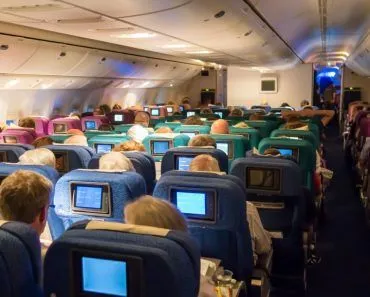
Airplane food tastes bad because flying dulls how we perceive flavor. Cabin humidity drops to around 10–20% (drier than most deserts), drying out the nose and weakening smell. Low cabin pressure further blunts sweet and salty tastes, while the roughly 85-decibel engine noise suppresses sweetness. On top of that, meals are cooked on the ground hours ahead and reheated.
How many times have you complained about airline food being bland and tasteless? How many times have you skipped ordering anything at all because it just looked unappetizing? Well, science suggests we might be a little unfair. According to several well-regarded studies, the real culprit behind that ‘bad food’ is often a change in our own ability to perceive taste. In other words, the fault lies partly with our bodies, not only with the airline. Let’s get into the actual details before you get offended…
The Fraunhofer Institute, a research organization based in Germany, conducted a study on why a dish that would be perfectly acceptable in a fine dining restaurant would seem bland while in the air. In a mock aircraft cabin, researchers tasted the same ingredients at sea-level pressure and at the lower pressure of cruising altitude, and the differences were startling.
The Cabin Air Is Far Drier Than The Air On The Ground
To keep the cabin pressurized, airlines must closely regulate the air inside, and that involves changing the very air we breathe. The air inside an airplane cabin is far drier than the air on the ground: relative humidity typically sits around 10–20% (sometimes as low as 5%), compared with the 40–60% we find comfortable indoors. In other words, it’s drier than the Sahara, which hovers near 25%. In an environment like this, your powers of taste and smell begin to drift away. Scent starts to fade the moment you step on board and then nosedives once the plane climbs, because your nasal passages dry out and your olfactory receptors get less to work with. Since roughly 80% of what we call “taste” is really smell, dulling your nose dulls the whole meal. The same goes for that glass of wine: poured at altitude, it can feel thinner and more acidic than the identical bottle would taste before take-off.
The Pressure Inside The Cabin Is Lower Than On The Ground
Although the cabin is pressurized, it is not pressurized all the way to sea level. On a typical cruise, the cabin is held at the equivalent of roughly 1,800–2,400 m (6,000–8,000 ft) of altitude, so the air is thinner than what you would breathe on the ground. That reduced pressure, working together with the dry air, blunts the senses. In the German study, salt was perceived as up to about 30% less intense and sugar around 20% less intense at cabin pressure, while sour, bitter and fruity flavors held up far better. It is a bit like trying to enjoy a meal with a head cold, and we all know a stuffed-up nose is no judge of good food.

Additionally, researchers discovered that the lower temperature and air pressure on an airplane both make it harder to detect odorants, which are airborne molecules that stimulate the nose’s sensory cells and play an important role in the tasting process. Essentially, it’s harder to smell on an airplane, so it’s also harder to taste.
The Noise Levels Are High During Air Travel
Flight noises include vibrations from the air striking the hull, as well as the roaring of the engines and winds. These collectively produce a rather constant ‘noise’ that can be as loud as 85 decibels, which is equivalent to city traffic. It might seem like a weird reason for food to taste bland, but researchers have found that loud noises inhibit our ability to appreciate sweet flavors. On the other hand, noise does help us to appreciate something called ‘Umami’. Umami is found in tomatoes and other hearty, rich or meaty foods, so at least tomatoes taste better during flight!
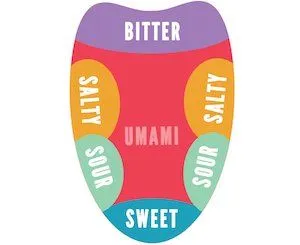
In fact, staff at Lufthansa famously noticed that passengers were drinking nearly as much tomato juice as beer on flights – a shocking discovery for a German airline, since Germans traditionally love beer. 48 participants sampled tastes in both a quiet room and one made to sound like an airplane cabin. Each volunteer rated the foods for flavor and stated how much they liked them. Background noise led to the foods being rated less salty or sweet. They were also perceived as more crunchy. Researchers concluded that the “plane cabin” inhibited people’s ability to taste sweet flavors.
The Method Of Food Production Is Different
Okay, so maybe not all of this is your fault. Some of the blame really does sit with the meal itself, not just the cabin conditions. Preparing and serving tasty food for a few hundred people above the clouds is not an easy task. Due to food safety standards, all meals must be cooked on the ground, which demands that the food be robust. Those mass-production requirements definitely tie a chef’s hands. The final product might not be similar to what they envisioned, as the food they prepare goes through plenty of hardships before consumption.
After the food is prepared, it’s chilled and stored until it’s time to load it onto a truck and, finally, onto the plane where it’s served to passengers, possibly hours later. Food that has been cooked, chilled, and then reheated inevitably loses something along the way, and meat in particular tends to turn dry and tough.
What Can Be Done?
Basically, we can’t use the same recipes for airline meals that we would use on the ground, but that doesn’t mean meals served on airplanes can’t taste just as good. Apparently, chefs have been trying to master the art and science of adapting recipes to changes in how food tastes at high altitudes. For example, meals served in first-class are prepared differently. They are prepared in a manner that takes the re-heating process into account so they’re not overcooked.

Since sweet and salty foods suffer the most, airlines have begun to add more salt and spice during preparation to give their food some added vigor. Although this service is limited to first-class passengers, everyone needs to be patient until better solutions for mass food production are found that take into account all the changes that happen when we fly. Until then, keep in mind that food flavors like cardamom, curry and lemongrass taste especially good at cruising heights!