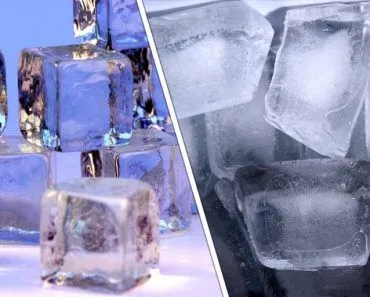
The coldness of water suppresses the taste of certain unwanted impurities in the water that are amplified if the water is warm. Also, taste is a relative term and varies from person to person.
After coming home from a long trip or finishing a gruesome daily workout, most people long for a cool glass of water. Nothing quenches our thirst like this fundamentally important liquid. However, if someone gives you a glass of warm water when you’re thirsty, you probably won’t like the taste. On the other hand, if someone puts ice in that glass, the flavor appears to change completely.
What’s the reason behind this change of taste accompanying a change in temperature? Is it just you or does this happen to everyone? If you’ve ever thought about these questions and desperately want to know the answers, you’ve come to exactly the right place.
A Little Something About ‘Taste’
In school, we all learned about the five senses that our body possesses, taste being one of them. We also learned about the tongue, a sensory organ that has thousands of taste buds helping it detect different tastes. But what is taste? Is it just a sensation, a chemical reaction or some gimmick of the mind?
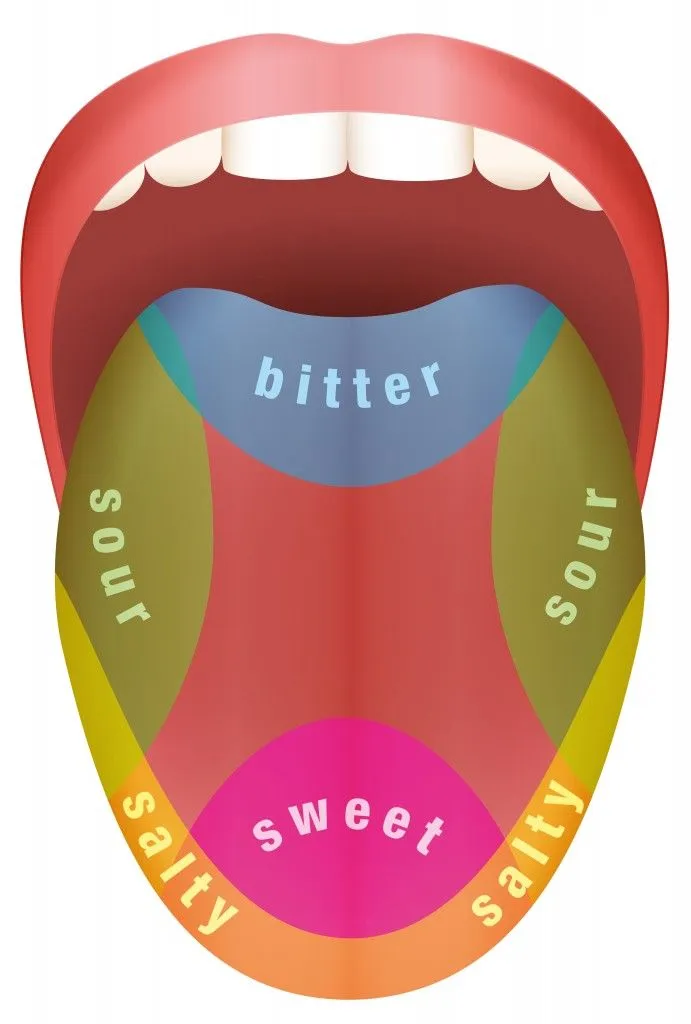
Modern taste science recognizes five basic tastes: sweet, sour, salty, bitter, and umami (the savory taste of glutamate, officially classified in 2002). Researchers have also proposed oleogustus (the taste of fat) as a candidate sixth taste. And contrary to the old textbook “tongue map” that assigns each taste to its own region, all five basic tastes can actually be detected across the entire tongue wherever taste buds are present.
The word “taste”, more formally known as “gustation”, refers to the sensations developed by the taste cells on the front, back and sides of our tongue when molecules from the food or drink being consumed attach to these cells and send signals to our brain. Hence, taste can be considered a mix of different chemical reactions taking place on the tongue.
How Does The Tongue Detect Different Flavors?
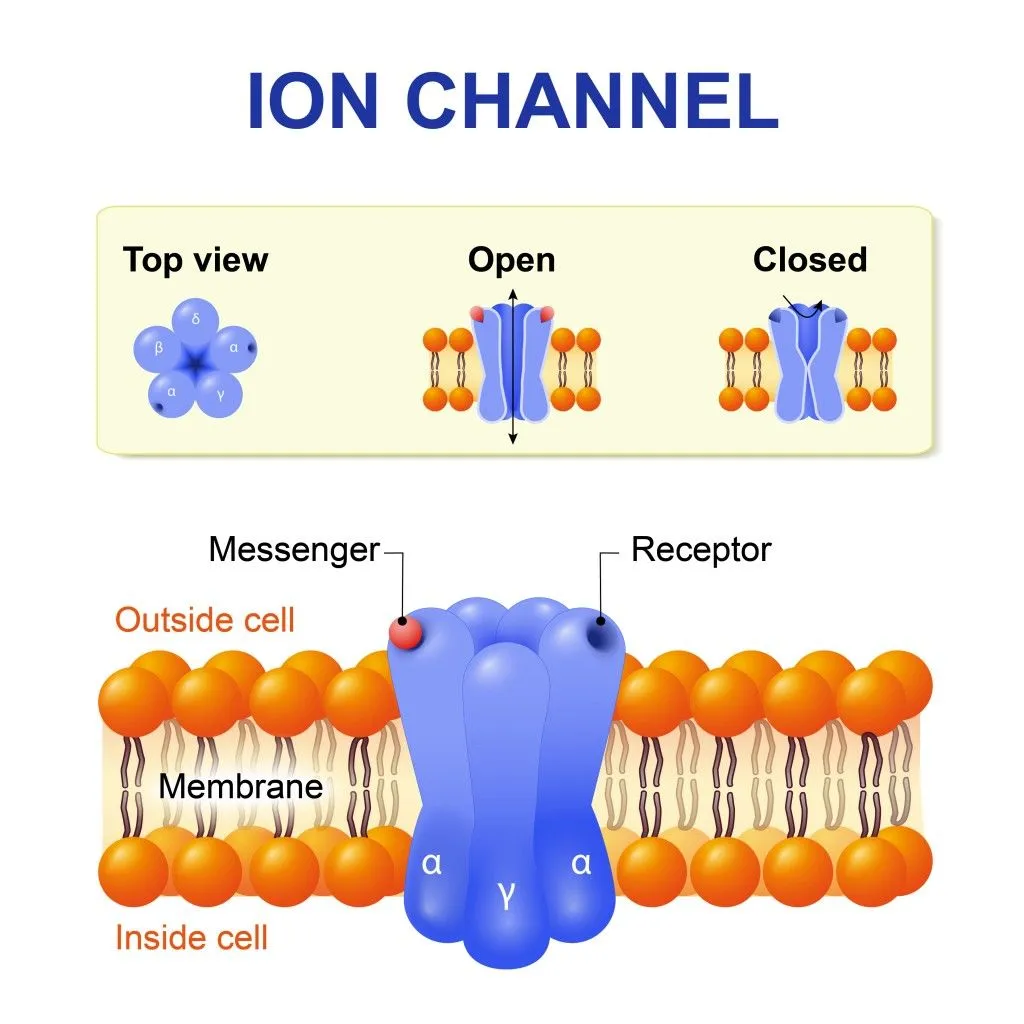
Different tastes, such as salty, sour and sweet, are sensed differently. Saltiness is partly detected by epithelial sodium channels (ENaC) in the membranes of taste receptor cells, which allow Na⁺ ions to flow into the cell. In humans, ENaC accounts for only about 20% of salt perception; the remainder uses an amiloride-insensitive pathway that researchers are still characterizing. Once the cell depolarizes, it releases neurotransmitters that pass the sensation to axons (nerve cells that carry taste information to the brain).
Sourness is triggered when protons (H⁺) from acids such as citric or acetic acid enter taste cells through OTOP1, a proton-selective ion channel identified in 2018 by Emily Liman’s lab at USC. Bitter compounds, on the other hand, are detected by the TAS2R family of G-protein-coupled receptors (about 25 in humans). When a bitter molecule binds, it activates the G-protein gustducin, which triggers a PLCβ2/IP₃ cascade that releases calcium inside the cell and depolarizes it.
Sweet molecules bind to the T1R2/T1R3 heterodimer, a G-protein-coupled receptor whose Venus flytrap domain closes around the sugar in a lock-and-key fashion. Only chemicals of a specific shape can fit in the binding pocket and initiate the response. Once these chemicals are bound, changes inside the cell lead to the release of neurotransmitters, which send the signal to the brain. The better the fit, the higher the “sweetness potency” of the substance.
What Does Water Taste Like?
Growing up, we all learned that water has no taste. However, when we drink this colorless life-giving fluid, we experience some kind of taste sensation on our tongue. For ages, people simply thought that it came from the minerals and salts dissolved in the water, but even pure distilled water has something akin to a taste. So… what is accountable for this pseudo-flavor?
First of all, to be clear, distilled water is supposed to be tasteless. However, as soon as it is taken out of the distillery, a certain amount of carbon dioxide and oxygen gas dissolves in it. Also, if you pour such pure water in a glass, the impurities present in the glass (however small in quantity) will mix with the pure water, altering its taste slightly. Again, whenever we eat food, certain minute food particles stick around in the mouth and on the tongue; the moment we take the first sip of water, they mix in, providing the water with a specific taste.
Why Does Cold Water Taste Better?
Chilling water actually suppresses some of these “bad” factors that alter the taste of pure water. Cold dulls the sensitivity of your taste receptors (particularly to bitterness and sweetness) and lowers the volatility of dissolved compounds such as chlorine and sulfur, so any off-flavors register more faintly. Any impurities that make warm water taste slightly different are picked up much more easily on the tongue.
Try it yourself; put some sugar or salt in a glass of water and taste it at different temperatures. You will experience the difference in sensitivity immediately.
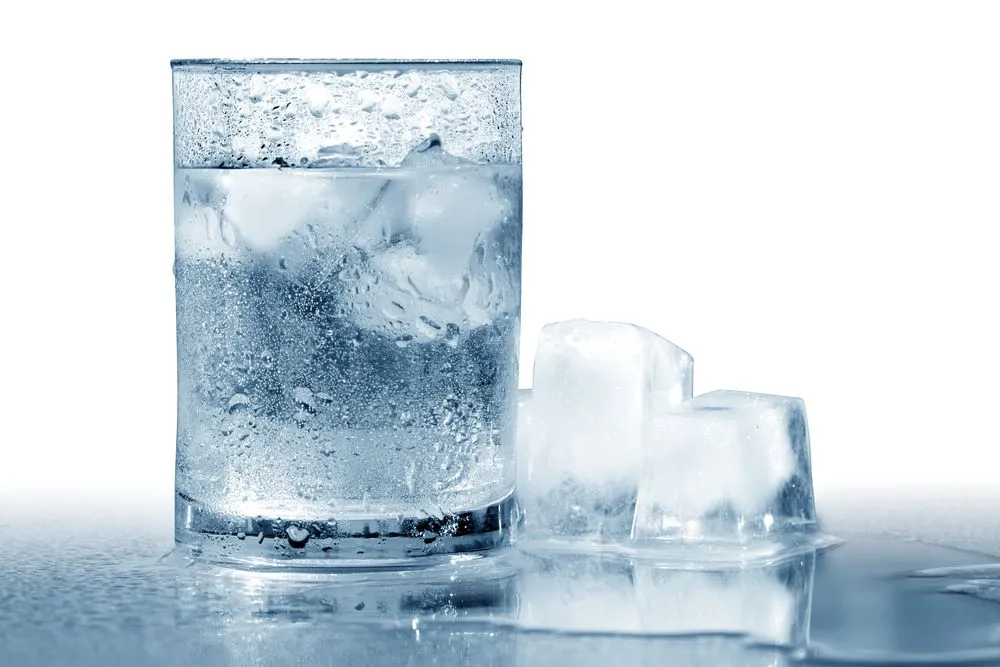
Also, when the body is tired after strenuous work or heat, the temperature of the body rises. In such a situation, cold water helps to bring the body temperature down quickly and effectively, providing a refreshing feel in the process.
Another possibility is the fact that water is an acquired taste, a preference that an individual develops over many years. A person living in the poles will not like water to be as cold as someone living in the desert may prefer. Many of us might associate warm water with stagnant, uncovered water, as anything cold is inherently considered “fresh”; that psychological factor may be hard to avoid when sipping a glass of warm H2O.
Why Does Warm Water Taste Bad?
If cold water gets all the love, warm water gets all the complaints. Pour yourself a glass, let it sit on the counter for an hour, and that first lukewarm sip suddenly tastes flat, faintly stale, almost heavy. So what flips between the two?

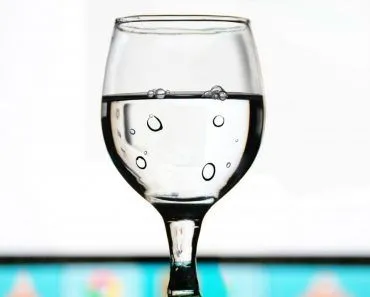
Part of the answer is plain physics. Cold water holds on to dissolved gases like oxygen, nitrogen and carbon dioxide that give a fresh glass its crisp, lively mouthfeel. As water warms, those gases become less soluble and slowly escape, which is exactly why you see tiny bubbles cling to the inside of a glass left standing. The U.S. Geological Survey notes that gases are simply less soluble in warm water, because the faster-moving molecules can no longer hold as much dissolved gas. Strip that dissolved air away and what is left tastes dull.
The bigger surprise hides on your tongue. Many taste receptor cells rely on a heat-activated channel called TRPM5, and its current ramps up steeply as the tongue warms from roughly 15 to 35 °C (59 to 95 °F). Researchers led by Karel Talavera showed in 2005 that warming the tongue markedly boosts the nerve response to sweet compounds, and TRPM5 also helps carry bitter and umami signals. In plain terms, heat turns up the volume on taste, so the faint bitterness from chlorine, dissolved minerals or whatever trace impurities the water carries registers far more loudly than it would ice cold. Cold mutes those off-flavors; warmth amplifies them.
Do Other Cold Drinks Taste Better Too?
Water is not the only drink that lives and dies by its temperature. Picture a soda: ice cold, it is sharp, fizzy and bracing; left to go warm, it turns into a flat, cloyingly sweet syrup that few people want to finish. The same two mechanisms are at work, just turned up louder.

Carbonated drinks live on dissolved carbon dioxide, and CO2 obeys the same rule as any other gas: it stays dissolved far better in cold liquid than in warm. That is why a chilled soda keeps its bubbles and its tangy carbonic-acid bite, while a warm one quickly goes flat as the gas escapes.
Then there is the sweetness problem. Because the TRPM5 channel cranks up sweet perception as your tongue warms, a soda tastes noticeably sweeter, sometimes sickly so, once it loses its chill. The same line of research that explains warm water also explains why warm cola tastes syrupy and why a lukewarm beer tastes flabby and harshly bitter. Chilling a drink tames both the sweetness and the bitterness while locking in the fizz, which is why almost everything from lager to lemonade lands on the table cold. It is also a cousin of why food tastes different cold versus hot.
Purely Psychological?
Although the taste of water depends on many factors, such as temperature and mineral constituents, a lot of it might also be purely psychological. A 1997 study from the John B. Pierce Laboratory at Yale School of Medicine (Figaro & Mack) showed that infusing water directly into the stomach via a nasogastric tube didn’t satisfy thirst nearly as effectively as the act of drinking itself. In simpler words, the same amount of water can be given to two different people, but the one who drinks it from a glass will feel more refreshed and hydrated.
Having discussed all this, there are bigger problems to consider. The water crisis is now a global phenomenon, and we should all try to conserve as much water as possible, because one thing is pretty clear, whether cold or warm, water quenches our thirst like no other liquid on Earth!
References (click to expand)
- Shallenberger, R. S. (1997, January 1). Taste recognition chemistry. Pure and Applied Chemistry. Walter de Gruyter GmbH.
- How does our sense of taste work? - InformedHealth.org - NCBI. The National Center for Biotechnology Information
- Sour taste cells detect water (Zocchi, Wennemuth & Oka, Nature Neuroscience, 2017). Caltech.
- Tamborlane W. V.,& Weiswasser J. Z. (1997). The Yale Guide to Children's Nutrition. Yale University Press
- Talavera K, et al. (2005). Heat activation of TRPM5 underlies thermal sensitivity of sweet taste. Nature. PubMed / NCBI.
- Talavera K, et al. (2007). Influence of temperature on taste perception. Cellular and Molecular Life Sciences. PMC / NCBI.
- Dissolved Oxygen and Water. Water Science School. U.S. Geological Survey.