Table of Contents (click to expand)
- Why Do We Stretch?
- What Effect Does Stretching Have On The Body?
- How Does This Relate To Sleep And Stretching?
- Don’t We Yawn Before We Stretch Sometimes?
- Why Does It Feel So Good To Stretch?
- Why Do We Groan Or Make Sounds When We Stretch?
- Is The Morning Stretch Involuntary, Or Are We Choosing To Do It?
- A Final Word
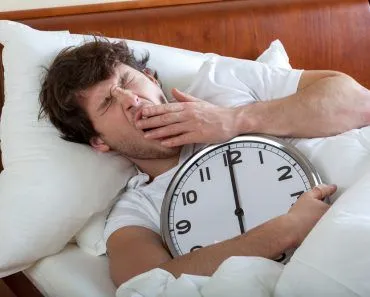
That involuntary stretch-and-yawn you do the moment you wake up has a name: pandiculation. While you sleep, your muscles relax, lose tension and lose water. Stretching restores their tone, gets blood circulating again, and triggers your central nervous system into wake mode. It’s why dogs and cats do their downward dog every morning too.
You open your eyes, then close them again to protect against the sudden and blinding light of morning. We rub them in consolation, let out a yawn, and starfish-stretch our limbs in opposite directions. At least, that’s what I do. You would be hard-pressed to find any person who can get up and immediately be physically ready for the day, or even weirder yet, doesn’t stretch their body at all!
So, let’s look at two things, why do we stretch our bodies when we wake up, and is stretching actually important?
Why Do We Stretch?
Ready. Steady. Go!
Most people associate stretching with sports or physical exertion. When you just read the phrase “Ready. Steady. Go!”, you likely pictured runners or swimmers limbering up or shaking out their bodies before the pistol starts the race.

That being said, stretching is more than just a precursor to sports. While stretching does enhance physical performance (e.g., athletes limbering up before a race), it’s important to note that stretching, in general, and in any setting, is a good thing. David Nolan, a physical therapist at Massachusetts General Hospital, agrees with this notion. In an article published by Harvard Health Publishing, Nolan proposed that stretching needs to be a regular activity that everyone should do daily.
What Effect Does Stretching Have On The Body?
From the cardiovascular system to the nervous system, stretching helps us in many different ways. For instance, imagine that you’ve been sitting at your desk all day, staring at your computer for hours at a time. Maybe you’re a writer who happens to be writing about stretching. After a few hours of this activity, you’ll notice stiffness in your shoulders and at other joints in your body. Research indicates that this is rather common in individuals that spend more than 75% of their time sitting and working.
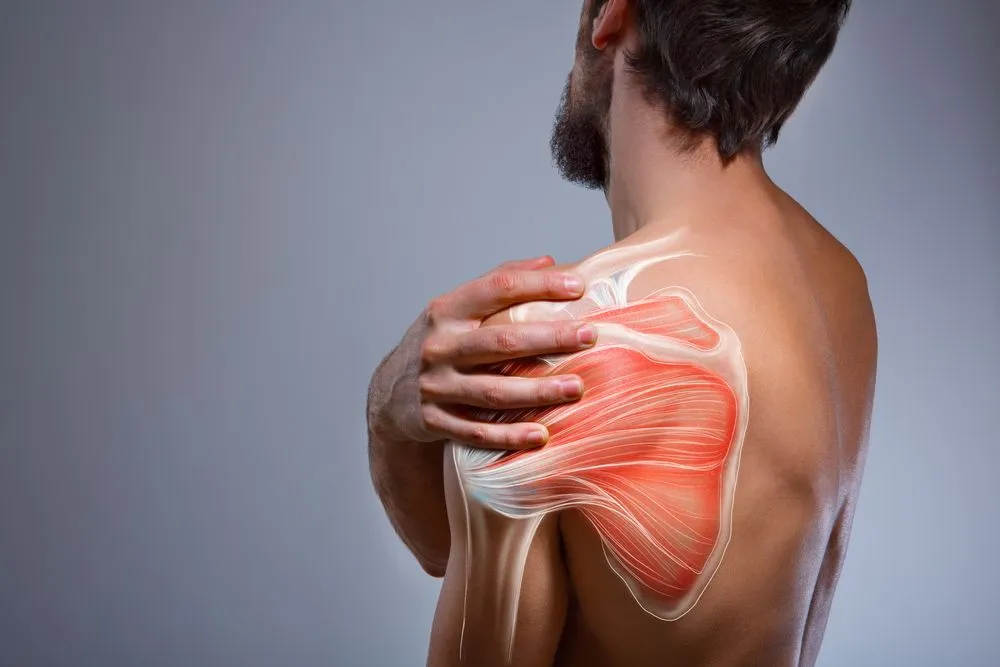
In such instances, doctors advocate that even stretching for as little as 3 minutes per hour of continuous sitting or standing can help counter everyday fatigue and aches.
How Does This Relate To Sleep And Stretching?
Now we come full circle, because what is sleep if not a period of continuous inactivity? On average, humans sleep for eight hours per night. During this time, muscles lose their natural tension or “tone” that they otherwise maintain in their relaxed state. Similarly, when we sleep, our bodies continually lose water, mainly through breathing out water and sweating, and our muscles are the first organs to lose that water. This loss of tone, along with dehydration, is what makes us wake up feeling stiff.
This is why we default to stretching when we wake up. Stretching helps us regain muscle tone and relieve us of that feeling of stiffness. This phenomenon of stretching when we wake up is referred to as pandiculation, and it isn’t just common to humans, but other mammals as well.
Oooh, Big Stretch!
Think of dogs and cats and their spectacular renditions of the downward dog stretch every time they wake up from a nap. Even animals resort to pandiculation to limber up their soft muscles before they engage in any type of active movement.

Don’t We Yawn Before We Stretch Sometimes?
Now, let’s talk about yawning for a moment. We seem to yawn every time we wake up; it is one of the most innate behaviors we do, and it’s basically a stretch for the muscles of the mouth! This means that yawning isn’t separate from pandiculation, but is actually a sub-process of pandiculation.
Big Brain Move
Pandiculation doesn’t just help our muscles; it helps our brains as well. Pandiculating our muscles as soon as we wake up triggers our central nervous systems into action. It literally drives us into a state of arousal.
Furthermore, pandiculation has also been linked to stress relief. It seems silly that the first thing you need when you wake up is a healthy dose of stress relief, yet that might actually be exactly what we need. Pandiculation gives us the best chance to ensure that the start to our day is a good and well-prepared one, as opposed to a lazy and drowsy one.
Why Does It Feel So Good To Stretch?
Be honest: that first big stretch of the morning isn’t just useful, it feels amazing. There’s a reason for that, and it’s more than the simple relief of finally moving after lying still for hours.

Part of it is plumbing. When you lengthen a muscle, your body responds by pushing more blood into the area. Harvard Health describes how lower-body stretching squeezes the arteries in your legs, prompting the release of chemicals that make those vessels widen so more oxygen-rich blood can flow through. After a night of barely moving, that rush of fresh circulation registers as relief.
The bigger part is happening in your nervous system. Your muscles are packed with tiny sensors called muscle spindles whose main job is to track how far a muscle is being stretched. When you first reach into a stretch, those spindles fire a protective “that’s far enough” signal. Hold the position for a few seconds and they begin to settle, so a limb that felt tight a moment ago suddenly feels free. Physiologists call this rising comfort stretch tolerance, and that shift from resistance to ease is a big slice of the pleasure. You may also have heard that stretching unleashes a flood of feel-good endorphins, but it’s worth being honest: the direct evidence for an endorphin “high” from ordinary stretching is thin, so the circulation and stretch-tolerance story is the part scientists are confident about.
Why Do We Groan Or Make Sounds When We Stretch?
Ever let out an involuntary “aaahhh” in the middle of a giant morning stretch? You’re not being dramatic, and you’re definitely not alone. That sound usually rides along on the yawn that piggybacks onto your stretch.

A yawn is, mechanically, a deep gaping inhale followed by a hard exhale. As that big breath rushes back out past your vocal cords, you can’t help but voice it, the same way a sigh becomes audible. Layer that onto the muscle tension of a full-body stretch and a little groan, moan or even a comedy-villain growl pops out on its own.
Big Stretch, Big Voice
Here’s the fun part: among mammals, this is almost a private club. According to a 2024 study in Scientific Reports, humans share the trait of producing loud, distinct vocalizations while yawning with just one other species, the gelada (Theropithecus gelada), a highland monkey from Ethiopia. The same researchers found that geladas, like us, can “catch” a yawn just from hearing one, which hints that a noisy yawn may double as a social signal rippling through a group. So the next time someone hears your morning groan and yawns back, you’re sharing a behavior with one of your more distant primate cousins.
Is The Morning Stretch Involuntary, Or Are We Choosing To Do It?
You don’t decide to stretch when you wake up any more than you decide to blink in bright light. People search for “why do we stretch involuntarily” precisely because the urge seems to arrive on its own, and that instinct is correct: pandiculation is a reflex, not a choice.

The behavior is run from deep, ancient circuitry rather than the thinking part of your brain. Researchers place the yawn-and-stretch program among central pattern generators in the brainstem, the same kind of automatic neural machinery that handles breathing, swallowing and coughing, with the hypothalamus helping to switch it on. Because the wiring sits so far below conscious control, the stretch-yawn fires whether you want it to or not. The review that named pandiculation describes it bluntly as the involuntary stretching of soft tissue, occurring across most animal species at the boundary between sleep and wakefulness.
Just how hard-wired is it? We start yawning in the womb, long before there’s anything social or willful about it. You can stifle the outward show of a stretch if you really concentrate, the way you can muffle a yawn in a meeting, but you can’t talk your brainstem out of generating the urge. That’s the whole point: the reflex exists to reset your nervous system to the waking state and get your muscles ready to move, so your body doesn’t leave that job to a sleepy you who might forget.
A Final Word
Pandiculation, and stretching in general, is an important and vital process of the body. It boosts blood circulation, restores muscle tone, and gives us the best chance to have a good and productive day. So, tomorrow when you get up and inevitably starfish-stretch all over your bed, don’t feel bad! You’re just making sure that you’re fully prepared to start your day strong!
References (click to expand)
- The importance of stretching. Harvard University
- Why do we stretch when we wake up?. BBC Science Focus
- LV Kallings. (2021) Workplace sitting is associated with self-reported general .... United States National Library of Medicine
- Bertolucci, L. F. (2011, July). Pandiculation: Nature's way of maintaining the functional integrity of the myofascial system?. Journal of Bodywork and Movement Therapies. Elsevier BV.
- Lorenzo, Serra-Prat, & Yébenes. (2019, August 9). The Role of Water Homeostasis in Muscle Function and Frailty: A Review. Nutrients. MDPI AG.
- Yawning: Causes and Why It Happens. Cleveland Clinic.
- Pedruzzi, Francesconi, Palagi & Lemasson. (2024). The sound of yawns makes geladas yawn. Scientific Reports. National Library of Medicine.
- Leg stretching may improve blood flow and prevent strokes. Harvard Health.
- Mechanoreceptors Specialized for Proprioception. Neuroscience, 2nd edition. NCBI Bookshelf.