Table of Contents (click to expand)
Emotional pain often manifests in physical symptoms. A common one is a weird feeling in your stomach. Stress hormones, such as adrenaline and cortisol, change the blood flow and muscle contraction in the gut, and you may feel these changes as a discomfort in your stomach.
A broken heart can hurt more than a broken nail. If you’ve ever been through heartbreak, you know that the emotional pain it causes can be physically crushing. That tightness in your chest and the gnawing sensation in your gut aren’t mere figments of the imagination; they’re tangible physiological manifestations stemming from emotional anguish and distress.
Emotional pain possesses the peculiar ability to provoke unsettling sensations in the stomach. Whether it’s the sting of rejection, the grip of fear, or a flutter of excitement, these emotions often give rise to distinctive sensations, often described as knots, flutters, or a general churn in the gut. But why does the stomach become so obviously entangled in our emotional experiences?
Let’s delve deeper into this connection between our gut and our emotional life.

Emotional Pain Is Not Much Different From Physical Pain
If you’ve ever dismissed your feelings, attributing them to overthinking or mere imagination, it’s essential to recognize that emotional pain is just as genuine as its physical counterpart. It’s not a fabrication of the mind, but a tangible experience deserving of acknowledgment and attention.
fMRI studies have shed light on this parallelism, demonstrating that identical areas of the brain light up when individuals experience either physical pain or emotional pain. In experiments where patients lying within a brain scanner were subjected to a hot probe’s touch, an uncomfortable and briefly painful stimulus, akin to the discomfort of holding a hot coffee mug, the same parts of their brains lit up as when they looked at pictures of someone they had recently broken up with.
This shows that rejection and emotional pain trigger the same brain areas as physical pain, making them equally, if not more, distressing.
This pain that we experience, whether physical or emotional, is crucial, as it is our body’s way of telling us when a stimulus is harmful or dangerous. Therefore, when the brain detects pain, it triggers the body’s fight-or-flight response, preparing us to cope with stress. The chain of responses initiated as a part of the fight-or-flight response is responsible for the physical sensations we experience when we feel emotions.

Responding To Emotional Pain And Stress, The Cause Of Stomach Discomfort
Any stimulus, be it physical or psychological, that disturbs the body’s usual equilibrium (homeostasis) is a stressor. Emotional distress also acts as a stressor, prompting a stress response characterized by activating three primary systems: the sympathetic nervous system, the HPA (Hypothalamus-Pituitary-Adrenal) axis, and the immune system.
These three systems collectively drive your stomach-centered sensations when you are emotionally hurt. Let’s examine their roles individually.
The Role Of The Sympathetic Nervous System
The sympathetic nervous system plays a crucial role in our body’s response to stress.
The hypothalamus triggers the adrenal medulla (the endocrine glands sitting atop the kidneys) to release epinephrine and norepinephrine into the bloodstream. Acting as stress hormones, they bind to adrenergic receptors on cell membranes and initiate cellular responses.
One of the cell types that these hormones target is the muscles. Cardiac muscles and smooth muscle cells contract, leading to increased heart rate and blood pressure. These physiological changes are vital for redirecting blood flow to skeletal muscles, an essential part of a “flight” response.
Meanwhile, blood flow to the digestive system decreases, diverting resources to organs requiring heightened activity, such as the heart muscles. You feel the reduced blood supply to your stomach as a strange pain, as if your stomach has “dropped” inside you.
The Role Of The HPA Axis
The HPA axis is activated at a slower pace than the rapid activation of the sympathetic nervous system, and facilitates a more gradual response. It begins when the hypothalamus releases corticotropin-releasing hormone (CRH), which prompts the pituitary to release ACTH, which in turn stimulates the adrenal cortex to release cortisol. The cortisol, once released, further diminishes blood flow to the digestive tract, while augmenting blood supply to the heart muscles.
Both adrenaline and cortisol contribute to muscle tension in the chest and stomach, a consequence of altered muscle contractions. The change in muscle activity also contributes to a feeling of physical discomfort in these areas.
The Role Of The Immune System
The release of cortisol resulting from stress dampens the immune-inflammatory response, leading to a suppression of immune activity. When stress persists for long periods and becomes chronic, the immune system continues to weaken, potentially leading to the development of gastric ulcers and bleeding, causing significant discomfort in the stomach region.
It has been made abundantly clear through extensive research over many years that the well-defined connection between the brain and the gut is responsible for orchestrating the impact of emotional experiences on the stomach. Therefore, it becomes necessary to explore this connection in more detail.
The Gut-brain Axis
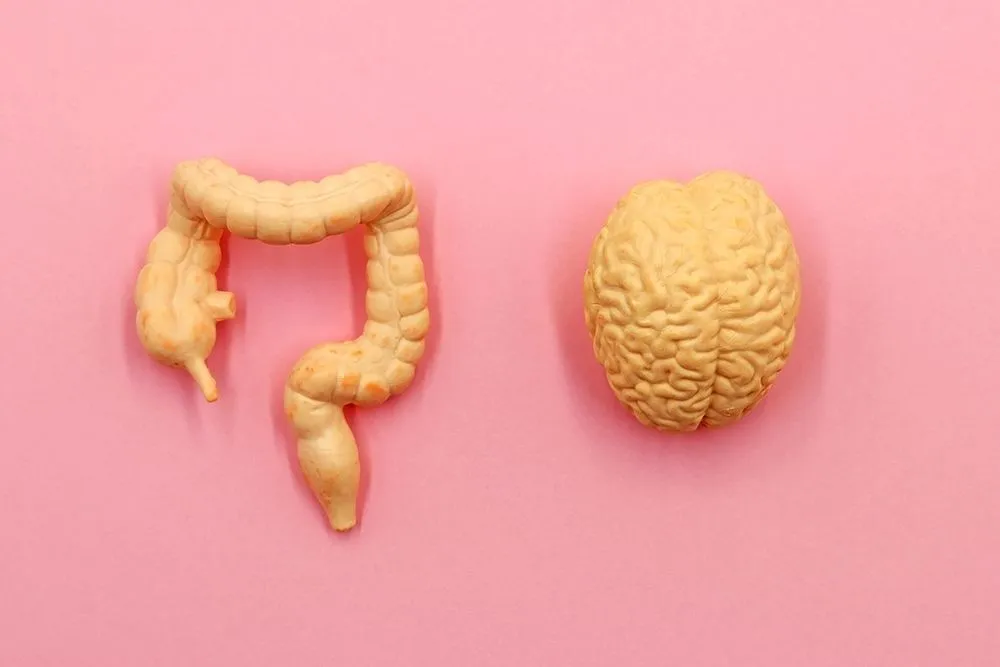
Extending from the esophagus to the rectum, the gastrointestinal tract harbors an intricate nervous system composed of roughly 400–600 million neurons, which we call the enteric nervous system or ENS. The ENS operates independently of the central nervous system (CNS), but the two communicate with each other. This bidirectional communication is referred to as the gut-brain axis.
This axis plays a pivotal role in translating emotional responses into physiological effects within the gut. One significant consequence of emotional pain or distress is its ability to influence gut motility. Elevated cortisol levels, triggered by stress, impact muscle activity in the digestive system and promote inflammation, disrupting the balance of your intestinal microbiome.
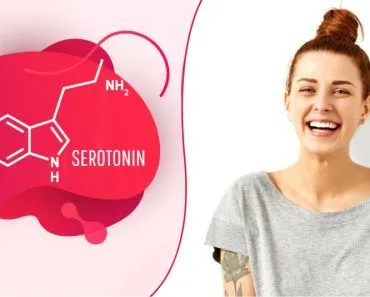
Such disruption in the intestinal microbiome can lead to changes in the release of serotonin, a critical neurotransmitter that influences both emotions and gut motility. 95% of serotonin is synthesized within the gut, and alterations in its levels can contribute to changes in gut motility, exacerbating physical discomfort in the stomach.
Which Emotions Do You Feel In Your Stomach?
Not every feeling shows up in the same place. In a landmark study published in the Proceedings of the National Academy of Sciences, researchers led by Lauri Nummenmaa asked 701 volunteers from Finland, Sweden and Taiwan to colour in blank body outlines, marking where they felt activity rise or fall during different emotions. The resulting “bodily maps” were strikingly consistent from one person, and one culture, to the next, which suggests these patterns are wired into us rather than learned.
So which emotion owns the stomach? According to the maps, disgust is the feeling most strongly localised to the digestive system and throat, the queasy, turning sensation you get when something repels you. Most other emotions register higher up the body: fear, anger and anxiety light up the chest as breathing and heartbeat quicken, while happiness and love produce a warm glow that spreads almost everywhere at once.
That said, the gut rarely stays quiet during strong emotion. As Johns Hopkins Medicine notes, nervousness can flood it with “butterflies” and anger can tie it in “knots”. The stomach, in other words, is less any single emotion’s home than a sensitive screen onto which many different feelings are projected.
What Does It Mean When Your Stomach “Drops”?
“My stomach dropped,” “butterflies,” “a pit in my stomach,” “gut-wrenching”: the language we reach for to describe emotion is full of the belly, and it all points to the same physiological event. When your brain registers something sudden or significant, whether it is a steep descent on a roller coaster, a near-miss in traffic, or catching the eye of someone you find attractive, it fires off a burst of adrenaline. That surge briefly diverts blood away from the digestive tract and disrupts the gentle, rhythmic squeezing (peristalsis) that normally moves food along. You register that abrupt change as a lurch, flutter or falling feeling in the pit of your stomach.

Why does the same sensation accompany both terror and excitement? Because the underlying machinery is identical. The thrill of a first date and the dread of a job interview both trip the same fight-or-flight switch; only the label your brain attaches afterwards, “good” or “bad,” differs. It is also why your stomach can drop the instant you see a particular person: attraction is arousing in the physiological sense, and your body reacts before your conscious mind has caught up.
The reason you feel it so vividly is that the gut is densely wired. Johns Hopkins Medicine describes the enteric nervous system as a kind of “second brain,” a sprawling mesh of nerve cells lining the digestive tract that chatters constantly with the brain through the gut-brain axis. So when your mental state shifts, your gut is often the very first place you notice it.
Effect Of Stomach Discomfort On Emotions
Just as emotions impact the gut, the gut also has a profound effect on emotions. For instance, changes in the gut microbiome caused by changes in diet or an illness can alter serotonin levels, which in turn can impact mood and lead to emotional distress.
Some studies suggest that abdominal discomfort during childhood is positively correlated with recurrent abdominal pain, anxiety, depression, and unhappiness in late adolescence. Furthermore, medications used to alleviate abdominal pain, such as Tylenol, have been found to alleviate emotional pain as well, likely due to the involvement of overlapping brain areas in both scenarios.
These findings suggest that there is an intricate interplay between psychology and physiology, indicating that good health in both aspects is essential for a healthy life. Therefore, we must regard our physical and psychological well-being with equal attention and care!
References (click to expand)
- Kross, E., Berman, M. G., Mischel, W., Smith, E. E., & Wager, T. D. (2011, March 28). Social rejection shares somatosensory representations with physical pain. Proceedings of the National Academy of Sciences. Proceedings of the National Academy of Sciences.
- Physiology, Stress Reaction - StatPearls.
- Go with your Gut: Increase Serotonin by Improving Gut Health.
- Emotion reliever?.
- Ayonrinde, O. T., Ayonrinde, O. A., Adams, L. A., Sanfilippo, F. M., O’ Sullivan, T. A., Robinson, M., … Olynyk, J. K. (2020, February 3). The relationship between abdominal pain and emotional wellbeing in children and adolescents in the Raine Study. Scientific Reports. Springer Science and Business Media LLC.
- Ferris, L. J., Jetten, J., Hornsey, M. J., & Bastian, B. (2019, June 25). Feeling Hurt: Revisiting the Relationship Between Social and Physical Pain. Review of General Psychology. SAGE Publications.
- Stress and The Sensitive Gut - Harvard Health Publishing.
- Nummenmaa, L., Glerean, E., Hari, R., & Hietanen, J. K. (2014). Bodily maps of emotions. Proceedings of the National Academy of Sciences, 111(2), 646-651.
- The Brain-Gut Connection - Johns Hopkins Medicine.