Table of Contents (click to expand)
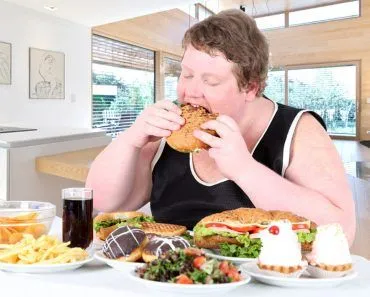
Yes, stress and anxiety can make you not hungry. During short-term stress the body enters fight-or-flight mode, and the hormones CRH and adrenaline suppress appetite while it focuses on the threat. If stress drags on, however, cortisol takes over and tends to increase appetite, which is why long-term stress can make some people eat more instead.
At first, I wanted to title this post “Why do people lose their appetite when they’re stressed?”, but then I edited it to “some people”. The change is because this is actually quite subjective; not everyone loses their appetite when they’re stressed. However, it’s true that stress usually shuts down a person’s appetite in the short term, i.e., when one is anxious for a little while.
In this article, we are going to discuss why some people lose their appetite when they are anxious about something (like an examination, an imminent job interview, a breakup etc.). First, however, let’s tackle a more basic question:
Why Do We Feel Hungry?
It’s a pretty straightforward question, isn’t it? We feel hunger when we have not eaten for some time (the exact value of that ‘some time’ varies from one individual to another; some people can last for a day or two without eating anything but water, while others can barely last a few hours before they start munching on something).

We eat food because it gives us energy – energy to do the most basic tasks, including reading, writing, walking, dancing etc. Basically, it just keeps our lives going. Humans need a bunch of molecules so that their bodies can do the most basic of operations that sustain life. The most critical of those molecules is glucose.
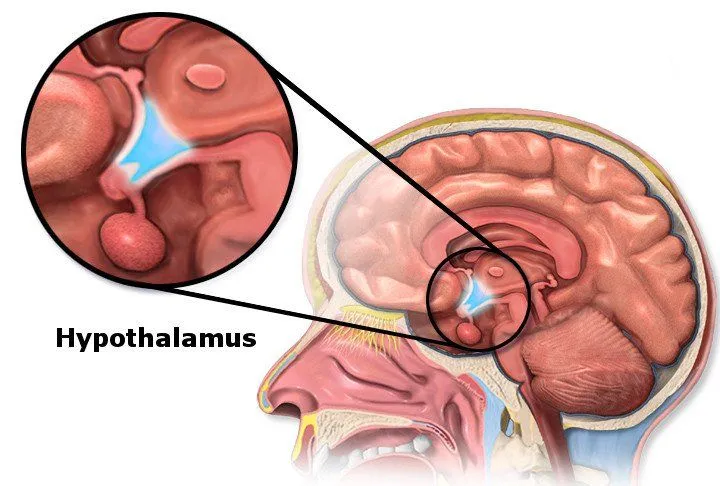
When your body runs low on glucose, your brain notices. Specialized glucose-sensing neurons in the hypothalamus (a part of the brain) track the level of glucose in your blood, and an empty stomach releases a hormone called ghrelin that travels to the same region. The hypothalamus interprets these signals and gives you the feeling of being ‘empty’, or in other words, you feel hungry.
Under normal circumstances, i.e., when you’re not stressed, the aforementioned system works like a well-oiled machine. But when you bring stress into the equation, the dynamics change.
What Happens To Your Hunger When You’re Stressed?
Stress and anxiety are a reaction to a perceived danger or stressor. For our ancient ancestors, stressors almost always came in the form of a physical threat to their lives, like a wild lion lurking close by, readying itself to pounce on you. This was, needless to say, a very strong reason to feel stressed.
When such a situation arose, the body entered fight-or-flight mode, which means the subject either readied themselves to engage in a fight with the lion or run for their lives.
 Today, thankfully, we’re not under direct physical threats from the beasts of the wild, but it doesn’t mean that there are no stressors present in our lives. The modern world has its own set of challenges and stressors that do a great job of stressing a person out.
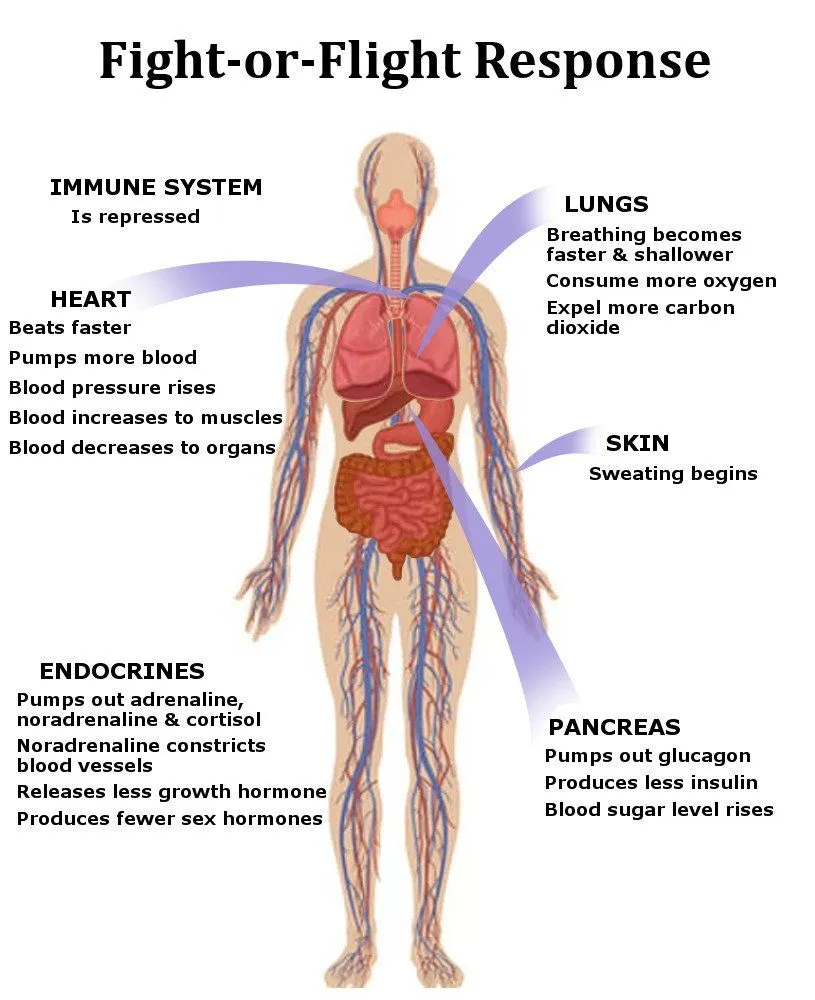
Once the body enters the fight-or-flight mode, it turns a ‘blind eye’ towards most of its other not-so-critical needs (like hunger) and focuses all its resources on either directly engaging with the threat (fight) or avoiding it in one way or the other (flight). Therefore, being face to face with a dangerous situation invariably kills one’s appetite for the time being.
From a biological standpoint, when you feel stressed, the hypothalamus produces corticotropin-releasing hormone (CRH), which temporarily suppresses your hunger. In addition to that, the brain also sends signals through the sympathetic nervous system to the adrenal glands (located atop the kidneys) to release the hormone epinephrine, commonly known as adrenaline.
The release of these hormones triggers the fight-or-flight response in the body, which, in turn, temporarily kills your appetite. This is why you don’t feel hungry when you’re stressed or anxious about something.
Why Does Stress Make Some People Eat More?
So far we’ve only talked about short bursts of stress, the kind you feel right before an exam or a big interview. But what about the stress that just won’t go away, the kind that lingers for days or weeks? Here the body behaves quite differently, and this is where the “some people” in the title really comes into play.
If a stressor sticks around, the adrenal glands switch from pumping out adrenaline to releasing a hormone called cortisol. And cortisol does the opposite of adrenaline when it comes to food: it actually increases appetite. According to Harvard Health, cortisol nudges the body to want more fuel, especially food that is high in sugar and fat, because that energy is easy for a stressed brain to burn. This is the reason that the very same situation can flatten one person’s appetite while sending another straight to the refrigerator.
So the short answer to why stress affects appetite so differently from person to person is timing. Acute (short-term) stress tends to switch hunger off, thanks to CRH and adrenaline, while chronic (long-lasting) stress tends to switch it back on (and then some) thanks to cortisol. How quickly you move from one phase to the other, and how strongly your body releases each hormone, varies from person to person, which is why no two people respond to a stressful week in quite the same way.
References (click to expand)
- Lawson, E. A., Holsen, L. M., DeSanti, R., Santin, M., Meenaghan, E., Herzog, D. B., … Klibanski, A. (2013, November). Increased hypothalamic–pituitary–adrenal drive is associated with decreased appetite and hypoactivation of food-motivation neurocircuitry in anorexia nervosa. European Journal of Endocrinology. Oxford University Press (OUP).
- Why stress causes people to overeat - Harvard Health. Harvard University
- CA Maglione-Garves. Cortisol Connection: Tips on Managing Stress and Weight. The University of New Mexico
- Negative Feedback Regulation of Hormone Release in the Hypothalamic-Pituitary Axis - courses.washington.edu
- Understanding the stress response - Harvard Health. Harvard University
- Chu B, Marwaha K, Sanvictores T, et al. Physiology, Stress Reaction. StatPearls. NCBI Bookshelf.