Table of Contents (click to expand)
Gambling is popular because it delivers a dopamine hit on an unpredictable, variable-ratio reward schedule, the same pattern that makes slot machines so hard to stop playing. Easy access (a phone and Wi-Fi are now enough), the thrill of risking something for a reward, and thinking errors like the gambler's fallacy keep people coming back.
Your favorite poker game may seem harmless when played with friends, but what about when the stakes involve thousands of dollars in cash? About 1.2% of the world's adults have a gambling disorder, and surveys suggest roughly 85% of US adults have gambled at some point in their lives. That's a lot of people. Despite knowing that gambling can be harmful, many engage compulsively and can sometimes even ruin their lives… but why?

What Makes Gambling Hard To Resist?
Dopamine Rush
Gambling is not always about money. According to Sydney University’s Gambling Treatment and Research Clinic, gambling offers the ‘universal appeal of risking something for a reward.’ This reward is not necessarily monetary. If you’re not gaining money from these games, then what are you gaining?
The reward is a dopamine rush. Dopamine is a neurotransmitter associated with pleasure and reward in the brain. Eating chocolate, going out with a friend, or having sex also give that same dopamine rush.
The lights and sounds of these gaming apps mimic actual gaming environments. This helps the gamblers feel like they’re in a casino, even though they’re eating Doritos with one hand and playing cards on a screen with the other!
Social Appeal
Another factor is social appeal, through sharing your results with friends. This is a typical strategy of online games, allowing you to share your scores by creating a ‘leaderboard’, which gives a sense of achievement. As a result, you get that feeling of dopamine from being rewarded by social approval and entertainment.
Coming back to the rewards associated with these games, dopamine is released while we play and win. Dopamine is an important link between reward and motivation, and the brain's reward system can be nudged by the same loops that drive other habits, gambling included. One important catch, though: dopamine isn't the simple "pleasure chemical" it's often made out to be. It tracks the anticipation of a reward and how surprising that reward is, which is exactly why the unpredictable payouts of gambling are so good at hooking us.

The Slot-machine Effect: Unpredictable Rewards
Here's the part that does most of the heavy lifting. If a slot machine paid out every single time, you'd get bored fast. If it never paid out, you'd quit. The trick is that it pays out sometimes, and you never know when. Psychologists call this a variable-ratio reinforcement schedule, and B.F. Skinner showed decades ago that it produces the most persistent behavior of any reward pattern.
In Skinner's experiments, rats that were fed every time they pressed a lever pressed it lazily. Rats rewarded at random pressed the lever far more often, and kept pressing long after the rewards stopped. Slot machines, scratch cards, and loot-box-style mobile games all run on this same unpredictable schedule. You keep pulling because the next pull might be the one, and your brain treats that "might" as a reason to play one more time.
Why Is Gambling Addictive?
It can be very difficult to recognize when you have crossed the line from entertainment to addiction.
Increased anxiety, the constant need to gamble with money, increasing the amount of money every time you gamble, resorting to illegal means to obtain money for gambling, and hiding from friends and family when you are gambling are all symptoms of gambling addiction.

Gambling affects all age groups, sexes and socio-economic groups. It’s not just a poor man’s problem, resulting from a desire to get rich quick. In the United States, the National Council on Problem Gambling estimates that about 2.5 million adults (roughly 1%) meet the criteria for a severe gambling problem in a given year, with another 5 to 8 million experiencing milder problems.
Certain psychological dispositions make people more prone to gambling. A systematic review of risk factors for gambling disorder points to a low tolerance for boredom, mood disorders like anxiety and depression, ADHD (attention-deficit/hyperactivity disorder), and impulsivity. Childhood trauma and unmet emotional needs can add to the pull as well.
Impulsive-Compulsive Spectrum
As a gambling addiction is a behavioral addiction, there are certain behaviors that can lead us to get hooked on gambling. According to research, gamblers are high on compulsivity. Compulsivity is a tendency to engage in certain repetitive behaviors in order to avoid a negative consequence. This act itself can lead you to a negative consequence, namely a gambling addiction. A gambler will want to continuously play in order to make up for their previous losses. Low impulse control leads you to continuously engage in activities that cause harm in the long run.
Beginner’s Luck

Imagine the first time you gambled and won… think back to the euphoria you might have felt. The initial small or large win creates an illusion in thinking that you can control luck better than others, or that you are a “lucky” person. This initial reward in early gambling is known as beginner’s luck, which encourages you to play more and risk more. Beginner’s luck gives the illusion of control in a game that actually has no control at all! It also affects your perception of success towards a particular game.
The Hot-hand Fallacy
The hot-hand fallacy is a belief of predicting future outcomes based on present successes. This means that when a gambler in a casino has won a few consecutive times, it makes one believe that today is their lucky day. They will be willing to raise the stakes as they have already won the last few times… so why not play a bit more?
The term ‘hot-hand’ is used in basketball when one player is performing well (has a hot hand) and everyone should pass the ball to them in order to win. The same thing can’t be said for a gambling hot hand, as that performance is based purely on chance, unlike the skill of a professional athlete.
The Gambler's Fallacy
The flip side of the hot-hand fallacy is the gambler's fallacy: the belief that if something has happened a lot recently, the opposite is now "due." If a roulette wheel lands on red five times in a row, it feels obvious that black must be coming. It isn't. Each spin is an independent event, and the odds reset to the same value every single time. The wheel has no memory of the last five spins.
This is one of the most common errors in a gambler's thinking, and casinos quietly lean on it. The boards that display recent results above a roulette table exist partly to encourage exactly this kind of pattern-spotting in a game where there are no patterns to find.
The Near-miss Effect
You don't even have to win to keep playing. When the slot machine stops on two jackpot symbols and the third lands just one position short, that "so close!" feeling is called a near-miss. In a well-known brain-imaging study, near-misses lit up some of the same reward circuitry that actual wins did, even though the player won nothing. Crucially, near-misses also made people want to keep gambling.
That's a strange reaction when you think about it. A near-miss is still a loss. But because gambling hijacks brain systems that evolved for skill-based learning (where almost succeeding really does signal you're getting better), your brain reads "nearly won" as "keep going, you're close." Slot machines are deliberately built to produce more near-misses than pure chance would, which is one reason they're so sticky.
Availability
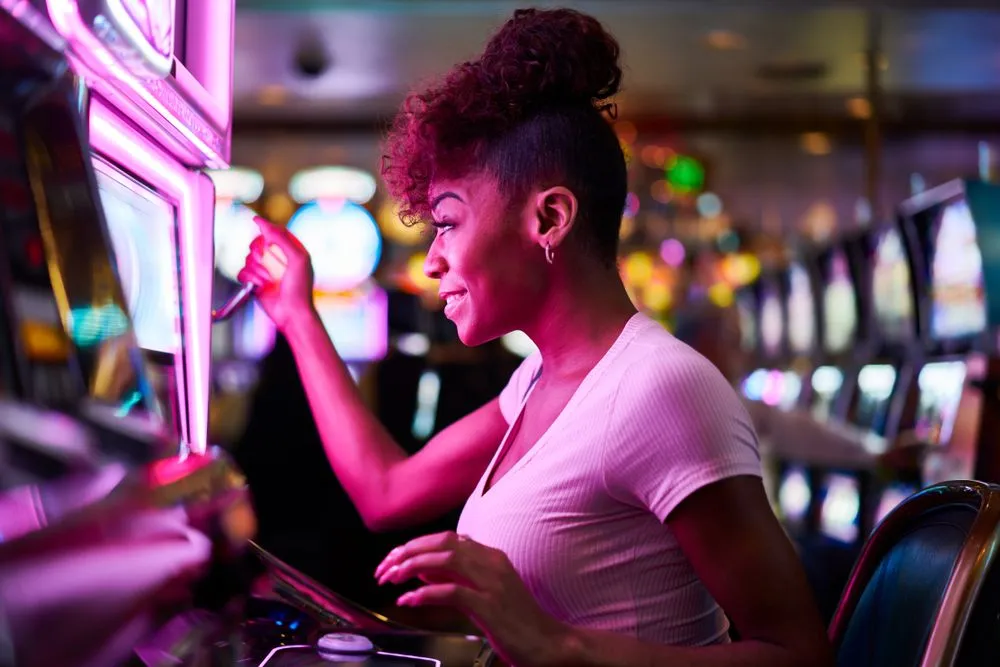
The increasingly available opportunities for gambling make it much easier to gamble than it used to be! It’s quite simple! Simply extend your arm, reach for the phone and open the app… pretty easy, right? Nearby casinos, gaming parlors in the malls in your neighborhood, and gaming machines in pubs or restaurants all make it a breeze to gamble. You don’t need to go to Las Vegas anymore!
Internet gambling has become one of the fastest-growing modes of gambling due to its easy availability. Good gaming interfaces, a medium to chat with friends while gaming, and easy payment options, all while sitting in the comfort of your own room, make this a compelling option. Unfortunately, this easy availability due to technology also makes technologically savvy teens more prone to gambling addiction.

Talking about availability, it’s not only Las Vegas in the USA, but also Europe and Asia that have become major gambling hotspots. Many European countries regulate and license a wide range of casino games such as poker, roulette, and slots, which keeps them easy to access both in venues and online. The spread of legal sports betting apps, especially since they took off in the United States, has only made gambling more available than ever, putting a casino in everyone's pocket.
Conclusion
Gambling, for all its popularity, can turn into a serious addiction if it isn't kept in check. Addiction is a complex problem, and psychologists are still working out precisely how it takes hold. A major 2024 Lancet Public Health Commission warned that the rise of online betting and gambling apps is making the problem harder to manage worldwide. The good news is that help exists: gambling therapy, community and support groups, and helplines (in the US, you can call or text 1-800-GAMBLER) can all help with the darker side of gambling.
References (click to expand)
- Gambling (fact sheet). World Health Organization
- The Lancet Public Health Commission on gambling (2024). The Lancet Public Health
- Clark L, et al. Gambling Near-Misses Enhance Motivation to Gamble and Recruit Win-Related Brain Circuitry. Neuron (PMC/NCBI)
- Behavior Modification. StatPearls. NCBI Bookshelf
- Risk Factors for Gambling Disorder: A Systematic Review. PMC/NCBI
- FAQs: What is Problem Gambling? National Council on Problem Gambling
- Doctrine of the Maturity of the Chances (Gambler's Fallacy). Encyclopaedia Britannica
- Understanding Gambling Addiction - Jeu : aide et référence. aidejeu.ca
- What are social casino games, and why do people become addicted? The Australian Broadcasting Corporation