WhatsApp does need an internet connection, but it works even on poor or low-bandwidth networks because it aggressively compresses everything it sends. Text uses lossless compression, voice notes use the highly efficient Opus codec, and photos and videos are crunched down (lossy compression) before transmission. WhatsApp also prioritises small packets like text over large media and uses adaptive bitrate playback for video.
Few brands become so synonymous with the products they make that they become the product themselves! Don’t know what I mean? Consider the case of Xerox. How many times have you caught yourself asking for a Xerox, instead of a photocopy?
A similar product making waves in the software industry is WhatsApp, an instant messaging (IM) platform. Chances are that you’ve not heard of IM, but you’ve almost certainly heard of WhatsApp. It has radically changed the way we communicate. Single-handedly obliterating SMS and complex video conferencing tools, it threatens to hand the same fate to emails someday soon.
What goes into making this 3-billion-user application (according to Meta’s March 2025 figures) so revolutionary and omnipresent? Let’s find out!
Why Can WhatsApp Work Even With Poor Internet?
The key to Whatsapp’s massive success lies in its simplicity of use and ability to work even under poor internet conditions. In doing so, it has established a league of its own, surpassing not only conventional systems like SMS, but also other IM platforms.
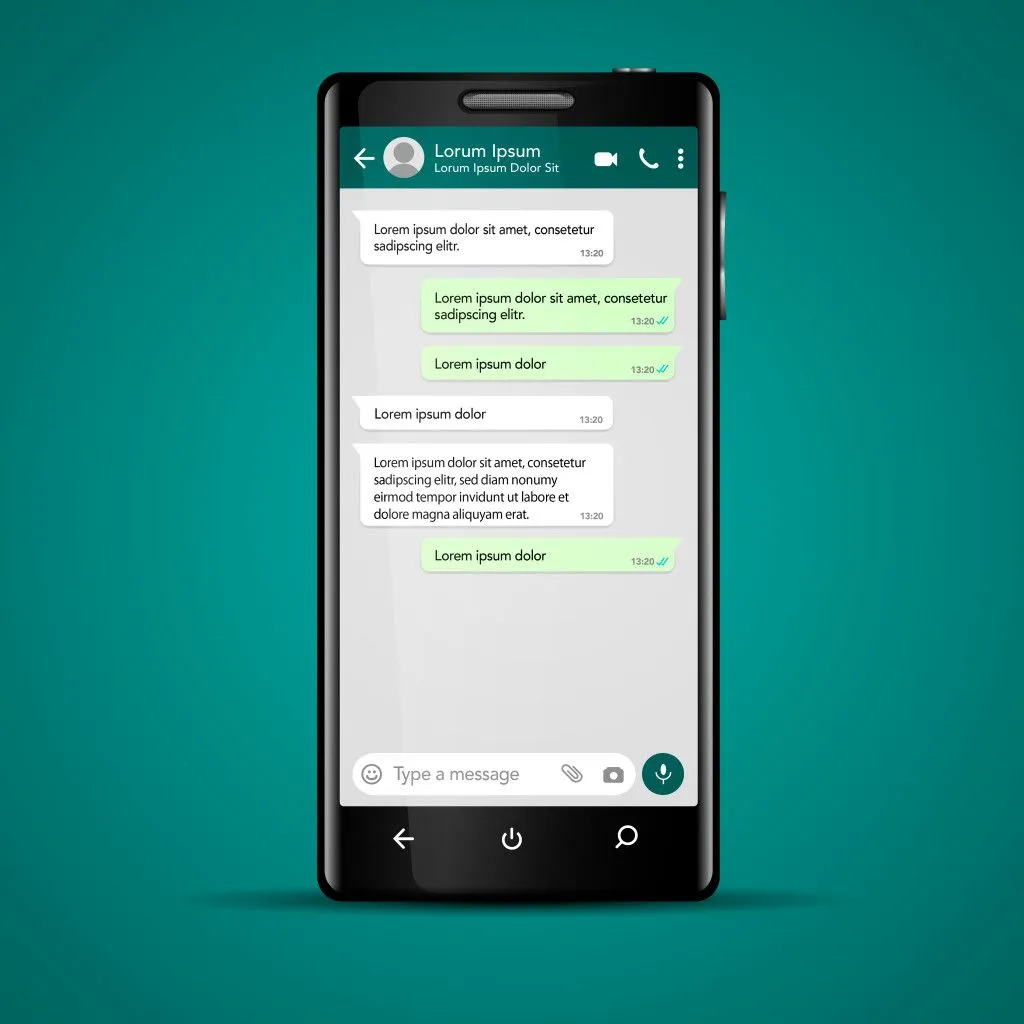
Simple features like blue ticks for message acknowledgement, document-sharing and even secure payment gateways make WhatsApp a very convenient and powerful tool to have by your side. Concurrently, it performs well even with sketchy internet.
As we already know, all forms of electronic communication are a transaction of packets of information through designated channels. WhatsApp is designed to compress these packets for easier transmission, even with poor internet connectivity. To achieve this, WhatsApp has several elements built into its code.
Optimization For Various Bandwidths
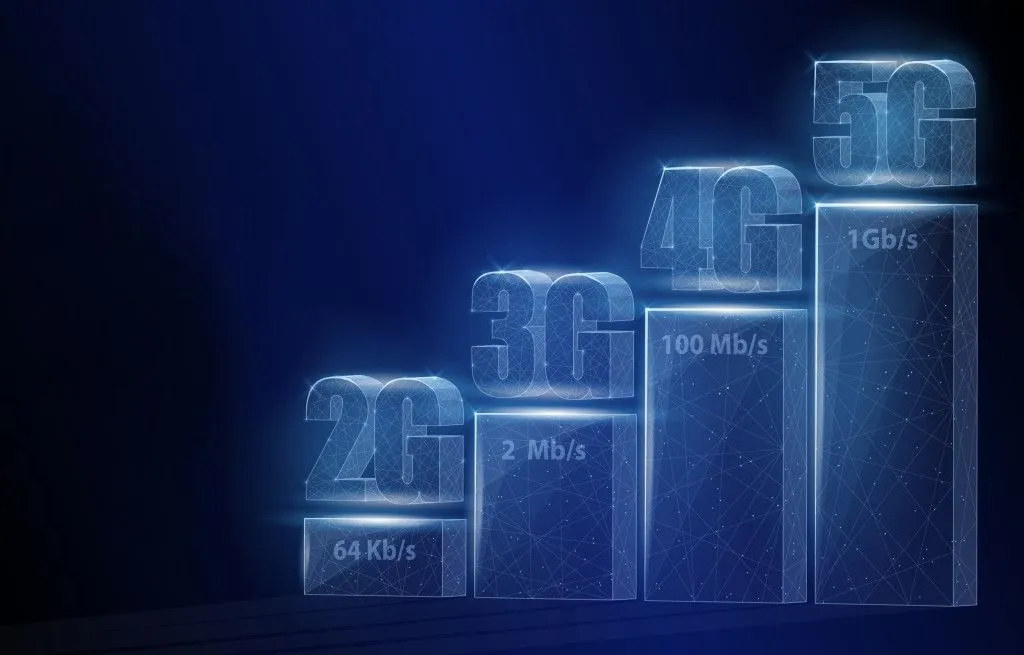
WhatsApp is optimised to work across the cellular standards in active use today: 4G LTE and 5G, with a 2G fallback that still matters in parts of Africa, South Asia, and rural Latin America. (Most carriers in the US, UK, Canada, and Australia have now shut down their 3G networks, so the relevant bands have shifted.) The actual transmission rate of your messages is directly tied to the speed of whichever connection your phone has at the moment.
However, network strength does not remain constant in all parts of the world. Chances are that you might even encounter 2G speeds in some areas. In such events, small packets of information like text are prioritised over bigger ones like media files.
Try this for yourself… When stuck with poor internet connectivity, try sending your WhatsApp contacts a media (image, video, file etc.) followed by a text message. You will find that the text message gets delivered while the media is getting uploaded in the background.
This is because Whatsapp enables smaller sized packets of information such as text to be transmitted in poor internet conditions. While WhatsApp typically follows a first-in first-out sequence, it overrides this to adjust for poor network conditions.
Adaptive Bitrate Streaming
Similar to message delivery prioritization, adaptive bit rate streaming is WhatsApp’s way of optimizing videos on a poor network connection. Like Youtube and other video-sharing platforms, WhatsApp does not require the whole video to be downloaded in order to be played.
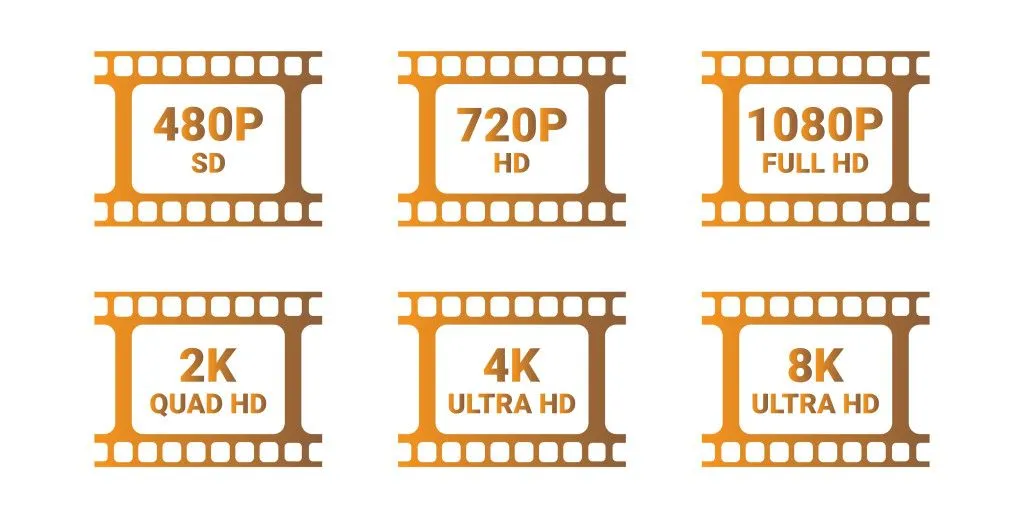
The beginning is streamed, wherein the later parts of the video get downloaded in the background while you watch the initial parts. When suffering from poor internet, WhatsApp is designed to reduce video quality, rather than stopping it from playing altogether. This feature, known as adaptive bit-rate streaming, is a great way to keep WhatsApp working, even in poor internet conditions.
Data Compression Protocols
WhatsApp has various techniques to compress all types of information it transmits, namely text, images, audio, and videos. These techniques are a combination of measures in which some data is permanently discarded (lossy techniques) or losslessly packed (lossless techniques), to reduce file size. Voice calls and voice notes use the Opus audio codec, the same low-bitrate codec used by Discord and many WebRTC services, which can deliver intelligible speech down to about 6-12 kbps; in 2024 Meta also introduced an internal codec called MLow for even tighter low-bandwidth calls on entry-level devices.
Lossy compression techniques cause several perceptible differences, such as loss of image clarity and a reduction in resolution. However, they also bring about imperceptible changes, such as the removal of metadata and even high-frequency data, such as color variations, background noise and other imperfections
Lossless compression, on the other hand, is slightly more complicated, in that it seeks to reduce file size without any actual loss of data. To do this, it scouts for redundancies in the data and replaces it with a single unit of representation. All data points with identical information are now represented by this single unit, as opposed to restating all of the information. This technique, known as referencing, is a great way to compact a file without losing essential information.
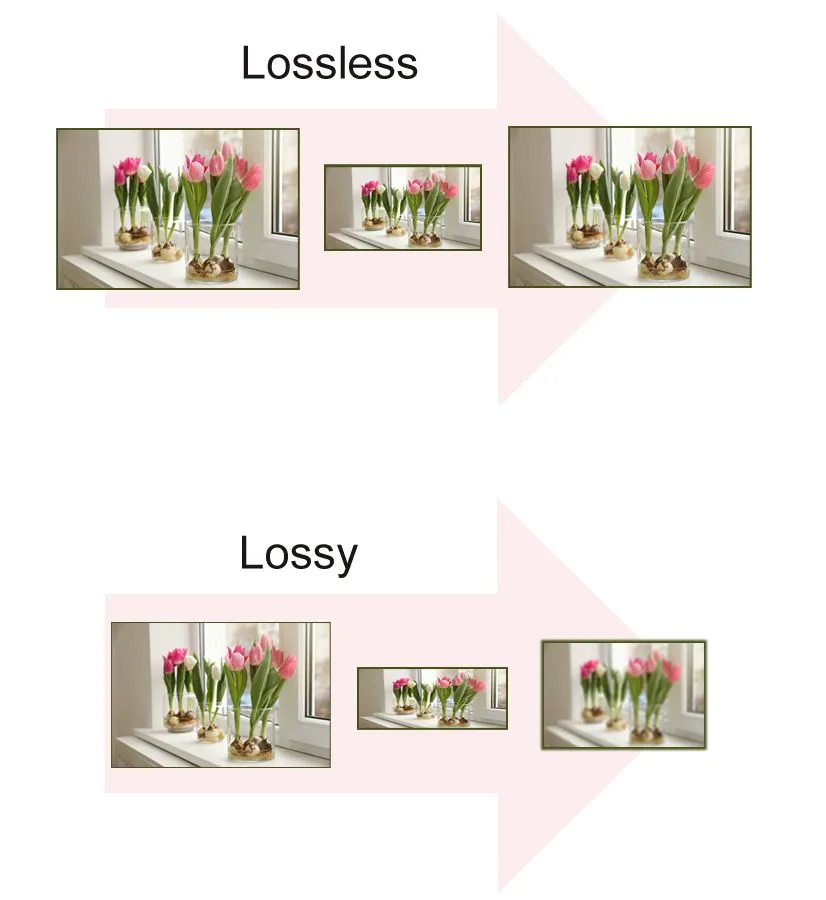
WhatsApp also puts a limit on the size of documents and videos that can be shared, further reducing bandwidth, and consequently, the time consumed to send them across. Lossy techniques achieve higher data compression in comparison to lossless techniques. Their downside is that they directly and perceptibly result in the deterioration of media quality.
Here’s how you can take advantage of this. Some websites put a cap on the size of media that can be uploaded. Common examples include banking, government, job and university application portals.
It is quite easy to not pre-empt for such situations, requiring a last-minute dash to online compression tools. Using WhatsApp, however, you can share the desired file with a trusted contact, or even yourself. The shared file is a compressed version of the original and invariably suffices for all your compression needs!
Online And Offline Data Caching
To ensure that the data transacted is available to users at all times, WhatsApp stores data both locally and on its servers. This presents a twofold advantage. Online storage prevents local storage consumption, while offline storage ensures that useful information is available to the user at all times.
Commonly cached information includes chats, media and profile pictures that are stored both locally and online. Whenever a secure, high-strength connection is established, WhatsApp updates this cache only with the latest information. This technique, known as differential data transfer, allows WhatsApp to keep updated records at all times, without consuming a lot of data.

Thus, WhatsApp is designed to operate at the confluence of conflict: Good and Bad internet, Online and offline storage, constant connectivity and reduced data consumption. Having the above-mentioned protocols, along with privacy add-ons like end-to-end encryption, make WhatsApp a great tool to have in your toolkit.
Does WhatsApp Work Without WiFi, Or Do You Need Mobile Data?
This is the single most common thing people ask about WhatsApp, so let us settle it. WhatsApp always needs an internet connection, but it is not fussy about where that connection comes from. According to the WhatsApp Help Center, the app simply uses your phone's internet connection, whether that happens to be WiFi or mobile data. So no, you do not need WiFi specifically; a cellular signal works just as well.
The practical difference is who foots the bill. On WiFi, WhatsApp uses no mobile data at all, so it costs you nothing beyond your broadband. On cellular, every message, call, and media file counts against your data plan. WhatsApp itself never charges you for messages or calls, but your carrier bills you for the data they consume, and roaming abroad can add charges on top of that.
What WhatsApp cannot do is work with no connection whatsoever. With zero signal, anything you send simply waits: a small clock icon sits beside the message until your phone finds a network again, at which point it quietly delivers. This store-and-forward design is exactly why a backlog of messages often lands the instant you step back into coverage.
How Much Data Does WhatsApp Actually Use?
WhatsApp does not publish official figures, but independent measurements paint a fairly consistent picture, and the numbers explain why the app feels so light on a stingy connection. A plain text message is almost nothing, on the order of a kilobyte or less. A photo, already squeezed by the compression we discussed above, typically lands somewhere between 100 and 500 KB.
Calls are where it adds up. Voice calls consume roughly 0.3 to 0.5 MB per minute, or about 18 to 30 MB per hour, thanks to that efficient Opus codec. Video calls are the heavy hitter at around 5 MB per minute (roughly 300 MB per hour), though this figure drops sharply on a weak 4G or 2G link, because adaptive bitrate deliberately lowers quality to keep the call alive rather than dropping it.
If you are watching your data, WhatsApp gives you a direct lever: the "Use less data for calls" toggle, tucked under Settings and then Storage and data. It trims the bitrate of your voice and video calls, costing you a little clarity in exchange for meaningfully lower consumption. That is genuinely useful on a capped plan or while travelling.
Why Does WhatsApp Reduce Your Photo And Video Quality?
If you have ever noticed that a crisp photo looks a touch softer once a friend receives it on WhatsApp, you have met lossy compression in action. The moment you hit send, WhatsApp re-encodes the file, lowering its resolution, cutting its bitrate, and stripping out metadata before the image or video ever leaves your phone. By default, standard-quality photos are capped at around 1,600 pixels on the long edge and videos at roughly 480p.

This is not a flaw; it is the entire point. Shrinking the file is precisely what lets your media travel across a shaky 2G or 3G connection instead of stalling forever. The trade-off is the visible loss of fine detail you can see above, where a picture degrades as the compression grows heavier.
WhatsApp does hand you some control. Since late 2023, tapping the HD badge before sending compresses the file less (video up to about 720p), although it still re-encodes rather than shipping your original untouched. If you want the pixel-perfect original to arrive intact, there is a neat workaround: send the photo or video as a document instead of as an image. Attached that way, WhatsApp skips its compression step entirely, and the file lands exactly as it left your phone.
Future Of WhatsApp And Instant Messaging – A Parting Note
Notoriously unadorned by extraneous features, WhatsApp offers a very convenient way to communicate. It also offers default end-to-end encryption (using the Signal Protocol) for chats, calls, and, since 2021, optional encrypted backups. Critics still raise concerns about metadata that Meta collects (who is messaging whom, when, and from which device) even though message content itself is encrypted, which leaves WhatsApp at a noticeable disadvantage on privacy compared with platforms like Signal.
The app has also evolved well beyond a 1:1 chat tool. Multi-device mode now lets WhatsApp run on up to four linked devices without the phone needing to be online. Communities and Channels (launched 2023) layer a one-to-many broadcast surface on top of the chat app. Passkey sign-in arrived in 2023, and under the EU’s Digital Markets Act WhatsApp has started enabling limited interoperability with other messengers.
Whether we shall find a competitor that does everything better is hard to say. It’s only a matter of time before instant messaging platforms serve all other cumbersome communication tools an eviction notice!
References (click to expand)
- K Vos —. The Opus Codec. jmvalin.ca
- A Rämö. (2011) Voice Quality Characterization of IETF Opus Codec. International Speech Communication Association
- Comparative Study of Data Compression Techniques. ijcaonline.org
- file structure analysis of media files sent and received over. University of Colorado Denver
- Opus Interactive Audio Codec. Xiph.Org Foundation / IETF RFC 6716.
- MLow: Meta's low bitrate audio codec (2024). Engineering at Meta.
- WhatsApp: number of monthly active users 2025. Statista.
- About WhatsApp charges. WhatsApp Help Center.
- How Much Data Does WhatsApp Use? Airalo.
- How to Set Photo Upload Quality on WhatsApp. MakeUseOf.