Table of Contents (click to expand)
Believe it or not, potatoes have helped make Wi-Fi better. Boeing engineers piled roughly 9,000 kg (20,000 lb) of potatoes into airplane seats to test in-flight Wi-Fi, because a potato’s water content absorbs and reflects radio waves much like a seated human body does. The project was nicknamed SPUDS.
Having come this far into the 21st century, can you really imagine a world without wireless internet connections? It’s hard to remember a time when we didn’t have constant access…
From big to small enterprises, everyone understands the importance of Wi-Fi. Most cafes, restaurants, and airports offer free Wi-Fi. Even airplanes, where once you were virtually cut off from the world during your journey, have started offering in-flight Wi-Fi. A plane ride full of boring in-flight entertainment and forceful napping has turned into a time to catch up on work or binge your favorite Netflix show.
But wait a minute… all of this sounds peachy, but what does the humble tuber have to do with any of this?
How Does Wi-Fi Work?
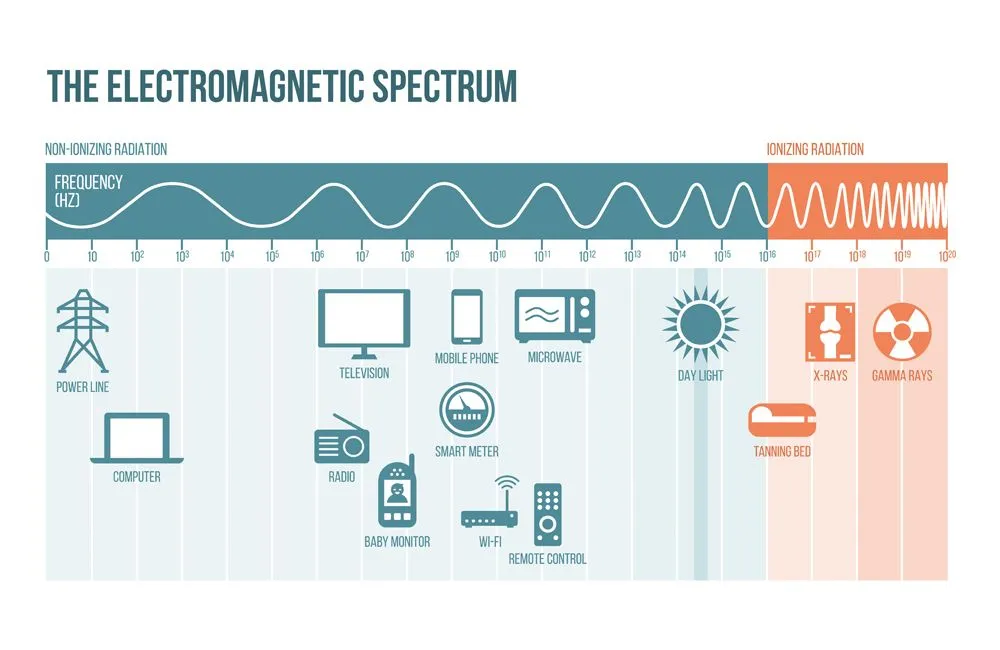
Contrary to popular belief, Wi-Fi doesn’t actually stand for “wireless fidelity.” It isn’t an acronym at all. The name was coined in 1999 by a branding firm because it sounded like “Hi-Fi,” and a short-lived marketing slogan, “The Standard for Wireless Fidelity,” is what spawned the myth. What the technology does, though, is exactly what you’d expect: it lets you connect to the internet without wires or cables. Information travels from one device to another via radio waves of a specific frequency, measured in gigahertz (GHz).
For you to watch the latest TikTok trend using Wi-Fi, the following is required:
The Internet. This is a massive collection of computers, linked to each other via a computer network. We receive the internet via an internet service provider.
Modem. To access the internet, you require a modem that is connected to your internet service provider through a cable connection. It receives signals from your internet service provider and translates them to the router via an ‘Ethernet cable’.
Router. Once the router has received information from the modem, it converts the data into radio waves.
Wireless Device. Your phone, laptop, tablet and other devices have an inbuilt ‘wireless adapter’ that allows it to receive Wi-Fi signals.
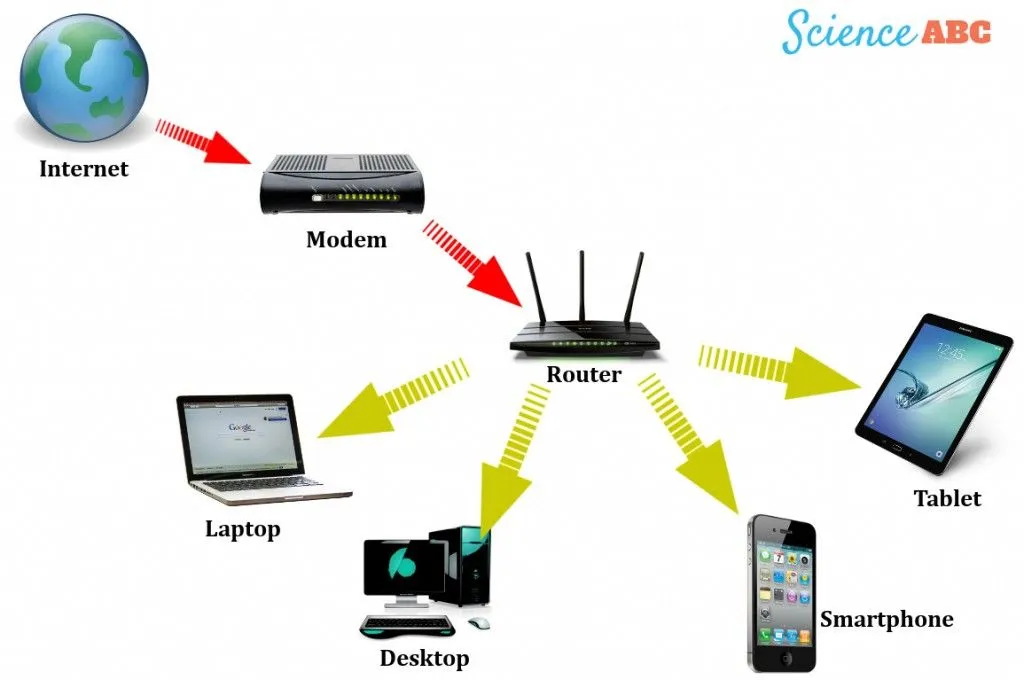
Now let’s say, you really enjoyed a certain TikTok video and want to show your appreciation by giving it a “like”. Once you click on the heart-shaped icon, within milliseconds, the adapter in your device relays the data to the router, which travels through the modem, reaching your internet service provider, which will eventually relay it to the TikTok server, and your ‘like’ will be registered.
How Does In-flight Wi-Fi Work?

I know what you’re thinking, how can one connect a cable to an airplane modem? Actually, we don’t need to.
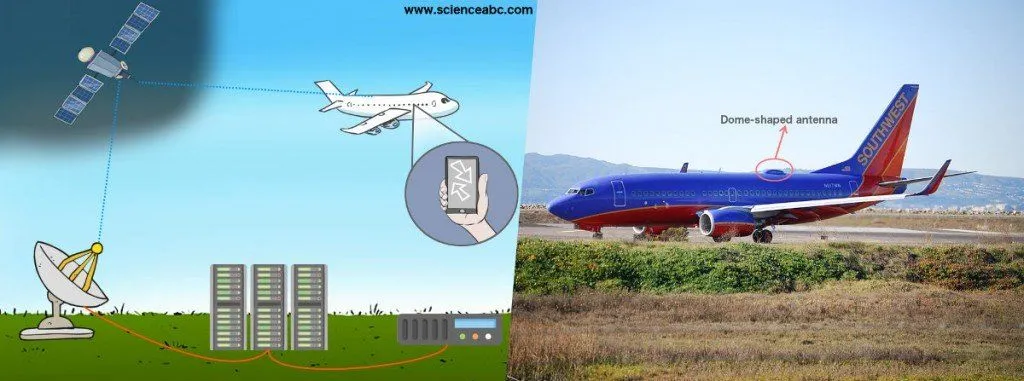
The airplane receives radio signals in two ways: through air-to-ground Wi-Fi and satellite Wi-Fi. It carries an antenna by which it receives the signal.
Air-to-ground Wi-Fi: When the airplane is within the radius of a network tower, it receives signal waves from there and then moves on to the next closest tower’s network as it completes its journey. However, this only works if the plane is flying over land.
Satellite Wi-Fi: When flying over large stretches of ocean, the airplane uses Wi-Fi that it receives as a signal from satellites orbiting above.
Now, let’s imagine this scenario. You’re at a party and get a call from your boss to send an important email. You’re all set with your email, but your phone has a poor network and there is no Wi-Fi to which you can connect. The most likely thing is that you will ask a friend with a more efficient network provider to put on their ‘hotspot’ and allow access to their network connection. They oblige, you send the email successfully and win some brownie points from your boss.
Similar to your friend’s phone, the airplane acts as a hotspot provider for its passenger’s devices.
Why Are Potatoes Used To Test In-flight Wi-Fi?
Unlike Superman’s laser beams, radio waves can’t penetrate through all types of matter. Depending on the object, it might get absorbed, reflected, or refracted. As Wi-Fi signals are radio waves, they too get absorbed by certain objects and their strength weakens. These ‘objects’ also include human beings!
A typical airliner seats roughly 200 passengers packed in rows. To make sure that everyone, including those sitting at the back, gets a solid Wi-Fi signal, engineers at Boeing’s Test and Evaluation laboratory in Arizona needed ‘test subjects’ to help map out the signal strength and pinpoint possible weak spots.
Instead of paying human volunteers to sit still for hours while the data was collected, they found it far more convenient to use sacks of potatoes. The team even gave the effort a tongue-in-cheek name: SPUDS, short for ‘Synthetic Personnel Using Dialectic Substitution.’
The water content and chemistry of about 9,000 kg (20,000 lb) of potatoes absorbed and reflected radio signals much like an aircraft fully occupied by passengers. The work, which began in 2006, used a decommissioned airplane so the spuds could be piled across the seats.
They settled on potatoes over other fruits and vegetables because the dielectric constant of a potato closely matched that of the human body, a clue they picked up from a research paper measuring the dielectric properties of 15 vegetables and fruits at 2,450 MHz (right in the Wi-Fi band), published in the Journal of Food Science.
Conclusion
Most of us are quite aware of the delicious nature of potatoes, as well as their nutritional benefits, and their use in the paper and cloth industry. However, who would have guessed their impeccable contributions to enhancing global connectivity?
It’s also quite remarkable to note that as science progresses, and research becomes more sophisticated, there is still space for simple methods to achieve optimal results!
References (click to expand)
- Sipahioglu, O., & Barringer, S. A. (2003, January). Dielectric Properties of Vegetables and Fruits as a Function of Temperature, Ash, and Moisture Content. Journal of Food Science. Wiley.
- Radio Waves - UCAR Center for Science Education. The University Corporation for Atmospheric Research
- Boeing uses potatoes instead of people to test wi-fi - BBC News. BBC Online