Table of Contents (click to expand)
Netflix gets you the right content using a recommendation algorithm built on data science. It learns from your viewing history, ratings and members with similar tastes (collaborative filtering), along with title data like genre and cast, to predict what you will enjoy. These recommendations drive roughly 80% of what people watch on Netflix.
You come back home, turn on the TV and hop onto Netflix. The moment you log in, an array of exciting recommendations is presented to you. Chances are that you can jump right into picking content that you’d like to view; after all, there are so many ideal options for you right on the main page! However, have you ever stepped back and wondered how Netflix has such an array of movies, sitcoms and documentaries tailored so perfectly to your taste? Even if it’s not perfect for your palette, it’s often something that tickles your interest? Well to break down this answer, let’s first take a dive into understanding a bit more about data science.
Netflix And Data Science

Data Science is a highly interdisciplinary field, consisting of statistics, probability and programming as the primary pillars. Data Science is primarily used to find patterns in large sets of data. It is usually employed to discern patterns that can give some underlying information about the data set being considered. Now, let’s try to understand how Netflix provides you with such great content from the get-go, i.e., when you have just joined their network. When you join the Netflix network, the company doesn’t have any information or data about your interests, likes or dislikes, so how exactly does the company provide that first assortment of entertainment options when it has no inkling of your tastes?
Well, the answer lies in how Netflix tackles what data scientists call the cold-start problem: making good recommendations for a brand-new user it knows nothing about. What Netflix does is quite ingenious. When you first set up a profile, it simply asks you to pick a few titles you already like, and it uses those choices to jump-start your recommendations. This step is optional, though. If you skip it, Netflix starts you off with a diverse and popular set of titles so that your home screen never sits empty. Either way, this preliminary lineup is just a starting point that gets fine-tuned as soon as you begin watching, since the titles you engage with most recently carry the most weight in shaping what you see next.
Recommender Systems
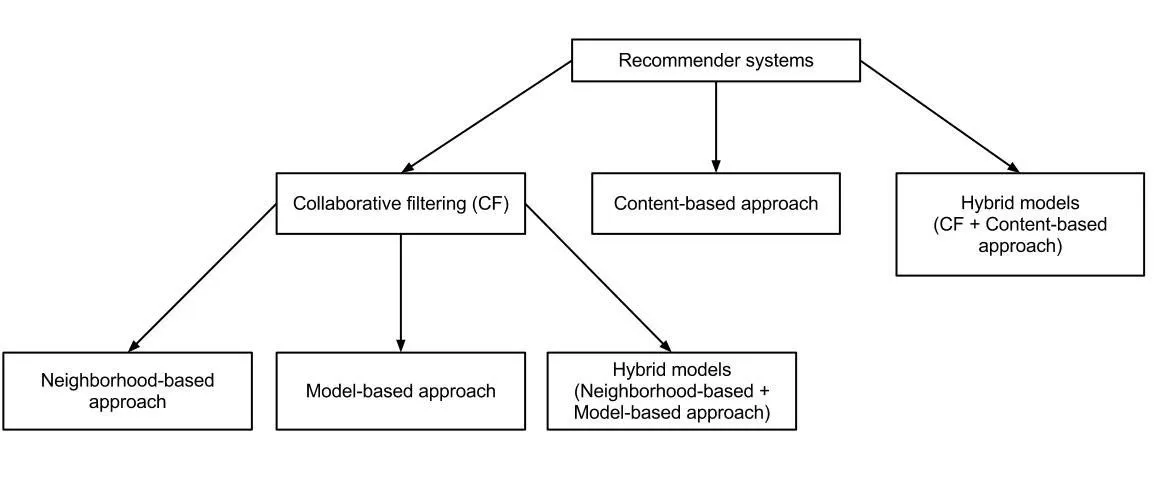
Once you start logging into Netflix regularly, you’ll realize that Netflix is usually spot on about what you’d like to see. This is done with the help of something known as a recommender system, a system capable of predicting your future preferences from a fixed amount of limited data. To make that prediction, Netflix leans on a whole range of signals: your interactions with the service (your viewing history and how you rated titles), other members with similar tastes, and information about the titles themselves, such as their genre, categories, actors and release year. It even factors in the time of day you watch, the devices you use and how long you stick with a given title. And it isn’t static: the titles you engage with more recently outweigh the ones you watched long ago. This effort pays off. By Netflix’s own estimate, recommendations influence roughly 80% of the hours people stream, with the remaining 20% or so coming from search.
Content Based Recommendation
There are two ways in which a recommender system can be built. The first of these is known as a content-based recommendation. The idea of a content-based recommendation system is to filter the content based on a few parameters, such as likes, dislikes and viewing time. To understand this better, let’s take two movies, known as A and B. Now, let’s assume there are ten participants. If the participants like or dislike one movie over another, the recommender system would pick either movie A or movie B. However, that would be a perfect-case scenario where everyone leaves a rating. So what does one do when there is not a relevant amount of ratings to discern from for the recommender system? Well, that’s where the viewing time comes in. It can be safely assumed that if you like the content that you’re watching, you will watch it from start to finish. This can also be translated into data by the recommender system and used as an essential parameter in determining the likability of certain content.

Collaborative Filtering
Another recommender system is known as collaborative filtering. Collaborative filtering is a method in which automatic predictions occur based on the collection of preferences and tastes within a pool of users. In a more general sense, collaborative filtering is the process of filtering for information or patterns using techniques involving collaboration among multiple agents, viewpoints, data sources, etc.
Applications of collaborative filtering typically require data sets of a substantial size. Collaborative filtering methods have been applied to many different kinds of data, including: sensing and monitoring data, such as in mineral exploration; environmental sensing over large areas or multiple sensors; financial data, such as financial service institutions that integrate many commercial sources; or in electronic commerce and web applications, where the focus is on user data, etc.
The underlying principle of collaborative filtering is that, if person A and person B like the same movie, then person A will likely have similar taste in movies as person B, rather than assuming that they might have similar tastes to a random person.
A slightly more powerful way to use collaborative filtering is a technique called matrix factorization. Following this approach, Netflix lays out a giant grid of members and titles and pairs people together based on the movies they have rated or watched in common. Under this prediction method, people who fall into the same bracket are assumed to enjoy the same titles in the future. It is no small thing to get this right: Netflix has estimated that the combined effect of personalization and recommendations saves the company more than $1 billion per year by keeping subscribers happy and engaged. So the next time you sit down in front of your Netflix interface, you’ll understand that the movies proposed for your viewing pleasure have been closely considered and analyzed behind the scenes before they make their way onto your screen!