Table of Contents (click to expand)
The radio frequency spectrum (roughly 3 Hz to 3 THz) is finite, and the most useful bands are crowded, so in that sense we are running out of room. We are not stuck, though: regulators like the FCC and ITU keep reallocating and auctioning bands, and 5G, spectrum sharing and 6G research keep squeezing more capacity out of the same airwaves.
You’re sitting in a swish, fine-dining restaurant, and you can’t wait to Instagram your fancy dish with a fancy name. Your post and the 20 instant likes just occupied a tiny space in the radio frequency spectrum. With the explosion of wireless technology over the past decade, could we run out of space on the radio frequency spectrum?
Short answer: Yes and no. The spectrum is a finite resource, and the prime bands are already packed, so in that sense the airwaves really are filling up. But we keep finding clever ways to fit more into them, so it is less a hard wall than a constant balancing act. Whether your glass is half-full or half-empty here is largely up to you.
What Is The Radio Frequency Spectrum?
Wireless communication is possible with the help of signals called radio waves. Radio waves are a part of the much larger electromagnetic spectrum. Whether you’re enjoying a quiet meditation session at home or stuck for hours in a traffic jam, the air around you is packed with millions of radio waves traveling at the speed of light, scrambling desperately to reach their destinations.
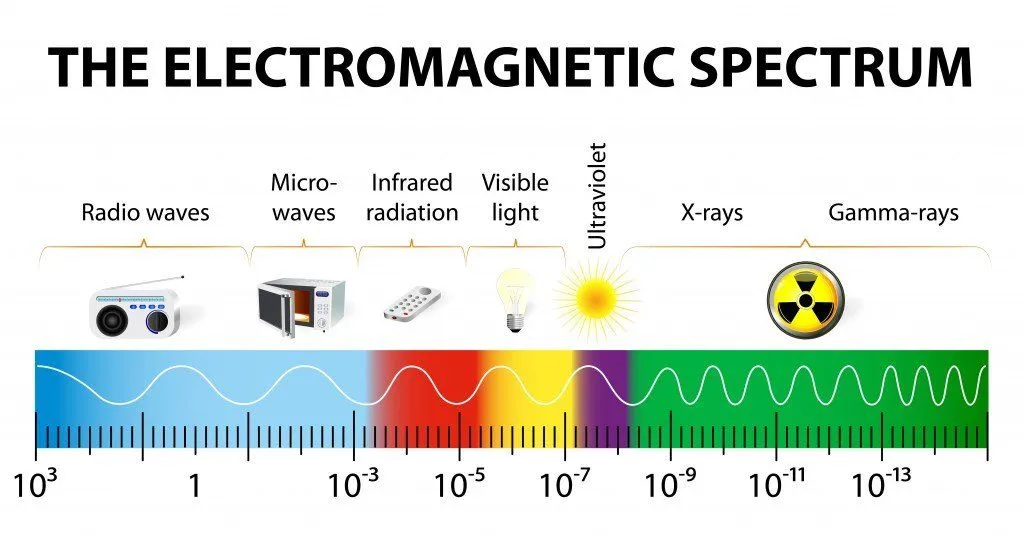
How then, do these signals not interfere with each other? Each wave has a unique identity, known as frequency. The frequency of a wave is measured in a unit called Hertz (Hz), and it goes a long way toward determining how a signal behaves and how far it can travel. Radio waves can have frequencies ranging from about 3 Hz to 3,000,000,000,000 Hz, or 3 terahertz (that’s a 3 followed by 12 zeroes!). The set of frequencies within this range forms the radio frequency spectrum.
Where Do We Use Radio Waves?
Low-frequency radio signals can hug the curve of the Earth and travel for hundreds of kilometers, which is why such signals are used for things like maritime navigation, aviation and military communications. On the other hand, very high-frequency signals tend to travel in straight lines and fade fast, so they cover much shorter ranges. They power the short-hop devices crammed into your home, such as Wi-Fi routers, Bluetooth earbuds and garage-door openers.
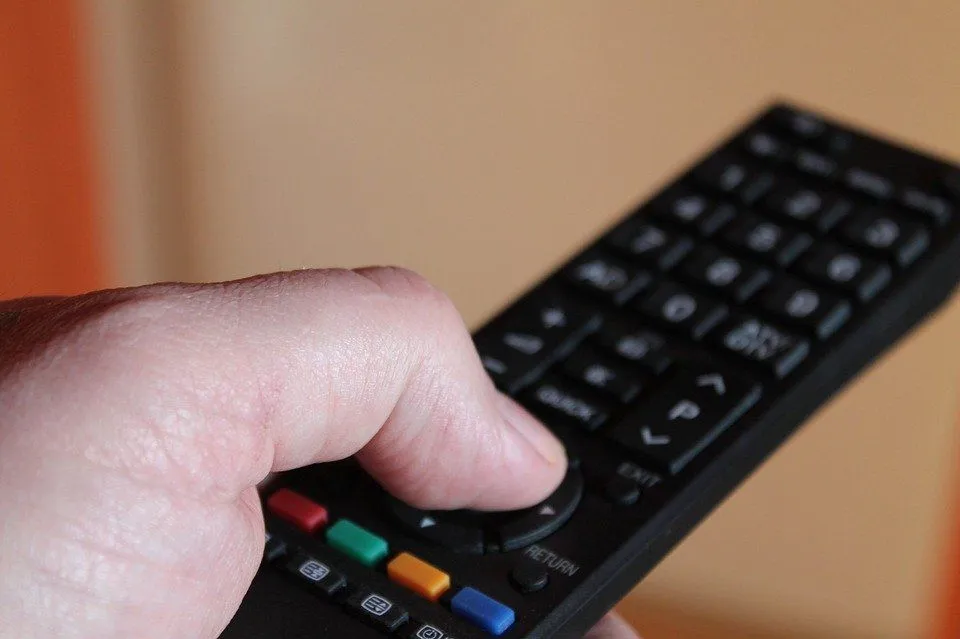
The frequencies below roughly 6 GHz are where things get crowded. This is prized real estate, often called "beachfront spectrum," because signals here travel reasonably far and pass through walls without needing enormous power. It caters to a huge variety of applications, including AM/FM radio, television, cell phone signals, GPS and Wi-Fi.
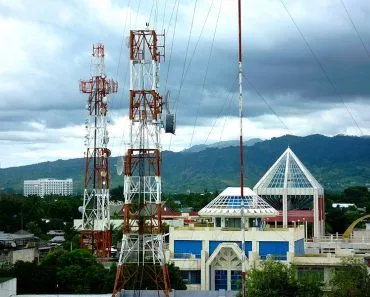
For instance, consider a cell phone signal. Cell phones are equipped with transmitter and receiver antennae. Transmitters can give out radio signals, while receivers can receive radio signals of a specific frequency. When you’re talking to someone on your phone, your audio signal is converted into an electrical signal. The transmitter transmits this signal in the form of radio waves to the nearest cell phone tower. The signal travels off many cell phone towers until it is captured by the receiver antenna of the phone tuned to receive a signal of this frequency. The radio signal is converted back into an electrical signal, which in turn is converted back into audio, allowing your friend to hear you.
Whew! How much time does all of this take? Practically none. Radio waves carry information in the form of oscillating electric and magnetic fields. Frequency is a measure of the number of oscillations per second, so if your cell phone signal was transmitted at a frequency of, say 1 MHz, those radio waves are oscillating 1,000,000 times per second! Each oscillation therefore takes a millionth of a second (the reciprocal of the frequency). The wave itself travels at the speed of light (about 300,000 km/s, or 186,000 mi/s), so it covers the few kilometers to the nearest tower in well under a tenth of a millisecond. No wonder the call feels instant.
Every time you make a call, tune in to the radio, bombard your WhatsApp group with ‘Good Morning’ messages, or go on a long drive with GPS to guide you, your signals are occupying a small part of the radio frequency spectrum. Now imagine billions of people doing this all over the globe!
The Space Crunch
As you may have already guessed, the radio frequency spectrum is a finite resource. Managing seamless communication over billions of wireless devices on such a limited frequency range is not an easy task.
Different applications have different transmission requirements. This is why the radio frequency spectrum is divided into a number of sections, or frequency bands, each band serving a different application. Military applications, radio, television, mobile signals, GPS, and satellite communications all have their own frequency bands within which they perform best.
The last couple of decades have witnessed an explosive increase in the number of wireless devices, from smartphones and smart TVs to the billions of "Internet of Things" gadgets now coming online. This means the frequencies set aside for commercial use are filling up fast. A global body known as the International Telecommunication Union (ITU), along with national regulators, makes sure that there is no commercial infringement on government or military bands, and that all players get a fair share of the spectrum pie.
How is this done? ‘Spectrum allocation’ is the word.
National regulators working under the umbrella of the ITU, such as the Federal Communications Commission (FCC) in the US and Ofcom in the UK, regularly auction off available frequency bands to commercial parties like telecom companies, television channels and radio stations. The winner gets to broadcast its signals over those frequencies exclusively. These auctions are big business: the FCC's recent sale of mid-band 5G frequencies (the 3.45 to 3.55 GHz band) alone raised more than USD 22 billion. However, there’s a catch. Not every sliver of a band can actually be put to work, and the unused gaps left between active signals are often called white spaces.
Limitations Of The Radio Frequency Spectrum
If a telecom company has been allotted a certain frequency range within which it can transmit data, it cannot use all the frequencies within that range to cater to their millions of subscribers. Why?
Interference. Signals that are too closely spaced to each other run the risk of interfering in each other’s path, and if this were to happen, you would end up listening in on someone else’s conversation on your cell phone.
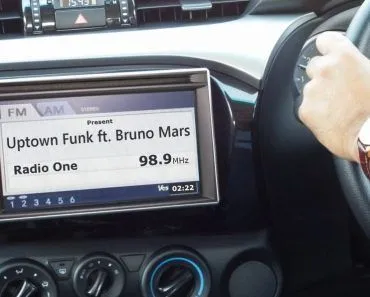
The same goes for radio stations. If you tune your radio to a frequency of, say, 92.7 MHz, you will hear content from a radio station that broadcasts at that signal. Tune it higher, up to about 93 MHz, and the signal gets weaker, but you start hearing faint snatches from another radio station that broadcasts at 93.5 MHz.
That is why all radio signals need to have some kind of buffer between them to avoid interference. This buffer is basically a number of frequencies that simply cannot be used, and are therefore called white spaces.
There is another limitation. As the frequencies shift towards the higher ends of the spectrum, the radio signals get weaker. This means that extremely sensitive, highly accurate and often expensive technologies are needed to detect such signals and give them enough strength to travel a sizable distance.
That brings us back to the question. Are we running out of space on the radio frequency spectrum? Yes, if you consider the number of white spaces, and the limitations of existing technology to breach the high frequency barrier.
Wireless communication has more potential applications than we can count, and the coming years will put tremendous pressure on the available regions of the radio frequency spectrum.
We’re Not In Trouble Yet
Every story has a hero, or in this case, heroes, who save the day. Researchers all over the globe are developing ways to use white spaces more effectively and shrink the buffer gaps between signals. Technology upgrades, such as the switchover from analog to digital television (US broadcasters made the jump back in 2009), freed up huge chunks of spectrum that were then repurposed for mobile broadband. "Smart radios" using cognitive radio and dynamic spectrum sharing can now sense which frequencies are momentarily idle and hop onto them, letting several users politely take turns on the same band instead of each owning a slice outright.
Engineers have also chipped away at the high-frequency ceiling. 5G is now widely deployed and taps into so-called millimeter-wave frequencies above 24 GHz, which were long considered too difficult to use, to deliver enormous bandwidth over short distances. Looking further ahead, 6G research is already eyeing the even higher terahertz bands, with the ITU targeting standards around 2030. Regulators are keeping pace too: the FCC's spectrum auction authority briefly lapsed in 2023 before Congress restored it in 2025, clearing the way for fresh mid-band auctions. So, is your glass half-full or half-empty?
References (click to expand)
- Radio-frequency spectrum | communications. britannica.com
- Radio Spectrum Allocation | Federal Communications .... The Federal Communications Commission
- ITU: Committed to connecting the world. The International Telecommunication Union
- Auction 110: 3.45 GHz Service. Federal Communications Commission
- Spectrum. Ofcom (Office of Communications, UK)