Table of Contents (click to expand)
No. Cell phone towers broadcast radio waves, a form of non-ionizing radiation too weak to break the chemical bonds in DNA the way cancer-causing ionizing radiation does. At ground level, the energy you receive sits hundreds to thousands of times below FCC safety limits, and large reviews by the WHO, NCI, and FCC have found no consistent link between tower radiation and cancer.
It’s a fear that refuses to go away, but the science behind it is reassuring. To see why, it helps to understand exactly what these towers are beaming out.
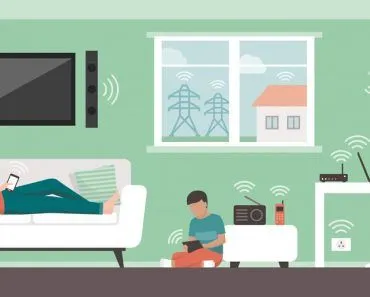
Right now, at this very moment, you are drowning in an ocean of electromagnetic radiation. Its waters are a myriad of radiation – radio waves, the sun’s light, infrared and all the rest. Initially, the world was dominated by the sun’s light and infrared radiation, the harbingers of heat. Now, however, with the construction of soaring phone towers and the ubiquity of smartphones, radio waves seem to be growing in domination.
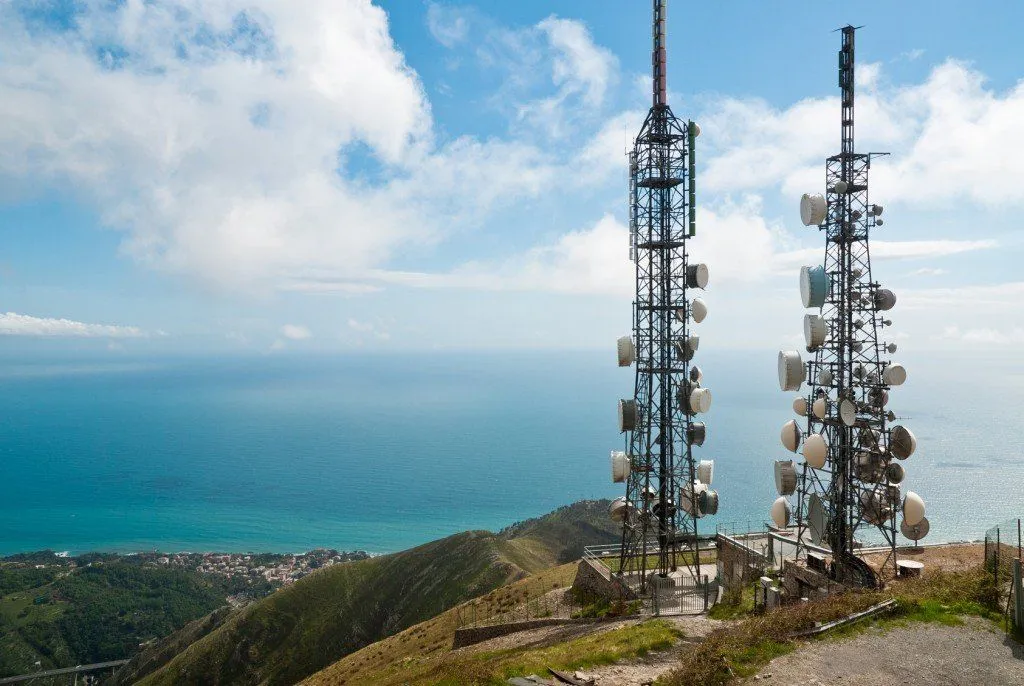
The notion of whether phone towers pose a health risk has been speculated for decades. The presence of towers and cell phones concerned people even at times when mobile devices were a luxury – complex technological equipment that only a few people carried.
The situation today seems to cause even more apprehension – cell phones are as common and necessary as footwear, every household has a router, and to accommodate both of these, radio towers are planted more often than trees.
Ionizing Vs Non-ionizing Radiation
Any type of fear is largely spurred by uncertainty, which is essentially a lack of information. In this case, the fear of phone towers seems to be fueled by our lack of understanding of electromagnetic physics. The seven types of electromagnetic radiation can be categorized into two classes based on their energies: ionizing and non-ionizing radiation.
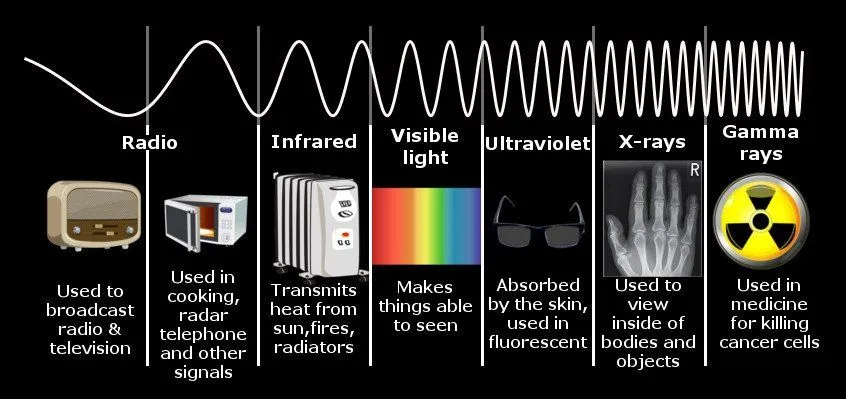
Ionizing radiation represents the high-frequency spectra of electromagnetic radiation, which includes high-frequency ultraviolet rays, X-rays and gamma rays – remnants of a nuclear aftermath. Prolonged exposure to these emissions can cause cellular mutation, which can lead to various cancers. This is because, as the name suggests, they tend to ionize and destabilize molecules.
These high-frequency waves are so energetic that they interact with matter as if they are individual particles, colliding and kicking matter’s constituents out of their stable structures. Exposure to such energetic radiation disrupts the structure of DNA, one of the principal triggers of cancer.
On the other hand, non-ionizing radiation represents the low-frequency spectra of electromagnetic radiation. These include radio waves, microwaves, infrared and visible light. Owing to their low frequencies, these waves travel with very low energies, rendering them non-ionizable, leaving them unable to knock particles away from stable molecular structures.

The fact that low-frequency waves aren’t energized enough to disrupt DNA molecules implies that the radio waves constantly emanating from phone towers are harmless. Even so, could constant exposure to them, like an interference pattern, positively add up to threaten us with a fatal health risk? The fear is most likely to be observed in parents who are apprehensive about radiation affecting the developing brains and bodies of children. Are these apprehensions justified? Let’s see what the experts have to say.
They Are “Possibly Carcinogenic”
Phone towers are not the only thing we should be worried about; phones and routers are similar to miniature towers themselves. In fact, not only are they greater in number, but they also lie much closer to us than most cell phone towers do. Microwaves generating non-ionizing radiation are harmless, but concentrated microwaves can penetrate our skin and burn tissues; this is exactly how ovens work! So… should we be worried?

You may have heard that the World Health Organization’s (WHO) International Agency for Research on Cancer (IARC) labeled radiofrequency radiation “possibly carcinogenic” (Group 2B) back in 2011. That sounds alarming, but it helps to know what the label actually means. It was based on limited evidence from heavy mobile phone users (people holding a handset against the head for hours a day over years), not from anyone living near a tower. Pickled vegetables and aloe vera sit in that very same 2B bucket. Tower exposure, as we’ll see, is in a different league altogether, and there are several good reasons to think it’s harmless.
First, antennas are generally mounted on top of tall towers or buildings, which causes the power levels of the emitted radiation to dwindle as they descend toward the ground. According to the American Cancer Society, the RF energy reaching the ground near a typical base station is hundreds to thousands of times below the safe-exposure limits set by the US Federal Communications Commission (FCC). In other words, harm is highly unlikely. Second, the signals are not transmitted constantly, but intermittently.

However, could the radiation affect people who live in the vicinity of these towers, such as people living right below the roof or inhabitants of buildings whose windows face towers mounted on a shorter building directly adjacent to them? The answer is still “No”. Cement, wood and other obstructions attenuate signals, thereby deterring any copious amounts of potentially harmful radiation.
The power levels are known to be at a maximum right next to the antenna, so access to the spots with direct exposure is usually restricted in the first place. And the epidemiology has caught up with the physics. A 2024 WHO-commissioned systematic review of decades of human studies found no convincing evidence that mobile phone use raises the risk of brain tumors, and concluded that base stations and transmitters do not increase the risk of childhood cancers. The US National Cancer Institute points to a telling real-world check: cell phone ownership has rocketed past 97% of American adults, yet rates of brain and central nervous system tumors have stayed flat for decades. If towers were quietly seeding cancer, that flat line is not what we would expect to see.
References (click to expand)
- Do Cell Phone Towers Cause Cancer? American Cancer Society
- Cell Phones and Cancer Risk. National Cancer Institute (NIH)
- IARC Classifies Radiofrequency Electromagnetic Fields as Possibly Carcinogenic to Humans (2011). IARC, WHO
- Karipidis K et al. The Effect of Exposure to Radiofrequency Fields on Cancer Risk. Environment International (2024) - WHO systematic review
- Cell Phone Towers and Radiofrequency (RF) Radiation Safety. Harvard EHS