Table of Contents (click to expand)
- What Is A Road Really Selling You?
- What Is Induced Demand?
- Why Don't More Lanes Solve Traffic? The Fundamental Law
- Where Do All The Extra Cars Come From?
- The Katy Freeway: What Happens When You Widen A Road To 26 Lanes?
- Can Removing A Road Actually Make Traffic Better?
- So What Actually Reduces Traffic Congestion?
- So, Why Doesn't Adding More Lanes Fix Traffic?
Widening a highway makes each trip feel cheaper, because the real cost of driving is the time it eats, and a bigger road briefly saves time. So people who had skipped the drive, or taken the train, or left at dawn all pile back onto it, until the road jams again. Across US cities, researchers found that driving rises almost exactly in step with new road space, which is why adding lanes rarely cures traffic for long.
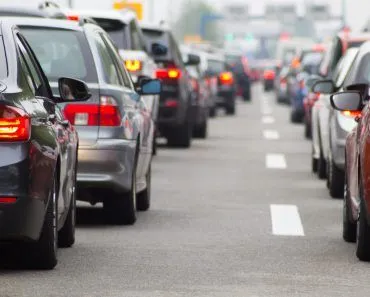
Picture the worst traffic jam you have ever been stuck in. Eight lanes of brake lights, and nothing moving. Somewhere in that gridlock, almost everyone is thinking the same thought. If they just built one more lane, this would all be over.
It is the most obvious fix in the world. More room, more cars can flow, less jam. City planners have believed it. Voters have voted for it. Governments have spent billions on it.
And for sixty years, the traffic keeps coming back. Sometimes the wider road ends up slower than the narrow one it replaced. This is not a story about bad engineering. It is a story about a hidden price, and what happens when you cut it.
What Is A Road Really Selling You?
Start with something simpler than traffic. Start with a price.
When something gets cheaper, people buy more of it. Drop the price of coffee and the line gets longer. This is the oldest rule in economics, and you already feel it in your gut. Economists call it the law of demand.
Now, a road looks free. You pay no toll on most highways. But every trip still costs you something, and that something is your time. A drive that eats 40 minutes costs you 40 minutes of your life. That is the real price of the trip.
Here is the key idea. Hold on to it, because the whole article rests on it. The price of a road trip is not money. It is time. When a road is jammed, that price is high. When it flows, the price is low.
So what happens when you widen a jammed highway? For a while, the traffic thins out. The drive gets faster. And without anyone charging a cent, you have cut the price.
You know what people do when a price drops.

What Is Induced Demand?
Think about all the trips you do not take because driving is a pain.
Maybe you skip the shop across town and use the one nearby. Maybe you take the train to work, because the freeway is a parking lot by 8 a.m. Maybe you moved close to the office on purpose. Every one of those is a trip you would happily drive, if only the road were clear.
Transport researchers have a name for this pile of would-be trips. They call it latent demand: the "additional trips that would be made if travel conditions improved." It is demand that is real but hidden, waiting for the road to get easier.
Widen the highway and the road does get easier. So the hidden trips come out of hiding. The shopper drives across town. The train rider gets back in the car. The whole city shifts a little more of its life onto the faster road. That flood of freed-up trips has a name too. It is induced demand.
Call it hidden demand, and keep calling it that. It is the engine of everything that follows.

Why Don't More Lanes Solve Traffic? The Fundamental Law
For a long time this was a good theory with no number attached. Then two economists gave it one.
In 2011, Gilles Duranton and Matthew Turner studied highways across US cities over several decades. Their finding was blunt. In their words, "VKT increases one for one with interstate highways." VKT is just the total distance everyone in a city drives. One for one means this. Add 10% more road, and people drive about 10% more.
Not a little more. Almost exactly as much more. The extra lanes fill with extra driving, and the jam returns. They named it the "fundamental law of road congestion," and they did not soften the lesson. Widening these roads, they wrote, "is unlikely to relieve congestion."
The number they trust most is a 10.3% rise in driving for a 10% rise in road. So a wider road does not cut your commute. It grows the city's total driving to match, then hands you back the same jam. You paid billions to move more cars through the same wait.
Add a lane, and the traffic is often gone before the paint dries.

Where Do All The Extra Cars Come From?
Fair question. The city did not sprout a million new drivers overnight. So who fills the new lane?
In the short run, nobody new shows up at all. The same drivers rearrange. Anthony Downs called this triple convergence. When a road gets better, traffic converges on it from "other routes, times and modes." Some drivers who took side streets switch to the highway. Some who left at 6 a.m. to beat the rush move back to 8. Some who rode the bus get back in their cars. Three shifts, one result. The new lane fills.
Researchers have put numbers on this. A California review by Handy and Boarnet found the short-run bump is real but small. Widen a road 10%, and driving climbs 3 to 6% at first.
The long run is different, and bigger. Cheap driving reshapes the city itself. Builders put houses farther out, because the commute now feels bearable. Businesses follow. People move. After about five years, that same road carries 6 to 10% more traffic, and much of it is brand new. The road did not just borrow cars from other streets. It helped grow more of them.

The Katy Freeway: What Happens When You Widen A Road To 26 Lanes?
Houston built the perfect test, by accident.
The Katy Freeway, part of Interstate 10, was already busy. So Texas widened it. Not by a lane or two. By the late 2000s it reached as many as 26 lanes in places, often called the widest highway on Earth, at a cost of about $2.8 billion. Surely that much concrete would end the jam.
It did, for a year or two. Then hidden demand went to work. City Observatory's Joe Cortright tracked the drive times afterward. By 2014, the morning commute had grown 25 minutes longer, up 30%. The evening commute had grown 23 minutes longer, up 55%.
Read that again. They spent $2.8 billion and the drive got worse. Twenty-six lanes, and the afternoon slog took over half again as long as before the shovels arrived. Katy is now the textbook picture of induced demand, mostly because it is impossible to miss.

Can Removing A Road Actually Make Traffic Better?
If adding lanes can make traffic worse, the flip should be possible too. Rip out a road, and traffic gets better. It sounds absurd. It happens.
Mathematicians know it as Braess's paradox. The short version: "adding a road may increase travel time instead of decreasing it." The reverse holds as well. Take away a well-placed road, and the cars scatter across other routes in a way that can speed everyone up. It is the same logic behind game theory, where everyone chasing their own best move can leave the whole group worse off.
Seoul ran the real experiment. In 2003, the city began tearing down the Cheonggyecheon, a four-lane elevated expressway through the heart of downtown. Together with the road beneath it, the corridor carried more than 168,000 cars a day. Everyone braced for gridlock. It never came. Rush-hour traffic did not seriously worsen, because drivers adjusted. They switched to the subway, shifted their times, and took other routes. The total number of car trips fell. Where the road once funneled every driver onto one crowded path, its absence spread them out. The researchers who tracked it gave the effect a fitting name: reduced demand, the mirror image of the trap we started with.

So What Actually Reduces Traffic Congestion?
If concrete cannot fix it, what can? The economics keeps pointing at the price.
Remember what rations a free road. Only your time. Everyone pays in the same currency, so the road jams until the wait scares enough people off. Put a money price on the busiest hours, a congestion charge, and some trips move to quieter times or other modes by choice, not by gridlock. The road keeps flowing.
Buses and trains help too, but not the way people expect. Duranton and Turner found that adding transit did not lower a city's total driving. Take some drivers off the road, and hidden demand sends others to fill the space. Transit earns its keep by moving people who would otherwise be stuck, not by clearing the highway for everyone else.
Then there is land itself. Build a city where daily life sits close by, and the trips get shorter to begin with. None of these is a magic fix. But they treat traffic as what it is: a matter of price, not just pavement. It also explains why we now measure congestion more carefully than we pave over it.
So, Why Doesn't Adding More Lanes Fix Traffic?
Because you were never fighting a shortage of concrete. You were fighting a price.
A jammed road is a road whose price, your time, has climbed until just enough people give up on the trip. Widen it, and you cut that price. Cheaper trips get taken, hidden demand pours in, and the price climbs right back to where it started. The road settles at the same jam it had before. You end up with more cars, more sprawl, more money spent, and the same wait.
That is the strange economics of induced demand. The jam is not a flaw in the road. It is a signal, telling you how many people wish the drive were easier. Pave over the signal and it comes back, because the wish never left. It is a cousin of phantom traffic jams, the ones that ripple through moving traffic for no clear reason. In both, the cause is hidden, and the road itself is innocent.
The only way to change the traffic is to change the price. No number of lanes will do that for you. So the next time you are stuck in eight lanes of brake lights, wishing for a ninth, take some cold comfort in this. The ninth lane would be full too.
References (click to expand)
- The Fundamental Law of Road Congestion: Evidence from US Cities — Duranton & Turner, American Economic Review (2011)
- Author's full-text PDF of the same paper — matthewturner.org
- Generated Traffic and Induced Travel: Implications for Transport Planning — Todd Litman, Victoria Transport Policy Institute
- Impact of Highway Capacity and Induced Travel on Passenger Vehicle Use and Greenhouse Gas Emissions (Policy Brief) — Handy & Boarnet, California Air Resources Board (2014)
- What if we spent billions to improve access instead of gridlock? (Katy Freeway figures, citing City Observatory's Joe Cortright) — Kinder Institute for Urban Research, Rice University
- Braess's Paradox and the Cheonggyecheon Restoration Project — Cornell Networks course (INFO 2040)
- Braess' Paradox and the Katy Freeway — Cornell Networks course (INFO 2040)
- The loss of road capacity and self-compliance: Lessons from the Cheonggyecheon stream restoration — Chung, Hwang & Bae, Transport Policy 21 (2012) 165–178