Table of Contents (click to expand)
- How Does An Electric Motor Actually Work?
- Why Is Starting A Stopped Motor The Hard Part?
- What Is Back-EMF, And Why Does It Cut The Current?
- Why Does A Motor At Standstill Act Like A Short Circuit?
- How Big Is The Inrush Current? 5 To 8 Times The Running Current
- Why The Inrush Current Trips Breakers And Dims Lights
- Is The Startup Surge A "Power Surge" That Damages Appliances?
- Do Light Bulbs And Transformers Have Inrush Current Too?
- So Why Do Motors Need A Surge To Start But Little To Run?
A motor at a dead stop has nothing pushing back against the wall socket, so for a split second it pulls five to eight times the current it needs once it is running. As the rotor speeds up, it makes its own reverse voltage that throttles the flow, and the current drops back down. That brief gulp at switch-on is why your lights dim when the fridge or the air conditioner starts, and it fades within about a second.
Picture your kitchen at night. The room is quiet. Then the refrigerator compressor kicks on, and for half a heartbeat the ceiling light dips. A moment later it steadies, and the fridge hums along as if nothing happened.
You have seen this a hundred times. Maybe a power tool bogs down the lights when you squeeze the trigger. Maybe a breaker trips the instant the air conditioner starts, never while it runs. Same story every time. The machine demands a big slug of power at the instant it switches on, then settles down to a fraction of it.
Here is the odd part. The fridge that dimmed your lights runs happily afterward on a fraction of that. So why is the first moment so hungry? The answer comes in two parts, one mechanical and one electrical, and the electrical half is the surprising one.
How Does An Electric Motor Actually Work?
Start with the basics. An electric motor turns electricity into motion using magnets.
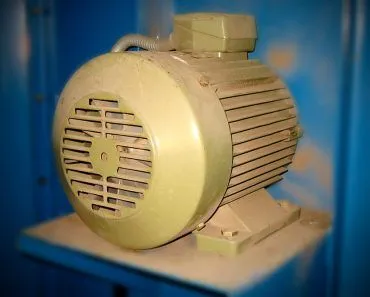
Send current through a coil of wire and the coil becomes a magnet. Put that coil near other magnets and the two push and pull on each other. Arrange it so the push always spins the coil the same way, and you have a motor. The spinning part is the rotor. The still part around it is the stator. Most motors in your home are induction motors. In them, the stator's changing magnetic field drags the rotor around. No wires even touch it.
One idea matters more than any other here, so hold on to it. The turning force a motor makes, its torque, comes from current. More current, more force. Less current, less force. Torque and current rise and fall together.
That single link is the whole article. Getting a stopped motor moving takes force. Force takes current. So the start takes current.

Why Is Starting A Stopped Motor The Hard Part?
Think about pushing a stalled car. Getting it to roll from a dead stop takes a real heave. Once it is rolling, a light shove keeps it going. Nobody strains to keep a moving car moving. They strain to start it.
A motor faces the same wall. A parked rotor has inertia, a resistance to any change in motion. It also sits gripped by static friction. That is the extra stickiness holding a still object in place before it breaks loose. Both fight hardest at zero speed.
So to break away and speed up, the motor must make extra turning force, more than it will ever need once it is up to speed. We just said turning force comes from current. Extra force at the start means extra current at the start. That is the mechanical half of the puzzle.
The mechanical half explains why the start is demanding. It does not explain why the current is so enormous. For that, we need the electrical half, and it is the strange one.

What Is Back-EMF, And Why Does It Cut The Current?
Here is the twist that makes motors weird. A spinning motor fights its own power supply.
As the rotor turns, it does not just use electricity. It also makes some. A moving coil inside a magnetic field generates a voltage, exactly the way a generator does. In a running motor that home-made voltage points backward, against the supply from the wall. Engineers call it back-EMF, short for back electromotive force. In plain terms, it is a reverse voltage the spinning motor makes, pushing back against its own power.
The faster the rotor spins, the bigger this back-EMF grows. And it works against the wall socket. So the voltage actually driving current through the windings is not the full wall voltage. It is the wall voltage minus the back-EMF the motor is making. This is why a running motor sips current: most of the supply voltage is canceled out by the motor's own back-EMF. The wall and the motor are locked in a tug-of-war, and at full speed they nearly cancel. (Back-EMF only appears with a changing magnetic field. That is the same effect behind alternating current and an induction cooktop.)

Why Does A Motor At Standstill Act Like A Short Circuit?
At a dead stop, the rotor is not moving. A coil that is not moving generates no voltage. So the back-EMF is zero.
With no back-EMF to cancel it, the full wall voltage lands across the windings at once. And a motor winding is just a coil of copper with little resistance. Push a full voltage across a low resistance and you get a large current. In that first instant the motor looks less like an appliance and more like a near short circuit. The physics text OpenStax University Physics puts it plainly. The back-EMF is zero when the motor first switches on. So the coil gets the full driving voltage, and the motor draws its biggest current while it is on but not turning.
This standstill gulp has a name: inrush current. Because it happens while the rotor is still locked in place, engineers also call it locked-rotor current. It is the electrical half of the puzzle, and it is the reason the surge is so big.
Then the rotor starts to spin. Back-EMF appears and grows. It cancels more and more of the supply voltage. The current falls. Within about a second the motor reaches full speed, the back-EMF is at its peak, and the current has dropped to the small running value. The surge does not so much end as get strangled by the motor's own spin.

How Big Is The Inrush Current? 5 To 8 Times The Running Current
Let us put a number on it. OpenStax works a clean example. The values are an idealized teaching case, but the arithmetic shows the effect.
- A motor runs on a 48-volt supply. Its winding has a resistance of 0.4 ohms.
- At the instant of switch-on, the back-EMF is zero. So the full 48 volts drives the current. 48 volts divided by 0.4 ohms gives 120 amps.
- Once running, the motor makes 40 volts of back-EMF. That leaves only 8 volts across the winding. 8 volts divided by 0.4 ohms gives 20 amps.
So the same motor pulls 120 amps to start and 20 amps to run. That is six times as much at the start. Real motors vary, but for a motor started straight off the wall, five to eight times the running current is the typical range. Big industrial motors classified under the NEMA MG-1 standard sit right in that band.
The surge is also brief. It peaks in the first instant, then decays as the rotor speeds up and the back-EMF climbs. Most of it is gone within a second. That short life matters, and it is why your house tolerates the surge at all.

Why The Inrush Current Trips Breakers And Dims Lights
A brief surge still has real effects, and you have felt all of them.
Take the dimming lights. All the wiring between the power plant and your outlet has a little resistance. When the motor grabs a huge current for a moment, that current drops a bit of voltage across the wiring. For that instant, every other device on the circuit sees slightly less voltage. Your lights, being sensitive to voltage, dip. The motor reaches speed, the current falls, and the lights recover. That flicker is the inrush current made visible.
Take the tripped breaker. A fuse or circuit breaker guards a circuit against too much current. But if it tripped on every startup surge, no motor could ever start. So breakers and fuses for motors are built to tolerate a short overload without tripping. The wiring code that governs this is NEC Article 430.52. It sizes motor protection to ride through the brief inrush. But it still cuts off a real, lasting fault. A breaker that trips only at startup is often a sign the surge has grown too large, not that the protection is broken.
Engineers who want to tame the surge have tools. A soft starter feeds the motor a reduced voltage at first, then ramps it up. That cuts the inrush to roughly two or three times the running current. A variable-frequency drive does even better, easing the motor up to speed so gently that it can start at close to its running current. Single-phase motors, like the one in that fridge, often use a start capacitor to give the rotor its first shove.

Is The Startup Surge A "Power Surge" That Damages Appliances?
This is where a common worry needs clearing up. Inrush current is not a "power surge" in the sense that harms your electronics.
The two sound alike but are opposites. Inrush current is the appliance pulling extra current out of the wall, by design, for a fraction of a second. It is the machine reaching in. A damaging power surge runs the opposite way. It is a spike of extra voltage the grid pushes at your devices. The cause is a lightning strike or a switching fault. That is the thing a surge protector guards against, and it comes from outside.
So the dip in your lights when the fridge starts is not your appliances hurting each other. It is normal, expected, and designed for. Your fridge is not attacking your lamp. It is just briefly thirsty.

Do Light Bulbs And Transformers Have Inrush Current Too?
Motors are the famous case, but they are not alone. Two other everyday devices gulp at switch-on, each for its own reason.
The old-fashioned incandescent bulb is a dramatic example. Its tungsten filament changes resistance with temperature. Cold, the metal barely resists the current. Hot, it resists far more. Tungsten's resistance climbs as it heats. Near room temperature it rises about 4.5 thousandths for every degree Celsius, as HyperPhysics tabulates. By the time the filament glows at around 2,500 °C (4,500 °F), its resistance has risen roughly fifteenfold. At the flick of the switch the filament is cold. Its resistance is low. The current jumps to about fifteen times normal for a few thousandths of a second. Then the wire heats up and chokes it back. This is why a filament bulb, if it is going to die, almost always dies with a pop the instant you turn it on.
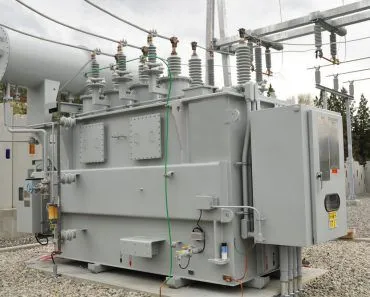
A transformer does it too, by yet another route. Switch one on at the wrong moment and its iron core briefly saturates with magnetism. Its resistance to current then collapses. For a cycle or two it can draw many times its rated current. The Electrical Classroom reference points to leftover magnetism in the core, called residual flux. That leftover magnetism sets up the surge the moment the transformer switches on. Same headline, three different mechanisms: a big gulp at switch-on, a quiet sip thereafter.

So Why Do Motors Need A Surge To Start But Little To Run?
Put the two halves together and the paradox dissolves.
The mechanical half sets the demand. A stopped rotor is held by inertia and static friction, and breaking it loose takes extra turning force. Turning force comes from current, so the start asks for more.
The electrical half sets the size. A stopped rotor makes no back-EMF, so nothing cancels the supply voltage. The full voltage lands across a low-resistance winding. The current briefly soars to five or eight times what running needs. Then the rotor spins up, its back-EMF rises, the supply voltage gets canceled away, and the current sinks to a trickle.
So starting is the hard part and running is easy, for the same reason it is easier to keep a car rolling than to get it moving. The next time your kitchen light dips as the fridge stirs to life, look closer. You are watching a motor at the one moment it has no back-EMF to protect it. It reaches hard into the wall, then lets go a heartbeat later. It is not a fault. It is the motor being born up to speed.
References (click to expand)
- Electric Generators and Back Emf — OpenStax University Physics Volume 2, §13.6
- Temperature Coefficient of Resistance — HyperPhysics, Georgia State University
- Motors and Generators (MG 1) standard — NEMA
- NFPA 70, National Electrical Code (Article 430, motors) — NFPA
- Magnetization Inrush Current in a Transformer — The Electrical Classroom