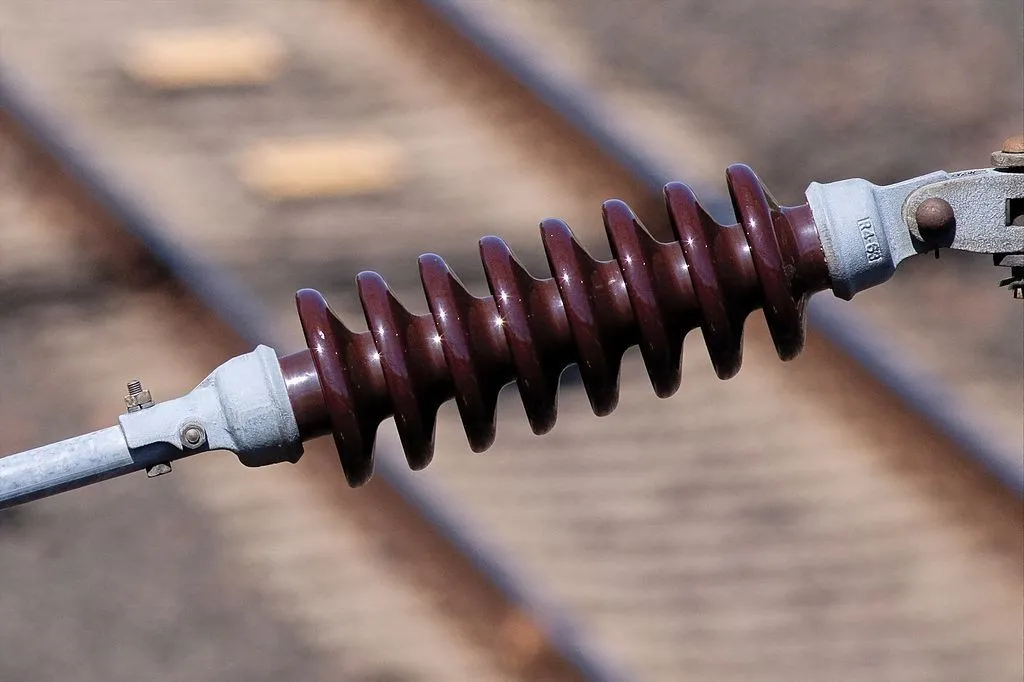
Power lines and transmission towers don’t normally short-circuit during rain because of their insulators, not the rainwater itself. Modern HV insulators — porcelain, toughened glass, or silicone-rubber composite — use a stack of bell-shaped sheds to extend the surface path (the "creepage distance") that any leakage current would have to follow, while their hydrophobic surfaces stop a continuous water film from forming. Rain alone on a clean insulator is harmless; the real risk is pollution flashover, when contamination on the insulator surface gets wet enough to conduct.
All of us have had certain experiences that have taught us one thing or another about how the world works. There are many, in fact, countless examples of such experiences, but for now, I’ll take the one that involves electricity.
I have been zapped more than once by low-intensity (basically harmless) electric shocks while trying to plug in a cable (that was not completely dry) into an outlet. The lesson that I learnt after experiencing a few of these small, yet surprising electric shocks is that water and electricity should not be ‘brought together’, especially if you enjoy staying alive.
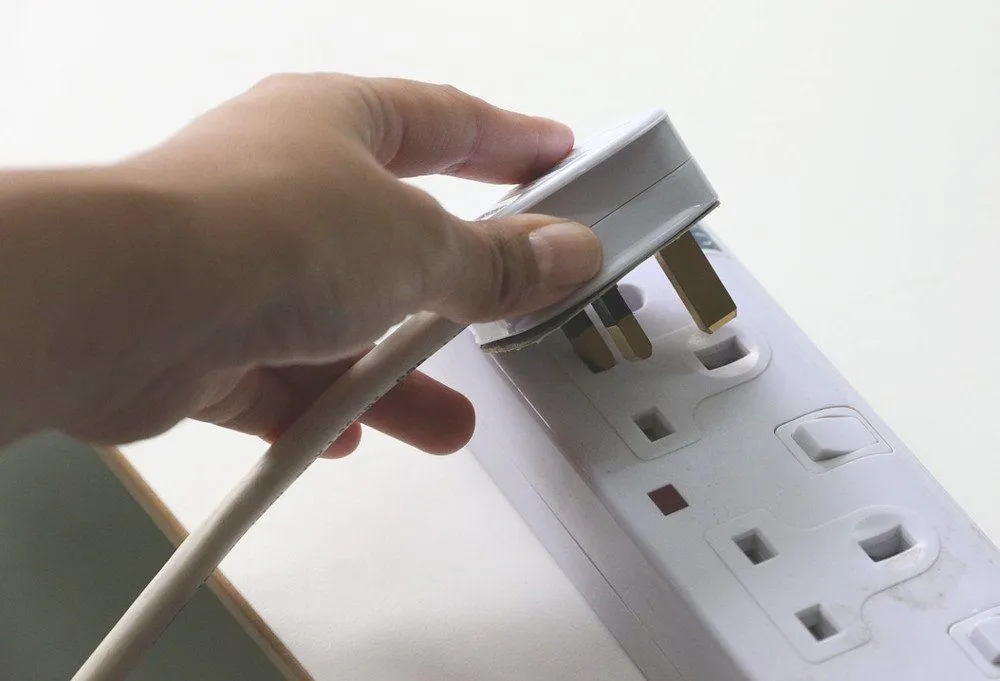
So, it can definitely be said that water has a tendency to make electricity behave ‘abnormally’, i.e., in a way that’s not particularly safe for us. However, if that’s the case, why don’t power lines and transmission towers short-circuit during rainstorms when they’re practically drenched in water?
Before we get to that, we should try to understand the basics.
What Is A Short Circuit?
A short circuit is a low-resistance connection between two conductors supplying electrical power to any circuit; in other words, a short circuit causes current to flow through an unintended path, which has no or very little electrical resistance. In simple terms, a short circuit is an unintended connection between two parts of a circuit that is not good for your circuit, and by extension, is not good for you either!
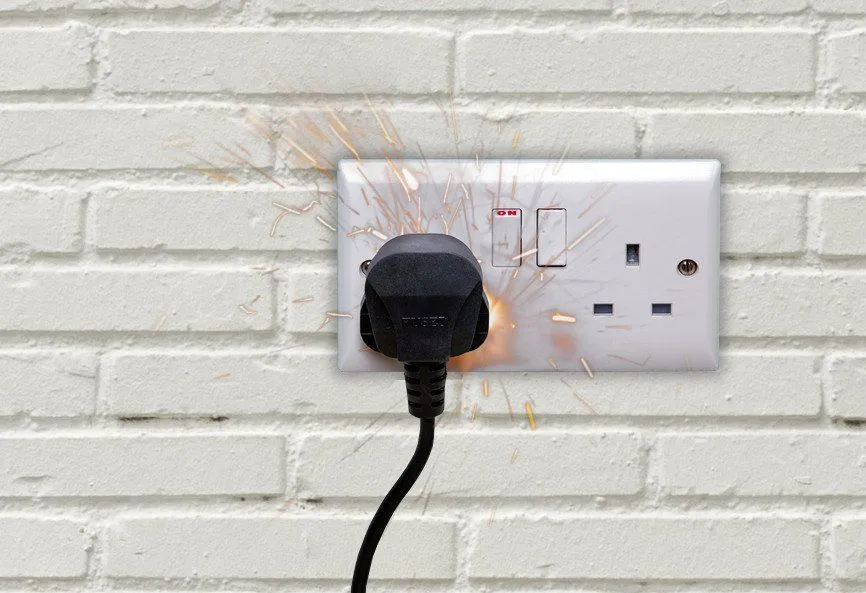
Why Does Water Cause Short Circuits?
Most liquids that come in contact with electrical circuits are water-based, so understanding why water and electricity are not a great combination is important.
You may recall from your high school science class that water is conductive. The truth is, pure water is an extremely poor conductor: ultrapure water at 25°C measures only about 0.055 μS/cm, because the only ions in it are the H+ and OH− produced by the water molecules slightly auto-ionising. For most practical purposes, that’s as good as not conducting at all.
Yes, that’s true. Pure water is, for everyday purposes, not electrically conductive.
However, the water that usually comes in contact with electrical circuits is rarely pure water, i.e., it’s usually filled with impurities. These impurities are what make water electrically conductive, and thus a hazard when brought in direct contact with electrical circuits.
Since water is conductive, it could potentially make (electrical) connections in places (within the circuit) where you don’t want them. This can then lead to the flow of current through an unintended path, and boom! You have a short circuit!
How Power Transmission Towers Protect Against Short Circuits
There are a number of reasons that ensure that power transmission towers don’t normally short circuit.
First, as mentioned earlier, pure water is not all that conductive — but rainwater isn’t pure either. As it falls, it dissolves CO₂ to form weak carbonic acid (giving natural rain a pH of about 5.6), picks up sea-salt aerosols near coasts, and absorbs SO₂ and NOx from industrial pollution that can drop the pH to 4.0 or lower (acid rain). Typical rainwater conductivity ranges from roughly 5 to 50 μS/cm — hundreds of times higher than ultrapure water. So rainwater is conductive enough to matter at transmission voltages; what really keeps the lines from shorting is the geometry and the materials of the insulators, not the purity of the water.
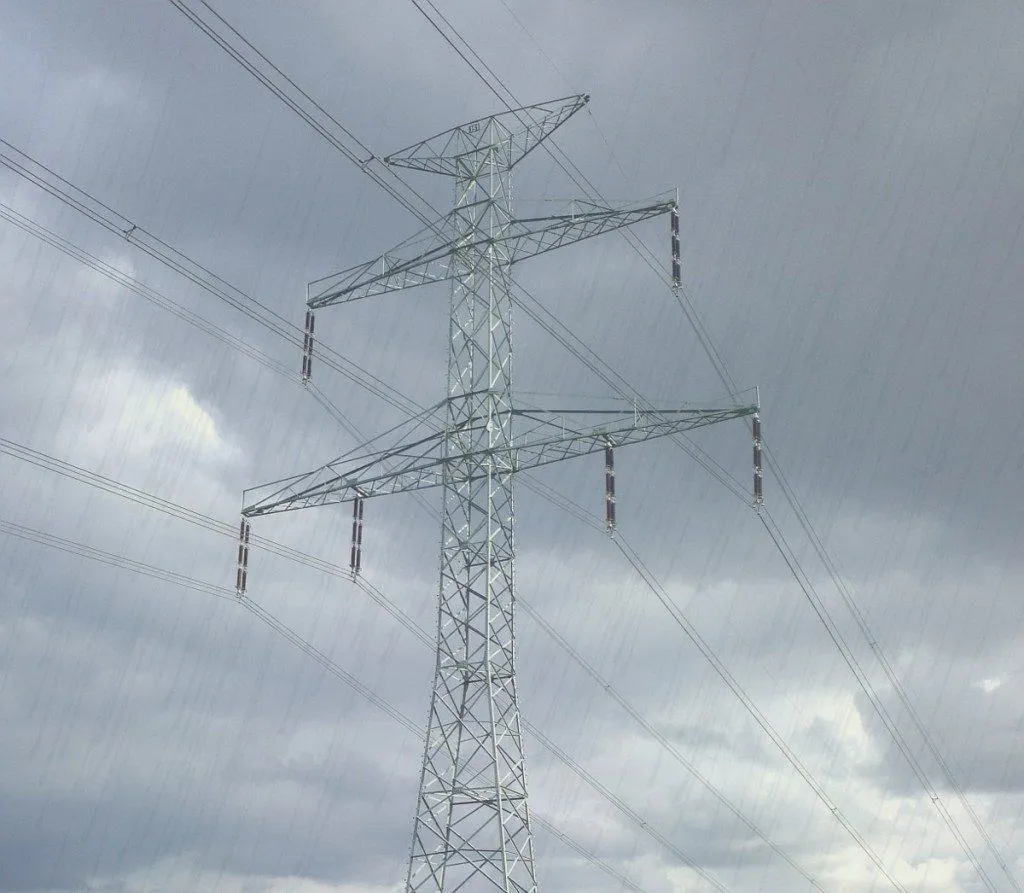
Far more importantly, electrical insulators are put in place to keep circuits separated, i.e., to prevent them from coming in contact. These insulators are materials that allow no or very little electrical current to flow through them under the influence of an electric field. Modern transmission insulators come in three main families: traditional porcelain (ceramic), toughened glass, and — increasingly common since the 1980s, especially at the highest voltages — polymer composite insulators (a fibreglass-resin core sheathed in silicone rubber). Composites are popular because their silicone surface is hydrophobic: water beads up rather than forming a continuous film, which sharply reduces the leakage current that would otherwise creep across a wet surface.
These bell-shaped grooves are called sheds (or skirts), and their main engineering purpose isn’t just shedding water — it’s extending the creepage distance, the path that any leakage current would have to follow along the insulator’s surface from the live end to the grounded end. By forcing that path to wind up and over each shed, designers pack a much longer surface path into a shorter overall insulator. The IEC 60815 standard specifies how much creepage is needed per kilovolt depending on local pollution levels (about 16 mm/kV in clean areas, more than 31 mm/kV in heavily polluted ones). Keeping the inner surfaces dry during rain is a useful side effect.
Power companies also space the phases far apart — not because rain itself can bridge a metres-wide air gap, but because of insulation coordination, lightning and switching surges, and especially because wind can make the conductors physically swing or "gallop" during storms (rain-wind-induced vibration), bringing them close enough to flash over in air. Lastly, utilities run regular maintenance activities on these towers: they wash the insulators with deionised (high-purity) water, often from the ground or a helicopter, in a "live-line" cleaning procedure governed by IEEE Std 957. The water's very low conductivity makes it safe to use even on energised lines.
What can actually go wrong: pollution flashover
Rain on a perfectly clean insulator is harmless. But after weeks of dry weather, salt, dust and industrial pollutants build up on insulator surfaces. When rain, fog, or even heavy dew wets that layer, it becomes mildly conductive, and a small leakage current begins to flow. The current heats parts of the surface, evaporating water in patches called dry bands; the full line voltage now drops across these narrow dry sections, and arcs strike across them. Under the wrong conditions those arcs grow and merge, "flashing over" the entire insulator and tripping the line. Counter-intuitively, light fog or drizzle is often worse than heavy rain, because heavy rain washes the contamination away. Pollution flashover is in fact the single biggest weather-related cause of transmission outages — not "ordinary" short circuits. To fight it, modern composite insulators use silicone rubber (which is hydrophobic and even transfers its hydrophobicity to a contamination layer), utilities apply RTV silicone coatings to existing porcelain or glass strings in polluted regions, and increasingly they monitor leakage current in real time using optical-fibre sensors as an early-warning sign of impending flashover.
These are the main reasons why you don’t see power transmission towers failing (thank god for that!) due to short circuits every time it rains.
Why Do Power Lines Buzz And Crackle More In The Rain?
If you have ever stood near a big transmission line during a drizzle and heard it hiss, crackle, or buzz, you were not listening to a short circuit. That sound is corona discharge, and it gets noticeably louder in wet weather.

Corona happens when the electric field right at the surface of a conductor grows stronger than the surrounding air can withstand. Dry air at sea level breaks down at roughly 30 kV/cm, and near that threshold the thin layer of air hugging the wire begins to ionise, glowing faintly and hissing as it does. On a clean, dry conductor, engineers keep the field just below this point, so the line stays quiet.
Rain tips the balance. Raindrops and dewdrops clinging to the conductor form tiny pointed tips, and a sharp point concentrates the electric field far more than a smooth, round surface does. Each droplet effectively becomes its own little launch pad for corona, while the extra moisture in the air makes it even easier for charge to leak off and ionise its surroundings. That is why the same line can be silent on a dry afternoon yet buzz audibly in fog, drizzle, or humid air.
Corona is normal and harmless to you, but utilities are not fond of it: it quietly wastes energy as corona loss, throws off radio-frequency interference, and even produces a whiff of ozone. To tame it, engineers fit smooth hardware and round corona rings that spread the charge over a wider surface, holding the field below the corona threshold in dry conditions. (For a closer look at the sound itself, see our explainer on why power lines produce a buzzing sound.)
Can Line Crews Work On Power Lines In The Rain?
Yes, they can, and they routinely do. When a storm knocks out power, repair crews head straight out into the rain to get the lights back on; wet weather by itself does not send everyone home.

What changes is how they work. For most hands-on repairs, the crew first de-energises the line (switching it "dead") and bonds it to the ground, so the conductor they are handling carries no voltage at all. On a cold, grounded line, the rain is simply weather rather than a hazard.
The genuinely delicate case is live-line work, where a lineworker services a conductor that is still energised, insulated from the ground by a bucket, a helicopter, or a conductive bonded suit. Here, water really does matter, because a film of moisture can bridge the very air and insulator gaps the technique depends on. For that reason, OSHA's rules for live-line bare-hand work prohibit it during bad weather, including thunderstorms, high winds, and snow or ice storms. Crews also clear the area whenever lightning is close, whatever the job.
So the honest answer is a split one: routine restoration on de-energised lines happens in the rain all the time, while energised live-line work pauses when a storm rolls through. It follows the same logic as the "live-line" insulator washing described above, which is only safe because the water used is ultra-pure. And although the lines themselves shrug off ordinary rain, that does not mean the grid is invincible. Trees, wind, flooding, and lightning can still knock things out, which is exactly why the power goes out during storms.
References (click to expand)
- MIT School of Engineering | » What is a short circuit?. The MIT School of Engineering
- Insulator (electricity) - sheds, creepage distance, pollution flashover - Wikipedia
- (2004) Rain Water Composition Study - Carleton College. Carleton College
- Acid rain (rainwater pH and ionic composition) - Wikipedia
- Corona discharge (air breakdown, water droplets, audible and radio noise, ozone) - Wikipedia
- Why high-voltage lines hum, and how corona rings help - OPPD The Wire
- Live-Line / Bare-Hand Work restrictions in adverse weather - OSHA eTool