Table of Contents (click to expand)
No, pure water is an extremely poor conductor of electricity due to its very low concentration of ions. However, the water we encounter daily contains dissolved ions and impurities that make it a good conductor of electricity.
You may have heard this about water and electricity: water conducts electricity. This is why the combination of water and electricity is considered dangerous, as it can cause electric shocks to those who come in contact with it.
However, if we delve into the depths of chemistry on this issue, we can see that pure water is actually an extremely poor conductor of electricity. In other words, it barely allows electricity to flow through it.
Water Is A Universal Solvent
Water is a good solvent as it can dissolve many substances. In fact, it is often referred to as the “universal solvent” because it can dissolve more substances than any other liquid.
Water molecules have a polar nature, meaning there is a partial negative charge on the oxygen atom and a partial positive charge on the hydrogen atoms. This polarity allows water molecules to surround and break apart ions and polar molecules, enabling their dispersion in water.
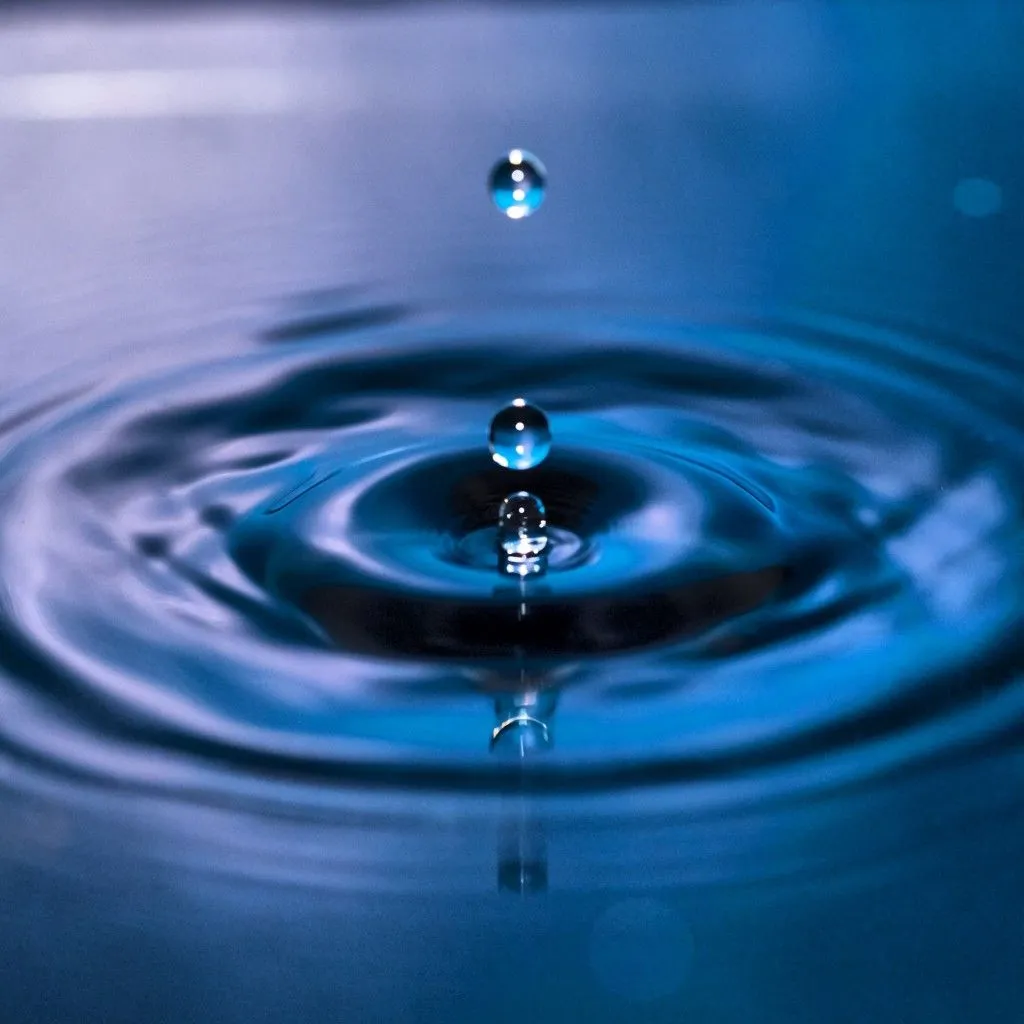
Thanks to this unique property, water can dissolve various compounds, including salts, sugars, acids, and some gases. This makes it an essential component for various biological and chemical processes in nature and laboratories. The versatility of water as a solvent plays a crucial role in supporting life and enabling many chemical reactions.
Almost all water we encounter daily contains dissolved substances, chemicals, and minerals – whether from the kitchen tap, shower, swimming pool, or elsewhere.
It is improbable that any water we use is entirely pure, free from all salts, minerals, and impurities.
Pure Water Is An Extremely Poor Conductor Of Electricity
Water’s ability to conduct electricity hinges on the presence of ions (charged particles). In pure water, such as fully deionized or distilled water, there are virtually no dissolved impurities to provide ions. However, even pure water undergoes a process called auto-ionization (or self-ionization), where a tiny fraction of water molecules spontaneously dissociate into hydronium (H3O+) and hydroxide (OH−) ions. At 25°C, the concentration of these ions is approximately 1.0 × 10⁻⁷ mol/L—roughly 2 out of every billion water molecules at any given moment.
This extremely small concentration of ions gives ultra-pure water a conductivity of just 0.055 microsiemens per centimeter (µS/cm), making it an extremely poor conductor of electricity for all practical purposes.
In distilled water, impurities are removed, leaving almost exclusively neutral water molecules with only this negligible concentration of ions from auto-ionization. Additionally, distilled water exposed to air absorbs carbon dioxide (CO2), forming carbonic acid, which slightly increases the ion concentration and lowers the pH to around 5.5–6.5. Still, the conductivity remains far too low for distilled water to be considered a conductor.
Why Is ‘Regular’ Water A Good Conductor For Electricity?
Tap water, rainwater, and seawater all contain a vast array of impurities, such as sodium (Na+), calcium (Ca2+), and magnesium (Mg2+) ions. Because these ions are charged when present in water, they allow for the flow of electricity through the liquid.
Even a small amount of ions in water can allow it to conduct electricity, so it doesn’t require a large amount of impurities to function as a good conductor.
In summary, water can conduct electricity due to the dissolved ions and impurities. When a battery with positive and negative poles is placed in water, a closed circuit is created as the positive ions are attracted to the negative pole and the negative ions to the positive pole.
Water is amphiprotic, meaning it can act as both an acid and a base by donating or accepting protons. It is also a good source of hydrogen, as electropositive elements (like sodium, potassium, and calcium) can reduce water to produce hydrogen gas, which is useful in redox reactions.
Water has higher surface tension compared to most common liquids (mercury and molten metals like gallium being notable exceptions). This high surface tension is due to the extensive hydrogen bonding between water molecules.
Interestingly, a 2025 study published in Nature found that water confined in nanoscale channels between atomically flat crystals showed up to 100,000 times greater electrical conductivity than bulk water, opening new possibilities for nanotechnology and energy applications.
Because the water we use daily inevitably contains dissolved ions, keeping all electrical appliances away from it is best to prevent any risk of electric shock.
Why Does Salt Water Conduct Electricity So Well?
If a pinch of impurity turns water into a conductor, then it should come as no surprise that salt water is one of the best conductors of all. When common table salt (sodium chloride, NaCl) dissolves, the polar water molecules pull the crystal apart, a process chemists call dissociation. Each formula unit splits into a positive sodium ion (Na+) and a negative chloride ion (Cl−), and these freed ions are able to move nearly independently through the solution, carrying charge from one place to another.

When you apply a voltage, the Na+ ions drift toward the negative electrode and the Cl− ions drift toward the positive one. That two-way migration of charged particles is the electric current. Crucially, the more ions there are, the better the liquid conducts: halve the salt concentration and you roughly halve the current, because there are only half as many charge carriers to do the work.
This is why seawater is in a different league from tap water. The ocean carries on the order of 35 grams of dissolved salt per kilogram of water, giving it an electrical conductivity of roughly 5 siemens per meter (about 50,000 microsiemens per centimeter). Compare that to ultra-pure water at just 0.055 µS/cm, and seawater conducts something like a million times better. It is also why the old textbook line that “sea water is a bad conductor of electricity” is simply false. Sea water is an excellent conductor, precisely because it is loaded with sodium, chloride, magnesium, and other ions. The same logic explains why sea ice ends up nearly fresh: the freezing process leaves the salt behind.
Does Ice Conduct Electricity?
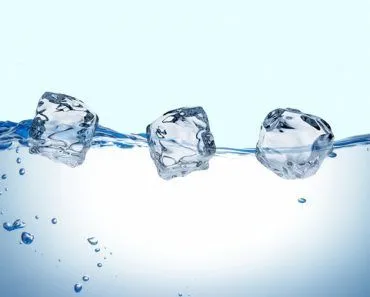
Here is a twist that trips up a lot of people: liquid salt water conducts beautifully, yet freeze that same water and its ability to carry a current collapses. The ions that made the liquid conductive do not vanish when water turns to ice, but they get locked into the rigid crystal lattice and can no longer wander freely toward an electrode. With the charge carriers held in place, ice behaves as a very poor conductor for everyday purposes.

Researchers can watch this happen directly. When they measure the electrical impedance of water while cooling it, the impedance jumps sharply right at the freezing point for both deionized and salty samples, meaning resistance shoots up and conductivity drops the moment a solid lattice forms. There is an extra wrinkle for salt water: as the ice lattice grows it actually rejects most of the dissolved salt, squeezing it into pockets of unfrozen liquid brine trapped between the ice crystals. That leftover brine stays liquid (and conductive) until temperatures fall well below −20 °C (−4 °F). So “does ice conduct electricity?” gets the honest answer: barely, and far less than the water it came from.
If Pure Water Doesn’t Conduct, Why Are Water And Electricity Still Dangerous?
A fair question follows from everything above: if pure water is basically an insulator, why is everyone warned to keep hair dryers away from the bathtub? The answer is that you almost never meet pure water in real life. The water in your bath, your kitchen sink, a swimming pool, or a puddle is full of dissolved ions, and your own body is a salty, watery, conductive object too. Drop a live appliance into that water and it completes a circuit straight through anyone in contact with it.

The same principle governs lightning. According to the U.S. National Weather Service, when lightning strikes water most of the electrical discharge occurs near the surface, which is why fish swimming below are largely unaffected while anyone or anything at the surface is in serious danger. That is also the reason you should get out of a pool, lake, or the ocean the instant you hear thunder. The hazard does not even stop at the shoreline: the U.S. Centers for Disease Control and Prevention warns against bathing, showering, or washing dishes during a thunderstorm, because a strike can travel through a building’s metal plumbing. The takeaway is not that water is harmless when it is pure, but that the water around us never is, and that combination with electricity can stop a heart.
References (click to expand)
- Conductivity (Electrical Conductance) and Water - USGS.
- ELECTRICAL CONDUCTIVITY.
- Farzaneh, M., Fofana, I., & Hemmatjou, H. (2007, February). Effects of temperature and impurities on the DC conductivity of snow. IEEE Transactions on Dielectrics and Electrical Insulation. Institute of Electrical and Electronics Engineers (IEEE).
- Using Electrical Conductivity and Total Dissolved Solids ....
- Ions in Solution (Electrolytes). ChemPRIME, Chemistry LibreTexts.
- Monitoring Electric Impedance During Freezing and Thawing of Saline and De-ionized Water. PMC, NCBI.
- Lightning and Fish. National Weather Service (NOAA).
- Safety Guidelines: Lightning. Centers for Disease Control and Prevention (CDC).