Table of Contents (click to expand)
Yes. An octopus changes color almost instantly using pigment-filled skin cells called chromatophores, backed by reflective iridophores and leucophores. By tensing tiny muscles, it can also change its skin texture and even mimic the shape and movement of other animals to camouflage, hunt, and communicate.
The octopus is one of the most fascinating creatures you can find underwater, and the more you read about this animal, the more intrigued you’ll become!
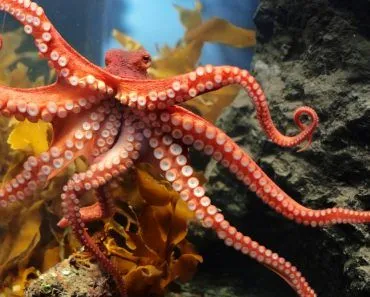
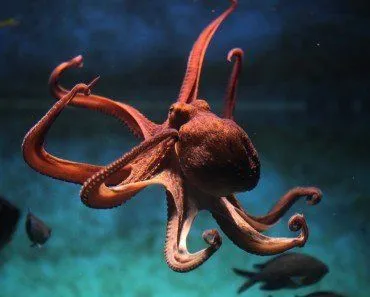
These creatures belong to the Octopodidae family and weigh between 3-10 kg (about 7-22 lb). They have a short life span (1-2 years) and have 33,000 genes, which is much more than what humans possess! They are found in the ocean and prefer warm and tropical waters. Most octopuses remain close to the ocean floor, in dark or deep waters, although a few types live nearer to the surface of the ocean. They are carnivorous and often feed on clams, lobsters, fish and shrimp.
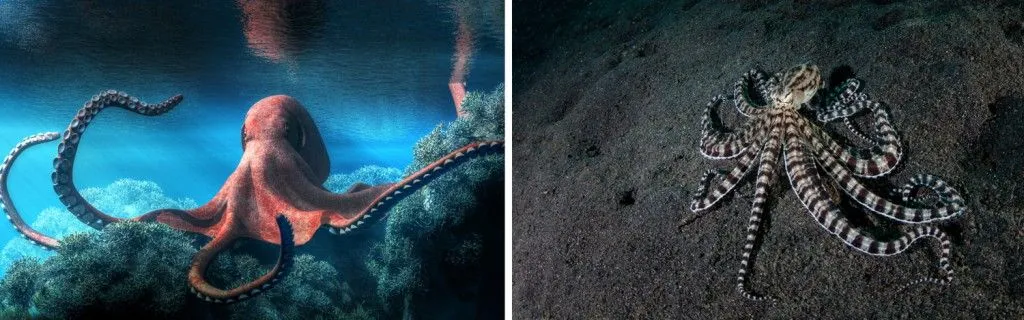
Octopuses have eight arms and three hearts; they are also boneless, have blue blood, and can squirt ink to scare predators away. Adding to this cool list of features is their ability to squeeze through incredibly tight spaces! This is quite useful when they get trapped in a sticky situation, don’t you think?
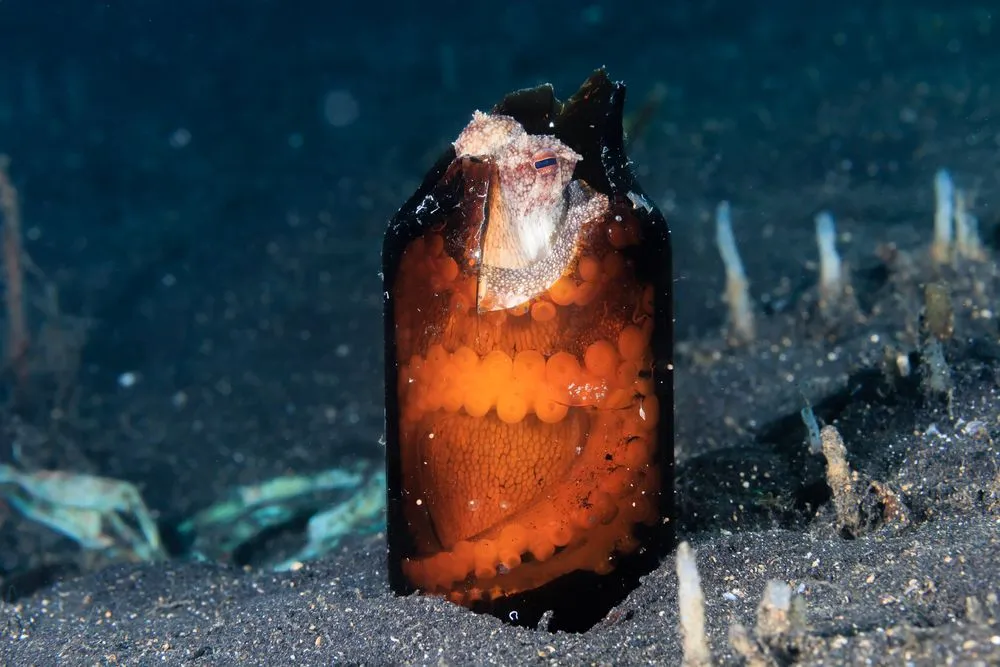
They’re also incredibly smart and are capable of using tools, such as coconut shells!
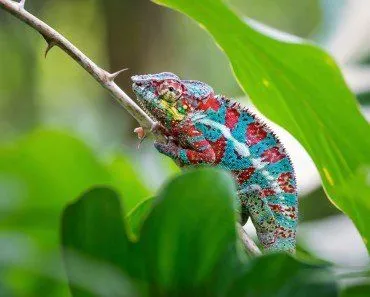
The octopus belongs to the class Cephalopoda, which is an exclusive group in the animal kingdom. Animals belonging to this class can change their color based on their surroundings or when performing specific activities.
Octopuses, in particular, are good at blending in with their surroundings, either to camouflage themselves or to communicate with other individuals. In fact, they can change their skin color in the blink of an eye to match their surroundings, make them invisible or even make them stand out or appear more intimidating. If you’ve never seen an octopus changing its colors, watch it happen here.
How Do Octopus Change Color?
Octopuses have specialized cells below their skin surface known as chromatophores. Each chromatophore has a stretchy sac called the cytoelastic sacculus at its center. Each of these sacs is filled with pigments of a single color: red, yellow, black or brown.
Thus, when an octopus tightens its muscles, the pigment sac is pulled wider. This makes the pigments more visible on the skin of the octopus. When the muscles are relaxed, the pigment sac shrinks back to its normal size and the pigments are less noticeable, so the octopus returns to its original, unchanged color.
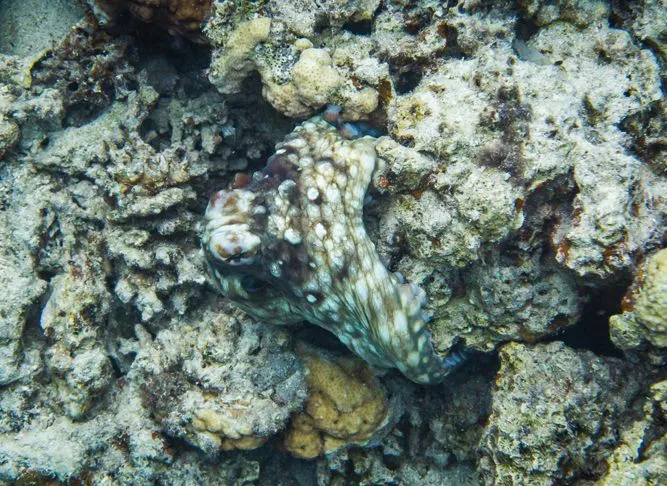
Each of the chromatophore cells in an octopus is attached to a nerve. The tightening and relaxation of the cells are controlled by the octopus’ nervous system. Thus, when an octopus wants to camouflage itself, its brain signals the chromatophores to expand in an instant! With roughly 230 chromatophores packed into every square millimeter of skin, the octopus can paint astonishingly detailed patterns across its body in a fraction of a second.
Chromatophores don’t work alone, though. Below them sit two other types of cells. Iridophores act like tiny mirrors, stacking reflective plates that bounce back shimmering blues, greens and silvers, while leucophores scatter whatever light hits them and produce a bright white that helps the other colors pop. Layered together, these three cell types give the octopus its full palette.
And it isn’t just color, the octopus can change its texture too. Scattered across its skin are tiny muscular bumps called papillae. By tensing these muscles, the octopus can go from smooth as glass to spiky and lumpy in under a second, allowing it to match the rough surface of a rock or a clump of seaweed. So when you wonder how an octopus changes color and texture so quickly, the answer is this remarkable, nerve-controlled toolkit working all at once.
Why Does An Octopus Change Its Color?
There are many reasons why an octopus might need to change its color. Here are a few of them:
Survival
Just imagine how difficult it must be to survive in the wild. You’re constantly worrying about where you’re going to find your next meal from, while not becoming someone else’s dinner! In this regard, the octopus’ color-changing ability gives it an advantage over other animals.
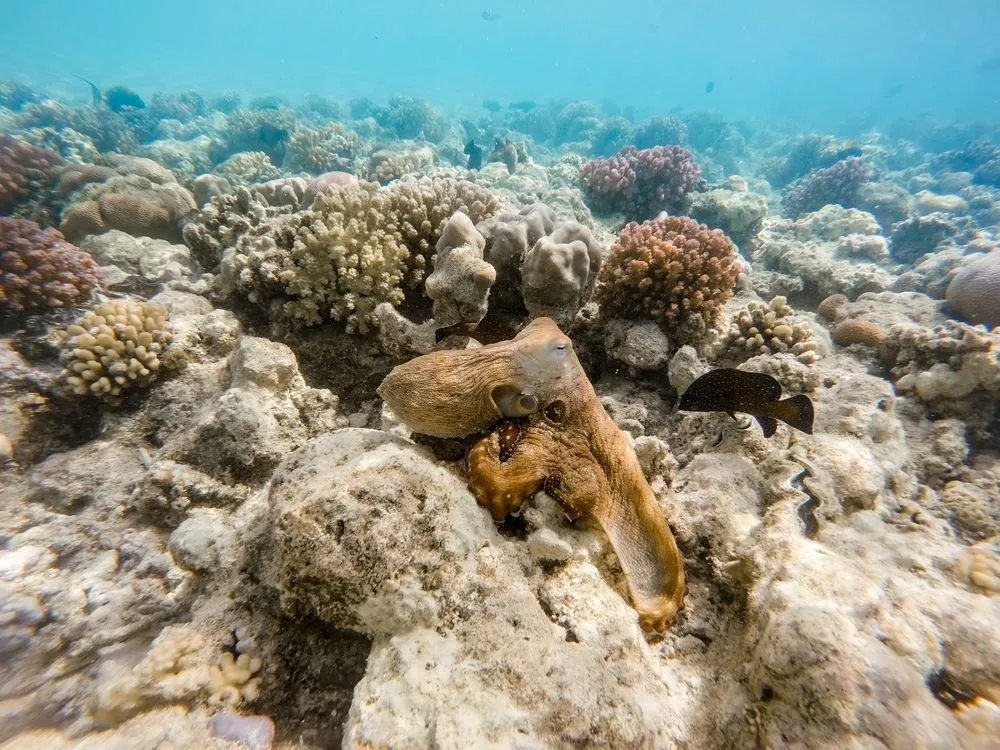
Octopus can mimic other animals and neighboring habitats, and by doing so, they can camouflage themselves very effectively. Several studies have been able to observe this phenomenon. In one such study, researchers watched an octopus swim alongside a group of reef fish, shifting its color and shape until it blended right in with the shoal. By becoming similar in color and form to its companions, the octopus was far less conspicuous and could slip past predators, particularly those that hunt using visual cues.
Food
Octopuses are known to change their color while attacking their prey. This is one of the many amazing strategies the animal uses to trick their prey into thinking they’re not octopuses!
One particular study shows how octopuses changed their colors before, during and after attacking their prey. Octopuses changed their colors while attacking crabs, and this study found that they changed their colors in the following sequence: (i) before detecting prey, they displayed a range of colors; (ii) upon detection and attack of prey, their colors varied from light orange to grey; (iii) upon landing on the prey, the octopus became colorless and almost transparent; (iv) upon trapping the prey, the octopus turned spotted; and (v) afterwards, the octopus went back to displaying several colors.
From this study, researchers discovered that the color changes were due to locomotor activities and postural adjustments.
Mimic
Several creatures in the animal kingdom have mastered the art of mimicry, allowing them to trick their common predators. From camouflage to playing dead, animals have a whole list of tricks up their sleeve!
The mimic octopus (Thaumoctopus mimicus), in particular, is one such fascinating animal that does a phenomenal job in tricking predators! The relatively small mimic octopus lives mostly in shallow waters and is pale brown. What makes this octopus genuinely amazing is that it doesn’t stop at just camouflaging itself, but can also change the way it moves to mimic other animals!
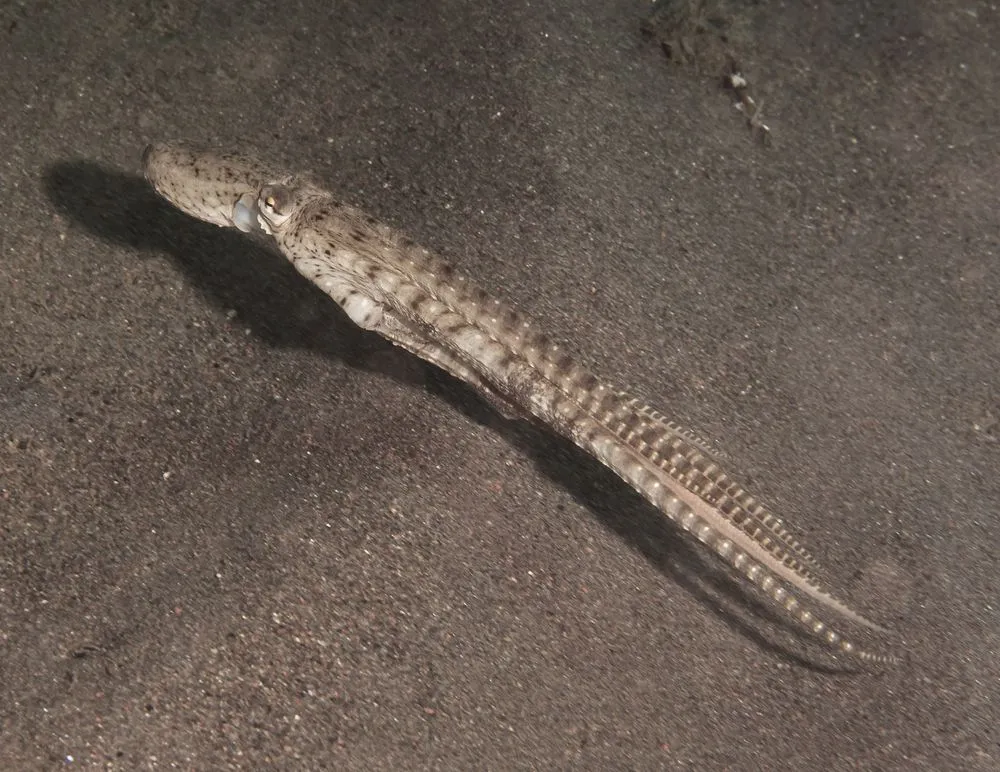
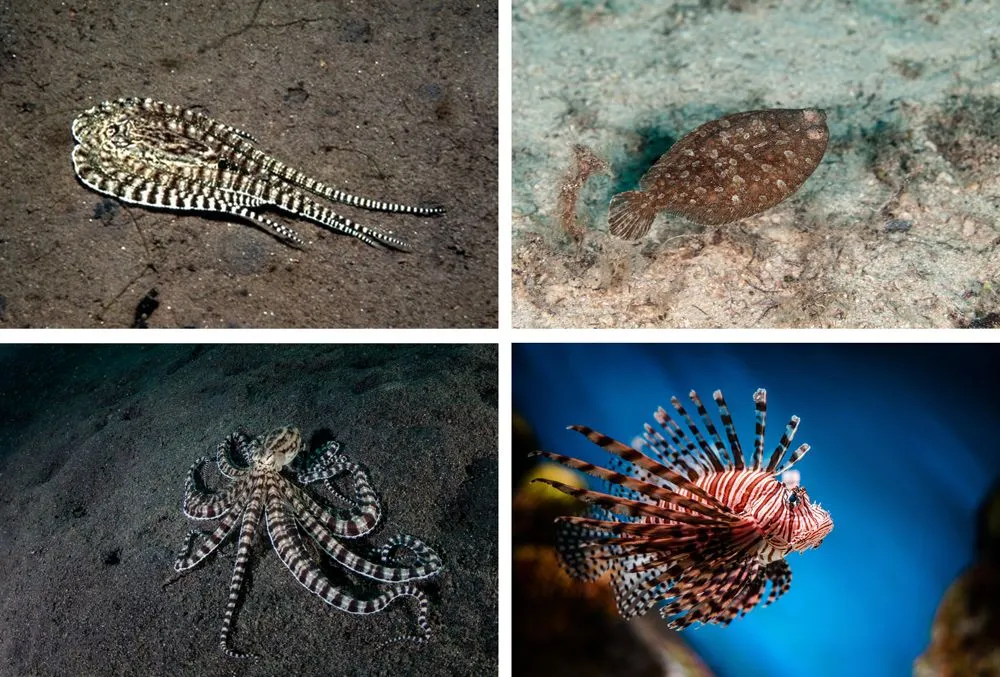
For instance, researchers studying it in Indonesia found that the mimic octopus changed its color and arranged its body to impersonate venomous animals, such as the lionfish, banded sea snakes and flatfish like the banded sole (see photographs below). Remarkably, it can switch between these disguises depending on the threat it faces.
Dreaming
Scientists have also filmed octopuses changing their colors while they sleep, which has led some researchers to wonder whether the animals might be dreaming. While the octopus rests, bursts of neural activity in its optic lobe (a part of the brain that processes vision) fire signals to the skin. In turn, the chromatophores expand and contract, making the sleeping octopus flicker through colors and patterns. Whether this reflects an actual dream is still debated, as some scientists suspect it may simply be the chromatophore muscles twitching as the octopus sleeps.
So, to answer the question of can an octopus change the way it looks? As we have clearly seen… indeed it can!
References (click to expand)
- Abbott, A. (2015, August 12). Octopus genome holds clues to uncanny intelligence. Nature. Springer Science and Business Media LLC.
- Krajewski, J. P., Bonaldo, R. M., Sazima, C., & Sazima†, I. (2009, January). Octopus mimicking its follower reef fish. Journal of Natural History. Informa UK Limited.
- Warren, L. R., Scheier, M. F., & Riley, D. A. (1974, February). Colour changes of Octopus rubescens during attacks on unconditioned and conditioned stimuli. Animal Behaviour. Elsevier BV.
- Norman, M. D., Finn, J., & Tregenza, T. (2001, September 7). Dynamic mimicry in an Indo–Malayan octopus. Proceedings of the Royal Society of London. Series B: Biological Sciences. The Royal Society.
- Nature on PBS (2019). Octopus Dreaming. Youtube
- National Geographic (2012). Amazing Octopus Color Transformation | National Geographic. Youtube
- List of Species for Fishery Statistics Purposes - Octopus vulgaris. The Food and Agriculture Organization of the United Nations
- How Octopuses and Squids Change Color. Smithsonian Ocean, Smithsonian Institution.
- High energetic cost of color change in octopuses. Proceedings of the National Academy of Sciences (PNAS).
- Pophale, A., Shimizu, K., Mano, T., et al. (2023). Wake-like skin patterning and neural activity during octopus sleep. Nature.