Table of Contents (click to expand)
Yes, animals have different blood types, but they don’t use the human ABO system. Each species has its own set of red blood cell antigens: dogs are classified by DEA groups, cats use an AB system, and horses have eight blood groups. Mismatched transfusions can trigger severe inflammation, kidney failure, or death, just as in humans.
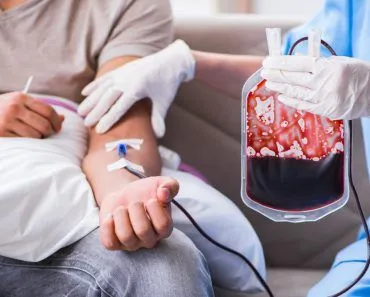
When you’re watching a medical drama, you almost always see doctors and nurses handling bags of blood for transfusions to be given to the most critically injured patients who have lost a lot of their own blood. When you go to donate blood, your blood will be carefully labeled as one of four blood types – A, B, AB, or O. These classifications apply for human blood, but what about our furry friends and the rest of the animal kingdom?
Do they share the same blood types, or would a transfusion of human blood into a dog be a terrible idea?
Blood Type Specificity
When a patient receives a blood transfusion, it is essential that they be given blood that matches their own blood type. Red blood cells (RBCs) in human beings are covered in specific antigens that have been inherited over time, and based on the presence or absence of these antigens (which could be proteins, carbohydrates, or lipids), you fall within a certain blood group. The International Society of Blood Transfusion currently recognizes around 48 blood group systems covering nearly 400 distinct antigens in humans, though for everyday purposes we lump them into a handful of familiar types. Your blood type is determined by the blood types of your parents, based on the ABO blood group system of antigens. The other important blood group system is Rh, which determines a (+) or (-) after the ABO classification.
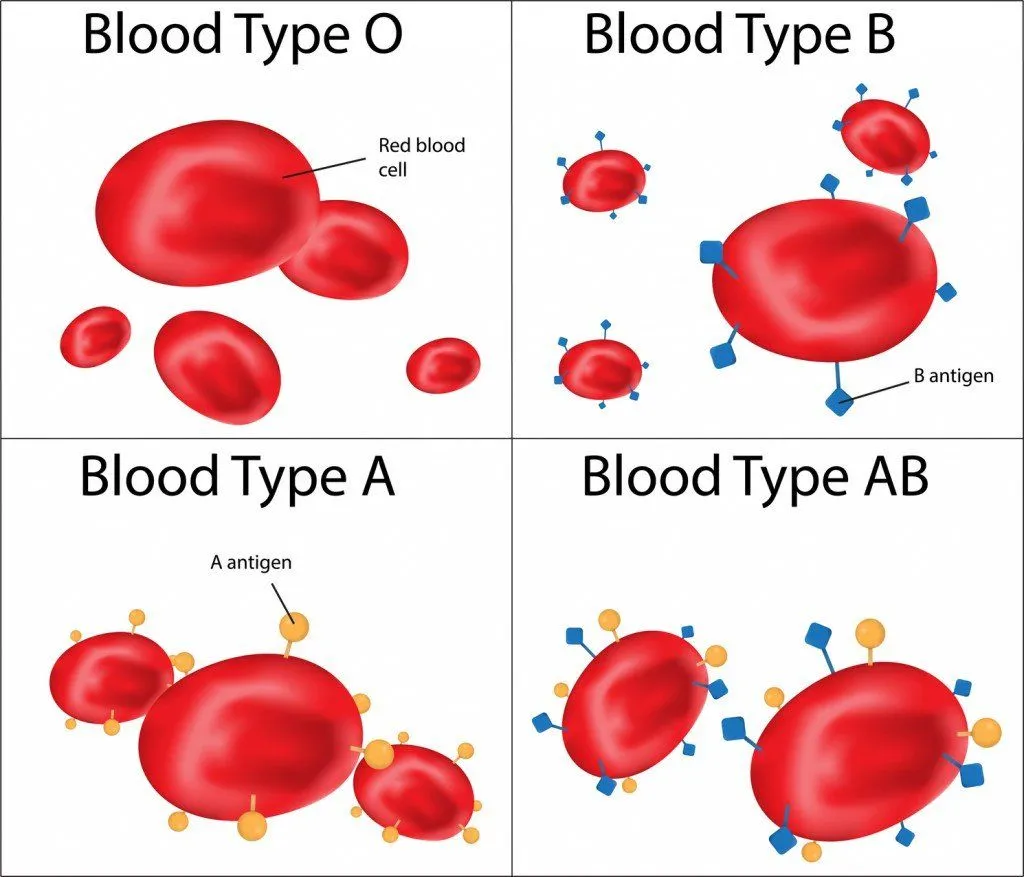
The human body is very clever, and doesn’t allow foreign blood types to mix in the body. For example, if you have Type A blood, then your body will have antibodies that seek out the antigens found on Type B blood. If you receive a transfusion of the wrong blood type, then your body’s natural defense mechanism will find and eliminate that perceived threat, essentially “rejecting” the incompatible blood.
Animal Blood Types
While the ABO blood group of antigens is one of the most important classifications for human RBCs, the ABO blood group doesn’t exist in animals. Dogs, cats, horses, and cows all obviously have blood, but the groups of antigens that exist on the outside of their RBCs are quite different from the antigens found in humans. This is likely due to the evolutionary development of those animals, where certain antigens became more important for survival, and were thus passed on through successful generations.
In the case of dogs, there are more than a dozen blood types in the DEA (Dog Erythrocyte Antigen) system, and these are the canine equivalent of the human ABO group in terms of clinical importance. DEA 1 is the one veterinarians worry about most, because a DEA 1-negative dog that receives DEA 1-positive blood can mount a strong antibody response. DEA 4 sits on the red blood cells of roughly 98% of dogs, so a dog that is positive only for DEA 4 (and negative for DEA 1, 3, 5, and 7) is treated as the closest thing to a universal donor. DEA 1-positive dogs, on the other hand, are considered universal recipients, much the way Type O-negative is the universal donor in humans and Type AB-positive is the universal recipient.
For a dog to donate blood, its blood type should match with the recipient’s in an ideal scenario. However, cross-matches can be conducted to ensure compatibility in case of different blood groups. Furthermore, the donor dog should be in the prime of its health, free from diseases and parasites and not on any sort of rigorous medication.
Cats are slightly less complicated than dogs. Their main blood group is called the AB system, which sounds reassuringly familiar but is biologically nothing like the human ABO system. Cats can be Type A, Type B, or Type AB, and don’t let the labels fool you into thinking humans can swap blood with cats. The vast majority of cats (roughly 94–99% in the United States) are Type A, a small minority are Type B, and the rare Type AB cat is the universal recipient. There is no universal donor in cats, so every feline patient is blood-typed before a transfusion.
When it comes to horses, there are eight blood groups (A, C, D, K, P, Q, U and the research-only T), whereas sheep have seven and goats have five major systems. Cows take the prize for sheer complexity, with eleven described blood group systems. All of these blood types are determined the same way as in humans and pets, by the antigens present on the surface of the red blood cells. Veterinarians therefore take the same precautions we take with human patients. Blood types must match up (except in the case of a universal donor or recipient), or the transfusion can trigger severe inflammation, kidney failure, and even death, exactly the dangers a human faces with the wrong blood.

Next time you hear a veterinarian shout, “Get me some DEA 1.1 Negative blood, STAT!” on your favorite medical drama taking place in a zoo, you’ll have a bit more of an idea what that means!