Chimpanzees and bonobos possess about 98.7% of the same DNA makeup as human beings. Despite our obvious differences in physical appearance, our genetic makeup is nearly identical, which is why the question of potential blood transfusions between our species is so interesting.
For many people, the idea of opening up a vein and giving away their blood—one of the most precious personal resources we possess—is something they simply don’t want to do. On the other hand, if you’ve ever been in need of a blood transfusion, perhaps after an accident or injury, then you know how critical it is to have an adequate supply of donated blood. Not that this needs to be said, but it is quite literally the difference between life and death!
Now, the demand for donated blood is rarely satisfied, if ever, so a number of innovative solutions have been proposed throughout history. Dating all the way back to the 17th century, doctors and researchers were exploring the idea of transferring blood between non-human animals and people, as well as between non-human animals of different different species.
The question is, was this an impossible dream by Renaissance-era researchers? Or can humans receive blood from other animals? More specifically, given our intimate evolutionary history linking us to great apes, can we receive blood from chimpanzees?
The Science Of Blood
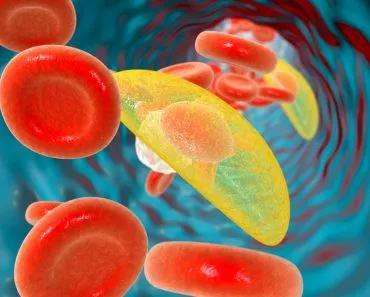
When you cut yourself and see a drop of blood well up, you are probably more annoyed than mesmerized, but blood is a rather remarkable thing. More importantly, particularly for this discussion, not all blood is created equal. Every individual on the planet has a certain blood type, which is a means of classifying blood into groups based on whether the surface of a person’s red blood cells possess indicative antigens or antibodies. Different blood groups can form blood group systems, representing an effective method for categorization. There are many different blood antigens—more than 360 in fact—organised into 48 distinct blood group systems recognised by the International Society of Blood Transfusion (ISBT) as of 2025.
These specific antigens can come in various different forms on the red blood cells, and they function as signals for the body’s immune system. This is not unique to blood cells, but also to every cell in your body, which helps your immune system target the proper cells when seeking foreign or potentially harmful substances/growths. In the case of blood cells, there are two main blood group systems used in classification for humans—the ABO system and the Rh system.
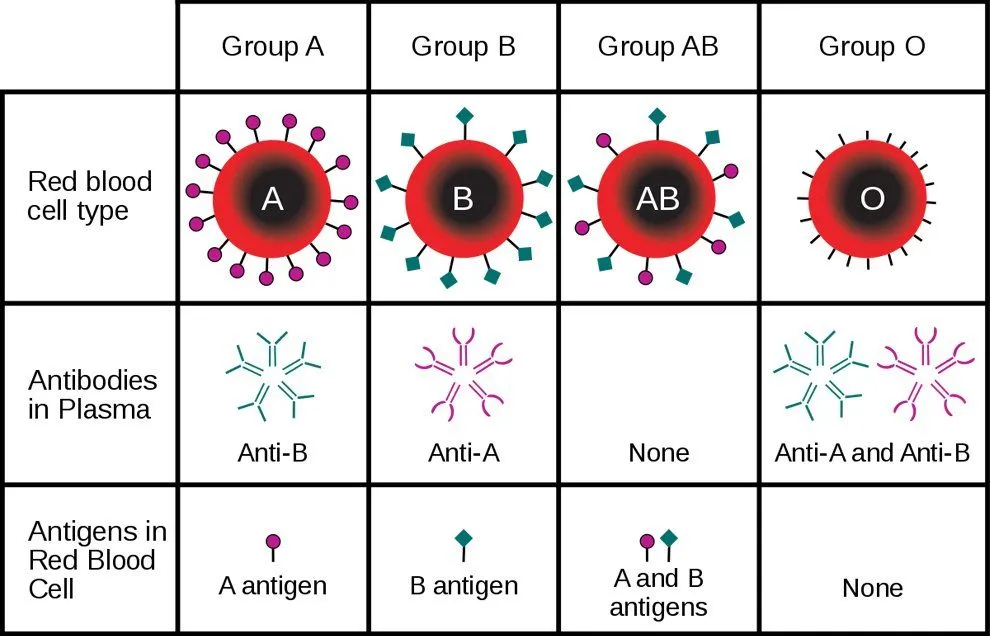
The ABO system is what determines a person as having the A antigen, the B antigen, both antigens or neither antigen. If you have the A antigen on your red blood cells, then your body will have the Anti-B antibody; similarly, if you have the B antigen, then your immune system will have the anti-A antibody. If your blood has both the A and B antigen (blood type AB), then your body will have neither antibody. Finally, if you have the O blood type, it means that neither antigen is present on the blood, and thus will have both antibodies in their blood.
There is also the Rh blood group system—named after the Rhesus monkeys whose blood revealed a similar blood antigen to human beings. There are nearly 50 different Rh antigens, but this second blood group system is slightly simpler than the ABO system, yet still adds an extra level of accuracy and sensitivity when donating or transfusing blood between humans. If a person has an Rh(D) antigen on their red blood cells, they will be classified with a (+) beside their ABO classification. If a person’s red blood cells lack an Rh(D) antigen, then they will have a (-) next to their ABO category. Thus, the 8 blood types found in human beings are as follows—A+, A-, B+, B-, AB+, AB-, O+ and O-.
One of these blood types, O-, is particularly sought after, and these people are often called universal donors, as their blood can be used by anyone. If the red blood cells lack any AB antigens, and also lack an Rh(D) antigen, than there won’t be any negative reactions by the immune system of the body. For this reason, if you do have O- blood, donating regularly is a beneficent thing to do, as your blood is the most versatile and “valuable”, per se.
On the opposite side of the spectrum are those people with an AB+ blood type; they are nicknamed universal recipients, and can receive blood from anyone, since they don’t have anti-A or anti-B antibodies, nor do they have antibodies for the Rh antigen.
Can Humans Receive Blood From Chimps?
As you may know, chimpanzees and bonobos possess about 98.7% of the same DNA makeup as human beings. Despite our obvious differences in physical appearance, our genetic makeup is nearly identical, which is why the question of potential blood transfusions between our species is so interesting.

Xenotransfusion is the process of transferring the blood of one species into the veins of another, and while there are a significant amount of ethical considerations to be made regarding this, it is possible to do it successfully—in very limited situations.
If you have every seen a chimpanzee in a movie donating its blood to humans, or vice-versa, this isn’t completely fiction. As mentioned above, the ABO blood group system is critical for humans, but it is also present in chimpanzees and other Old World monkey species. At a certain point in our evolutionary history, our paths diverged, which means that some of our genetic similarities began to erode, including the precise compatibility between blood groups.
Although a full explanation of this goes beyond the scope of this article, the ABO blood group system is found widely, but the A and B antigens are not necessarily identical across species. Therefore, the risk of complications or rejection by the recipient’s immune system is much higher, unless the donated blood group from chimpanzees is O. The A and B antigens may have moved forward, evolutionarily speaking, to make it harder for compatibility with humans, but if the antigens are absent from the red blood cells (i.e., blood type O), then a human immune system will have no impetus to snap into defensive action.
Xenotransfusion is not a widely pursued field, but when it comes to animals you can potentially swap blood with, chimpanzees aren’t actually the best choice! Despite being our closest evolutionary relatives, the blood of pigs is actually a better match for human beings than chimps and great apes. The porcine antigens of the ABO blood group system are more easily matched with humans, and are less likely to cause a rejection or immune response. There is a good reason why heart valves from pigs have been used in transplants to humans—a far lower likelihood of being rejected! The red blood cells of pigs are similar in size, volume and life cycle length to humans; their genes can also be manipulated to close the gap and make their blood even more compatible with humans!
What Blood Types Do Chimpanzees And Monkeys Have?
Here is where it gets genuinely surprising: the ABO system is not a human invention at all. The very same genetic switch that makes you type A or type B turns up in monkeys and apes too, and it is remarkably ancient. Researchers describe ABO as a "trans-species polymorphism," an ancestral variation that has been carried down, intact, for at least 20 million years. In other words, your blood type is older than the human species itself.

So what type is a chimp? Chimpanzees are overwhelmingly type A, with a minority running type O, and essentially none are type B. Bonobos, our other closest cousins, are likewise predominantly type A. Gorillas flip the script entirely and appear to be almost exclusively type B. Orangutans are the wild cards of the family, expressing the full menu (A, B, AB and O), with Bornean orangutans showing all four blood types.
Monkeys are stranger still. Rhesus and cynomolgus macaques carry A, B and AB, yet the O type is essentially absent among them. And there is a crucial catch: in monkeys, the A and B antigens are not displayed on the surface of the red blood cells the way they are in people. They sit mostly in body fluids and secretions, such as saliva, instead. Only in the apes do these antigens also appear on the red cells themselves. That single quirk is why blood typing a monkey is far trickier than pricking a human finger, and it is a neat reminder that sharing the ABO alphabet does not mean sharing identical blood.
Why Can't We Just Use Animal Blood?
If swapping blood between species sounds like a modern thought experiment, it isn't. The first blood transfusions ever attempted in humans were animal-to-human. In 1667, Jean-Baptiste Denis, physician to King Louis XIV, teamed up with the surgeon Paul Emmerez and transfused lamb's blood into a 15-year-old boy in Paris. Across the Channel, the English physician Richard Lower was running comparable experiments transfusing animal blood into people.

It did not end well. After one of Denis's patients died, French authorities forbade the practice in 1670, and England and the Pope soon followed, banishing animal-to-human transfusion for well over a century. The reason these early trials were so dangerous is exactly the antigen problem from earlier, amplified across the species gap: the recipient's immune system reads the foreign antigens studding the animal's red cells as invaders and attacks them, frequently destroying the donated blood in a violent reaction.
The puzzle was only cracked in 1900, when Karl Landsteiner discovered human blood groups and finally explained why some transfusions clotted and killed while others quietly saved lives. Once doctors could match donor to recipient, carefully typed human-to-human transfusion became the standard, and animal blood was shelved. It is only since around 2000, with genetically engineered pigs, that scientists have seriously revisited the idea, which is why the humble pig, rather than our chimpanzee cousins, now sits at the front of the queue.
A Final Word
While it is possible to use chimpanzee blood in certain extreme situations, it will have to be O-type blood. Donating human blood to chimpanzees has been far less studied, and is not believed to be a viable procedure. If humans are looking for a viable source for blood when our supply is running low, we may want to shift away from our chimpanzee cousins and instead look to the pig sty!
References (click to expand)
- Human Blood: Rh Blood Types. Palomar College
- Do primates have similar blood types to humans? - ABC. The Australian Broadcasting Corporation
- Introduction to the Rh Blood Group.pdf. The University of Utah
- Ape-to-human, pig-to-human blood donations. geneticliteracyproject.org
- Bonobos Join Chimps as Closest Human Relatives - Science. sciencemag.org
- Wang, Z.-Y., Martens, G. R., Blankenship, R. L., Sidner, R. A., Li, P., Estrada, J. L., … Tector, A. J. (2017, March). Eliminating Xenoantigen Expression on Swine RBC. Transplantation. Ovid Technologies (Wolters Kluwer Health).
- Deschamps, J.-Y., Roux, F. A., Sai, P., & Gouin, E. (2005, March). History of xenotransplantation. Xenotransplantation. Wiley.
- The ABO blood group is a trans-species polymorphism in primates. PNAS / PMC.
- Blood Group Antigen Types and Prevalence. CARTA, UC San Diego.
- ABO Blood Group Phenotype Frequency Estimation in Rhesus and Cynomolgus Macaques. Transfusion / PMC.
- Roux, F. A., Sai, P., & Deschamps, J.-Y. (2007). Xenotransfusions, past and present. Xenotransplantation. Wiley.