Table of Contents (click to expand)
Yes, most bears do love honey, especially brown and black bears. But what really pulls them to a beehive isn’t just the honey: it’s the protein-rich bee larvae, pupae, and adult bees inside the comb. Bears have working sweet-taste receptors (most carnivores have lost them) and their thick fur largely protects them from stings, though their snouts and tongues still get hit.
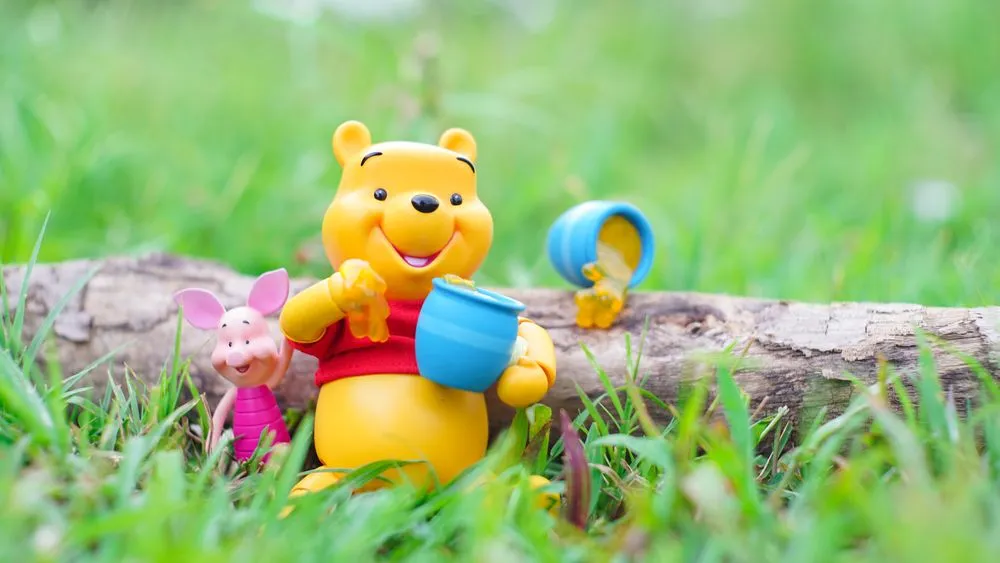
For those of us who grew up watching Winnie the Pooh, a bear’s love for honey is far from a secret, but how much of that fiction is reality?
Whether it’s a cute yellow animated bear or a big burly black bear, these beasts truly enjoy the sweet taste of honey, but why are bears so keen on getting their paws into that golden gooey goodness?
Do Bears Really Have A Sweet Tooth For Honey?
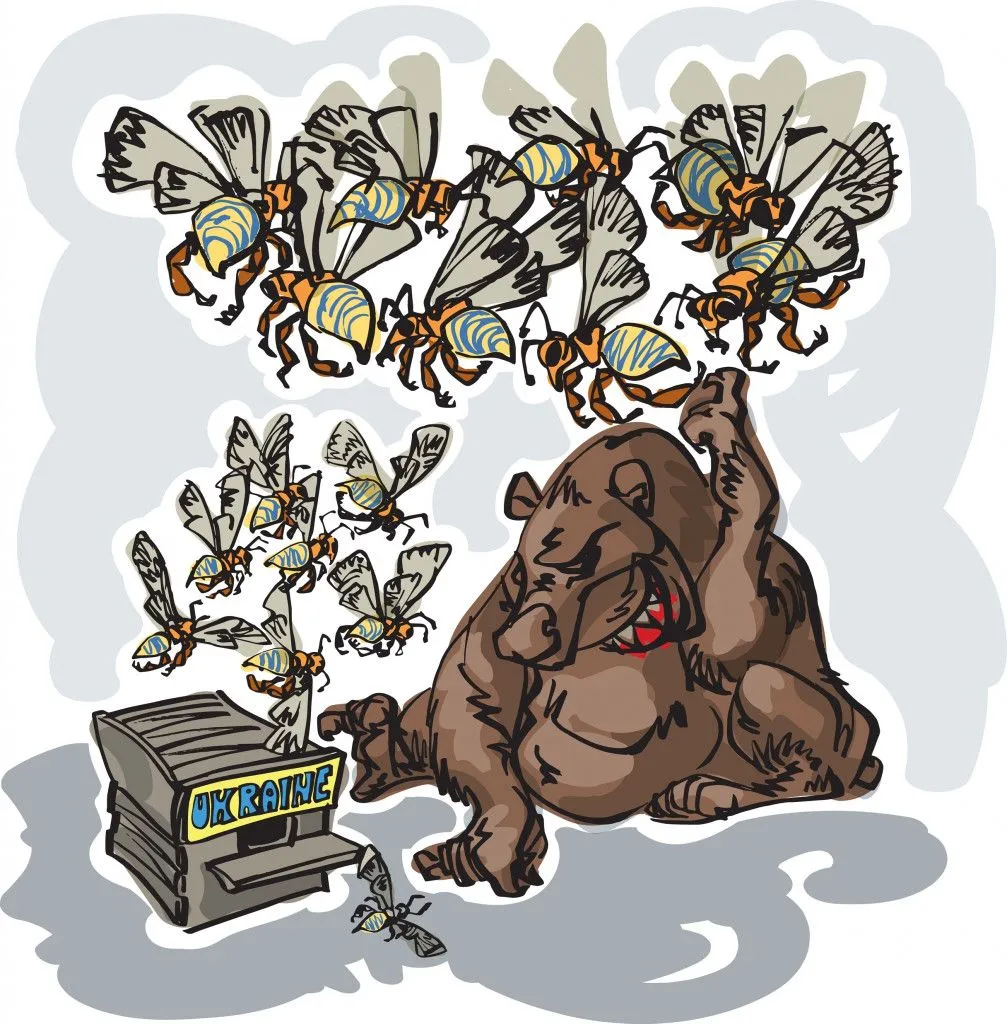
Bears love honey so much that they are among the biggest vertebrate pests that regularly raid apiaries.
However, it is during their “lean” season that bears really become keen for honey. The lean season follows the period of hibernation (a fasting period where bears consistently burn four thousand calories a day). Hibernation causes them to lose the majority of their energy reserves to keep their bodies metabolically active without food.
To pack on those reserves, bears enter a phase called hyperphagia in late summer and autumn, when they can consume up to 20,000 calories a day in a feeding frenzy designed to build the fat reserves that will get them through the next winter and hibernation period.
Now, can they gain all of those calories through honey alone? Unlike Pooh Bear’s diet, bears in the real world need a lot more than just honey.
Do Bears Raid Hives For More Than Honey?
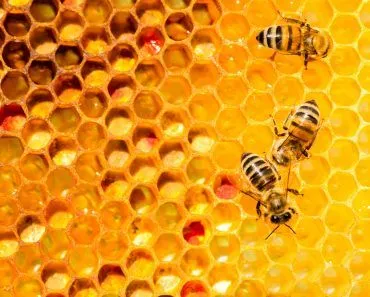
Sure, honey is sweet, but the real prize is the hive comb, with the pupae, larvae, eggs, and honey bees.
Each tablespoon of honey contains roughly 65 calories, so if a bear were to sustain their daily 5,000-calorie requirement with just honey, they would need to consume close to 1.2 liters of honey each day! Pooh might have stores of honey in his cozy house, but real-world bears don’t have that luxury.
While honey is rich in sugars, such as fructose, glucose, maltose, sucrose, and vitamins and minerals, it has a limited amount of protein. The honey might satisfy the bear’s sweet cravings, but its nutritional value falls short on the protein front.
The bees and their larvae (rich in fat and proteins) are therefore an amazing source of protein for the bears to supplement the carbohydrates from honey.
Are Bears Immune To Bee Stings?
If you’re wondering what happens to the bears that stick their faces into a hive, bees, as they instinctively do, tend to sting their predator. The bears’ thick fur provides them with much needed protection, but their snouts, faces and tongues are still vulnerable areas for bee stings. However, resilient as they are, bears will get stung and endure the pain in order to get their mitts on some sweet gooey grub.
What Else Do Bears Eat?
Being the large animals that they are, bears need every bit of nutrition they can get their paws on. Bears are omnivores, meaning that they eat both plants and animals.
In addition to honey, most bears have a taste for a variety of fruits, berries, nuts, fish and even other herbivores, like rodents, fish, moose and deer.
Insects are a favorite snack during summer months, while beechnuts and acorns are preferred during the autumn. Sounds like a pretty balanced diet, huh?
Do All Bears Love Honey?
Whether a bear eats honey or not depends on the geographic location of that bear species. Take polar bears, for example. Living in the icy snowing Arctic, where bees cannot thrive, finding honey is a practical impossibility for a polar bear. Their diet consists mostly of marine mammals, with ringed seals and bearded seals making up the bulk of their kills. Occasionally they also take belugas, narwhals, walrus pups, and seabirds, and they will scavenge whale carcasses when they wash up.
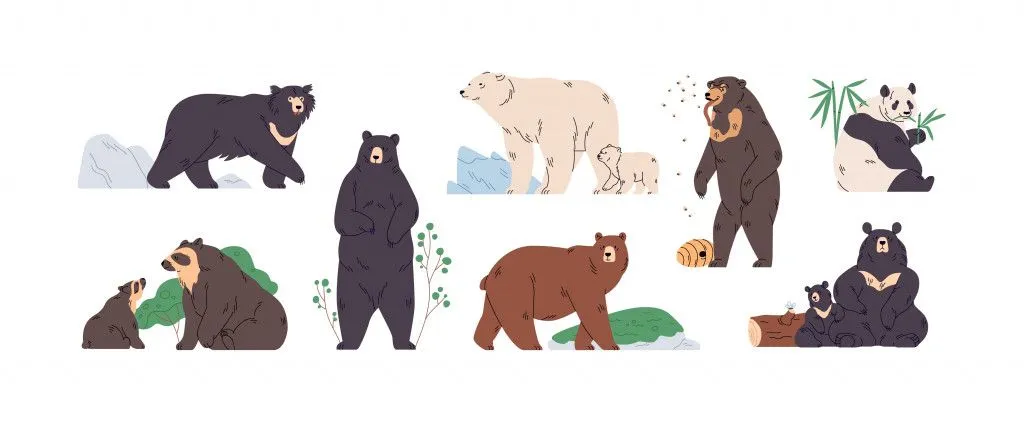
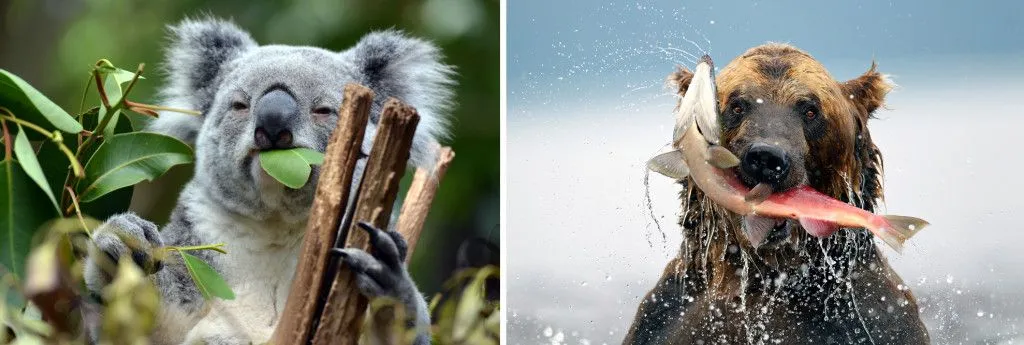
Due to the wide availability of bamboo shoots where panda bears live, they have resorted to eating mostly bamboo. Some pandas might also include honey, fruits, eggs and small rodents in their diet. On the other hand, grizzly bears (or brown bears) never miss a chance to devour salmon. However, honey, small deer, insects, berries and nuts are also staple dietary items for Grizzlies.
Koala bears may have “bear” in their name, but they aren’t bears at all. They are marsupials, and their closest living relatives are actually wombats, not kangaroos (the two share an order, Diprotodontia, but sit in different families). Their diet mostly consists of just eucalyptus leaves. Yum?
Closing Thoughts
Ever wondered why Tigger, Piglet and Eeyore didn’t go head over heels for honey like Pooh did? Well, not all animals have taste receptors for sweetness on their tongues. Carnivores, in particular, have evolved to lose their sweet-taste receptors. Bears are an exception. Not only do they have this receptor on their taste buds, but they also put it to use almost every day.
Bears and bees mutually benefit each other. When bears eat fruits and excrete the seeds, it helps in seed dispersal and the subsequent growth of more flowers. This provides the bees with more flowers to pollinate.
So, even though bears gulp down a lot of bees along with their honey, balance in the ecosystem is maintained.
References (click to expand)
- Honey, Nutrient Profile. USDA FoodData Central.
- Pagano, A. M., Durner, G. M., Rode, K. D., Atwood, T. C., Atkinson, S. N., Peacock, E., … Williams, T. M. (2018, February 2). High-energy, high-fat lifestyle challenges an Arctic apex predator, the polar bear. Science. American Association for the Advancement of Science (AAAS).
- Mowat, G., Curtis, P. J., & Lafferty, D. J. R. (2017, March 1). The influence of sulfur and hair growth on stable isotope diet estimates for grizzly bears. (Z. Jiang, Ed.), Plos One. Public Library of Science (PLoS).
- IN MASSACHUSETTS. coexist-black-bear.pdf - Mass.gov. mass.gov
- Stenvinkel, P., Jani, A. H., & Johnson, R. J. (2013, February). Hibernating bears (Ursidae): metabolic magicians of definite interest for the nephrologist. Kidney International. Elsevier BV.
- (1990) Vertebrate pests of beekeeping - eScholarship. escholarship.org
- Nelson, R. A. (1987, September). Black Bears and Polar Bears—Still Metabolic Marvels. Mayo Clinic Proceedings. Elsevier BV.
- Sarwar, Muhammad. (2016). Predations on honey bees (Arthropoda) by vertebrate pests (Chordata) and control of nuisance. 1. 2455-7269. - ResearchGate
- Carnivores Lack Taste for Sweets. nih.gov
- Beauchamp, G. K., & Jiang, P. (2015, February 2). Comparative biology of taste: Insights into mechanism and function. Flavour. Springer Science and Business Media LLC.
- Summer weather conditions influence winter survival of honey .... The Pennsylvania State University
- Grizzly Bear | National Wildlife Federation. The National Wildlife Federation