Table of Contents (click to expand)
- Reproduction In The Animal Kingdom
- Can Cockroaches Give Birth To Their Offspring?
- How Pacific Beetle Cockroaches Feed Their Young
- What Is Special About The Pacific Beetle Cockroach?
- Is A Cockroach Oviparous Or Viviparous, And What Are Its Babies Called?
- Do Other Cockroaches Care For Their Young?
- Could Cockroach Milk Become A Human Superfood?
- A Final Word
Yes, one species of cockroach effectively makes milk. The Pacific beetle cockroach (Diploptera punctata) gives live birth, and the mother nourishes her developing embryos inside a brood sac with a crystalline milk protein called Lili-Mip. It is the only known cockroach that nurses its young this way, and its milk is among the most calorie-dense ever measured.
The biology rule book says that mammals are the only class of animals that make milk to feed their young ones. However, there are exceptions to every rule in the natural world. One particular species of cockroach called the Pacific beetle cockroach does make milk to feed its babies. That said, its modus operandi is different from other invertebrates when it comes to nourishing its embryos.
Reproduction In The Animal Kingdom
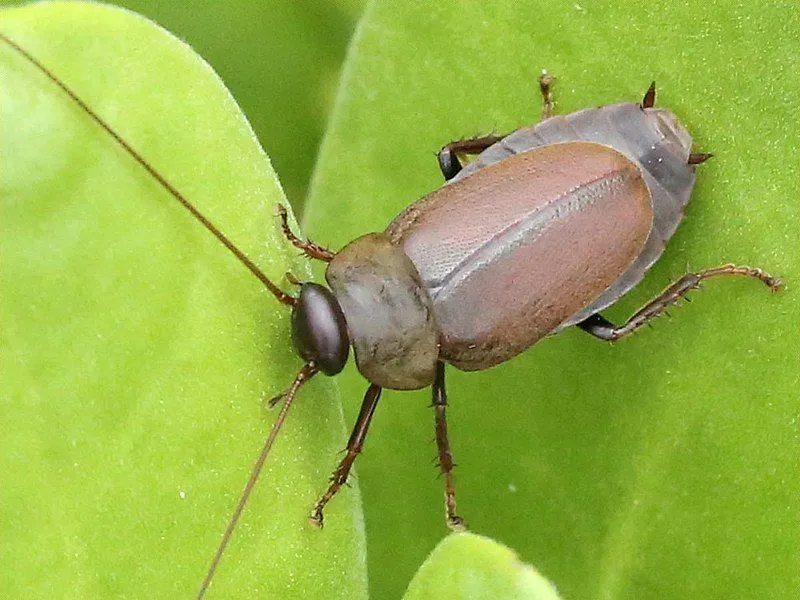
Animals reproduce in many ways, from simple binary fission in bacteria to sexual reproduction in higher organisms. In animals that sexually reproduce, there are two types: egg-laying or oviparous animals (i.e., fish, birds, snakes), and live-birthing or viviparous animals (i.e., humans, horses, and dogs).
The organisms caught in the evolutionary transition between the two always manage to surprise us!
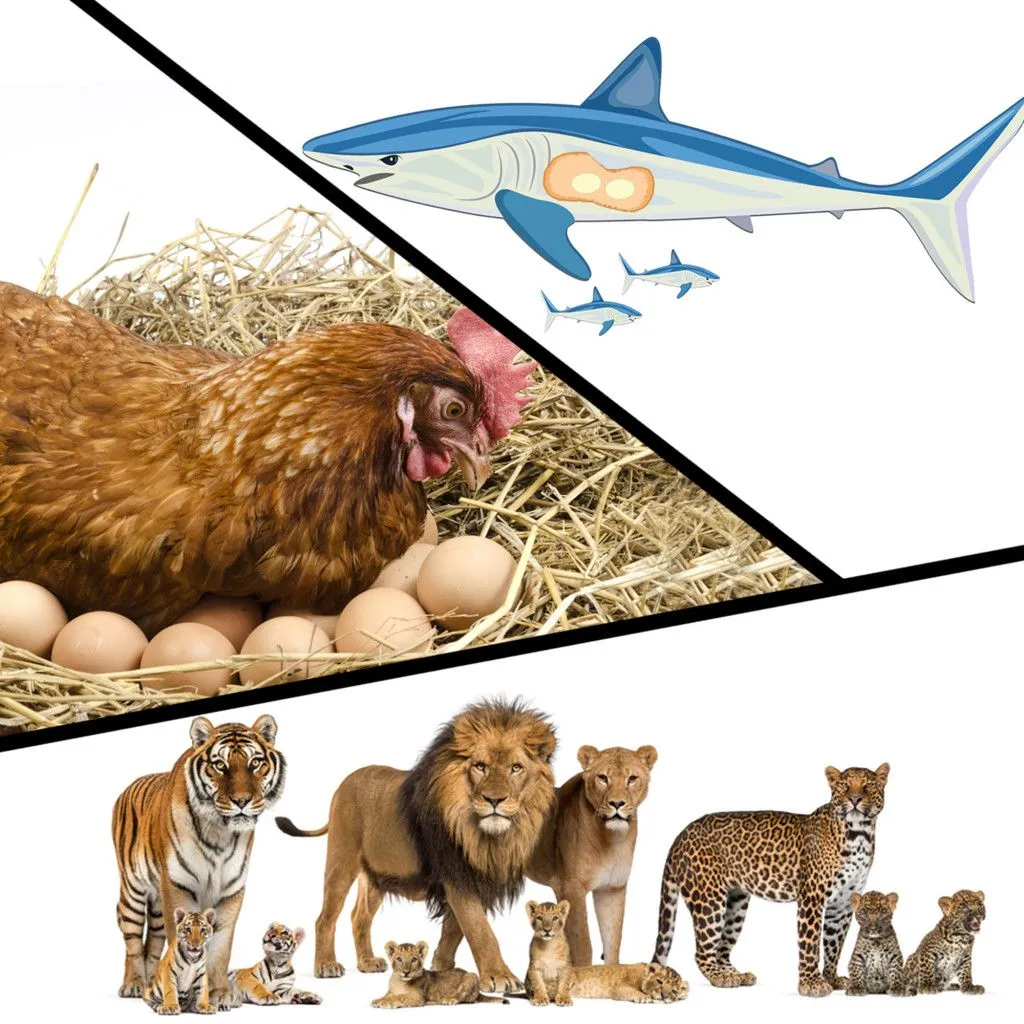
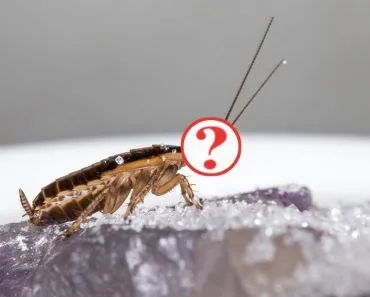
The Pacific Beetle Cockroach or Diploptera punctata, found in Hawaii, is unique and different from any other cockroaches, as they not only give live birth to their young ones, but they also nourish their young during gestation.
Can Cockroaches Give Birth To Their Offspring?
A Pacific beetle cockroach retains the embryo inside their body in the brood sac, nourishes them, and then expels young ones. Unlike other cockroaches, which lay their eggs outside their body in egg cases, the embryo of the Pacific beetle cockroach is found inside the body of the female adult.
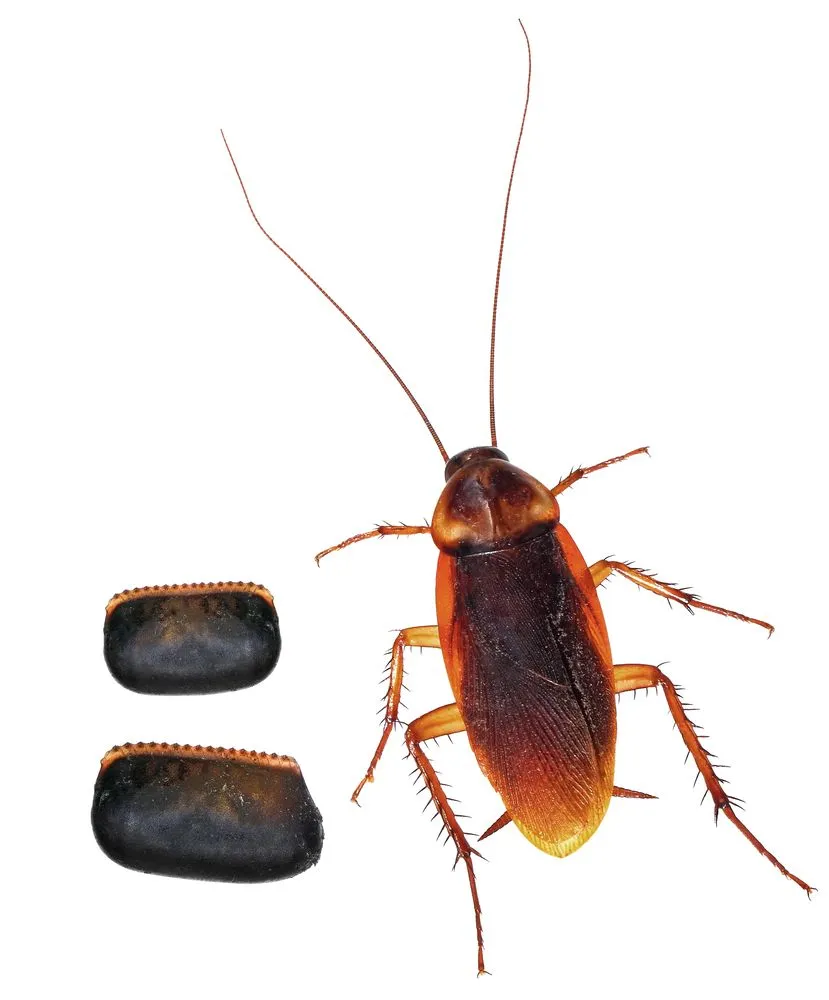
In most oviparous organisms, the embryo receives nutrition from the yolk contained in its egg. Viviparous animals, on the other hand, stream nutrients from the parent to the offspring via the placenta.
Considering that the Pacific beetle cockroach is viviparous, the question is… how do they feed their embryos without a placenta?
Animals without a true placenta have varied patterns of feeding during gestation. In some gall midges, the developing larvae feed on the mother's tissues and hemolymph from the inside. Tsetse flies nourish their single larva with secretions from specialized "milk glands", modified accessory glands that empty into the uterus.
Pacific beetle cockroaches lay eggs with no yolk. Instead, they secrete a form of crystalline milk through a pseudo placental-like tissue.
How Pacific Beetle Cockroaches Feed Their Young
The embryos of the Pacific beetle cockroach grow inside a brood sac, a unique organ that functions as both a uterus and pseudo-placenta.
The mother cockroach feeds her young with a crystalline milk secretion composed of carbohydrates, proteins, lipids, and other nutrients that are necessary for baby roaches.
The crystalline milk protein, called Lili-Mip (short for Lipocalin-like Milk Protein), is an unusually dense source of energy. At roughly 232 kcal per 100 g, it carries more than three times the energy of cow or buffalo milk by weight. Far from shortening the pregnancy, this rich diet sustains an unusually long one: Pacific beetle cockroaches carry their embryos in the brood sac for about 60 to 70 days, compared with the roughly two to four weeks it takes a typical cockroach ootheca (such as the German cockroach's) to hatch externally. The trade-off is fewer but much larger, better-developed offspring.
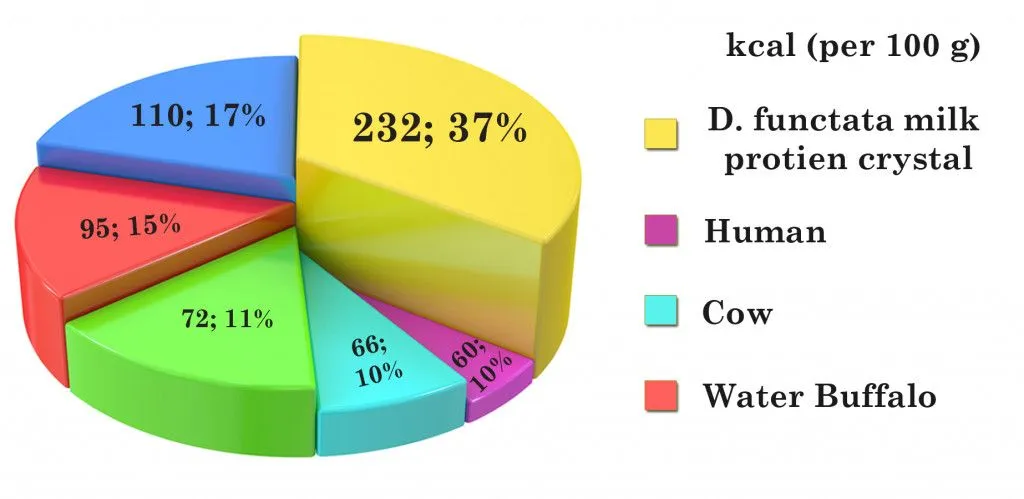
The milk protein in crystalline form is unique to the Pacific beetle cockroach. The crystalline state is far more stable over time than a soluble protein, and researchers have since produced Lili-Mip recombinantly in yeast and bacteria, opening the door to it being studied as a long-shelf-life food protein.
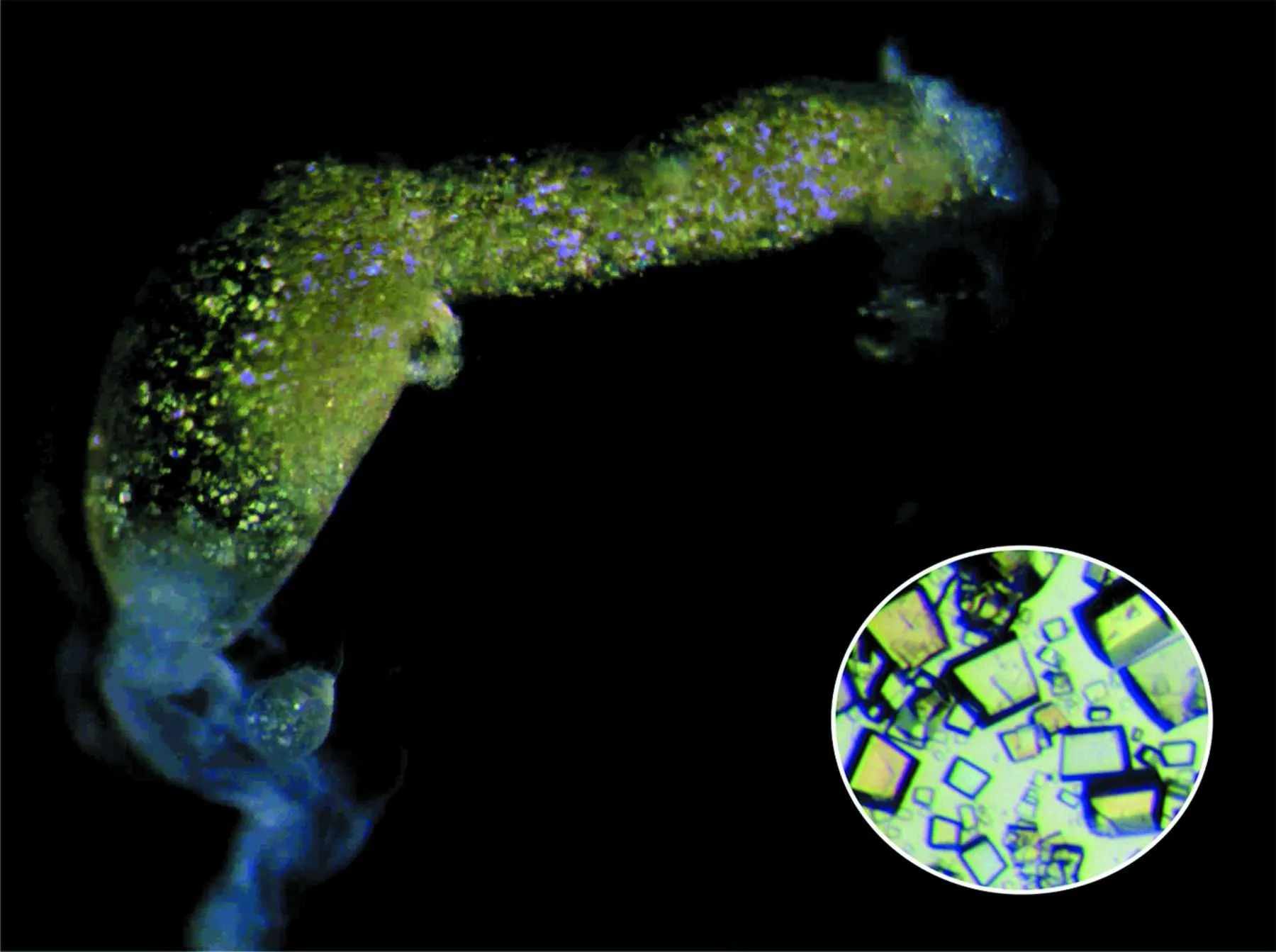
What Is Special About The Pacific Beetle Cockroach?
The exceptions to our rules for nature are often the most fascinating to study. Popular imagination portrays evolution as a straight line going from one adaptation to the next, but that mode of thinking has many flaws and can’t explain the Pacific beetle cockroach’s reproductive strategy.
Often times, two very distantly related animals evolve similar traits independently, evolutionarily speaking, of each other. This is called convergent evolution.
Bats can fly, and so can birds, but the two evolved their ability to fly in very different ways. Similarly, the Pacific beetle cockroach evolved its reproductive traits independent of mammals evolving them. Some reptiles, such as the sea snake, also give birth to live young (although they don’t produce milk for their young), while some mammals lay eggs, such as the platypus.
Why did the cockroach evolve this form of reproduction? That part remains a mystery, though we may be able to discover the reason by studying the cockroach’s DNA for evolutionary clues.
Is A Cockroach Oviparous Or Viviparous, And What Are Its Babies Called?
If you have ever wondered whether to file the cockroach under oviparous (egg-laying) or viviparous (live-bearing), the honest answer is: it depends on the species, and most of them sit somewhere in between. Cockroaches actually span the whole reproductive spectrum. The familiar household pests, such as the American cockroach (Periplaneta americana), are strictly oviparous: the female packages her fertilized eggs into a hard, purse-shaped case called an ootheca, which she drops or carries until the young hatch, with each embryo living off the yolk sealed inside.

A large group of cockroaches, including many in the family Blaberidae such as the Madeira cockroach (Rhyparobia maderae), are ovoviviparous. Instead of leaving the ootheca outside, the female retracts it into an internal brood sac, where the embryos are kept safe and hydrated but are still fed only by their own yolk, not by the mother. She then appears to "give birth", though biologically this is really just delayed, internal hatching. True viviparity, in which the mother actively nourishes yolk-poor embryos from the brood sac wall, is the lone trick of the Pacific beetle cockroach (Diploptera punctata). So whichever way a cockroach reproduces, its babies are never called larvae: a baby cockroach is a nymph. Cockroaches undergo incomplete metamorphosis (egg to nymph to adult), with no caterpillar-like larval stage and no pupa. A nymph is simply a small, wingless version of the adult that molts repeatedly as it grows, which is why you can recognize a baby roach at a glance even though it never resembles the way many insects change shape as they mature.
Do Other Cockroaches Care For Their Young?
The crystalline milk is the headline act, but cockroach parenthood gets stranger still. Most roaches simply abandon their egg cases, yet a handful are genuinely devoted parents, which is why search engines see so many people asking whether cockroaches nurse, breastfeed, or care for their young. A few really do. The wood-feeding roach Cryptocercus punctulatus lives in family groups inside rotting logs, where both mother and father tend the nymphs. The young cannot digest wood on their own, so the parents feed them hindgut fluid laden with the gut microbes they need, passed from the parent's rear to the offspring's mouth in a transfer called proctodeal trophallaxis. This care continues for at least three years, until the parents die.

These wood roaches happen to be the closest living relatives of termites, and that long family life is thought to be an evolutionary stepping stone toward termite society. Even closer to actual nursing is the Asian genus Perisphaerus. Their first-instar nymphs are born blind, with an elongated, straw-like head and mouthparts that plug into a set of orifices on the mother's underside, between her legs, where they drink a nourishing bodily secretion. It is a suckling-like behavior that evolved completely independently of the Pacific beetle's milk. So when people ask whether cockroaches breastfeed, the surprising truth is that a few species really do tend, feed, and in one remarkable case all but nurse their young.
Could Cockroach Milk Become A Human Superfood?
When the crystal-structure study broke in 2016, "cockroach milk superfood" went viral, and people still search for its protein content per 100 g. The numbers are genuinely striking. The milk carries roughly 232 kcal per 100 g, about three times the energy of buffalo milk by weight, and it is packed with proteins, fats, sugars, and a full complement of essential amino acids. Because the protein is locked into a crystal, it dissolves slowly in the gut and releases amino acids at a steady rate rather than in a quick spike, which is part of why researchers find it so interesting.
There are, however, two large caveats before anyone pours it on cereal. First, you cannot milk a cockroach. There is no udder, and the crystals form inside the midgut of the developing embryos, so harvesting any meaningful quantity would mean dissecting countless roach babies, which is hopeless at commercial scale. The realistic route scientists are pursuing is to brew the Lili-Mip proteins in engineered yeast or bacteria, the same way other proteins are now grown in the lab. Second, no one has shown that the protein is safe or beneficial as a human food. There are no human feeding trials, and whether it would behave like mammalian milk in our bodies is, by the researchers' own admission, still an open question. For now, cockroach milk is a fascinating protein under study, not something headed for your refrigerator.
A Final Word
For species to survive and reproduce, they must adapt to their environment by acquiring new characteristics. The Pacific beetle cockroach and its evolutionary rule-defying nutrition strategy is just another way for it and its young to survive in the wild.
It’s very surprising in the Pacific beetle cockroach, an invertebrate locked in matrotrophic viviparity: the insect gives birth to little ones, and provides nutrition to those young ones.
The Pacific beetle cockroach is anomalous among its class of Insecta for its adaptation to matrotrophic viviparity, and could likely teach some humans a thing or two about proper maternal care!
References (click to expand)
- Banerjee, S., Coussens, N. P., Gallat, F.-X., Sathyanarayanan, N., Srikanth, J., Yagi, K. J., … Ramaswamy, S. (2016, June 27). Structure of a heterogeneous, glycosylated, lipid-bound,in vivo-grown protein crystal at atomic resolution from the viviparous cockroachDiploptera punctata. Iucrj. International Union of Crystallography (IUCr).
- Jennings, E. C., Korthauer, M. W., Hendershot, J. M., Bailey, S. T., Weirauch, M. T., Ribeiro, J. M. C., & Benoit, J. B. (2020, May). Molecular mechanisms underlying milk production and viviparity in the cockroach, Diploptera punctata. Insect Biochemistry and Molecular Biology. Elsevier BV.
- Ponce de León, J. L., & Uribe, M. C. (2021, April 7). Morphology of yolk and pericardial sacs in lecithotrophic and matrotrophic nutrition in poeciliid fishes. Journal of Morphology. Wiley.
- Niaz, K., Zaplatic, E., & Spoor, J. (2018). Highlight report: Diploptera punctata (cockroach) milk as next superfood. EXCLI Journal; 17:doc721; ISSN 1611-2156.
- American Cockroach, Periplaneta americana (Linnaeus). Featured Creatures / EDIS, University of Florida IFAS Extension.
- Genetic insights into family group co-occurrence in Cryptocercus punctulatus, a sub-social woodroach. PMC, NCBI.
- Perry, J., & Nalepa, C. A. (2003). A new mode of parental care in cockroaches. Insectes Sociaux. Springer.
- Pushparaj et al. (2024). Potential of insect-based milk moiety from Pacific beetle cockroach, Diploptera punctata (Blattodea): Insights as superfood. Journal of Asia-Pacific Entomology. Elsevier.