Table of Contents (click to expand)
Yes. One spider, the ant-mimicking jumping spider Toxeus magnus, makes milk. The mother secretes a nutritious fluid (about four times the protein of cow’s milk) from an opening on her abdomen, and her spiderlings drink it. The milk is essential to their survival, which is forcing scientists to rethink how we classify lactation in animals.
Nurturing young ones with milk is one of the characteristic features of mammals. Mammalian glands and their secretions help provide all the essential nutrients that aid in the proper development of growing offspring. This process of producing milk is known as lactation, and is seen in all mammals.
Non-mammalian species tend to lay eggs that contain all the nutrition the developing offspring requires. Once the young one hatches, usually parents (if they’re still around) will give them chewed-up food. Milk doesn’t come into the picture.
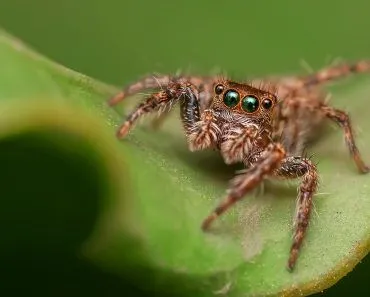
However, as so often happens in the animal kingdom, some animals are an exception to this trend. One such species is Toxeus magnus, an ant-mimicking jumping spider found across South and East Asia.
This little spider has a huge secret, and all it takes to spill the milk is a gentle abdominal squeeze. Oozing out of its egg-laying opening is the “milk” that an adult Toxeus magnus spider feeds its offspring.
What’s So Special About The Milk-producing Spider?
One look at, Toxeus magnus, the jumping spider, and you would immediately be reminded of a black ant. This clever disguise saves it from aggressive spider-attacking ants. Incidentally, it is one among nearly 300 spider species that mimic the appearance of ants. One look at the spider and its babies’ behavior and it may remind you of pups running to their mother for milk.
In general, young or developing jumping spiders don’t go scouring for food until they’re old enough to fend for themselves. After hatching, the spiderlings stay put in the nest for about 20 days, living entirely on their mother’s milk before they ever venture out to hunt. For the first week, the mother deposits droplets of milk on the nest walls for them to lap up. After that, the spiderlings behave a lot like teat-sucking pups, attaching to her abdomen to suck the milky goodness directly from her egg-laying opening.
The mother lays anywhere between 2-36 eggs in one go. Upon hatching, these babies explore their nests in an attempt to find their mother’s milk. Upon closer examination (and a little probing), scientists from the Chinese Academy of Sciences (working with colleagues at Hubei University) noticed a whitish-yellow substance seeping from the spider. The odd behavior caught their eye, and they decided to look into it.
For their first 20 days, the spiderlings live on milk alone. After that, they begin venturing out to hunt for their own food, but they don’t give up the milk just yet. They keep nursing alongside foraging until they reach the subadult stage at around 40 days old, and they only reach full adulthood at about 52 days. The mother continues to guard the nest throughout, and passes away not long after the young have left it.
What’s In The Milk?
To be classified as milk, the exudate must contain a variety of substances, including lactose (milk sugar), protein (casein and whey), minerals, and certain vitamins. Although the Toxeus magnus’s secretions don’t really contain lactose, the main components of the milk still include sugars, lipids, and proteins.
Some bioactive substances, similar to those found in mammalian milk, are also present. These can include immunoglobulins, antibacterial peptides, antimicrobial proteins, oligosaccharides, and lipids that can facilitate the growth and proper development of the juveniles. When the researchers measured the fluid, they found roughly 124 milligrams of protein, 5 milligrams of fat, and 2 milligrams of sugar in every milliliter. That works out to almost four times as much protein as cow’s milk, which is the headline figure people remember. The fat and sugar, on the other hand, sit well below the levels in cow’s milk, so this is very much a high-protein formula rather than a richer all-round drink.
Do The Spiderlings Need The Milk To Survive?
The milk definitely provides the young spider with the necessary nutrients to aid in their growth, making them strong enough to survive on their own. Since they have to venture out to forage at a later age than most spiders, they’re safe from being preyed upon. However, all these could simply be additional benefits, rather than essential to the spider’s survival.
To find out just how valuable the milk is, the scientists cut off the supply by painting over the egg-laying opening (the epigastric furrow) that secretes it. Every spiderling blocked from the milk at hatching stopped developing and died within about 10 days. When the young had both milk and their mother’s care, by contrast, roughly 76% survived all the way to adulthood. That gap made it clear the milk is essential, not a mere bonus.
The story changed once the spiderlings passed the 20-day mark. Cutting off the milk after that point didn’t hurt their odds of reaching adulthood, their final body size, or how fast they grew. What did matter was the mother herself: when she was removed, the youngsters fared noticeably worse, even though they could already hunt. In other words, after day 20 it was her continued presence, not the milk, that kept survival rates high.
How exactly the milk is made remains a mystery. Scientists think that it may be a product of some of the unfertilized eggs of the mother.
How Special Is The Jumping Spider’s Behavior?
The jumping spider isn’t the only non-mammal that produces what scientists have dubbed “milk”. Some birds feed their young with “crop milk,” which is semi-digested food with additional secretions from the parent’s digestive system. That said, this isn’t milk produced by the body, like we see in the jumping spider.
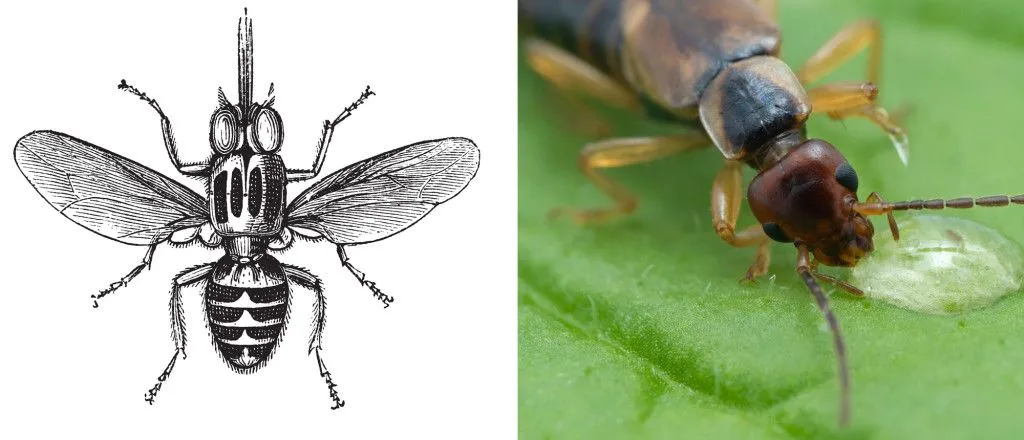
A few other insects produce “milk” as well. For example, during the prenatal stage, tsetse flies and cockroaches will either nourish the larvae or developing embryos with nutritional milk-like fluids.
If other insects show such similar traits, then what is so noteworthy about the jumping spider’s milk production? Well, what’s unique about the jumping spider and its milk isn’t necessarily the milk, but the behavior.
In the cases of cockroaches and tsetse flies, there is no behavioral connection between mother and offspring. Jumping spiders, on the other hand, show a relationship between mother and the young. This may imply complex social interactions, like learning. It is this behavior, one that so closely resembles mammalian behavior, that is fascinating to scientists.
References (click to expand)
- Capuco, A. V., & Akers, R. M. (2009). The origin and evolution of lactation. Journal of Biology. Springer Science and Business Media LLC.
- Chen, Z., Corlett, R. T., Jiao, X., Liu, S. J., Charles-Dominique, T., Zhang, S., ... & Quan, R. C. (2018). Prolonged milk provisioning in a jumping spider. Science, 362(6418), 1052-1055.
- Dong, B., et al. (2019). Prolonged milk provisioning and extended maternal care in the milking spider Toxeus magnus. Zoological Research. PMC, National Center for Biotechnology Information.
- Jumping Spiders Nurse Offspring Nearly to Adulthood. American Association for the Advancement of Science
- A Jumping Spider's Story (Family Salticidae). Field Station, University of Wisconsin-Milwaukee.
- Gillespie, M. J., et al. (2012). Functional Similarities between Pigeon 'Milk' and Mammalian Milk. PMC, National Center for Biotechnology Information.
- Spider moms spotted nursing their offspring with milk. Science
- Wiggins, W. D., & Wilder, S. M. (2022, July 29). Carbohydrates complement high‐protein diets to maximize the growth of an actively hunting predator. Ecology and Evolution. Wiley.