Table of Contents (click to expand)
Snakes are legless reptiles that evolved from legged lizards, most likely burrowing ones. As that lifestyle made limbs more of a liability than a help, mutations crept into a genetic switch (the ZRS enhancer) that turns on the Sonic hedgehog gene during limb growth. With the switch broken, leg buds shrank to nubs and then vanished over millions of years.
Snakes are elongated, carnivorous reptiles of the suborder Serpentes. Their most distinctive feature is their lack of appendages. Snakes are legless, so they move by slithering ahead, dragging and pulling their bodies across the ground.
Now, if a tail is an essential characteristic of the body of an animal, we must ask where does the snake’s body end and its tail begin? This is comical, yet a very profound philosophical problem, if you ask me. But let’s not dwell any further on it.
Instead, on a far more serious note, what we should focus on is the question of why snakes lost their legs in the first place?
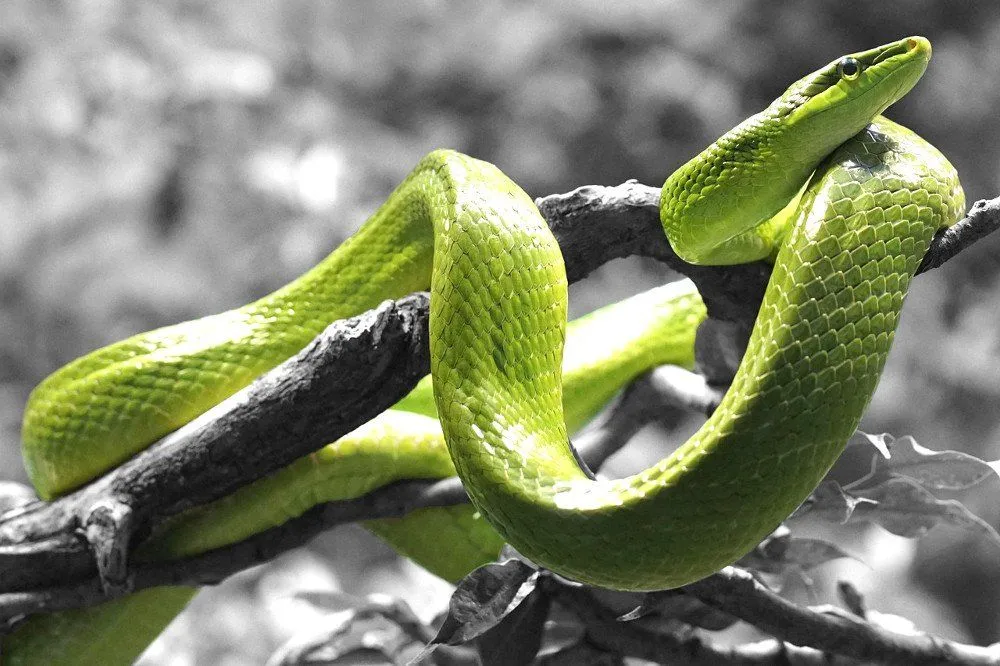
The question essentially asks, why would nature deem this regression better for survival than having limbs like other reptiles? The dexterity would make burrowing far easier than it would be without a pair of forelimbs.
Fossils show that prehistoric snakes did once possess limbs, albeit small ones. They gradually lost them as their way of life shifted and the limbs became a poor investment of energy. Later, we’ll learn how this regression played out where it really counts, arresting the growth of limbs at the phase of manufacturing itself, at the level of genes.
Snakes With Ankle Bones
Zoologists predict that at some point in the past, some snakes, if not all, used to have legs. Snakes are believed to be evolved from legged lizards. The claims find their ground in the similarities between these reptiles. Both lizards and snakes possess the same sensory organs to locate prey. Both the male forms of these species possess the same reproductive organs. Both of these species are covered with scales and are cold-blooded animals.
However, due to a lack of concrete evidence, evolutionary zoologists have long been uncertain about this claim, but a new finding corroborates this theory.
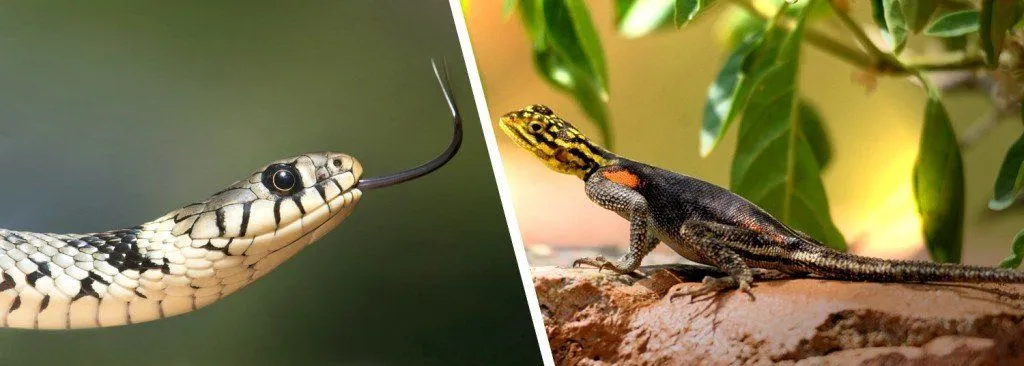
Researchers have long debated whether snakes evolved from lizards that burrowed on land or ones that swam in the ocean. The legs grew obsolete in either case as the animal evolved over time. For years a popular idea held that limbs simply got in the way of aquatic locomotion. The weight of fossil evidence, however, has since tilted toward a land-dwelling, burrowing ancestor. But if these animals were diggers, wouldn’t forelimbs aid with shoveling?
Well, zoologists claim that snakes seldom dug their own holes. Rather, they encroached and snuck into holes dug by smaller animals, probably potential prey. In this scenario, forelimbs would have surely made them larger than the hole and prevented them from accessing their food.
The presence of limbs would have been responsible for a formidable waste of energy. These constraints forced the regression to have no legs. The regression also occurred without any impact on the organism’s survival. The study highlights that the loss of limbs can be credited to the snakes growing them at an extremely sluggish rate or growing them only for a very short period of time.

For the study, Houssaye and her colleagues from the National Museum of Natural History in Paris rigorously examined a prehistoric fossil snake termed Eupodophis descouensi. The oldest snakes are now dated as far back as roughly 167 million years, to the Middle Jurassic. This particular fossil, recovered from Cenomanian-age limestone in Lebanon, wasn’t amongst the very oldest, but it was old enough to matter, estimated at about 95 million years.
The scientists used a novel, highly advanced imaging technique called Synchrotron Radiation Computed Laminography (SRCL). The procedure uses large machines that allow us to magnify and view microscopic features in exquisite detail. More importantly, it causes no damages to these priceless specimens.
The machines expose a specimen to intense X-ray radiation that deeply penetrates the fossil through every crevice as it rotates on a substrate. The procedure generates thousands of high definition 2D images, which are compiled to form a sophisticated 3D model of the fossil.
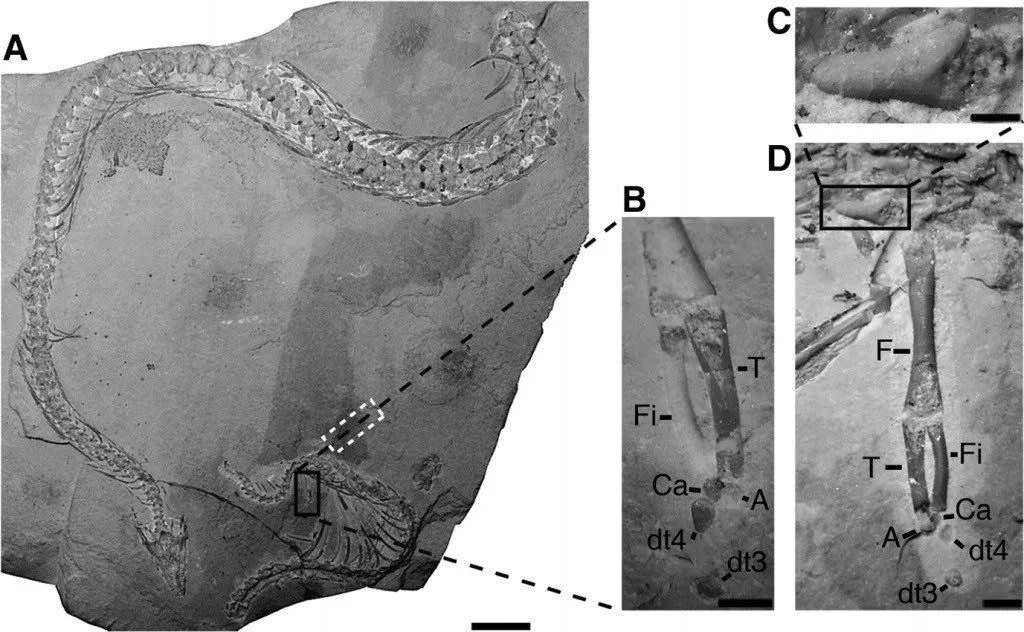
The three-dimensional model of the fossilized snake illustrated the ancient snake’s hips and slender 2 cm legs! It showed 2 small, regressed hind limbs and an absence of front limbs. The palpable leg was bent at the knee and possessed 4 ankle bones, but it had no foot or toe bones. This morphology quite closely resembles the limbs of a modern-day terrestrial lizard.
Another snake of a similar age, Najash rionegrina from Argentina, tells a complementary story. Far from being spindly, its two rear legs were robust and well developed, and the animal even retained a sacrum, the triangular bony feature that anchors the pelvis to the spine. Because Najash was unmistakably a land animal, it is one of the strongest pieces of evidence that snakes arose from burrowing, terrestrial lizards rather than marine ones.
These features might have subtly departed as the animal evolved.
The Single Genetic Tweak That Caused The Snake To Lose Its Limbs
Even though, as I argued, the limbs of a snake would have impeded terrestrial activities, the genome of a snake tells a different story. It emulates the genome of a terrestrial lizard.
A highly elegant study revealed that the snake genome does possess genes for limb genesis and growth, but tiny mutations in DNA located near a gene pivotal to limb architecture and growth prevented the gene from ever activating in the first place, consequently changing their appearance forever.
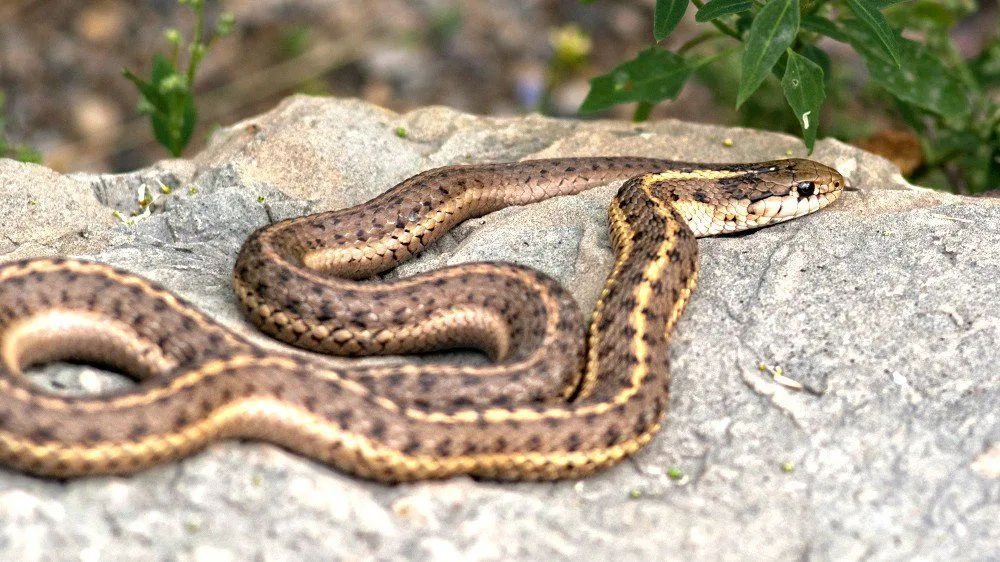
This illustrates a scintillating butterfly effect where a tiny variation transmutes to consequential differences. The study highlights the spectacular vicissitudes that a single genetic mutation can induce. Zoologists claim this regression might have sprung into action some 150 million years ago.
The first clues about these genetic changes came from Martin Cohn (now an evolutionary developmental biologist at the University of Florida) and Cheryll Tickle, working in the United Kingdom in 1999. They discovered that certain genes in a python embryo switched on in a different pattern than in other reptiles, and that adding a growth factor could coax these embryos to start growing limb buds. However, because genome-editing technology was still in its infancy, they lacked the tools to peek any deeper.
Their work pointed to a gene named Sonic hedgehog (Shh), which signals to the growing limb bud and governs how many digits form and how large a limb becomes. If that signal failed in snakes, it could explain why their limbs never finished developing.
As gene-editing technology caught up, scientists tracked the embryos of pythons to examine why their legs start to grow but never finish. They traced the problem to a genetic switch that controls when and where Sonic hedgehog turns on in the limb. The switch had lost key binding sites where regulatory proteins normally latch on!

This switch is a stretch of DNA called an enhancer, specifically the ZRS (the limb enhancer of Sonic hedgehog). The enhancer works like a docking bay where the proteins that control the gene’s activity come to land. When those docking sites are lost, the proteins struggle to attach, leaving only a narrow window of gene activity early in the python’s development before the signal fizzles out and limb growth stalls.
Axel Visel, a genomicist at the Lawrence Berkeley National Laboratory in Berkeley, California, compared the enhancer sequences of basal snakes, such as pythons and boas, with those of more advanced snakes like cobras and vipers. Pythons and boas still carry tiny pelvic spurs, leftover hints of hind limbs, whereas the advanced snakes have no leg remnants at all. Sure enough, the advanced snakes’ enhancers were riddled with even more deletions and degenerative mutations.
Researchers then attempted to test this enhancer’s influence on mouse limbs, to foresee its effects on the growth of their limbs. In an insightful experiment, researchers utilized the CRISPR-Cas9 gene-editing technique to replace a rodent’s own enhancer with the enhancers of other animals and then the enhancer of a snake.

When maturing with the enhancer of other species, the mouse legs grew conventionally. However, when replaced with the enhancer of a snake, the limb growth was restricted to small nubs! Moreover, when the researcher made the necessary additions to the DNA and placed the amended enhancer back into the mice, the leg growth resumed to its normal growth!
In this way, a microscopic tweak altering the rungs of snake DNA restricted any protruding appendage to an imperceptible bud, or in the case of new iterations of snake species, caused a regression to having no appendage at all.
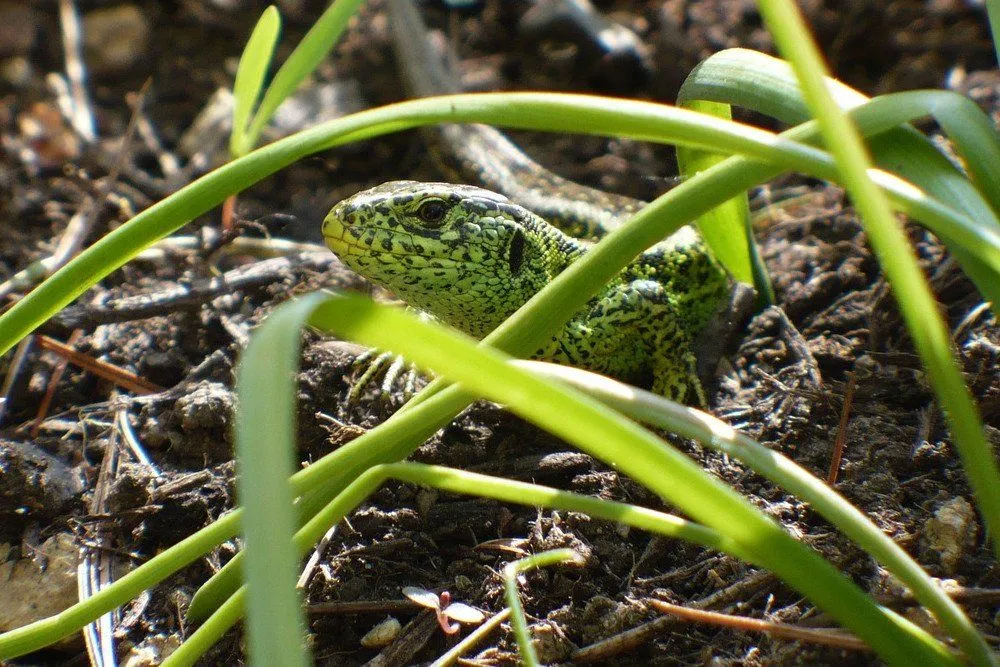
However, scientists are still uncertain whether this tweak can be deemed the single, monumental mutation that introduced the trend of limblessness in lizards and facilitated their evolution into snakes. They believe this mutation might not be the sole perpetrator, but it is certainly a major actor in this unfolding drama.
For now, the common ancestor of all snakes still lurks in the shadows, elusive and reluctant to be identified.
References (click to expand)
- Research|Penn State: When did the snake lose its legs? - www.rps.psu.edu:80
- Tiny DNA tweaks made snakes legless | Science | AAAS
- Kvon, E. Z., Kamneva, O. K., Melo, U. S., Barozzi, I., Osterwalder, M., Mannion, B. J., … Visel, A. (2016, October). Progressive Loss of Function in a Limb Enhancer during Snake Evolution. Cell. Elsevier BV.
- How snakes lost their legs › News in Science ... - ABC. The Australian Broadcasting Corporation
- Caldwell, M. W., et al. (2015). The oldest known snakes from the Middle Jurassic-Lower Cretaceous provide insights on snake evolution. Nature Communications.
- Apesteguía, S. & Zaher, H. (2006). A Cretaceous terrestrial snake with robust hindlimbs and a sacrum. Nature.