Table of Contents (click to expand)
Dogs were the first animals humans domesticated, descended from grey wolves at least 15,000 years ago, with genetic evidence pushing the split back to around 30,000 years ago. Recent ancient DNA work shows their ancestry traces to at least two wolf populations across Eurasia, not just one. From that beginning, selective breeding shaped today's hundreds of breeds.
Many pop culture shows have talked about domesticating dogs, from thrilling movies like Air Bud and Turner and Hooch to comic book sidekicks like Krypto. However, for animals that we value so much, we know very little about how dogs became (Hu)man’s best friend.
So how exactly did this happen? How long did it take? Was there a single event or many events that led to this? What led to their domestication?
Fortunately, a combination of archaeological, genetic and evolutionary evidence has been able to shed some light on the process.
What Do We Mean By Domestication?
The Oxford English Dictionary defines it as “The process of taming an animal and keeping it as a pet or on a farm.” This is a simple definition of what is, in fact, a very complex process. Domestication has both cultural and biological aspects.
First of all, human society has to accept the animal in question. After being accepted within human social structures, the animal will undergo biological changes to fit the requirements of humans. Thus, for dog ancestors to be domesticated, they first needed to meet humans, but where were those dog ancestors for humans to meet them? All around the globe, in fact.
How Canines Conquered The Globe
First, let’s talk about what we mean when we say dogs. Dogs belong to a family known as Canidae, which is a family of dog-like species such as foxes, jackals, wolves, etc. Canids are characterized by their long muzzles, upright ears and long slender legs. They branched off from a family called Miacidae roughly 40 million years ago in North America.
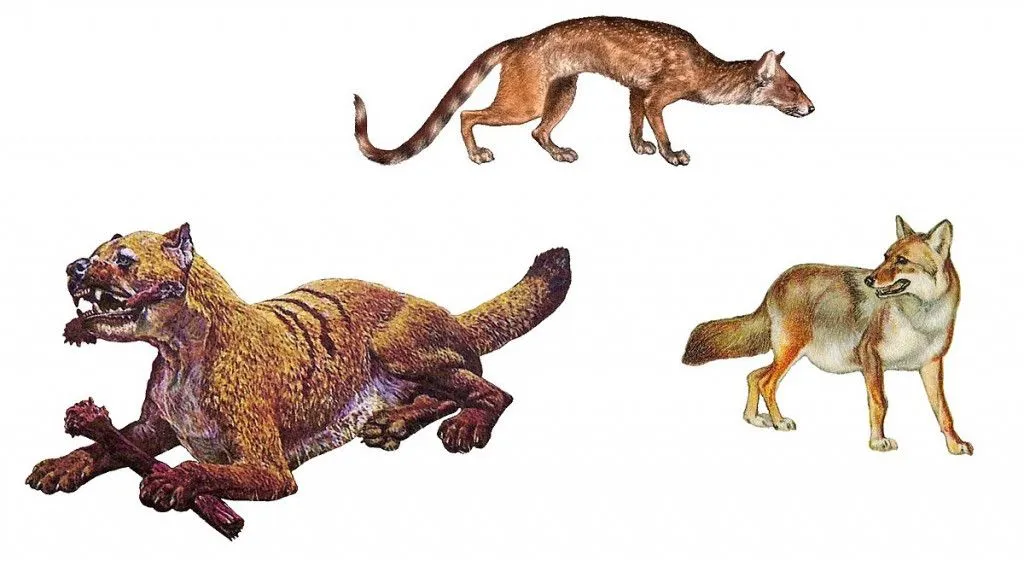
There were three subfamilies of ancient dogs: bone-crushing dogs (bottom left), hesperocyoninae (top), and canines. Only the canine lineage remains alive today.
These canine ancestors of dogs crossed into Europe and Asia using the Bering Strait about 8 million years ago. Around 3 million years ago, they crossed into South America, around the time the Isthmus of Panama formed.
Canines only crossed over to Australia around 3,500 years ago, but we’ll get to that a little later…
Where Did We First Meet Dogs?
Much of how we domesticated dogs has been inferred from present dogs and their behavior, as well as archaeological and genetic evidence. However, it’s been harder to determine where and when this happened. The earliest widely accepted dog remains are around 15,000 to 17,000 years old, while genetic clocks comparing dogs and grey wolves push the lineage split back to roughly 20,000 to 40,000 years ago. The actual moment of domestication almost certainly sits somewhere inside that broader window.
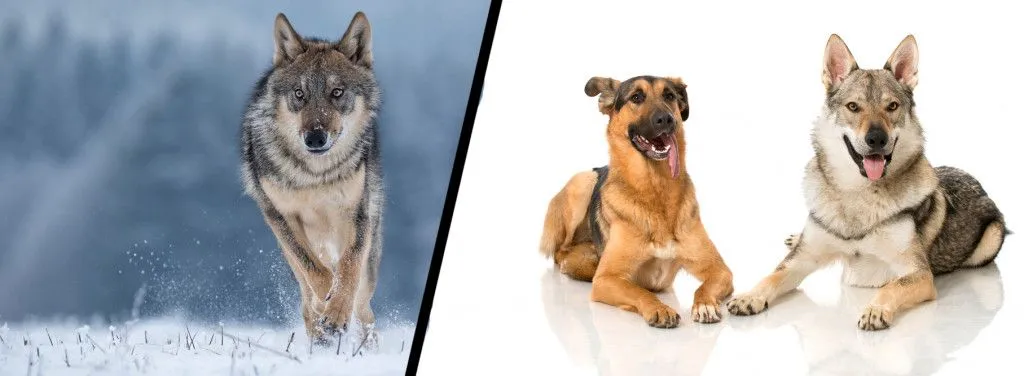
Scientists haven’t come to a consensus on the “where” question either. Research has variously pointed to a European, Middle Eastern, or East Asian origin. The most recent ancient-DNA work suggests the picture is messier than a single birthplace: the founder wolves were most closely related to populations in eastern Eurasia, but dogs in the Near East and Africa carry significant ancestry from a second, western Eurasian wolf source as well.
Either way, the relationship between early dogs and humans seems to have been mutually beneficial. People used these primitive dogs for hunting and protection, and the dogs found a reliable food source by hanging around human camps. Ecologists call this kind of arrangement commensal domestication.
However, after we met our dog ancestors, the journey towards becoming “man’s best friend” is a long and interesting one.
Another factor that helped with dogs being domesticated is the fact that their ancestors (the grey wolves) were pack hunters. Early humans were also pack hunters. With shared social and behavioral signals, it was easier for us to understand each other, so wherever we did initially meet, it was helped along by a number of overlapping factors.
The Journey Of Domestication
We know that dogs descend from at least two separate wolf populations. One source was related to wolves in eastern Eurasia and contributed to nearly all early dogs, while a second source related to wolves in the Near East added 20-60% of the ancestry seen in early Near Eastern and African dogs. All domestic dogs today, from the ferocious Doberman to the tiny Shih Tzu, can trace themselves to genes mixed from these wolf populations.
In certain parts of Europe and the Middle East, dogs may have been cross-bred with wolves from the same region, which could have created new breeds. Inuits also created new breeds when they travelled to North America for the first time. This was not because of cross-breeding, but because only a small part of this original population was taken with them. This small group led to a “genetic bottleneck”; there were only so many individuals to mate within a small gene pool, so their characteristics changed quickly and dramatically.
Australia is a different story. Aboriginal Australians had already lived on the continent for tens of thousands of years before any dog arrived. Dingoes were brought in much later, by seafarers travelling from Southeast Asia. The oldest directly dated dingo bones, recovered from Madura Cave on the Nullarbor Plain, point to an arrival around 3,300 to 3,500 years ago. Once on the continent, those dogs went feral and formed their own separate population, known as dingoes.
Today, there are numerous breeds of dogs. Each dog breed reflects their place of origin, the place to which they were best adapted. Take the Siberian Husky, for example. The ‘Siberian’ in their name points to Siberia, an extremely cold place, so the dogs have long fur to survive the cold. They also have strong legs and a tendency towards obedience.
Early humans chose these traits and “selectively bred” these dogs. Basically, if a dog had desirable traits, that dog would be selected to have puppies. Studies using DNA analysis show that it was males with desirable traits that were selectively bred. They were then made to mate with as many females as possible.
Conclusion
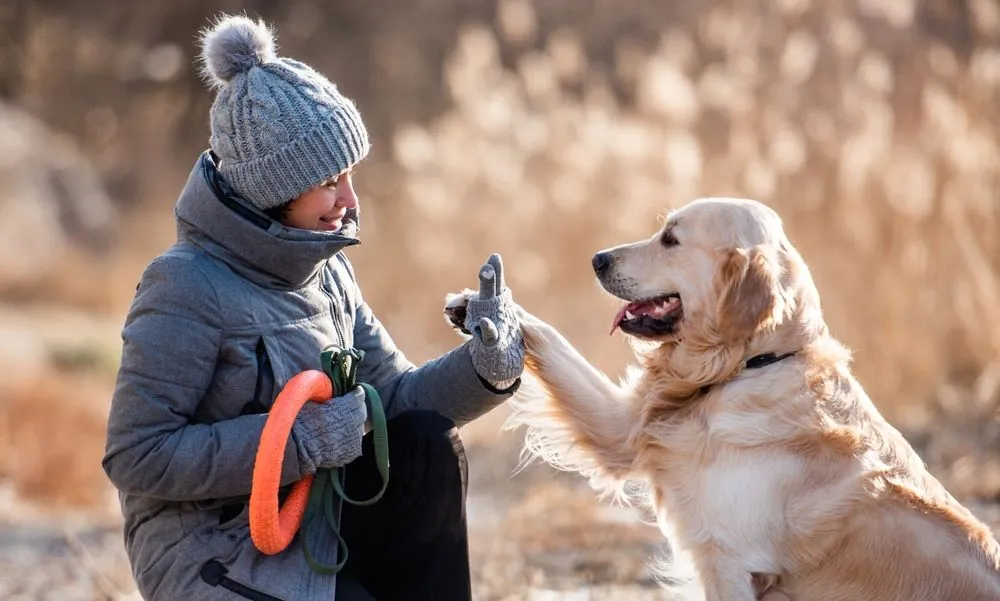
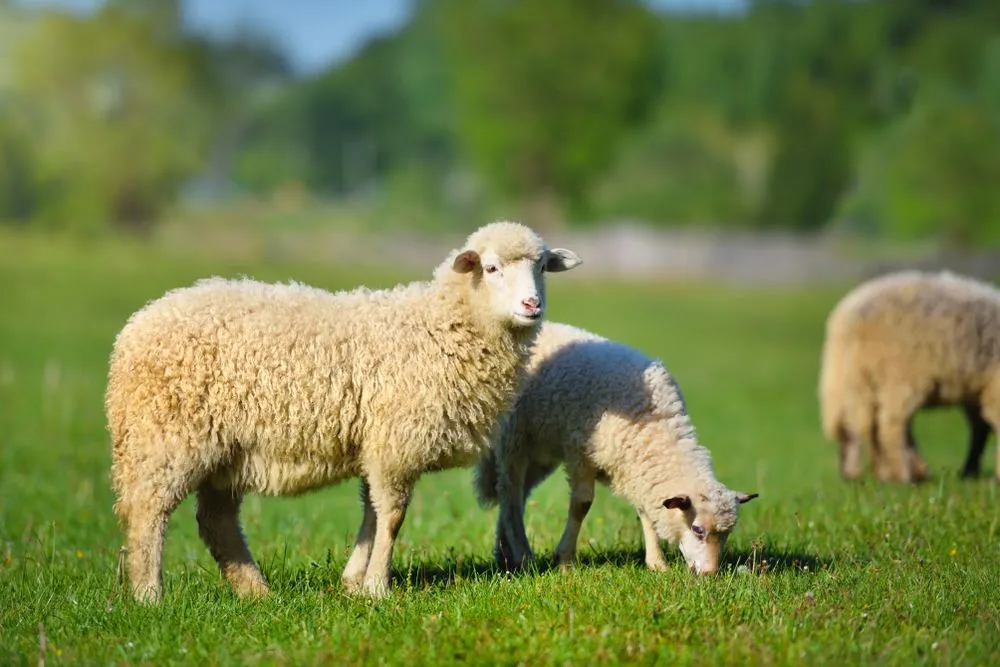
Dogs have come a long way from helping us hunt down our dinner. They are now considered members of families, a status symbol, and treated with more respect than other domesticated animals, like sheep and horses.
Unfortunately, a dog’s place as a cultural symbol has made pedigree more important than function. Pedigree refers to the “purity” of the breed, without any intermixing of genes. This leads to a lot of inbreeding and genetic disorders in dog populations. Recently, there has been more awareness about how choosing pure breed dogs can be bad for their health.
Dogs have a long way to go on their evolutionary journey, but every day there are new discoveries that show us how they became our closest animal friends!
References (click to expand)
- Jensen, P. (ed.). The Behavioural Biology of Dogs. CABI Digital Library.
- Bergström, A. et al. (2022). Grey wolf genomic history reveals a dual ancestry of dogs. Nature.
- Balme, J., O'Connor, S., & Fallon, S. (2018). New dates on dingo bones from Madura Cave provide oldest firm evidence for arrival of the species in Australia. Scientific Reports.
- CLUTTON-BROCK, J. (1992, June). The process of domestication. Mammal Review. Wiley.
- Fillios, M., Crowther, M. S., & Letnic, M. (2012, March). The impact of the dingo on the thylacine in Holocene Australia. World Archaeology. Informa UK Limited.
- Savolainen, P., Zhang, Y.-. ping ., Luo, J., Lundeberg, J., & Leitner, T. (2002, November 22). Genetic Evidence for an East Asian Origin of Domestic Dogs. Science. American Association for the Advancement of Science (AAAS).
- Wang, G.-D., Zhai, W., Yang, H.-C., Wang, L., Zhong, L., Liu, Y.-H., … Zhang, Y.-P. (2015, December 15). Out of southern East Asia: the natural history of domestic dogs across the world. Cell Research. Springer Science and Business Media LLC.
- Bannasch, D., Famula, T., Donner, J., Anderson, H., Honkanen, L., Batcher, K., … Rebhun, R. (2021, December 2). The effect of inbreeding, body size and morphology on health in dog breeds. Canine Medicine and Genetics. Springer Science and Business Media LLC.