Table of Contents (click to expand)
Animals have a tendency to choose partners that resemble their parents. This behaviour is called sexual imprinting. Does this behaviour have evolutionary implications?
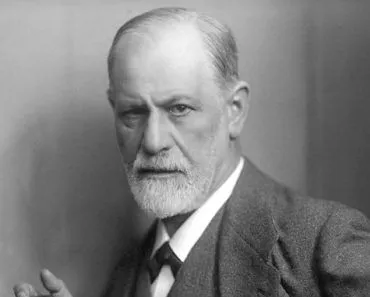
Freud’s Oedipus complex states that children are attracted to parents of the opposite sex, and may even consider the other parent a competitor. However, this has been widely criticized by many psychologists, along with many of Freud’s other theories. Interestingly, scientists have encountered instances of animals choosing partners that specifically resemble their parents.
So, what’s happening here?
What Is “Imprinting?”
“Imprinting” in this case is not what Jacob did to Bella’s newborn in Twilight. In biology, imprinting is the term scientists use to describe a type of learned behavior in young animals. It can be defined as the connection a young animal establishes with an object or experience that lasts through to adulthood.
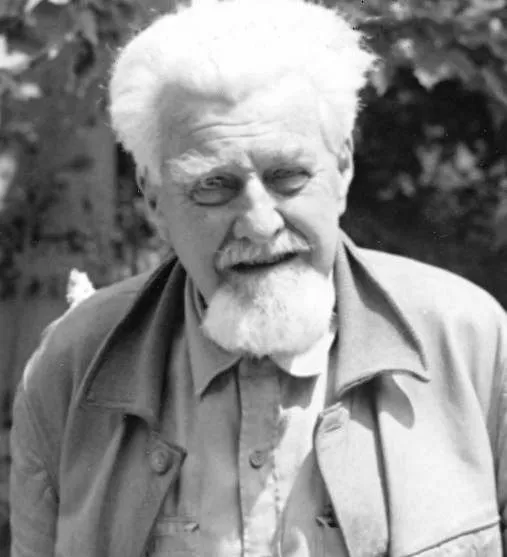
Konrad Lorenz, a scientist studying animal behavior, was the first to describe imprinting. In an exciting experiment, Lorenz noted that ducks newly hatched out of their eggs would follow him around when he was the first thing they saw. The ducks took him for their mother. This specific type of imprinting is called ‘filial imprinting’.
‘Sexual imprinting’ is when a juvenile forms a preference for a partner who resembles an adult with whom they are familiar. Most often, it happens to be the parent.
Reasons For Imprinting?
For a young one, their parents are the gateway to the world, figures of familiarity and trust. As adults, when we encounter an individual with characteristics similar to our parent, we’re more likely to trust this new individual. This, in turn, makes us feel more inclined to choose such as individual as our partner. The evolutionary perspective on this is that we sexually imprint on our community members to ensure animal mates only with members of the same species; parents are bound to belong to the same species as their offspring.
How Common Is Sexual Imprinting In Nature?
Look around and we see countless examples of this happening: in birds, mammals, fish, and insects.
In fish, the threespine stickleback female fish imprint on their fathers. When they were raised with foster fathers, they imprinted on the foster parent! However, in the case of cichlid fish, females learn how their mothers are and then imprint on partners that resemble their mothers.
One study used novel or artificially exaggerated ornaments to study imprinting in birds. Young offspring of Japanese Quail were exposed to parents with varying numbers of painted black dots on their beaks. When these birds grew up, they had a preference for individuals with the same number of beak dots that they had been shown earlier in life.
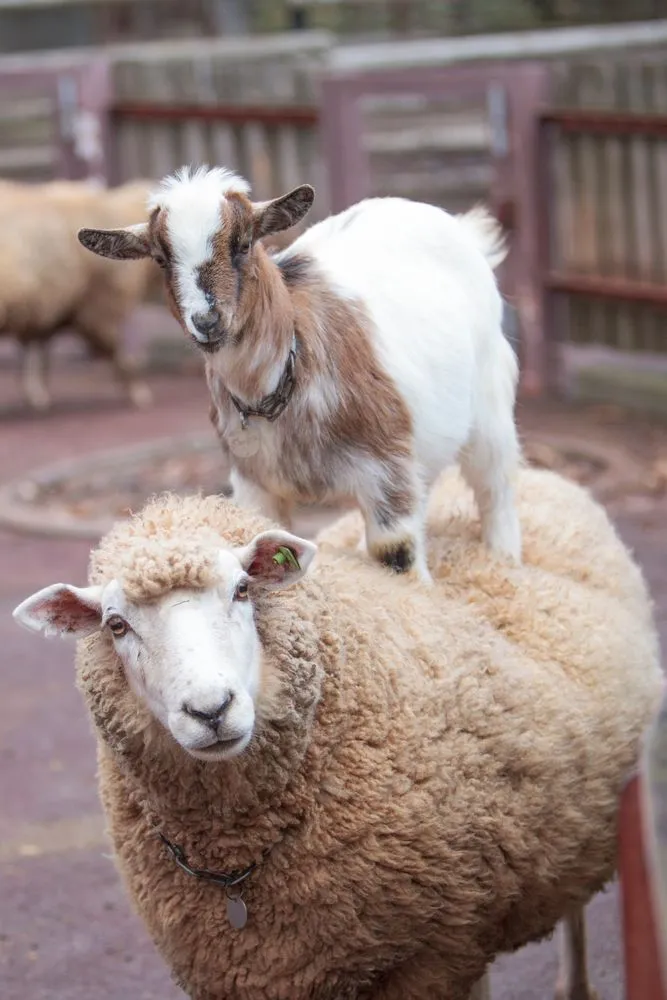
However, does this attraction happen only towards the members of the opposite sex? When male Mallard ducks were raised only among males, the male ducks grew up with a preference for having sex with other males! This could be a result of same-sex imprinting, but when they were allowed to grow up with members of both sexes, the male Mallards opted for a female for mating.
So is it just based on being born to a parent or does rearing also contribute to who an animal imprints upon? A different study on Mallard ducks had something else interesting to report. They found that these birds are interested in sexual partners of the species that provided them with parental care as children, instead of other adults of their own species, when forming pairs.
Humans imprint too (vaguely vindicating Freud). A study found that women reported sexually imprinting on fathers and even brothers, at times. Another study found that there was more similarity between a man’s mother and his wife than between a husband and his wife.
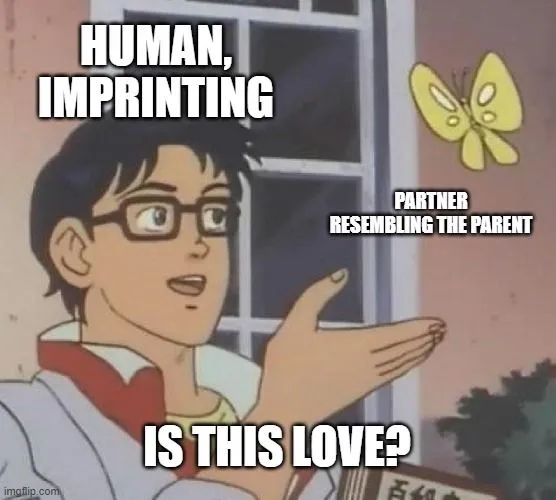
This form of ‘positive imprinting’ is not universal. There are also cases of negative imprinting, in which animals develop a strong sexual aversion to individuals they have been associated with when they were young. This is called the Westermarck effect.
What Is The Westermarck Effect In Animals?
If positive imprinting is the pull toward partners who resemble the family an animal grew up with, the Westermarck effect is the push in the opposite direction. Named after the Finnish anthropologist Edvard Westermarck, who first described it in 1891, it is essentially negative sexual imprinting: an individual that spends its earliest, most formative days alongside another tends to grow up feeling no sexual attraction to that familiar companion at all. The childhood housemate becomes, in effect, off-limits.

Why would evolution wire in a switch that turns attraction off? The leading explanation is inbreeding avoidance. Mating with close relatives raises the odds that two copies of the same harmful recessive gene land in the offspring, which is the engine behind inbreeding depression. The elegant trick is that an animal does not need to consciously recognize a sibling. It simply applies a rough rule of thumb: whoever I was raised with is probably kin, so I will look elsewhere for a mate.
A neat experiment on Damaraland mole-rats, a eusocial rodent from southern Africa, shows the rule in action. Researchers cross-fostered pups so that some grew up alongside their actual relatives and others alongside strangers. When the mole-rats matured, animals reared together avoided breeding with each other, while pairs raised apart mated readily, regardless of how closely related they really were. Genetic similarity on its own made no difference; only shared upbringing did. Familiarity, not some hidden genetic radar, was doing the work, exactly as the Westermarck effect predicts.
A Final Word
When we look at certain populations of animals, sexual imprinting can pose some disadvantages. When individuals continue to choose partners that resemble their parents, they also continue choose a limited set of genetic traits. This prevents different variants of a trait from intermingling, and could become an evolutionary disadvantage.
Evolutionary theories are used to elucidate every nature vs nurture situation. Here also, cultural differences, childhood experiences, and the emotional bond that children share with their parents can also potentially affect their partner preferences. Our genes are able to dictate our tastes strongly, and sexual imprinting can have a huge impact on mate choice. That said, there is clearly a lot more to it than that!
References (click to expand)
- Marcinkowska, U. M., & Rantala, M. J. (2012, July 1). Sexual Imprinting on Facial Traits of Opposite-Sex Parents in Humans. Evolutionary Psychology. SAGE Publications.
- Irwin, D. E., & Price, T. (1999, April). Sexual imprinting, learning and speciation. Heredity. Springer Science and Business Media LLC.
- Rantala, M. J., & Marcinkowska, U. M. (2011, January 18). The role of sexual imprinting and the Westermarck effect in mate choice in humans. Behavioral Ecology and Sociobiology. Springer Science and Business Media LLC.
- Bereczkei, T., Gyuris, P., Koves, P., & Bernath, L. (2002, October). Homogamy, genetic similarity, and imprinting; parental influence on mate choice preferences. Personality and Individual Differences. Elsevier BV.
- Griffee, K., Stroebel, S. S., O’Keefe, S. L., Harper-Dorton, K. V., Beard, K. W., Young, D. H., … Kuo, S.-Y. (2017, April 5). Sexual imprinting of offspring on their parents and siblings. (S. Elmer, Ed.), Cogent Psychology. Informa UK Limited.
- Leedale, A. E., Vullioud, P., Seager, D., Zöttl, M., Glauser, G., & Clutton-Brock, T. (2024). Kin recognition for incest avoidance in Damaraland mole-rats, Fukomys damarensis. Proceedings of the Royal Society B: Biological Sciences.