Mimicry is the close resemblance of one organism to another species or to objects in its surroundings. Its purpose is, in a word, survival: it helps an animal evade predators, blend into its habitat, lure prey, and sometimes attract mates. Stick insects, hornet moths, and harmless snakes all use mimicry to stay alive.
What comes to your mind when you see the word mimicry? You might think of a comedian mimicking a superstar. You might also think about your cousin imitating your aunt when she’s not looking. But did you know that mimicry is one of the most fascinating concepts in nature too? Animals and plants also mimic certain characteristics of other creatures and the world around them. But why do they do this? Is it a necessity? Or is there a more significant force behind it? Let’s find out!
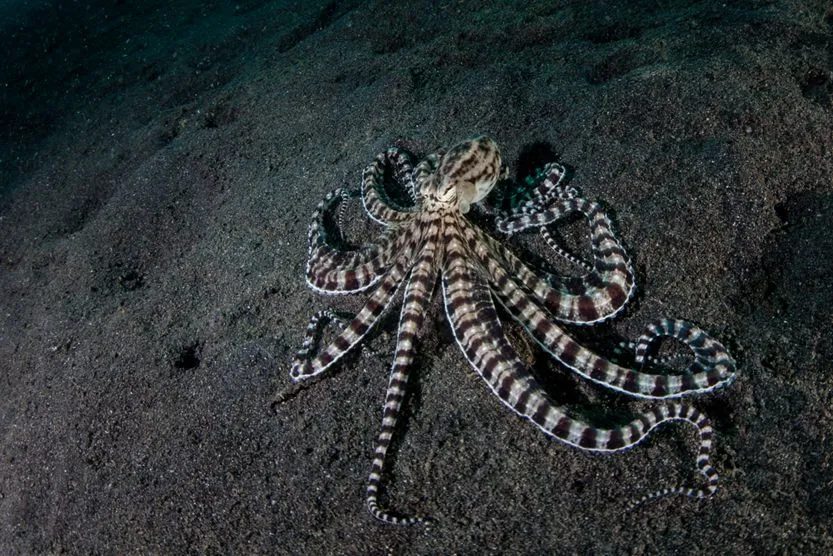
One can observe mimicry in animals if they display physical or behavioral traits of another species, or even aspects of the surroundings in which the animal is usually found. The simple reason why this occurs naturally in animals is that it provides the advantage of survival. However, they don’t mimic things or other species deliberately. They’re born with these characteristics without having to make a conscious choice to learn or practice!
Animals That Use Mimicry
If you’ve ever gone hiking out in nature, you have probably been within a few inches of stick insects. However, you probably never spotted them because they look so much like the bark on which they’re perched.
However, this precise characteristic provides them with a huge advantage for survival. Just like us, other predators are unable to spot the presence of such an animal, which prevents them from being killed in the act of predation. Brilliant, right?
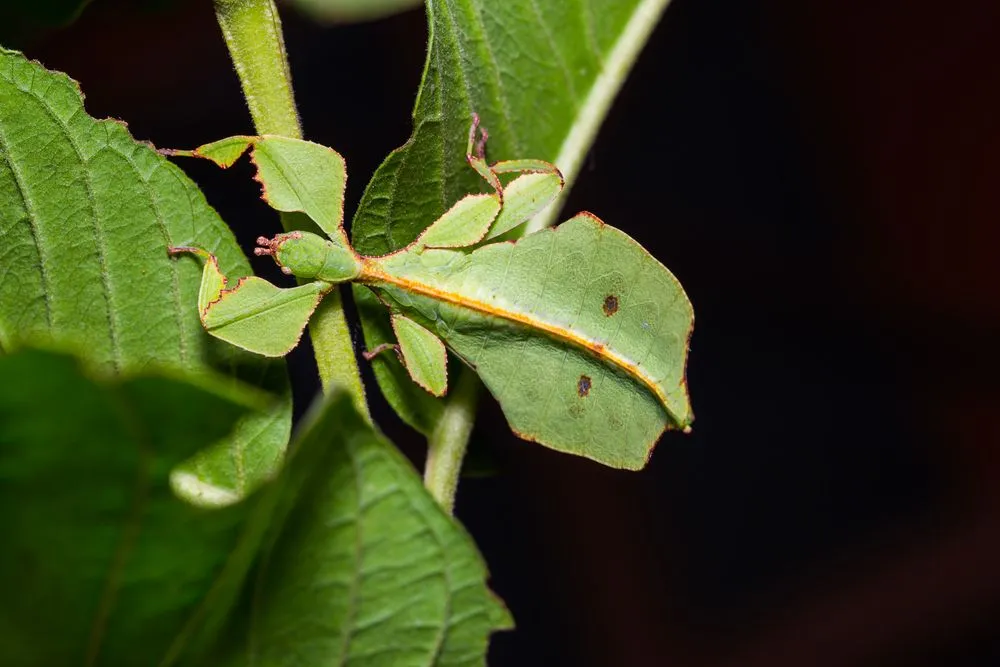
But that’s not all! Sometimes animals also mimic other animals to avoid being eaten by bigger predators. They also mimic external features, such as color and form, to lure prey towards them.
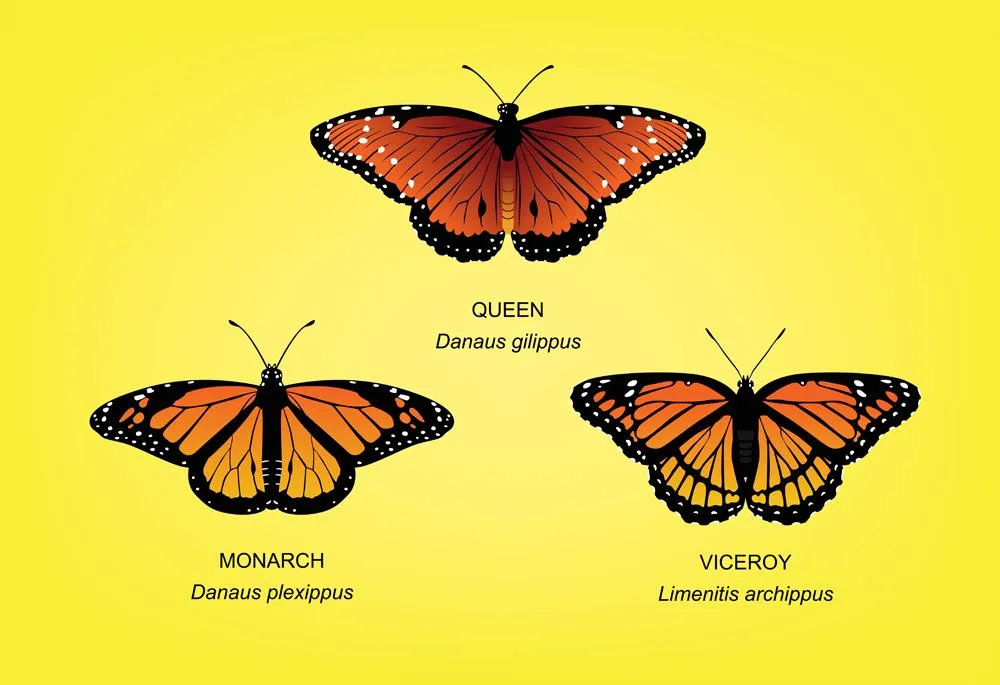
You will even find a number of different animals mimicking other species to benefit from their particular traits. One famous example is the viceroy butterfly, which resembles the toxic monarch butterfly in both the color and pattern of its wings. For decades the viceroy was held up as a harmless copycat, but experiments by David Ritland and Lincoln Brower in 1991 showed that the viceroy is itself unpalatable, so the two species actually warn predators together (more on that later).
Similarly, the hornet moth Sesia apiformis mimics the dangerous stinging European hornet Vespa crabro, copying not just its black-and-yellow body but even its buzzing flight, to avoid becoming prey.
Yet another interesting example is the hognose snake (Heterodon), which flattens its neck like a cobra and hisses loudly to advertise that it is dangerous, even though it is essentially harmless.
One may conclude that these plants and animals evolved these methods of trickery and deception over long spans of time, all to improve their likelihood of survival!
What Is Batesian Mimicry?
Let’s try to understand this concept through an example. Consider a group of insects: A, B and C. Out of these, only B has toxic chemistry in the form of stingers, spines or other features that are harmful to predators. On the other hand, A and C only look like B, but due to prior unpleasant experiences with B, the predator will avoid all A, B and C organisms, since they look so similar. This is known as Batesian mimicry.
This type of mimicry is named after Henry Walter Bates, a British naturalist who pioneered the work of observing patterns of mimicry in Amazonian butterflies. The harmless hornet moth mentioned above is a textbook example: it is perfectly edible, yet its hornet costume keeps predators away. One can also observe Batesian mimicry in milk snakes, which are non-venomous but possess the same body coloration as deadly coral snakes.
What Is Mullerian Mimicry?
This type of mimicry, named after the German naturalist Fritz Müller, is only slightly different from Batesian mimicry. A group of animals are said to exhibit Mullerian mimicry if they share the same warning signals to indicate that they are unpalatable or dangerous. In this case, it is difficult to say who is mimicking whom, as both creatures are toxic, yet each gains protection from looking like the other, which makes the relationship mutually beneficial. This is exactly what is now thought to be going on with the viceroy and monarch butterflies: because both are unpalatable, they reinforce a shared warning pattern rather than one simply freeloading off the other.
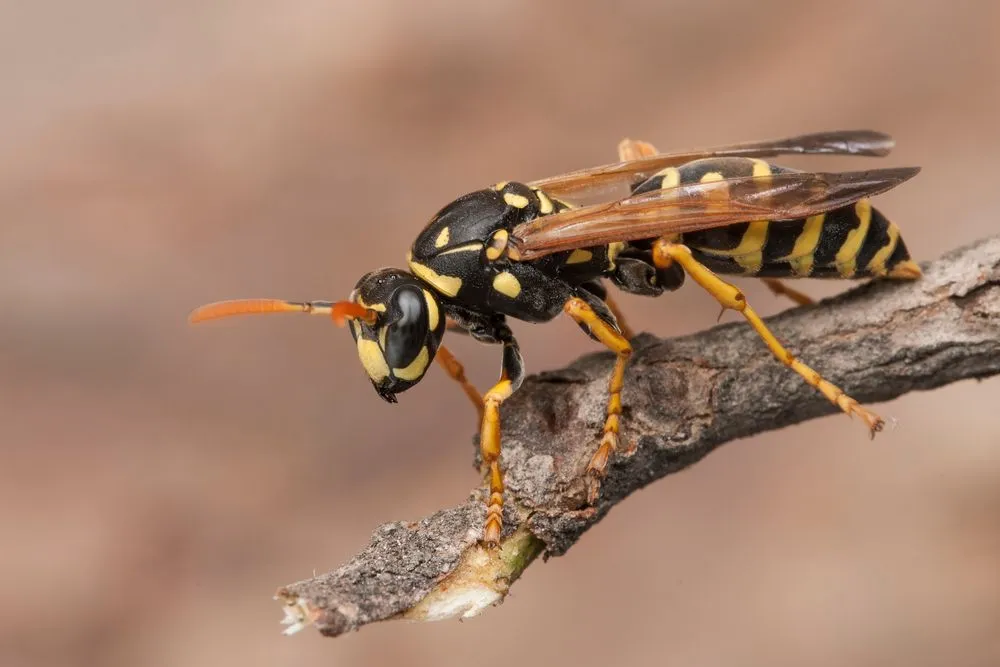
As such, we can say that Mullerian mimics exhibit similar warning systems. These can be the same pattern of bright colors on the body of the animal that advertises the prey as being unpalatable or toxic to predators. This is popularly known as aposematism. Once the predator has had a bad experience with an animal displaying such a pattern, it will avoid all similar patterns in the future. Some prominent examples of creatures who rely on this type of mimicking are bees, yellow jackets and wasps, which are all stinging insects and have the same black-and-yellow external coloration.
What Is Aggressive Mimicry?
So far we have looked at mimicry as a defensive trick: harmless animals borrowing a dangerous species' warning colors to avoid being eaten. But some animals flip the script and use mimicry to hunt. This is called aggressive mimicry, and here the predator (or sometimes a parasite) is the one wearing the disguise. Instead of copying a scary model, it imitates something harmless or even tempting, so that its prey wanders close without sensing the danger.

The orchid mantis, which lures pollinating insects with its flower-like disguise, is one example, but the ocean offers even sneakier ones. The deep-sea anglerfish carries a modified spine from its dorsal fin that dangles over its mouth like a fishing rod. The tip, known as the esca, glows thanks to bioluminescent bacteria, and the fish wiggles it so that it resembles a small, wriggling prey animal. Curious fish swim in for a snack and become the snack instead.
The alligator snapping turtle (Macrochelys temminckii) plays a similar game on riverbeds. It lies perfectly still with its jaws wide open, twitching a small, pink, worm-shaped appendage on its tongue. To a passing fish it looks like an easy meal, right up until the jaws snap shut.
Perhaps the most ruthless example belongs to the fireflies. Females of the genus Photuris, nicknamed "femmes fatales," imitate the flashing light signals that Photinus females use to attract mates. When a hopeful Photinus male flies down expecting romance, the impostor eats him. Biologist James E. Lloyd documented this deadly deception in the 1970s, showing that a single female could mimic the courtship flashes of several different firefly species.
Mimicry vs. Camouflage: What Is The Difference?
You may have noticed that our very first example, the stick insect vanishing against the bark, feels a little different from a harmless snake copying a cobra. That is because biologists actually draw a line between camouflage and true mimicry, even though the two are often lumped together.

Camouflage (also called crypsis) is about not being detected in the first place. An animal blends into its background by matching the color, pattern, or texture of its surroundings. When the disguise imitates a specific inanimate object such as a leaf, a twig, or even a bird dropping, it is sometimes called masquerade. The stick insect, the leaf insect, and the mossy leaf-tailed gecko of Madagascar all belong here; the gecko's frilly skin flaps flatten against the bark and scatter its shadow until its outline practically disappears.
Mimicry, on the other hand, works even after the animal has been spotted. The mimic is seen, but it is misidentified as a different, meaningful organism, usually a dangerous or unpalatable one. A harmless hoverfly resting in plain sight is not hiding at all; a bird sees it perfectly well but reads its yellow-and-black stripes as "wasp" and leaves it alone. In short, camouflage says "you cannot find me," while mimicry says "you found me, but I am something you would rather not mess with."
Why Do Animals Mimic: Purpose And Advantages
Mimicry, just like several other phenomena in the biology of plants and animals, is attributed to evolutionary forces. If a creature’s appearance makes it easily distinguishable in its surroundings, then the chances of it becoming a meal are quite high. Therefore, mimicry helps them avoid such situations and promotes survival.
The camouflage of leaf insects among plants and the mimicking of a poisonous creature by a non-poisonous animal are both effective methods of survival.
Moreover, some animals also use this phenomenon to attract prey and meet their nutritional demands. A fascinating example is the orchid mantis; unlike a regular green mantis, this species displays delicate shades of pale purple or pink. Interestingly, research suggests it does not copy any single orchid. Instead, it presents a generalized flower-like lure, complete with petal-shaped legs, that draws in pollinating insects, which then end up becoming its prey!
Unlike the comedians you watch on TV, animals mimic to survive, not entertain. This mimicry in not only spectacular, but also very devious!
References (click to expand)
- (1933, December). Mimicry in Animals. Nature. Springer Science and Business Media LLC.
- Jamie, G. A. (2017, February 22). Signals, cues and the nature of mimicry. Proceedings of the Royal Society B: Biological Sciences. The Royal Society.
- Batesian Mimicry - an overview | ScienceDirect Topics. ScienceDirect
- Batesian mimicry. Encyclopaedia Britannica.
- Ritland, D. B., & Brower, L. P. (1991). The viceroy butterfly is not a batesian mimic. Nature.
- Lloyd, J. E. (1975). Aggressive Mimicry in Photuris Fireflies: Signal Repertoires by Femmes Fatales. Science.
- Aggressive mimicry. Encyclopaedia Britannica.
- Mimicry. Encyclopaedia Britannica.
- Coloration. Encyclopaedia Britannica.