Table of Contents (click to expand)
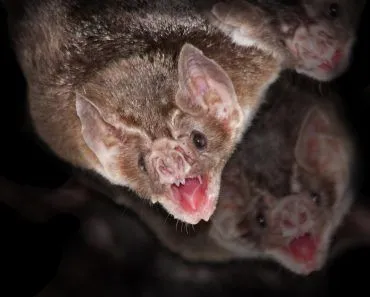
Bats live in caves because caves offer a cool, humid microclimate and a stable temperature year-round, so bats stay comfortable without burning much energy. Caves are also safe: hanging upside-down from a high ceiling keeps bats well out of reach of most predators.
If you ever have the chance to step inside an ancient cave in the dead of the night, be prepared to ‘expect’ a large group of creatures producing a high-pitched, chaotic noise that will likely terrify you and send you scurrying for the exit.
We are talking, of course, about bats.
Bats have inspired countless poets, authors and some of the finest movie-makers in past generations. Bats are intriguing creatures, so there is little surprise why bat-based movies are so darn good to watch (well, not all of them).
Has it ever crossed your mind why bats prefer to live in a dark, enclosed space, normally a cave of some kind? Why is that?
Bats Know How To Enjoy The Nightlife
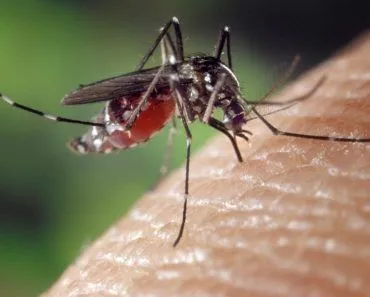
Most bat species are nocturnal, so they perform most of their hunting activities during the night. Bats feed on pests like mosquitoes, moths, flying beetles and many other small insects. They use an interesting technique called echolocation to hunt down their prey. Unlike most other creatures, which depend on visual cues to detect their prey, bats also use sound waves in their favor to locate their food, bouncing high-pitched calls off objects and reading the echoes that return. This is where the saying “blind as a bat” comes from, but it’s actually a myth. No bat is truly blind. Many species see about as well as we do, and some can even detect ultraviolet light. In the pitch dark, though, eyesight isn’t much use, so echolocation lets them build a kind of sound-image of their surroundings and zero in on a moth in mid-air.
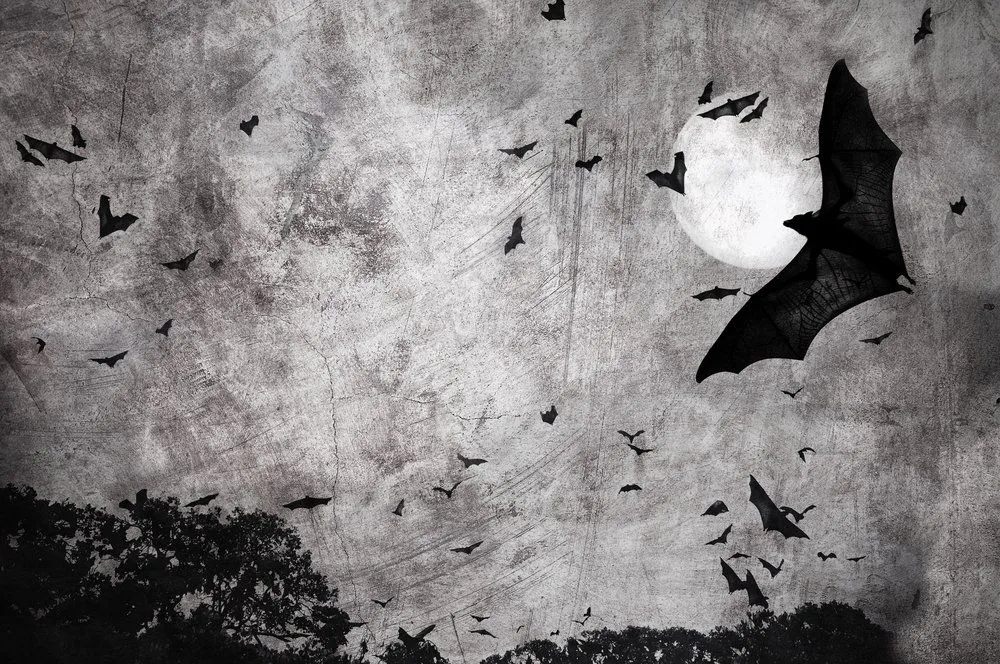
Since most creatures pretty much depend on visual cues to hunt, they need daylight to go about their lives, whereas bats use the darkness of the night to move in for the kill.
But Why Caves?
Bats are warm-blooded mammals, just like humans. Therefore, temperature is a very important factor for their healthy survival. When you combine this with the fact that they don’t forage much during the day (although some species do), bats need a safe and isolated hideout where other predators won’t find them.
This is where caves come into the picture. Deep inside a cave, the air stays cool and humid, and the temperature barely changes from summer to winter, hovering close to the area’s average annual temperature. That stable, mild climate lets bats stay comfortable without burning up too much energy keeping warm or cooling down.
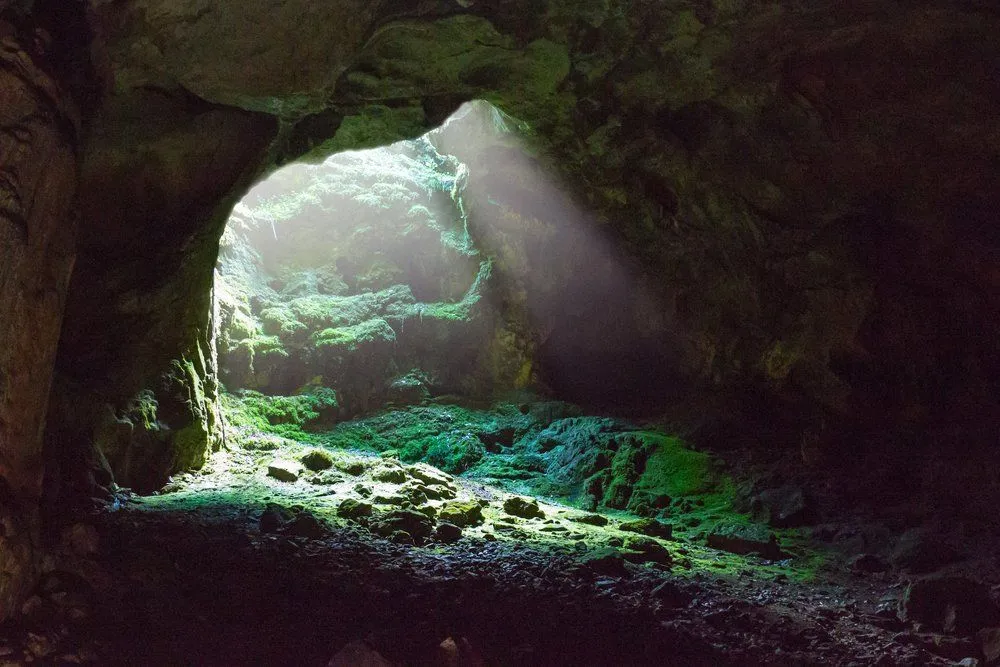
The high humidity matters too. It keeps bats from drying out while they hang motionless for hours at a time.
Don’t forget that caves are an excellent place to stay out of reach of a predator’s claws (or whatever they use to prey on bats). Hanging upside-down from a high cave ceiling, often in spots that are hard to climb or fly to, offers a level of safety for bats that few other creatures have. Essentially, they are free from most ‘worldly’ worries and typically far from danger.
In fact, many bats spend most of the winter in a state of hibernation in those same caves, when the insects they feed on have all but vanished. During hibernation, a bat slips into torpor: its metabolism slows to a crawl and its body temperature drops until it nearly matches the cool air of the cave, so it can coast through winter on stored fat. They spend much of that time hanging upside-down, which their bodies are uniquely built to do.
Thriving In Caves
Some of the most populous species of bats are found in caves, as roosting there helps them avoid danger and save energy. A few places around the world are famous for their bat-filled caves. The most spectacular is Bracken Cave, just outside San Antonio, Texas, the summer home of an estimated 15 to 20 million Mexican free-tailed bats. That makes it the largest known bat colony on Earth, and one of the largest gatherings of mammals anywhere. Now that’s a lot of guano!
Interestingly, most bat colonies leave or enter these caves as a group, mostly around dusk and through the night. It looks like a real sense of unity, which is always nice to see in a colony, but it also protects them through simple strength in numbers. A predator hunting the swarm is so overwhelmed by sheer numbers that any single bat is almost impossible to single out. (And no, despite a claim you may have heard, bats don’t always turn left when they stream out of a cave, as we’ll see below.)
Do Bats Always Turn Left When They Leave A Cave?
There’s a stubborn old claim that bats always turn left as they pour out of a cave. It’s the kind of tidbit that gets repeated at campfires and in pub quizzes, but it simply isn’t true. Terry Reardon, a life member of the Australasian Bat Society with more than 50 years of bat research behind him, calls the idea a complete myth. Watch enough cave mouths and you’ll see bats peel off to the left, to the right and straight ahead, with no universal preference.

So why does a colony often seem to favor one side? The honest answer is geometry, not handedness. As NSW National Parks ecologist Doug Mills points out, bats tend to exit on whichever side lets them fly downhill, since dropping away from the entrance is an easy way to pick up the speed and elevation they need. Add in the local landscape and the direction of the nearest food and water, and a cave can develop a lopsided flow that looks like a rule but is really just the path of least effort.
Some colonies do swirl in a tidy spiral before they disperse, which probably helped the myth along. At Carlsbad Caverns in New Mexico, hundreds of thousands of Brazilian (Mexican) free-tailed bats spiral out of the entrance in a counter-clockwise column around civil twilight each evening, and researchers are still teasing out why, with one idea being a magnetic sense tied to Earth’s poles. Yet at Naracoorte Caves in Australia, Reardon has watched southern bent-wing bats circle clockwise before their flyout. Two famous colonies, two opposite directions, which is about the clearest proof you could ask for that there is no built-in “turn left” in a bat.
It’s time for you to leave all the worries of your life behind and simply find a cave to hide out in for the rest of your days. Finally… a solution!
References (click to expand)
- Why do bats live in caves? Why don't they fly into objects at night? The Library of Congress
- Cave Ecosystems: Bats and Caves - www.blm.gov
- White-nose Syndrome (cave-roosting bats and hibernation). National Park Service
- Busting bat myths (the "always turn left" claim). Australian Geographic
- Brazilian Free-Tail Bat Outflight (counter-clockwise emergence). Carlsbad Caverns National Park, National Park Service