Table of Contents (click to expand)
Echolocation is the ability to “see” using sound. Bats, dolphins and toothed whales emit high-frequency clicks and read the returning echoes to map their surroundings in the dark. Humans can learn it too: a 2021 Durham University study found that both blind and sighted people can master functional echolocation in just ten weeks of training.
Ben Underwood (1992–2009) was blinded by retinoblastoma as a toddler, with both eyes surgically removed by the age of three. If you had visited his California neighborhood in the mid-2000s, you would often have found him cycling, skateboarding and rollerblading on the streets. Popularly known as ‘The Boy Who Sees Without Eyes’, he could discern people, cars and the next turn in his course — a feat he demonstrated on TV around the world before his death from the same cancer at the age of 16.
If you had ridden past him, you would have heard – other than his bell’s peal – a series of sharp “clicking noises” coming from his mouth. The high-frequency noises he emitted returned to him after reflecting and ricocheting off nearby objects. He then used those echoes to map or ‘see’ his surroundings. This real-life Daredevil had developed and honed a sense of vision that animals sequestered in darkness have mastered over millions of years. The process is appropriately termed echolocation.
Echolocation Definition
Echolocation is a physiological process that acts like an “auditory imaging system” that works on the same principle of emitting high-frequency sound waves which are reflected back to the emitter. These reflected sound waves are analyzed by the brain to gain information about its surroundings. This might also help marine animals to develop 3D images of their surroundings.
Echolocation In Animals
Bat Echolocation
The term was coined in 1944 by zoologist Donald Griffin, who — working with neurobiologist Robert Galambos at Harvard — was the first to demonstrate with conviction that bats navigate by listening to the echoes of their own ultrasonic calls. Even though bats possess eyesight, it is futile in the remote corners of dark caves. Such an unlit location, which they so often find themselves in, effectively renders them blind.
In these circumstances, bats, just like Ben, use sound to ‘see’. However, while Ben uses high-frequency sound waves to discern obstructions, bats use ultrahigh-frequency sound waves to achieve the same. Sound waves of such exorbitant frequencies cannot be detected by human ears because they lie outside of our hearing range (20 Hz to 20 kHz).
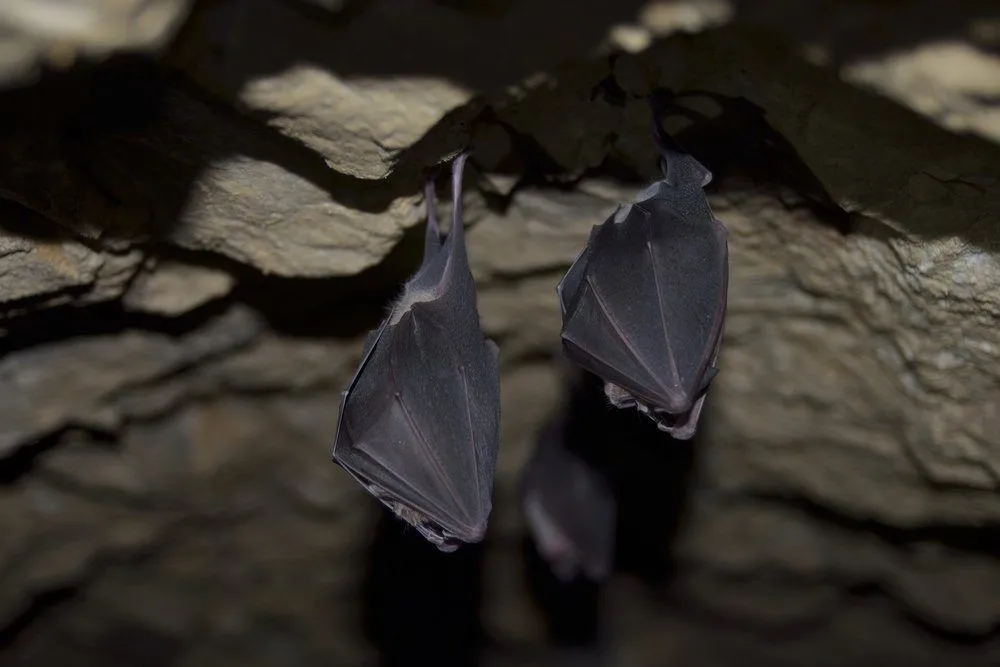
A bat’s squeaks are more informative than Ben’s clicks because with higher frequency comes higher resolution and more vivid detail – some species can detect wires as thin as a human hair! They use it to locate and navigate towards prey, such as a scampering insect.
As the detected sound waves that form the images are essentially echoes, they must conform to a rule — the retrieved train of pulses must be loud enough to return to the sender, but short enough such that the echo of the sender returns before the next one departs.
Marine Mammals
Whale Echolocation
Another group of animals that evolved this brilliant ability are marine mammals — specifically the toothed whales (Odontocetes): dolphins, porpoises, sperm whales, beluga whales and the like. (Baleen whales such as humpbacks and blue whales do not echolocate.) The Sun’s edged light cannot pierce all the way through to the solitary depths of the ocean. These dwellings, devoid of any light, like obscure, voluminous caves, are dark and solemn. The toothed-whale inhabitants overcome this blindness by using echolocation.

Toothed whales use short, broadband clicks (ranging from about 0.2 to 150 kHz) for echolocation — navigation, hunting, and judging distance. The long, patterned low-frequency ‘songs’ you may have heard of, by the way, belong to baleen whales (especially humpback males) and are used for mating and long-range communication, not echolocation. When a toothed whale is closing in on prey, it emits a trail of clicks; as it prowls forward, the click rate increases until, in the prey’s proximity, the clicks blur together into a distinctive ‘terminal buzz.’
Dolphin Echolocation
Dolphins rely on echolocation even when the light would suffice. They evolved the trait because their eyesight is not particularly great. Fostering this trait has a fortuitous effect – sound waves travel faster in water than light waves do. Dolphins generate the high-frequency pulses by squeezing air through nasal passages located beneath their blowholes. They then focus on these waves with a fat-filled area covered by the forehead known as the melon. The melon focuses its sound waves like lenses converge waves of light. Finally, the reflected waves are picked up not by the forehead (which is for emission) but by acoustic-fat channels inside the dolphin’s hollow lower jaw, which conduct the vibrations to the middle and inner ear. They transform it into signals which are sent to the brain for interpretation.

The combination of visual data and echolocation helps them determine the shape, speed, distance and even some basic facts about the internal structure of the objects in the water! This helps them to find food and swim in murky water.
Echolocation In Humans
The ability to build tools, a trait that largely explains our triumph over other species, has enabled us to outsmart nature and overcome our weaknesses. The upgrades or extensions are often inspired by what we covet among the myriad talents we find in nature’s circus — the ability to fly, move faster, apply crushing strength and — after studying echolocation — develop stealth technologies.
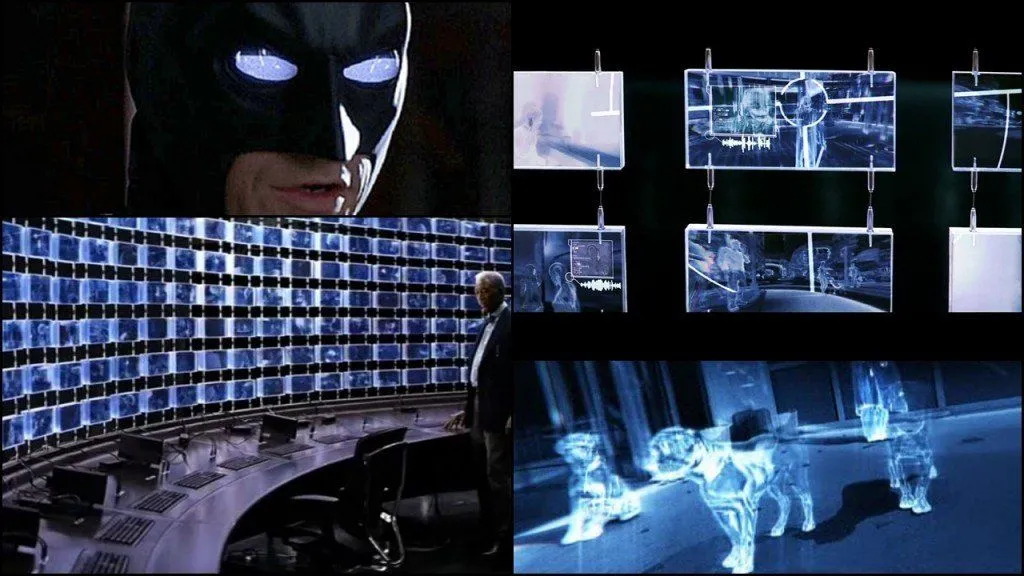
Submarines employ a technique known as Sound Navigation And Ranging (SONAR) to monitor enemies or animals underwater from a distance without making their presence felt. Echolocation inspired a variant of SONAR called active SONAR, where submarines listen to the reflections of sounds transmitted towards a target by the submarine itself. The other variant is passive SONAR, where a submarine triangulates by listening to sounds made by the surveilled object. This is what Batman used to track the Joker in The Dark Knight.
However, while our physiology completely prohibits us from flying, the same cannot be said of echo-locating. Ben Underwood is a shining example of our mysterious, suppressed ability to guide ourselves with sound waves. It was Aristotle who first introduced the notion of the five senses. These senses, he believed, were separate, independent of each other. However, modern neurology would vehemently disagree.
Neurologists discovered that the neuronal wires associated with these senses are installed like a tremendously condensed clump of trees. They cannot help but influence the operation of other senses. This is why the pungent smell of your food can exacerbate its taste.
What’s more, when a tree ceases to grow, the other trees presumptuously grow and spread over it. Due to the plasticity of the brain, the depreciation of one sense causes the heightening of another. The wires of touch, smell and hearing that colonize the defunct wires of vision in the brain of a blind person facilitate the heightening of his or her tactile, olfactory and auditory sensitivities.

However, the enhancement in acuity is not what you would traditionally expect; blindness doesn’t simply make you a more acute listener. Studies have shown that blind people score equally on hearing tests as people with vision do. Surprisingly, echoes don’t stimulate a blind person’s auditory cortex; instead, they activate his or her visual cortex. This stimulation is what enables Ben to ‘see’ his surroundings.
The diffusion of wires makes you more conscious of the deep synchrony or interdependence of senses you thought you never possessed. In fact, one doesn’t even have to be blind to achieve this; with deliberate practice, you can train yourself to see with your ears like a bat or dolphin — something Daniel Kish and the World Access for the Blind team have spent decades teaching. A landmark 2021 Durham University study went even further, training 26 people (12 blind, 14 sighted, ages 21–79) over just ten weeks and finding that both groups improved equally, with most blind participants reporting better mobility and independence afterwards.
The early work of psychologists Supa, Cotzin and Dallenbach (1944) on ‘facial vision’ found that blind people could detect the presence of a board placed in their path as they walked towards it. More incredible, however, is the finding that even sighted people who were blindfolded picked up the same skill in just a few dozen trials! The researchers suspected that the sighted subjects were seeing just how the blind subjects were — by implementing active SONAR. To test this, they placed the objects on carpets, inside thick socks. Both subjects suffered from exactly what you would imagine – a loss of “vision”. This ‘sixth sense’ is yet to be studied in extensive detail, however, this startling finding has surely opened our eyes to newer, unforeseen avenues (see what I did there?).