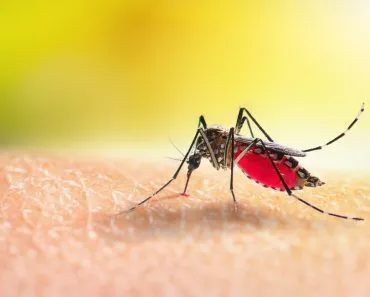
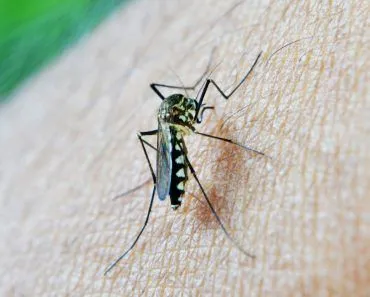
Most mosquitoes spend the day hiding in cool, damp, sheltered places—dense vegetation, hollows of trees, caves, sheds, barns, culverts, even closets inside your home—because the dry daytime heat can rapidly dehydrate and kill them. They emerge to feed at dawn, dusk and through the night, when the air is humid and cool. A few species, including the Asian Tiger mosquito and other Aedes species, break the rule and bite during the day.
Mosquitoes and cockroaches are some of the most despised creatures on the planet, but what makes mosquitoes more loathsome is that they love to bite us, unlike most cockroaches. Not to mention that mosquitoes are widely considered the deadliest animals on Earth, responsible for roughly 725,000 human deaths a year (mostly from malaria, dengue and other mosquito-borne diseases).
However, have you ever observed that these obnoxious insects are mostly active at night? It’s not that they completely disappear during the daytime, but your chances of getting bitten by a mosquito when it’s dark (e.g., at dawn, dusk, or night) are far greater than during the day.
Why Do Mosquitoes Bite And Drink Blood?
The most pressing issue the human species has with the mosquito community is that their members love to suck our blood.
However, why do they do that? Many might think our blood is mosquito dinner; they get nutrition and energy to build muscle and perhaps live a healthier life… that kind of thing, right?
If that’s what you think about mosquitoes, let me tell you two things. One, it’s only the female mosquitoes that bite and suck blood. Moreover, humans are not the only species mosquitoes afflict with their blood-sucking tendencies; mosquitoes also attack other mammals.
Second, female mosquitoes don’t suck blood for nutritional purposes, i.e., they don’t derive any energy or nutritional value from your blood. Rather, it needs the proteins and iron of mammalian blood to develop its eggs.
Your blood is used to bring more mosquitoes into the world!
The females and the males drink the nectar of flowers for nutrition.
Now, let’s get back to the original question…
Where Do Mosquitoes Go During The Daytime?
Just as it does to humans, the dry, sweltering heat of the daytime can dehydrate mosquitoes. Therefore, (most) mosquitoes (e.g., Anopheles) rest during the day in dark, sheltered places away from the scorching heat. Wet and humid areas, such as caves, vegetation, and even man-made structures like barns, culverts, cupboards, and closets, are common resting places for mosquitoes during the daytime.
Biology plays a crucial role. Researchers from the UK and USA analyzed when these mosquitoes are the most active. They found that mosquito activity increased just after sunset. Not only do the mosquitoes fly around more, they produce more smell receptors. In other words, their ability to smell you improves in the dark!
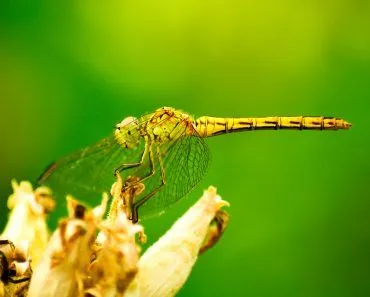
Dragonflies are also more active during the day. Dragonflies are a natural enemy of mosquitoes. This is why dragonflies are a natural pest control against mosquitoes.
Being awake and alert during the day, humans are also more likely to swat and kill mosquitoes.
Do All Mosquitoes Bite At Night?
No. There are some species of mosquitoes, like the Asian Tiger mosquito and Aedes species, that are active during the daytime and rest at night. There is another category of mosquitoes that feed during both times of day.
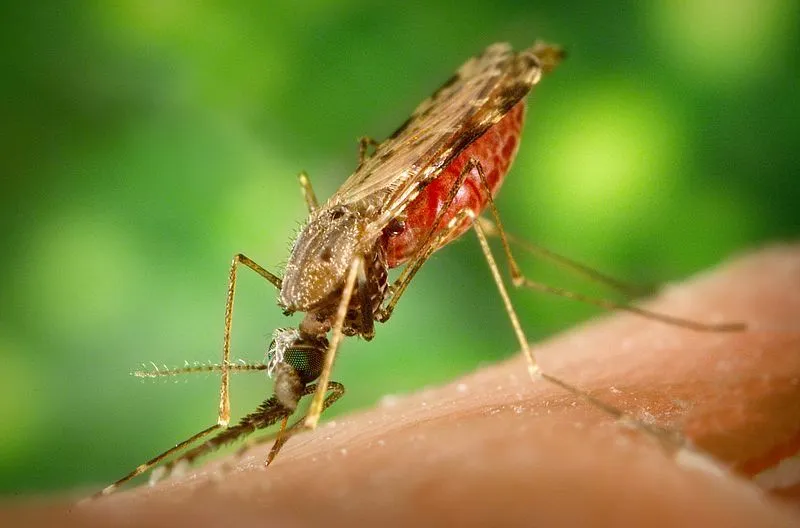
Anopheles is mostly active during dusk and dawn. It is a big threat to humans, as it is the primary vector of malaria. Aedes, a day-biter, is known to spread Dengue and Yellow fever through their bites.
More than 700 million people contract a disease spread by mosquitoes. Scientists see potential to curb the spread of mosquitoes through understanding mosquito biology. Anopheles and Culex species are active during dusk, so people in affected areas can set up countermeasures against mosquitoes. Closing windows and doors limit the number of mosquitoes entering homes.
Mosquitoes also mate in the evening, which could also provide answers to how to limit the number of mosquitoes in an area. Sanitation is important. Mosquitoes breed in stagnant waters. Open sewers, ponds, lakes, or areas with vegetation have a higher density of mosquitoes.
In a nutshell, although many mosquito species are usually dormant during the daytime, some species lurk around all the time, regardless of whether the sun is up or not. So, the best thing to do is to keep your surroundings clean, inspect your premises regularly for mosquito habitats, sleep under a mosquito net, and consider wearing long-sleeve clothing to be safe!
Why Are Mosquitoes Most Active At Dawn, Dusk, And Night?
If most mosquitoes are hiding from the midday sun, why do they pour out so reliably at dusk and after dark? Part of the answer is simply that the cooler, more humid evening air spares them the dehydration that the dry daytime heat would otherwise inflict. But the timing is not just a reaction to the weather. It is hard-wired.

Every mosquito carries an internal circadian clock, a set of cycling "clock genes" that drive daily rhythms in flight, host-seeking, and even how strongly the insect responds to light. Crucially, these rhythms keep running even when researchers hold mosquitoes in constant darkness, which tells us the activity peaks are scheduled from within rather than triggered moment-to-moment by the setting sun.
The clock is also why different species keep opposite schedules. In night-biting malaria mosquitoes such as Anopheles, key clock proteins peak around dusk, lining up with their nocturnal hunt. In the day-biting Aedes aegypti, the same proteins peak around dawn, lining up with daytime feeding. Anopheles mosquitoes will even creep toward an ultraviolet-lit area of a test chamber in anticipation of nightfall, before the lights actually change. So when a mosquito finds you at twilight, it is not stumbling on you by luck; its body has been counting down to that window all day.
Do Mosquitoes Sleep?
Here is a question that sounds like a joke until you try to answer it: while a mosquito is tucked away in that dark, humid hideout all day, is it actually sleeping? For a long time nobody had checked. It was only in a 2022 study published in the Journal of Experimental Biology that researchers directly established a sleep-like state in mosquitoes.

A team at the University of Cincinnati watched three disease-carrying species (the day-biting Aedes aegypti, the dusk-feeding Culex pipiens, and the night-active Anopheles stephensi) using cameras and infrared sensors so the insects were never disturbed. A sleeping mosquito gives itself away by its posture: its hind legs droop and its body sinks closer to the surface it is resting on. The angle of those hind legs turned out to be the single most reliable tell. The mosquitoes also showed the hallmarks scientists demand before calling something sleep: they became much harder to rouse, and after being kept awake they made up the lost rest later, a "sleep rebound" also seen in honeybees, fruit flies, and us.
And mosquitoes are not light sleepers in the figurative sense. In the lab they spent roughly 16 to 19 hours a day at rest, in many short bouts rather than one long stretch. That downtime matters to anyone hoping to avoid a bite: when the researchers deprived mosquitoes of sleep, far fewer went looking for a blood meal. More than 75% of well-rested mosquitoes sought out a host, compared with under a quarter of the sleep-deprived ones. A tired mosquito, it turns out, would rather catch up on sleep than feed on you.
References (click to expand)
- Mosquitos.
- Why do mosquitoes bite me and not my friend?.
- Mosquitoes smell you better at night, study finds | News.
- Behavioral and postural analyses establish sleep-like states for mosquitoes. Journal of Experimental Biology.
- Tired mosquitoes would rather sleep than munch on your legs. University of Cincinnati.
- Circadian and Daily Rhythms of Disease Vector Mosquitoes. Current Opinion in Insect Science.