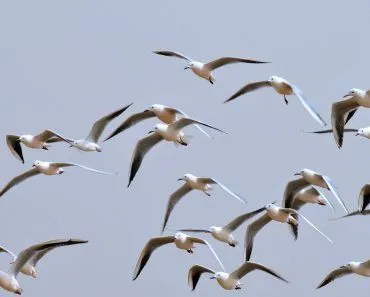
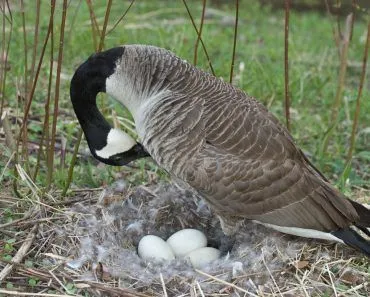
Migratory birds don’t get tired the way humans do because they’ve evolved an extraordinary fuel system. They beef up by 50–100% before takeoff, burn fat instead of carbohydrate (more than twice the energy per gram), shrink non-essential organs to save weight, and ride rising thermals to glide for free. The current non-stop record is a bar-tailed godwit that flew 13,560 km from Alaska to Tasmania in 11 days in October 2022.
Most of us can’t walk more than 5 km at a time. We look at endurance runners who jog 25 km in one single stretch with awe. Can any of us imagine walking 30,000+ km every year?
Arctic terns do just that!
Technically, they don’t walk… they fly.
Fondly called, “The champions of migration” these medium-sized birds that weigh in at just over 100 g migrate pole to pole every single year.
They’re monogamous birds that breed in the Northern hemisphere in the Arctic summer. Then, when winter arrives at the North Pole, they migrate to the south. They travel in flocks to Antarctica and set up camp for Southern Summer. These birds chase sunlight in the most extreme sense of the word!
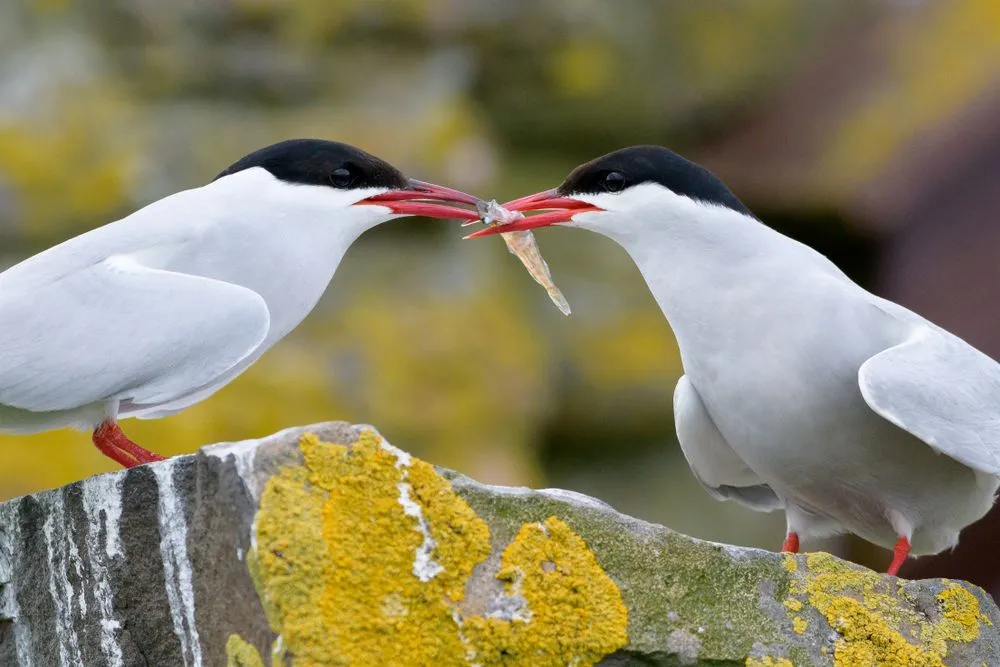
As if this wasn’t cool enough, tracking studies have logged Arctic tern round-trips of up to 90,000 km in a single year (the longest known migration of any animal), though they do pause to fish and rest along the way. The current non-stop distance record belongs to a bar-tailed godwit (Limosa lapponica) that flew 13,560 km from Alaska to Tasmania over 11 days in October 2022, without landing once.
That’s a bit longer than your average marathon.
So, how do birds make these amazing trips? Do they ever run out of fuel and get tired?
Where Do Birds Get Their Energy?
Most animals primarily break down various carbohydrates (glucose being a key sugar) to meet their energy needs. Birds shake things up a bit and instead choose to break down fats.
Fat or lipid metabolism is a series of biological processes that metabolize and derive energy from fats (i.e., fatty acids). Studies have revealed that birds use fatty acids as their energy source.
So what makes fats such an excellent fuel for birds, especially those that take on long and arduous migrations?
Fats Are Easier To Store
Migratory birds have been known to “beef up” before long-distance flights. They shift to a fat-rich diet. Birds overeat (hyperphagia) before embarking on a long migration. In fact, many warblers have been known to put on up to twice their body weight before embarking on a migration.

This hyperphagia alone does not account for their rapid fattening. Birds also get more efficient at assimilating nutrients from their food.
Birds are so specialized to store fat that most migratory birds can store up to 50–60% of their body mass as fats. They do this by keeping fats in cells known as adipocytes, or fat cells. These adipocytes are right under the skin in extra-muscular tissues. Avian adipocytes can store up to 95% of their volume as fatty acids. They can also store fats in their extra-muscular tissues and in their liver (similar to glycogen storage).

Researchers monitored the levels of free fatty acids in three species of small songbirds (passerines). They found elevated levels of free fatty acids and glycerols in those birds on nocturnal migratory flights, as compared to resting birds. This means that migratory birds have developed unique pathways to increase their fatty acid storage capacity.
One suggestion points to the levels of very low-density lipoproteins or VLDLs. They are a type of cholesterol that help increase the efficiency of fatty acid transport through the bloodstream to the muscles. They streamline fatty acids delivery to flight muscles (for example, the pectoralis muscles).
Birds can store fatty acids in the liver, which are then converted to triglycerides. These triglycerides are transported out of the liver as VLDLs. They reach flight muscles and are converted there back into fatty acids. The enzyme lipase, produced by the endothelial cells of the flight muscles, mediates this reaction.
Migratory birds have high levels of VLDLs in their bloodstream, as compared to other animals that take on similar long-endurance exercise.
In the flight muscles, fatty acids finally undergo oxidation to generate energy.
Fat Is More Efficient Than Carbohydrates
A little fat goes a long way, at least when it comes to deriving energy from it.
One gram of fat produces around 9 kilocalories of energy. This is significantly better than carbohydrates, which only provide 4 kilocalories of energy per gram.
How Do Birds Use This Energy?
Birds migrate long distances just like elite athletes run marathons. They choose stamina over speed. In fact, they minimize energy use anywhere they can.
Many birds take off by rapidly beating their wings. This makes take-off the most energy-intensive step in their flight. The take-off is anaerobic and birds use stored glycogen (a carbohydrate) to launch.
However, during long-distance flights, birds don’t beat their wings much at all.
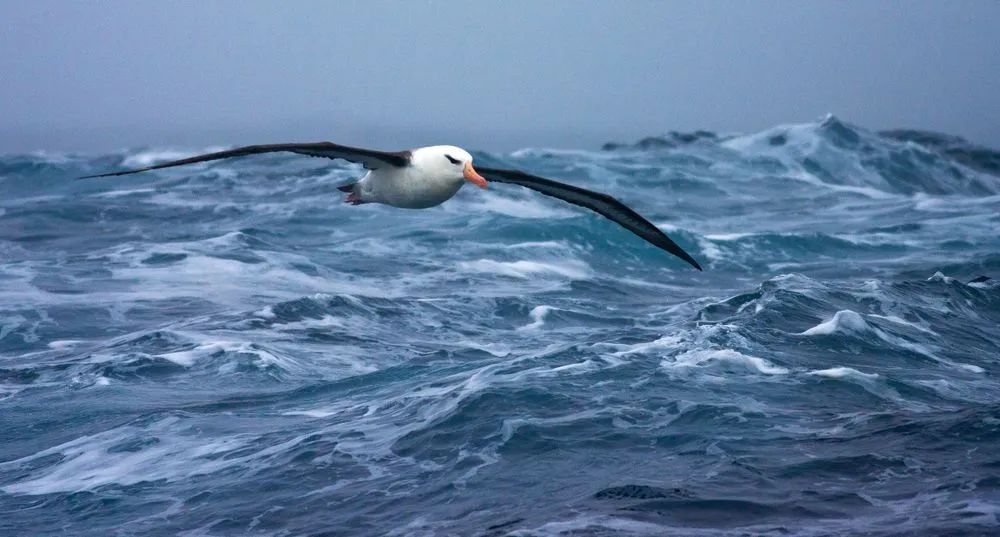
Grey-headed albatross are seabirds that migrate across Southern seas between breeding seasons. They very rarely beat their wings. In fact, they cover most of this journey by just gliding and soaring. Instead of flying in energy-expensive bursts, they glide and soar on thermals, taking advantage of the winds through which they fly!
How Long Can A Bird Fly Without Stopping?
So just how long can a bird stay up before it has to come down? For a few species, the honest answer is: almost never. When researchers glued tiny activity loggers to common swifts (Apus apus), they found the birds were airborne for more than 99% of the 10-month stretch between breeding seasons, and some individuals did not land even once in all that time. As lead researcher Anders Hedenström noted, a 10-month flight phase is the longest known for any bird. The swifts spent almost the entire span aloft, coming down only to breed and raise their chicks.

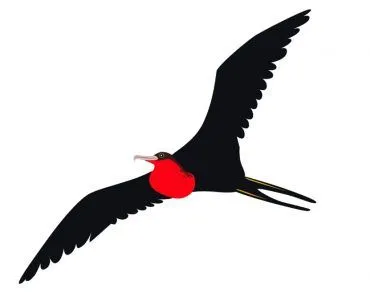
Seabirds pull off something similar over open water. Great frigatebirds (Fregata minor) can stay aloft for up to two months at a time while foraging across the ocean, simply because there is nowhere to perch.
And the non-stop distance record? That still belongs to the bar-tailed godwit we met earlier, which crossed 13,560 km (8,426 mi) of open Pacific in 11 days without a single break. The common thread is that fat-fueled engine: as long as the tank holds out, these birds just keep going.
How Do Birds Sleep While Flying?
If a swift or a frigatebird can stay up for weeks, when on earth does it sleep? The question stumped scientists for decades, until a 2016 study fitted great frigatebirds with miniature brainwave recorders (EEGs) and tracked them on foraging trips lasting up to 10 days.

The results were startling. In the air, the birds slept for only about 0.7 hours a day (roughly 42 minutes), compared with more than 12 hours a day when resting on land. They snatched sleep in bouts of around 10 seconds, usually after dark while circling upward on rising air.
Most of this in-flight sleep was unihemispheric, meaning one half of the brain dozed while the other stayed awake, with the open eye pointed in the direction the bird was turning so it could keep watch. Yet the team also caught moments when both hemispheres slept at once, proving a bird can briefly switch off entirely and still glide without tumbling. So ocean-crossing birds do not power through on zero rest; they take micro-naps on the wing. (Songbirds handle this differently, as we cover in how birds sleep during migration.)
Do A Bird's Wings Get Tired From Flapping?
Our arms ache after a few minutes of waving, so why don't a bird's wings give out after hours of flapping? The answer is partly in the muscle and partly in some clever flying.

A bird's downstroke is powered mainly by the pectoralis, the large breast muscle. In strong fliers this muscle is built almost entirely from fast-oxidative fibers (about 85% of them in a pigeon), packed with mitochondria and threaded with capillaries. That design lets the muscle run on aerobic metabolism, steadily burning the fat we discussed earlier, so it is geared for hours of sustained effort rather than a quick, fatiguing sprint.
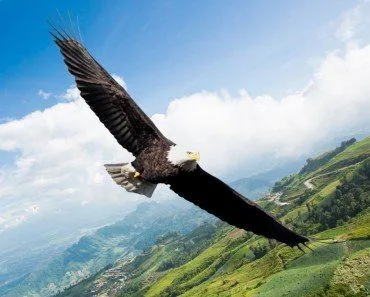
On top of that, birds dodge flapping whenever they can. Gliding and soaring on rising air let them hold their wings out and ride for free, one of several ways birds conserve energy during flight. Many flocking birds add another trick: the V formation. A 2014 study of northern bald ibises showed that each trailing bird carefully times its wingbeats to sit in the rising “upwash” of air spilling off the wingtip of the bird ahead, harvesting a little free lift on every stroke. Less effort per beat means wings that can keep going far longer than ours ever could.
References (click to expand)
- McWilliams, S. R., Guglielmo, C., Pierce, B., & Klaassen, M. (2004, September). Flying, fasting, and feeding in birds during migration: a nutritional and physiological ecology perspective. Journal of Avian Biology. Wiley.
- Becciu, P., Panuccio, M., Dell’Omo, G., & Sapir, N. (2021). Groping in the fog: soaring migrants exhibit wider scatter in flight directions and respond differently to wind under low visibility conditions. Frontiers in Ecology and Evolution, 9, 745002.
- Butler, P. J. (2016, September 26). The physiological basis of bird flight. Philosophical Transactions of the Royal Society B: Biological Sciences. The Royal Society.
- Harrison, J. (2019, September 3). The highs and lows of bird flight. eLife. eLife Sciences Publications, Ltd.
- Hedenström, A., Norevik, G., Warfvinge, K., Andersson, A., Bäckman, J., & Åkesson, S. (2016). Annual 10-Month Aerial Life Phase in the Common Swift Apus apus. Current Biology, 26(22), 3066-3070.
- Rattenborg, N. C., et al. (2016). Evidence that birds sleep in mid-flight. Nature Communications, 7, 12468.
- Portugal, S. J., Hubel, T. Y., Fritz, J., et al. (2014). Upwash exploitation and downwash avoidance by flap phasing in ibis formation flight. Nature, 505, 399-402.
- Cao, T., & Jin, J.-P. (2020). Evolution of Flight Muscle Contractility and Energetic Efficiency. Frontiers in Physiology, 11, 1038.