Table of Contents (click to expand)
Flapping is energy-hungry, so birds conserve energy by flapping as little as possible. Their wings and bodies are shaped to glide and soar, riding updrafts, thermals, and the wind gradient over the ocean to stay aloft without constantly flapping. Flocks add a V-formation, where each bird drafts the upwash off the wingtip of the one ahead.
We look at birds, bats, and other animals capable of flight with a sense of undeniable envy.
When we observe a bird in flight, we’re usually stupefied, but at the same time, we’re buzzing with questions.
How do they lift off? How helpful are feathers in flight? What lets them reach such heights so effortlessly?
Each species of bird, with its own body shape, usually has a specialized set of aerodynamic capabilities that allow it to fly the way it does. Birds do have a general game plan when it comes to flight.
Birds primarily fly by beating or flapping their wings. This mode of flight has two distinct kinematic phases: the downstroke phase (the wings assume a downward motion) and the upstroke phase (the wings revert to their initial position).
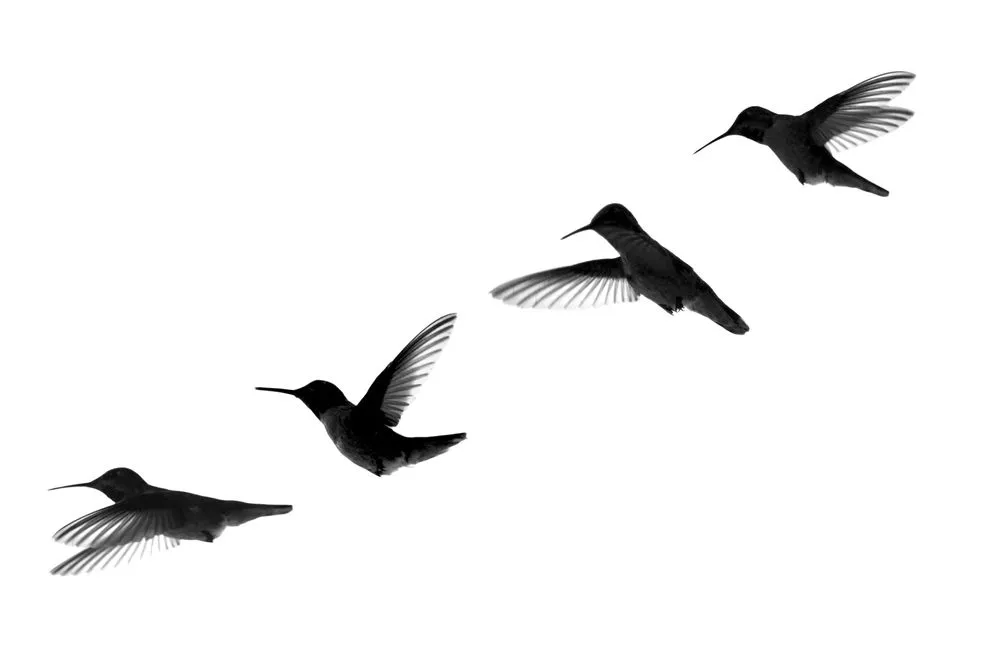
Unlike human machines (i.e., airplanes), birds have strong wings with a wide range of motion. The range of motion of these wings varies across species. Hummingbirds, for example, can flap and rotate their wings an incredible 180 degrees. Their wings are so strong that they can flap non-stop in a steady figure-8 motion.
Conversely, flightless birds like emus and ostriches have extremely weak wings.
However these individual wings evolved, they evolved very well. Birds don’t just look elegant while flying, they’re also ridiculously efficient at it. How do they do this? Aerodynamics.
What Is Aerodynamics?
Simply put, aerodynamics refers to the movement of air around things. It explains how objects (planes) or living things (birds) fly.
All birds use some sort of aerodynamic tactics to conserve their energy. For example, birds can gain altitude very quickly by using energy from surrounding wind currents. When they glide, they position their wings in such a way that they can deflect the surrounding air downwards. This generates a physical force called “updraft”, which keeps them in the air without them needing to use any extra energy or excessively flap their wings.
In fact, micro-differences in wing design allow different types of bird species to specialize in various modes of flight.
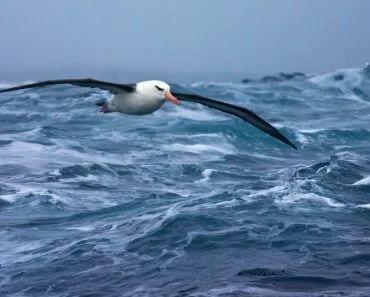
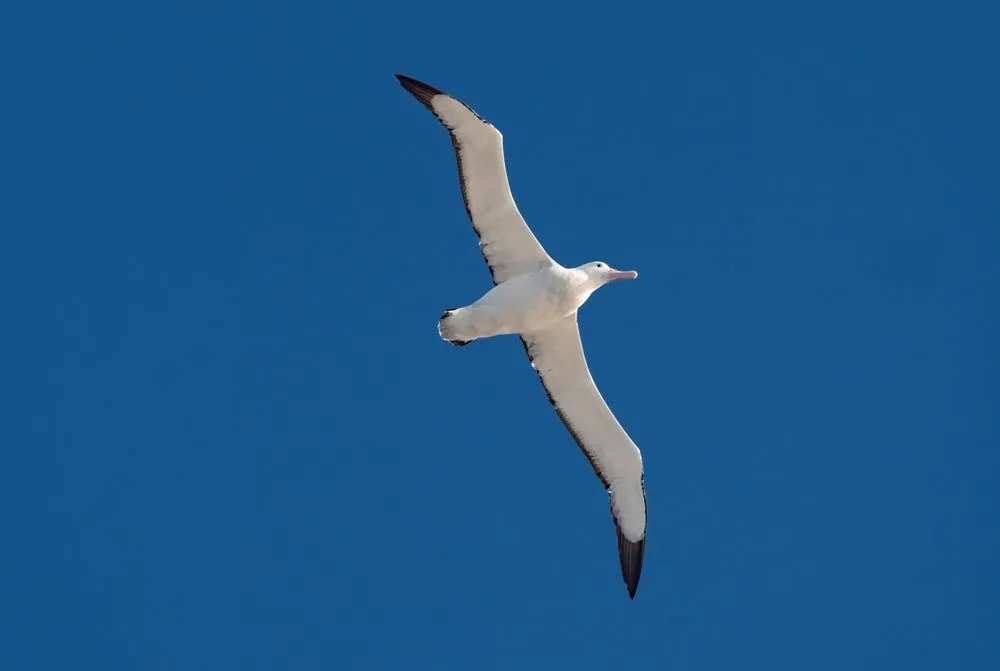
For example, seabirds, such as albatross, have absolutely massive wings. From end to end, their wings span 11 to 12 feet. They have the largest wingspan of any extant bird. They use their wings to channel updrafts (generated by the wind blowing over waves) to gain energy.
Additionally, albatross can glide for hours on end without a single flap of their wings and are the ultimate soaring birds. How do they do this? They ride the wind itself.
What Are Thermals?
Albatross have quite a few tricks up their sleeve when it comes to soaring. Out over the open ocean, they engage in a mode of flight known as “dynamic soaring” across seas and huge stretches of water.
Dynamic soaring is an aerodynamic tactic that lets albatross use the surrounding wind flow and its speed to their advantage. Here’s the key: wind blows faster higher up and slower right at the sea surface, and that difference in speed with height is called the wind gradient (or wind shear). The bird climbs into the faster wind, banks around, and swoops back down, skimming a little energy off that speed difference on every loop. There are essentially no thermals out over the cold Southern Ocean, so it’s this wind gradient, not rising warm air, that keeps the albatross aloft. By repeating the cycle, it can glide for hours, and even head into the wind, without flapping.
So what about thermals, then? Thermals are a different physical phenomenon, and they’re the engine behind soaring over land. As the sun’s heat bears down on the ground it also warms the air directly above it. As that air keeps soaking up heat, small parcels of it start to rise.
Think about a bowl of water sitting on a stove. Bubbles form, move in random orientations, and eventually collide with each other.
Thermals form in a similar fashion. As these small gusts begin to rise, they eventually collide with each other and merge into bigger pockets of warm air until they’re large enough to be called a proper thermal.
These thermals keep rising and drifting with the surrounding winds, climbing at 1-3 meters per second (roughly 3 to 10 feet per second).
Land soarers like hawks, eagles, and vultures take advantage of them by hitching rides, circling inside a thermal to gain altitude for free before gliding off to the next one.
By the time they reach lower altitudes again, where the wind is slower, they have gained enough momentum to keep moving fast.
This lets them align themselves in the direction they want to travel, even when that direction is against the wind.
When they tire out and run dry of energy, they slow down, dip back into the wind gradient or catch a fresh updraft off a wave, and it’s wash, rinse, and repeat. They begin the cycle all over again.
Do Birds Get Tired Of Flapping Their Wings?
Short answer: yes, flapping is hard work, and a bird’s flight muscles do fatigue, especially in small birds or when battling a stiff headwind. That’s exactly why all of these aerodynamic tricks matter. The whole point of gliding, soaring, riding thermals, and tucking into a V is to spend as little time flapping as possible.
So how do birds stay in the air without flapping their wings? Once they’ve climbed to a useful height, many species switch to a flap-and-glide rhythm, beating their wings only when they need to and letting air currents do the rest. A soaring vulture or albatross can cover huge distances on barely a wingbeat, which is why they look so effortless.
The endurance records are genuinely staggering. In October 2022, a satellite-tagged juvenile bar-tailed godwit flew about 13,560 kilometers (8,425 miles) nonstop from Alaska to Tasmania in just over 11 days, without landing once to feed or rest, the longest nonstop migration ever recorded. Frigatebirds go a step further: studies show they can grab a few seconds of sleep mid-flight, one half of the brain at a time, while still staying airborne. For more on how these long-haul fliers cope, see our piece on why migratory birds don’t get tired of flying.
Conclusion
Albatross aren’t the only birds that use aerodynamic principles to their advantage. Flocks of American White Pelicans fly in a V-shaped formation (the Skein Formation) to conserve energy during migrations.
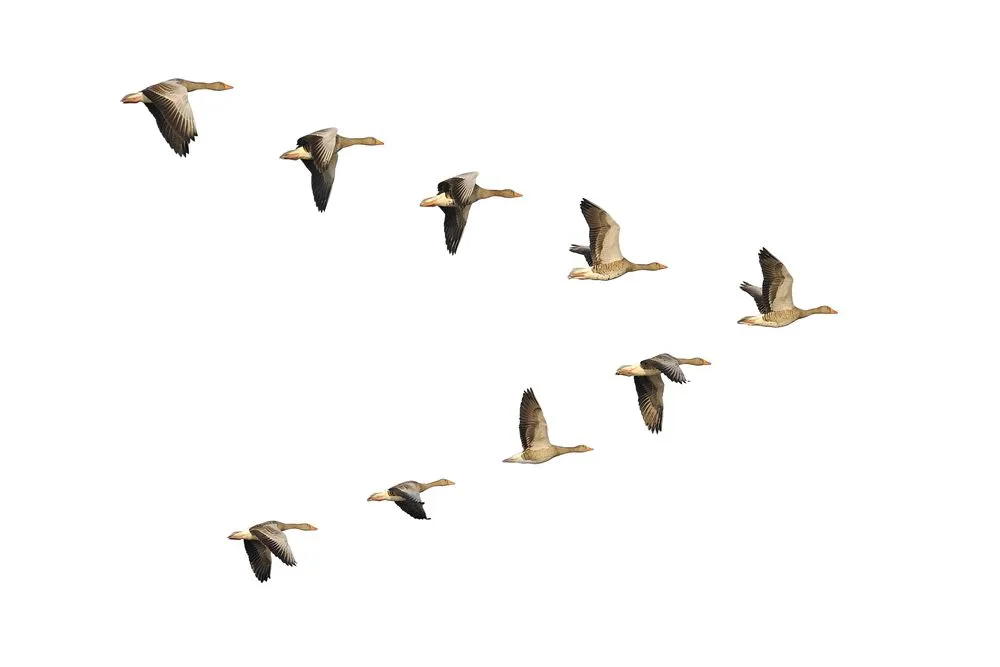
The separated feathers at the tip of each wing of the bird create tiny vortices. This phenomenon is known as a “wingtip vortex”. Each bird, except for the bird at the tip of the V (the leader), gains a bit of lift from the vortex created by the bird in front of it.
Similarly, large inland soaring birds like Condors use orographic updrafts. These air currents are formed when winds collide with mountains or buildings and change their direction to flow upwards.
References (click to expand)
- (2016) Aerodynamics of bird flight - EPJ Web of Conferences. epj-conferences.org
- How bird wings are built for aerodynamic and efficient flight. The University of Notre Dame du Lac
- Origin of Bird Flight Explained - Scientific American. Scientific American
- Richardson, P. L. (2011, January). How do albatrosses fly around the world without flapping their wings?. Progress in Oceanography. Elsevier BV.
- The Bar-tailed Godwit undertakes one of the avian world’s most extraordinary migratory journeys. BirdLife International DataZone.
- Rattenborg, N. C., et al. (2016). Evidence that birds sleep in mid-flight. Nature Communications.