Butterflies are both friend and foe to plants. In the caterpillar (larval) stage they can be major pests: the cabbage white (Pieris rapae), citrus butterfly (Papilio demoleus), and pea blue (Lampides boeticus) chew through leaves, flowers, and pods of cultivated crops. As adults, the same species help plants by carrying pollen from flower to flower while feeding on nectar.
We all love butterflies. Their striking scaly wings mesmerize us, and their flitting presence lights up any garden. Well, that’s our view of butterflies, but have you ever wondered what plants think of them?
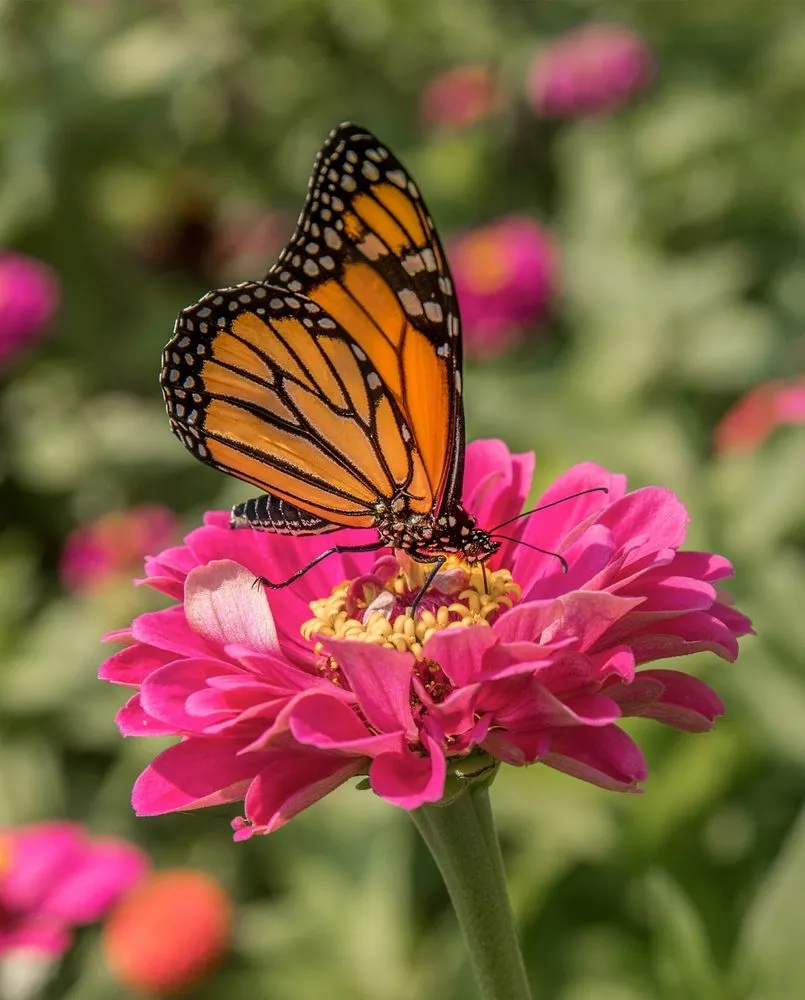
Butterflies and plants have a love-hate relationship. Butterflies often damage plants early in their life cycles, but they also benefit the plants in the later phases of the life cycle.
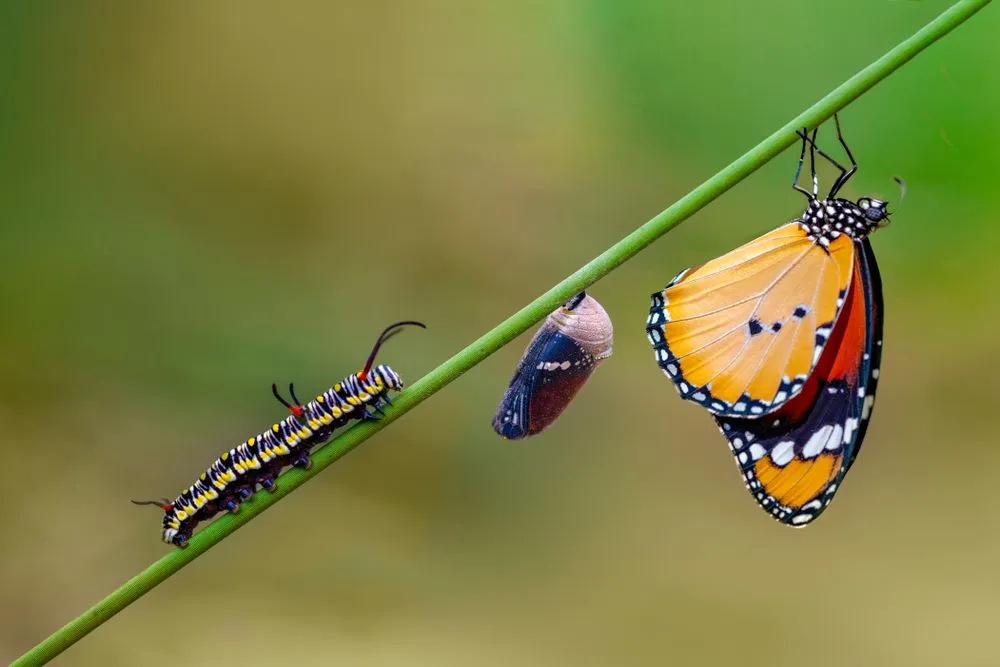
A butterfly’s life cycle has four phases: egg to crawling larval stage to cocooned pupal stage, to finally the winged adult stage. During each phase, the butterflies have different ways of interacting with plants.
How Do Butterflies Interact With Plants?
The plant-butterfly interaction occurs as follows. In this face-off, the first two stages induce a defense response in plants.
The Egg Stage
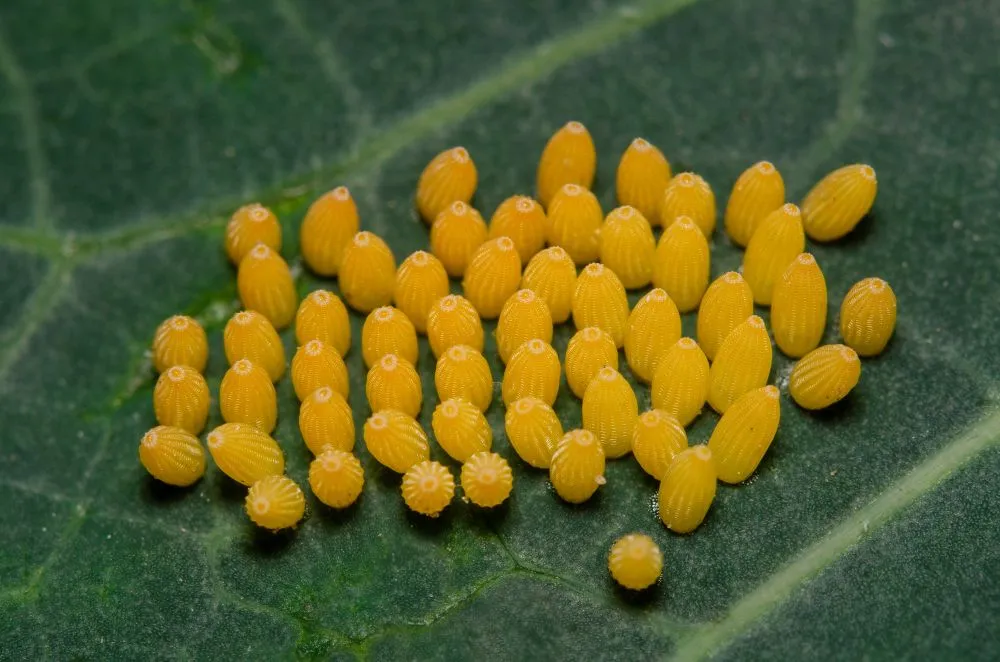
The butterfly’s eggs themselves don’t damage plants, but its successive stage does. Plants have therefore adopted mechanisms to get rid of these eggs before they can hatch and wreak havoc.
The eggs lie on the underside of the leaves. Upon contact with eggs, the leaves show a hypersensitivity response. It means that once a plant recognizes a pest or pathogen, it induces cell death in the contacted plant part. When these dead leaves or partial leaf parts detach from the plant, the eggs on them fall off.
Along with the hypersensitivity response, plants also secrete volatile organic compounds. These compounds can attract predators to consume the eggs, thus preventing larval damage in the future.
The Larval Stage
After hatching from eggs, the baby butterflies, in caterpillar form, enter the larval phase. This is the most destructive phase. Most caterpillars feed on the leaves of the plant; perhaps they’ve damaged some of the plants in your own garden!
However, butterfly caterpillars cause far greater damage to agriculture. They are major plant pests that bring about major losses to agricultural industries. They defoliate plants and feed on economic parts, such as flowers and pods. The seedlings contain tender stems and few leaves, so any damage to them is life-threatening.
Here are some caterpillars that cause destruction in the plant world.
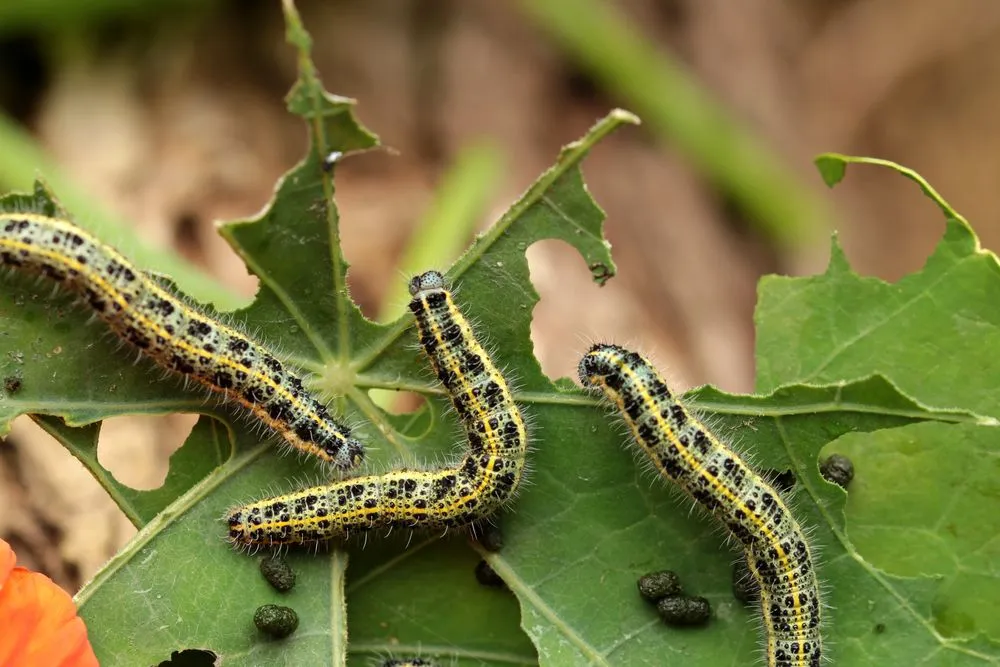
Cabbage white butterfly (Pieris rapae)
As the name suggests, these caterpillars feed on Brassicaceae, the cabbage family. You may or may not love broccoli, but these larvae love feeding on them.
It feeds on leaves and heads of the vegetable, but the leaf damage is not significant. When it settles in the heads of broccoli and feeds, things get more serious. Since the heads are the economic part, farmers face rejection for their infested crops. This produce then goes to waste, incurring financial losses.
Citrus butterflies (Papilio demoleus)
These butterflies are voracious feeders. Their larvae feed on seedlings, causing death to the plants. Also, they defoliate citrus trees, which can lead to an imbalance in photosynthesis. This hampers the plant’s food synthesis, and consequently impacts the yield.
Pea blue butterflies (Lampides boeticus)
Pea butterfly larvae feed on leaves, in addition to damaging flowers and pods. Flowers are the reproductive parts, so any damage to them results in reduced seed production. At the same time, pods are the economic parts of peas, and any damage to them makes peas unfit for sale.
Plants defend themselves against larvae by secreting volatile compounds. These compounds can attract predators that feed on larvae, just like in the egg stage.
Another way the volatile compounds work is by repelling insects. For example, the rosemary plant’s secretions repel cabbage butterfly larvae.
You can think of repulsion in this way. It is equal to us rejecting food that doesn’t taste good. Caterpillars also try to avoid distasteful foods.
The Pupal Stage
The next stage is pupa. This stage doesn’t damage the plant. The caterpillar begins its metamorphosis into an adult. It doesn’t feed and uses the energy gained from gorging itself on leaves during the larval phase.
The Adult Stage
Adult butterflies have wings and move from one plant to the other. They feed on the nectar of flowers. The presence of a long proboscis makes it easy to reach for the nectar stored in flowers.
While on their search for food, the butterflies carry pollen on their body, which gets deposited on the next flower they sit on. They are key pollinators in ecosystems around the world.
Plants have also devised traits to lure these pollinators, including flower petals with vivid colors and sugar-rich nectar.
Certain plants have flowers that mimic the odor of butterflies, which can fool butterflies in their search of a mate. Some plants even have flat flowers to assist butterflies when landing.
Are Butterflies Harmful Or Poisonous To Humans?
If you are wondering whether a butterfly can hurt you, the short answer is no. Adult butterflies have no teeth, jaws or stinger. Their only mouthpart is a long, coiled straw called a proboscis, built purely for sipping nectar and other liquids, so a butterfly simply cannot bite or sting a person. One that lands on your skin to drink a little sweat may tickle, but it cannot hurt you.

The word "poisonous" is a different matter, and here things get more interesting. Some butterflies really are poisonous, but the poison is aimed at predators, not people. The classic example is the monarch (Danaus plexippus). Its caterpillars feed on milkweed and store the plant's cardiac glycosides (also called cardenolides), and these toxins survive metamorphosis to remain in the adult's body.
A bird that eats a monarch usually becomes sick and vomits, and it soon learns to associate the bold orange-and-black wings with a bad meal. Scientists call this warning display aposematic coloration. For humans, though, these toxins are not a hazard through touch or handling. So a butterfly is essentially harmless to you, even if it can make a hungry bird thoroughly ill.
Do Butterflies Perform Photosynthesis?
This is a surprisingly common question, and the answer is no. Photosynthesis is the process by which plants, algae and some bacteria build their own food from sunlight, water and carbon dioxide. Butterflies are animals, and like every animal they are heterotrophs: they cannot make their own food and must get their energy by eating. Caterpillars chew through leaves, while adult butterflies sip sugary nectar through their proboscis. No butterfly, at any stage, turns sunlight into food.

The confusion probably comes from the fact that butterflies clearly love the sun. They do use sunlight, but for warmth rather than food. Butterflies are ectotherms (cold-blooded animals), so their body temperature tracks their surroundings. Their flight muscles work well only once the thorax reaches roughly 35 to 40 degrees Celsius, and a cold butterfly simply cannot take off.
To warm up, a butterfly basks with its wings spread open, angling the dark, scale-covered surfaces toward the sun to soak up heat. The effect can be dramatic: a basking brimstone can lift its body temperature into the high 30s Celsius while the surrounding air is barely above 13 degrees Celsius. But this is thermoregulation, not photosynthesis. The sunshine warms the butterfly so it can fly; it does not feed it.
Conclusion
Butterfly interactions with plants begins when the adult lays eggs on them. Though eggs are harmless, plants induce a hypersensitivity response, which helps plants prevent damage by vigorous-feeding caterpillars in the larval stage.
One example of such a troubling larva type is the Cabbage white butterfly, which feeds on broccoli heads. In response to larvae, plants secrete organic compounds to kill or repel them.
In the final adult stage, butterflies help in pollination. Thus, they transform into beneficial insects to plants. This transformation makes butterflies a crucial friend of plants, despite being a hated foe in previous life cycle stages!
References (click to expand)
- Repellent Effects of Volatile Extracts from Herb Plants against .... Canadian Center of Science and Education
- All about butterflies | Department of Horticulture. University of Kentucky
- Cover for Encyclopedia of Biodiversity. ScienceDirect
- (2020) The plant hypersensitive response: concepts, control and .... NCBI
- Cabbage White Butterfly | College of Agricultural Sciences. Oregon State University
- Jezek, M. (2020, June 22). Butterfly–plant interaction ‐ A dicey ménage à trois?. Plant, Cell & Environment. Wiley.
- (2020) Blue butterflies. Business Queensland
- Lime swallowtail / Citrus butterfly, Papilio demoleus. University of Florida Featured Creatures.
- Butterfly defence mechanisms. Science Learning Hub, University of Waikato
- How Ireland's butterflies regulate their body temperatures. Butterfly Conservation Ireland