Bees buzz because their flight muscles beat their wings very fast (a honeybee manages about 230 beats per second), and that rapid vibration is what we hear. Some bees also vibrate on purpose in a behavior called buzz pollination, shaking loose pollen that the flower keeps locked away.
The everyday buzz is simply the sound of a bee in flight, but there is a second, far more deliberate kind of buzzing, and that one began, like many interesting things do, as a love story. It began somewhere between 90 to 125 million years ago, and it progressed in fits and starts over millions of years. Angiosperms, or flowering plants, originated around that time. The lineage of plants can be traced back to between 400 and 500 million years ago, with single celled blue-green algae floating free in the warm Ordovician oceans.
But what does a 500-million-year history of plant evolution have to do with a bee’s flight?
Flowering plants were more unique back then, not nearly as prolific as what we see today. Scientists estimate that approximately 80% of all plants are flowering plants, but angiosperms started with just a handful of species bravely foraying into the world of botanical sexual reproduction.
The other half of the love story relates to the insects. The predecessors to insects, hexapoda, also originated during the Ordovician period. The earliest fossil evidence of insects is 400 million years old, and they diversified immensely after Angiosperms bloomed. Insects have not evolved solely to pollinate flowering plants, but a wide array of them do exactly that. It is difficult to understand what came first, the pollinator or the pollen, but this love story is certainly an interesting one.
How Does Sexual Reproduction Work In Plants?
Sexual reproduction is an expensive affair, and the living kingdom is still divided on it. It is not the case that sexual reproduction is necessary for evolution. Variation among organism can be produced and maintained through asexual reproduction too!
Sexual reproduction in plants requires a pollinator, be it the wind, the water, the birds or the bees.
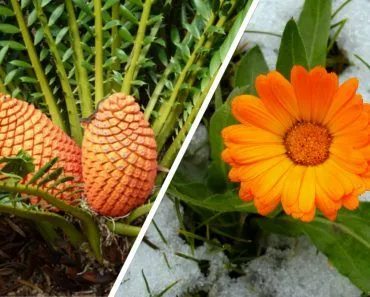
Not all plants are flowering plants. Mosses and other bryophytes participate in a process called the alternation of generation, and gymnosperms spread pollen through pinecones.
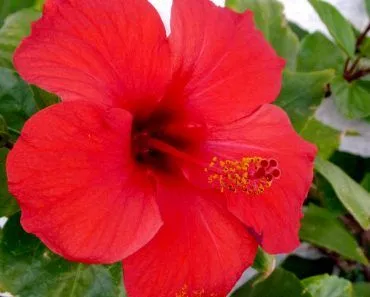
If you’ve ever attended a 7th grade biology class, you probably have a clear idea in your mind of what a flower looks like, perhaps the Hibiscus flower, with its clear pollen and stigma. Flowers and pollinators can take a huge array of shapes and forms. For example, grass flowers in tiny tufts, and some are even pollinated by minuscule ants.
Relying on a pollinator is fraught with complications. Which way will the wind blow? Will the stream carry pollen to the right place? There is no guarantee that the pollen of one flower will end up on the stigma of another.
Abiotic pollinators are unreliable enough, but what about biotic pollinators?
You Scratch My Back And I Scratch Yours: How Does Pollination Work?
Flowering plants get pollinators to do their bidding with the use of one key lure: nectar. This sugar-rich, easily metabolized resource is a rare thing in an environment, providing insects with a quick burst of energy without having to digest complex carbohydrates, proteins and starches.
This makes pollination a mutually beneficial affair; insects get dusted with pollen when extracting nectar from the flower, and when it proceeds to the next flower, it deposits the pollen and collects more nectar.
Plants often adapt to attract specific pollinators, which have a higher probability of encountering another flower of their same species. These adaptations include traits like deep-set nectaries, which only butterflies with long, tube-like mouthpieces can access. This specialization may even include UV markings on floral petals, visible only to the select few insects who can see them.
When the “love” is requited, both organisms lose a little, but gain plenty! The problem arises when cheating gets involved in the ecosystem.
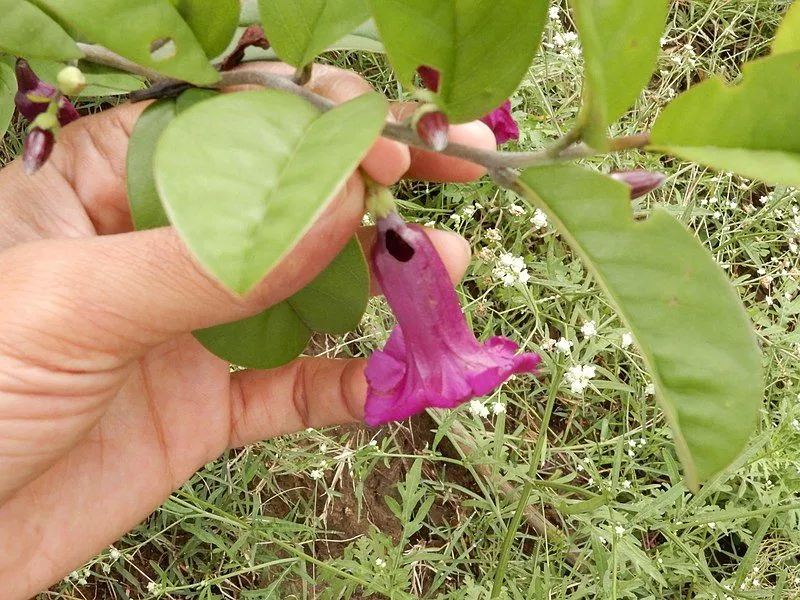
Nectar robbers are cheats that punch holes at the base of flowers, extracting nectar without entering the flower and being dusted in pollen. There are cheats of these cheats too. Secondary nectar robbers visit the holes and steal nectar after the hard work of robbing them the first time is complete.
Nectar robbing poses no benefits for the plant. It loses nectar without gaining pollination. To guard against cheats, adaptations that discourage robbers (like UV marked flowers and deep set nectaries) are selected for.
It’s important to remember that flowers do not set out with the intention to be pollinated by a specific insect. Flowers that are successfully pollinated by a specific pollinator are able to pass on the genes that made them ever so slightly more likely to be pollinated by the same specific pollinator. Over many generations, this effect gets selected for again and again, magnifying and resulting in what is referred to as co-evolution. This co-evolution is driven by the arms race between the flower, the nectar robber and the pollinator.
One such pollination adaptation strategy, which links flowers like tomatoes and blueberries with the bees that visit them, is why some bees buzz on purpose.
Buzz Pollination: Why Bees Buzz
First, the everyday buzz. The thorax of a bee is packed with powerful flight muscles that pull on its springy walls to flick the wings back and forth, and they do this astonishingly fast. A honeybee beats its wings roughly 230 times every second, while a small sweat bee can top 250 and a big carpenter bee runs slower with a deeper hum. Each beat shoves a tiny pulse of air, and hundreds of those pulses a second blur together into the drone you recognize. So in the most literal sense, a bee buzzes because it is flying, not because a flower asked it to.
Now the deliberate kind. Certain flowers, including tomatoes, eggplants, blueberries and cranberries, lock their pollen inside tube-shaped poricidal anthers that only release it through a tiny pore at the tip. Shaking gravity won’t do it; the pollen has to be vibrated out. So the bee lands, curls around the anthers, uncouples its flight muscles from its wings and fires them in place. The result is a high-pitched, focused vibration, distinct from its flight tone, that rattles pollen out of the pores in a cloud. This is buzz pollination, also called sonication, and the vibrations a bee channels into the flower can reach accelerations of roughly 30 g.
Bumblebees are the classic buzz pollinators, along with carpenter bees and many solitary bees. Honeybees, oddly, never picked up the trick and can’t generate enough acceleration to free the pollen, which is one reason greenhouse tomato growers ship in bumblebee colonies rather than rely on honeybees. The vibration frequency a bee uses during sonication (often in the 100 to 400 Hz range) tends to sit higher than its ordinary flight frequency, and a single bee can fine-tune its buzz from flower to flower. Interestingly, large and small bees can produce vibrations across a similar range of frequencies, just with different amplitudes.
Discovering the biomechanics of buzz pollination has been a challenge. It is easy to measure how much the bees are vibrating, but it’s difficult to estimate just how much of that vibration is actually transmitted into the flower. There may also be electrostatic forces at play between pollen grains and the bee, but this is yet to be fully understood. (Source)
Co-Evolution In Bees And Flowers
The intricacy of the buzz pollination process reveals the extent to which the interaction between two species across disparate taxa can influence each others’ evolution. The bee and the flower live on opposite sides of the metaphorical tree of life, but because they help each other, the bee influences the shape of the flower and vice versa.
So, why does the bee buzz? Most of the time, simply because it is flying. But when a bee leans into a tomato or blueberry flower and lets loose that deliberate, higher-pitched hum, you could say the flower demands it!
References (click to expand)
- Cappellari, S. C., Schaefer, H., & Davis, C. C. (2013, April). Evolution: Pollen or Pollinators — Which Came First?. Current Biology. Elsevier BV.
- CHRISTENHUSZ, M. J. M., & BYNG, J. W. (2016, May 20). The number of known plants species in the world and its annual increase. Phytotaxa. Magnolia Press.
- Sexual Reproduction and the Evolution of Sex - Nature. Nature
- Inouye, D. W. (1980, October). The Terminology of Floral Larceny. Ecology. Wiley.
- Misof, B., Liu, S., Meusemann, K., Peters, R. S., Donath, A., Mayer, C., … Zhou, X. (2014, November 7). Phylogenomics resolves the timing and pattern of insect evolution. Science. American Association for the Advancement of Science (AAAS).
- Bee Flight. Ask A Biologist, Arizona State University.
- Vallejo-Marin, M. (2019). Buzz pollination: studying bee vibrations on flowers. New Phytologist. Wiley.
- Buzz Pollination. Leonard Lab, University of Nevada, Reno.
- Bumble Bee as Managed Pollinators. Managing Alternative Pollinators, SARE (USDA).