It is widely believed that the extinction of the dinosaurs was due to a massive asteroid impact. In this article, we will investigate if humans could survive a similar event.
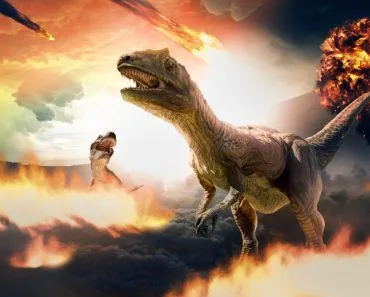
The dinosaurs were the most dominant species on Earth for millions of years, but like all things, their domination had to end at some point. And so it did… with the Cretaceous-Paleogene (K-Pg) mass extinction event, causing the extinction of almost all dinosaur species on the planet (the birds survived).
The exact reason for their demise and this extinction event as a whole is unknown. However, countless studies and a notable amount of available evidence suggest that an asteroid impact is the most probable reason.
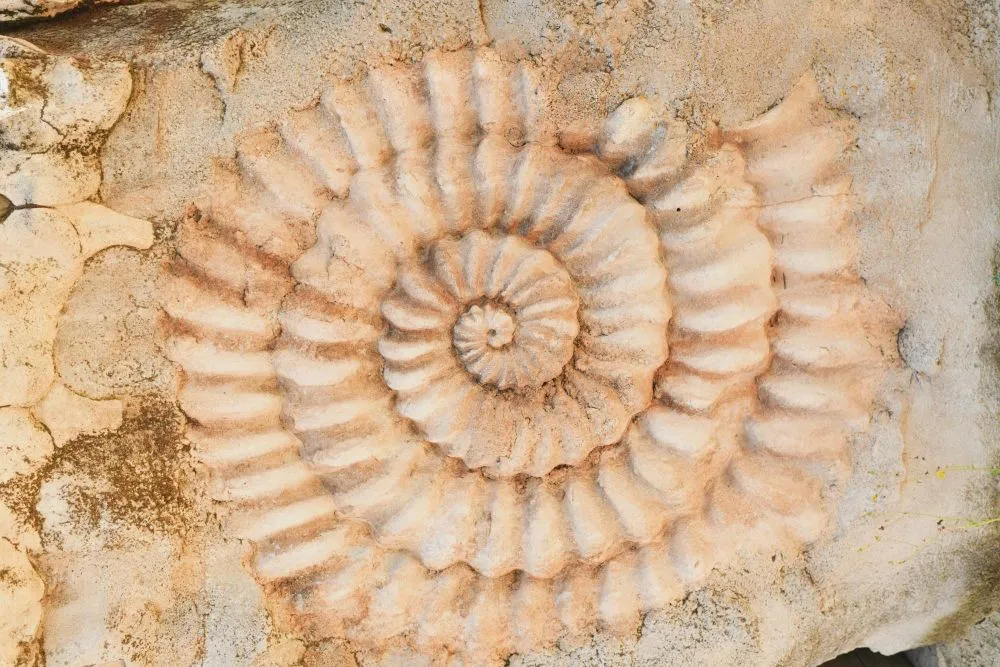
Not only did this impact wipe out most of the dinosaurs, but it also resulted in the extinction of species like pterosaurs, ammonites, plesiosaurs, and mosasaurs.
Even so, a few other organisms, including insects, mammals, fish, and coral, survived this event and continued to evolve in significant ways.
In the present day, humans are clearly the most dominant species on planet Earth, just as the dinosaurs were once upon a time. It’s only natural that at some point in the distant future, humans will become extinct.
With that in mind, it’s intriguing to ask: if the dinosaurs’ extinction occurred because of an asteroid impact, would humans be able to survive such an event?
The short answer is, yes, humans would very likely survive such a catastrophic incident. Of course, there would be billions of deaths, and the whole event would be a species-shifting ordeal, but it probably wouldn’t result in the extinction of humans.
To start with, let’s look into the asteroid impact that might have brought about the end of dinosaurs.
The K-Pg Asteroid Impact Event
Evidence implies that the impact location is the Chicxulub crater, located at the center of the Yucatán Peninsula in Mexico. Scientists believe the asteroid that created this crater caused the dinosaur extinction event. Evidence suggests that the extinction event’s timeline closely matches the crater’s age.
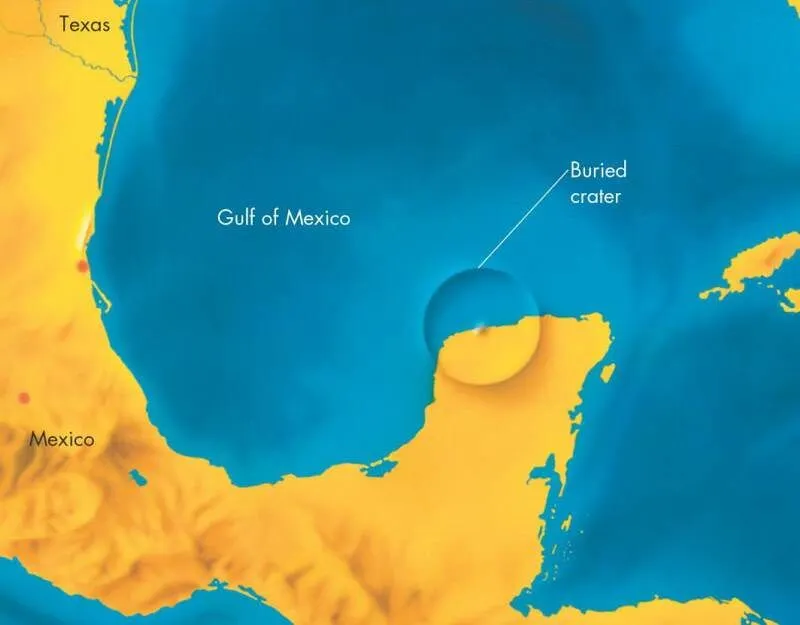
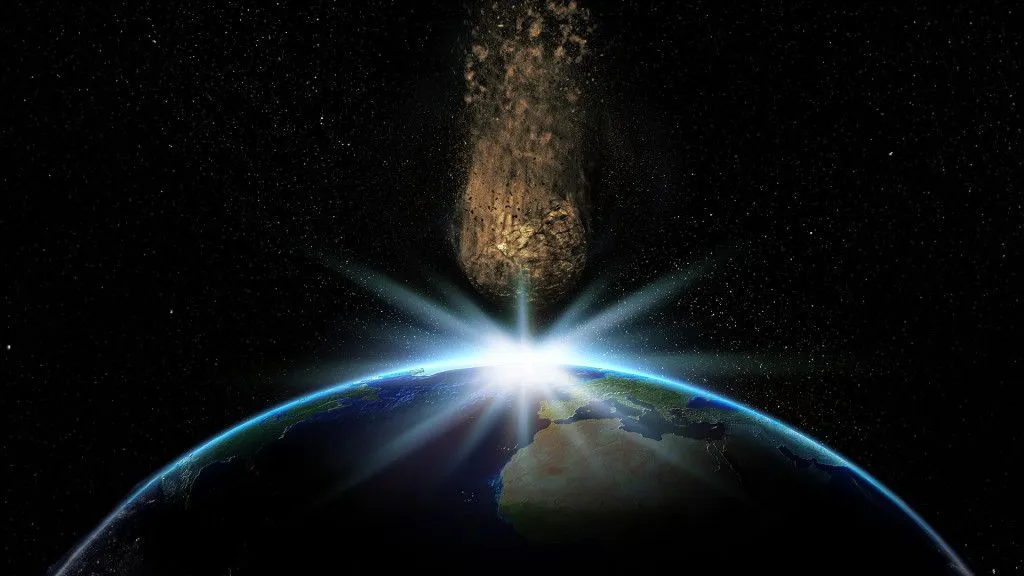
Scientists estimate that the asteroid’s size must have been around 10 to 15 kilometers, but because of the speed with which the asteroid crashed into the Earth, it resulted in a crater approximately 180 kilometers wide.
Studies show that there is always a slight possibility of massive asteroids slamming into the Earth. The probability of the collision of one that could cause a mass extinction is once in a hundred million years. The more devastating the impact of an asteroid on Earth, the rarer its probability.
Despite these small chances, there is no doubt that such events will happen in the future, including asteroids even larger than the one that caused the extinction of the dinosaurs.
Earlier, this article claimed that humans would almost certainly survive the dinosaur extinction-level asteroid impact, but studies also show that an asteroid of roughly 100 kilometers (about ten times larger than the one that caused the dinosaur extinction) would be detrimental to almost all life on Earth. Without prior preparation for such an asteroid impact, our species very well might go extinct.
In the case of the asteroid resulting in the K-Pg extinction event, scientists used statistical analysis methods to study fossils and determine their ages. The analysis results indicate that placental mammals did exist, along with the dinosaurs, for a time span of around several million years.
Placental mammals include species like humans and dogs. Thus, it seems like early human ancestors may have lived alongside dinosaurs for some time.
What Would Happen If The Asteroid Hit Earth Today?
So far, we've focused on whether humanity could pull through. But what would such an impact actually look like if it happened tomorrow? The Chicxulub asteroid struck with the energy of billions of Hiroshima-scale bombs, and the opening minutes would be brutal.
The impact would blast out a crater roughly 180 kilometers (110 miles) wide and throw trillions of tons of molten rock into the sky. Anything within hundreds of kilometers would be wiped out by the fireball and the blast wave. Because the original impact site was a shallow sea, it set off a global tsunami; one simulation found open-ocean waves topping 100 meters (over 300 feet) in the Gulf of Mexico, with the initial wave near the impact reaching far higher. Debris flung into space would rain back down and heat the upper atmosphere like a broiler, sparking wildfires across entire continents.

But the fireball and the tsunami are not what nearly ended life on Earth. The real killer was the "impact winter." Vaporized rock, soot from worldwide fires, sulfur released from the sea floor, and fine silicate dust were flung high into the atmosphere, where they lingered for years. Climate models suggest sunlight at the surface fell by as much as 80 to 85 percent, with global temperatures dropping by several degrees for a decade or more. With the sun blotted out, photosynthesis collapsed on land and in the oceans, and the food chains that depend on it came apart.
That is what would make a modern impact so dangerous. The blast itself might kill millions, but the years of darkness, crop failure, and global cooling would be the real test. Modern farming depends on stable, sunlit growing seasons, and a multi-year impact winter of this kind would threaten the food supply for billions of people. Humanity would almost certainly survive somewhere, but civilization as we know it would be pushed to the brink.
Co-existence Of Dinosaurs And Mammals
The scientists who performed this analysis used a wide range of fossil samples, some as old as 66 million years, including those of placental mammals. This study allowed them to determine the time of origin and how the evolutionary process allowed for the diversification of the respective species.
One of the results they found is that mammals did originate before the extinction of dinosaurs, including the earliest ancestors of humans.
After the demise of the dinosaurs, evolution resulted in the rapid diversification of mammals. Other mammalian animals that also existed before the K-Pg extinction event include the group containing rabbits and hares (Lagomorpha), as well as the group for dogs and cats (Carnivora).
Now, if human ancestors could survive the dinosaurs’ extinction event (and even go on to flourish after that), then modern humans would also probably survive a similar event.
There is also the fact that humans have become far more technologically evolved over the years. Today, we have a whole database of asteroids near to or approaching the Earth. This database also includes asteroids that could pose a hazard to life on Earth, along with their possible impact tracked within the next several centuries.
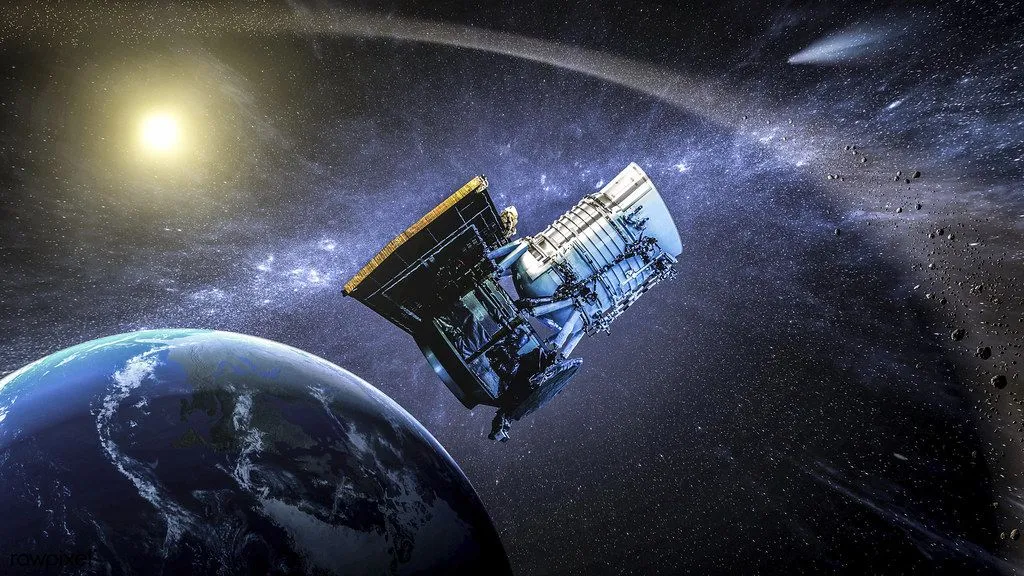
The spacecraft WISE/NEOWISE hunted for space objects near Earth for over a decade. NEO stands for Near-Earth Objects, and WISE stands for Wide-field Infrared Survey Explorer. The spacecraft tracked down asteroids and comets that came close to Earth’s neighborhood. NEOWISE was decommissioned in August 2024 and re-entered the atmosphere in November 2024, having cataloged over 44,000 solar system objects. Its successor, NASA’s NEO Surveyor, is scheduled to launch in 2028 and will greatly expand our ability to detect potentially hazardous asteroids.
Would Humans Even Exist If The Asteroid Had Never Hit?
Here's a stranger question that often comes up alongside the first one: if that asteroid had never struck, would humans be here at all? It turns the usual worry on its head. Instead of asking whether we could survive an impact, it asks whether we owe our very existence to one.
For roughly 150 million years, mammals lived in the shadow of the dinosaurs. Our ancestors were mostly small, nocturnal, shrew-like creatures, and they stayed that way for a very long time. As paleontologist Steve Brusatte has noted, the dinosaurs were "still diverse, still at the top of their game" right up until the impact. As long as they dominated the large-animal niches, there was little room for mammals to grow larger or more complex. It was only after the dinosaurs were gone that mammals rapidly diversified, eventually giving rise to primates and, much later, to us.

So if the asteroid had missed, the most likely outcome is that the dinosaurs would have kept ruling, mammals would have stayed small, and humans would probably never have appeared.
Could an intelligent species have arisen some other way? In 1982, paleontologist Dale Russell floated a famous thought experiment: a big-brained, upright "dinosauroid" descended from a Troodon-like dinosaur, filling the niche we occupy today. It's a fun idea, but most scientists are skeptical. There is little in over 100 million years of dinosaur evolution to suggest they were heading toward human-level intelligence.
The slightly uncomfortable conclusion is that we may owe our existence to the very kind of catastrophe we would dread. The asteroid that ended one dynasty cleared the stage for ours.
Surviving An Asteroid Impact
To be clear, if an asteroid impact is determined to be imminent, we could take preparatory steps to avoid it by pushing or destroying it or reducing its crash impact. We could even ship humanity to another planet! While this sounds like a logistical nightmare and a warning time of at least a century, scientists have contemplated the possibilities.
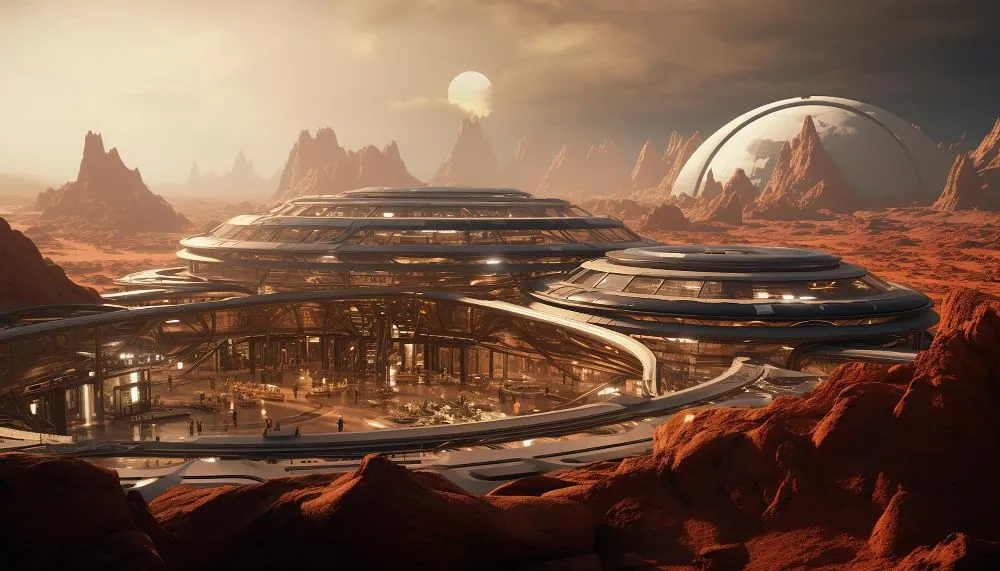
The plan is to establish an environment for humans and animals that would make them self-sufficient and able to live in inhospitable conditions on the surface of the Moon or Mars.
Another plan would be to establish a survival shelter. This would also be difficult, as the issues of self-sufficiency would also arise. Humans would have to reside in these shelters for years, and probably decades. Also, we would need to answer questions like where these shelters should be established, along with ways to procure the necessary resources.
People have also brought up ideas to deflect or destroy the incoming asteroid. In 2022, NASA's DART (Double Asteroid Redirection Test) mission successfully demonstrated this concept by slamming a spacecraft into the asteroid Dimorphos, shortening its orbit by 32 minutes, far exceeding the 73-second success threshold. While deflecting smaller asteroids is now proven to be feasible, our current capabilities are limited when it comes to larger ones. For massive asteroids, using kinetic impactors to reroute them may not be feasible, and more advanced techniques would be needed.
If humans execute some of these above ideas properly, their chances of surviving an extinction event caused by an asteroid impact are highly probable, but not guaranteed!
Conclusion
So, it seems that we would probably survive an extinction event like the one that wiped out all the dinosaurs. Although we have collected data about hundreds of potentially hazardous asteroids and when they might hit the Earth, scientists are constantly looking for new ones that might have evaded detection.
Early detection of such objects is necessary for adequate preparation, to ensure that as many lives as possible are saved. With the present technology and space satellites, we can ensure sufficient preparedness when an asteroid impact is inevitable.
Also, the solar system is a rather chaotic region, despite much of it being empty. Jupiter’s gravity seriously influences the objects in the asteroid belt, requiring that we keep constant tabs on them. Additionally, collisions between these asteroids could result in one getting hurled towards the Earth at high speeds.
So, being constantly vigilant and up-to-date on these asteroids might be the one thing that saves us from potential extinction!
References (click to expand)
- The KT extinction.
- How an asteroid ended the age of the dinosaurs.
- Carlisle, E., Janis, C. M., Pisani, D., Donoghue, P. C. J., & Silvestro, D. (2023, August). A timescale for placental mammal diversification based on Bayesian modeling of the fossil record. Current Biology. Elsevier BV.
- Humans' ancestors survived asteroid impact that killed the ....
- https://www.sciencedirect.com/science/article/pii/S0016328722000337?ref=cra_js_challenge&fr=RR-1
- WISE/NEOWISE.
- Range, M. M., et al. (2022). The Chicxulub Impact Produced a Powerful Global Tsunami. AGU Advances.
- Organic matter from the Chicxulub crater exacerbated the K-Pg impact winter. PNAS (2020).
- Chicxulub impact winter sustained by fine silicate dust. Nature Geoscience (2023).
- Massive perturbations to atmospheric sulfur in the aftermath of the Chicxulub impact. PNAS (2022).
- What if a giant asteroid had not wiped out the dinosaurs? Live Science.
- What If Non-Avian Dinosaurs Hadn't Gone Extinct? Sci.News.