Table of Contents (click to expand)
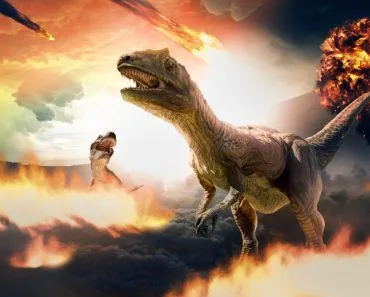
A 2026 study led by Swansea University, using deep-learning AI models and the most comprehensive global fossil dataset ever assembled for sharks and rays, found that the asteroid impact caused only a modest decline of around 10% in shark and ray species, dramatically less than the devastation suffered by other marine life. Research suggests that some shark species survived because of their deep-water habitats and their small sizes, more specifically because they didn’t run out of prey. After the asteroid impact, small algae became a steady food source for deep-sea creatures, including the fish eaten by sharks, which allowed these deep-sea hunters to survive.
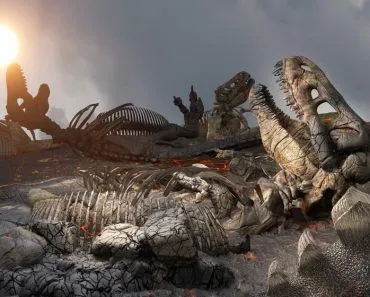
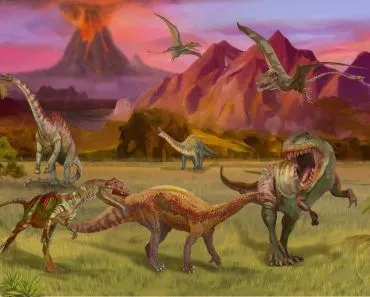
Sharks and dinosaurs are two of nature’s most toothy and fearsome predators. One ruled the land, while the other rules the waters. While dinosaurs were wiped out by an asteroid impact approximately 66 million years ago, sharks managed to survive and continue to thrive today.
Let’s dive into the amazing world of sharks and learn how they became some of nature’s most extreme survivors.
How Long Have Sharks Existed?
Scientists have found and studied teeth and other remains in rocks that they believe are fossilized remains of ancient shark species. Also, they compared how similar or different they appeared to modern sharks. Geological dating techniques are used to figure out how old rocks and fossils are, and can tell us a striking tale.
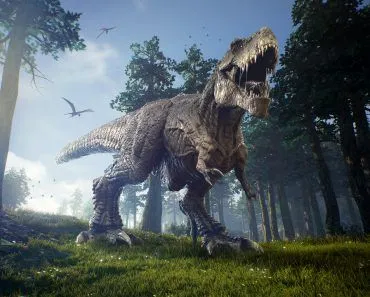
Fossil records reveal that the fearsome T-Rex and a small ancient carpet shark species existed at the same time.
The oldest intact shark-like teeth belong to a species named Doliodus problematicus. There are some scales that are even older, dating back to 450 million years ago. This might make the earliest sharks (which may not have looked much like the sharks we know and fear today) older than even the first trees!
So, not only do we know that sharks and dinosaurs were once neighbors on Earth, but we understand that sharks are actually 200 million years older than dinosaurs.
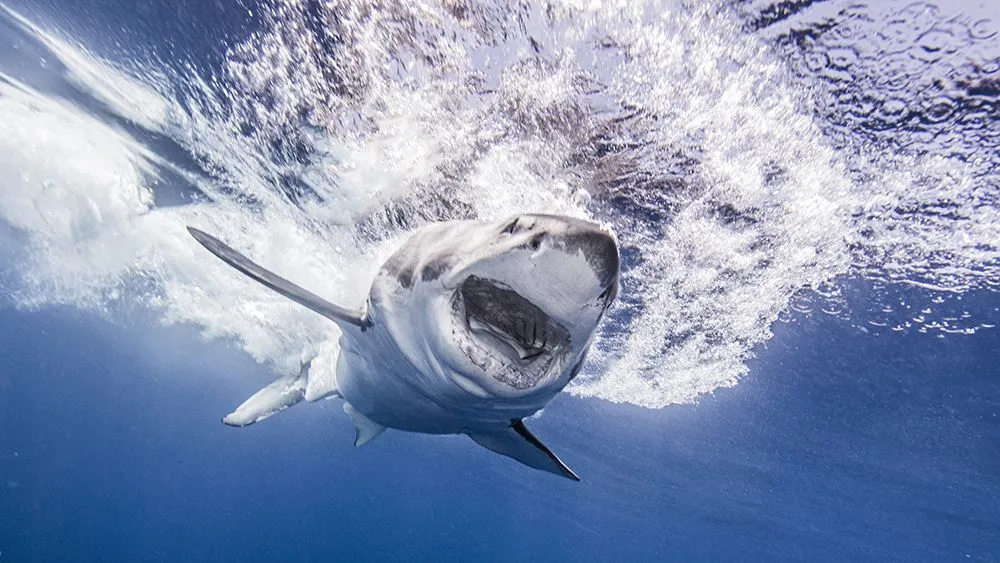
For many, this makes us scratch our heads and think,”Why did sharks survive but not dinosaurs?”
Are Sharks Dinosaurs?
Here is a question that pops up a lot: if sharks were swimming around in the age of the dinosaurs, does that make them dinosaurs too? The short answer is a clear no. Sharks belong to a group called cartilaginous fish (the class Chondrichthyes), the same branch of the family tree that includes rays, skates, and sawfish. Their skeletons are built from rubbery, lightweight cartilage rather than bone, which is exactly what makes them fish and not reptiles (and is part of why many sharks have to keep swimming so they don't sink).

Dinosaurs, by contrast, were reptiles, members of a completely separate group called Dinosauria. So while sharks and dinosaurs are both vertebrates (animals with backbones), they sit on very different twigs of the tree of life, having gone their separate ways hundreds of millions of years ago. Remember, sharks turned up roughly 200 million years before the first dinosaurs, so if anything, it was the dinosaurs who were the newcomers!
One more myth worth busting: the sharks that genuinely shared the seas with dinosaurs were not the species we know today. The famous great white (Carcharodon carcharias) is a relative latecomer, with the modern species appearing in the fossil record only in the late Miocene, within roughly the last 6 to 7 million years, tens of millions of years after the last dinosaurs had vanished. So no, a great white never crossed paths with a T. rex.
How Did Sharks Survive The Dinosaur Extinction?
Sharks aren’t just your average predator; they have some serious survival tricks up their… fins. Scientists have observed that they can live through harsh environmental shifts, including extreme temperature changes, high pressure, and low oxygen levels. Reef sharks and hammerheads have even been reported to live inside of an active underwater volcano!
No wonder sharks have also lived through five deadly extinction events, including the one caused by massive volcanic eruptions in Siberia that wiped out about 70% of terrestrial vertebrate species and up to 96% of marine species around 252 million years ago.
These apex predators are casually living where most creatures wouldn’t even dare to swim.
Emma Bernard, curator of fossil fish at the Natural History Museum London says in an article for the museum website, ‘I think it is safe to say that it is partly because sharks are able to exploit different parts of the water column – from deep, dark oceans to shallow seas, and even river systems. They eat a wide variety of food, such as plankton, fish, crabs, seals and whales. This diversity means that sharks as a group are more likely to survive if things in the oceans change.’
Many sharks can live for a very long time, even hundreds of years, which gives them more chances to reproduce and change to fit their environment. Furthermore, these robust creatures can repair their own DNA. Whale sharks have cancer-preventing genes similar to those in great white sharks. Their ability to quickly heal themselves helps protect against many illnesses and support their long lives.
Sharks have amazing sensors (also known as their “sixth sense”), such as electroreceptors and lateral lines, plus they have a strong sense of smell, all of which help them find food, stay safe, and explore new places.
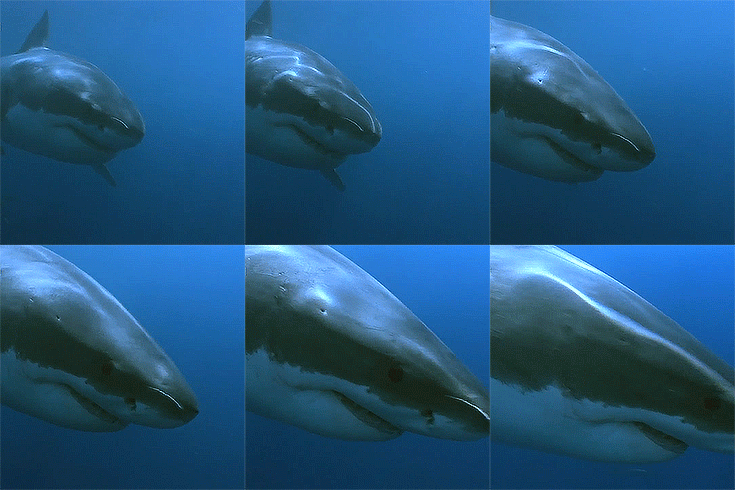
A study reflects that researchers still aren’t sure if the asteroid event affected sharks much at all.
Things like food, finding mates (biotic factors), as well as temperature, weather, sunlight, and pollution (abiotic factors), could have played a role in their continued existence.
Research suggests that some species of sharks survived because of their deep-water habitats and their small sizes, as they didn’t run out of prey. After the asteroid impact, small algae became a steady food source for deep-sea creatures, including the fish eaten by sharks, which helped sharks survive over time.
Why Did Marine Reptiles Vanish But Not Sharks?
If sharks pulled through, you might wonder why the ocean's other Cretaceous giants did not. The seas of the dinosaur age were patrolled by enormous predators called mosasaurs (giant marine lizards) and long-necked plesiosaurs. Here is the twist: these "sea monsters" were not dinosaurs at all, and they were not fish either. They were marine reptiles, air-breathing relatives of today's lizards and turtles that had returned to the water.

When the asteroid struck about 66 million years ago, the mosasaurs and plesiosaurs vanished right alongside the land-dwelling dinosaurs. (The dolphin-shaped ichthyosaurs had already bowed out tens of millions of years earlier, around 90 million years ago.) So why did these reptiles disappear while sharks carried on?
The answer comes down to lifestyle. The big marine reptiles were huge, air-breathing apex predators perched at the very top of the food chain, and that is a risky place to be when the food chain collapses. Once the impact darkened the skies and the ocean's tiny plankton crashed, the animals these giants relied on starved, and so did they. Sharks played it smarter. As a group they were generally smaller, spread across deep and shallow waters, and willing to eat almost anything, even switching to scavenging when times got tough. Being flexible, it turns out, beat being fearsome.
What About Megalodon, The Giant Shark That Didn't Make It?
Surviving as a group does not mean every single shark got a happy ending. The most famous casualty is Otodus megalodon (also called Carcharocles, the "megatooth" shark), the largest shark that has ever lived. This ocean titan stretched an estimated 15 to 18 meters (50 to 60 feet) long and may have weighed around 50 metric tons (roughly 110,000 pounds), with serrated teeth up to 18 centimeters (7 inches) across. That is a predator longer than a city bus.

Megalodon was not a contemporary of the dinosaurs. It cruised the oceans much later, from roughly 15 to 20 million years ago, and went extinct only about 3.6 million years ago, in the early Pliocene. So what brought down a predator that size? Researchers point to a combination of pressures rather than a single knockout blow. As the planet cooled, the warm seas this shark depended on shrank, and its prey (whales, seals, sea turtles, and seabirds) declined sharply. At the same time, a smaller and nimbler rival appeared: the newly evolved great white shark, which competed for the very same meals.
Megalodon's story is a useful reminder. Even the mightiest shark is not invincible when the climate shifts and the food runs short, an uncomfortable echo of the pressures people are putting on sharks today.
Other Ancient Survivors
As it turns out, sharks aren’t the only ones who’ve cracked the code of survival. Consider horseshoe crabs, those little armor-plated creatures half-buried in the sand. They’ve been around for something like 450 million years. Talk about longevity! Fossils of early toothless birds indicate that they could eat plant-based foods like nuts, fruits, and seeds, while birds with teeth didn’t make it through the extinction event.
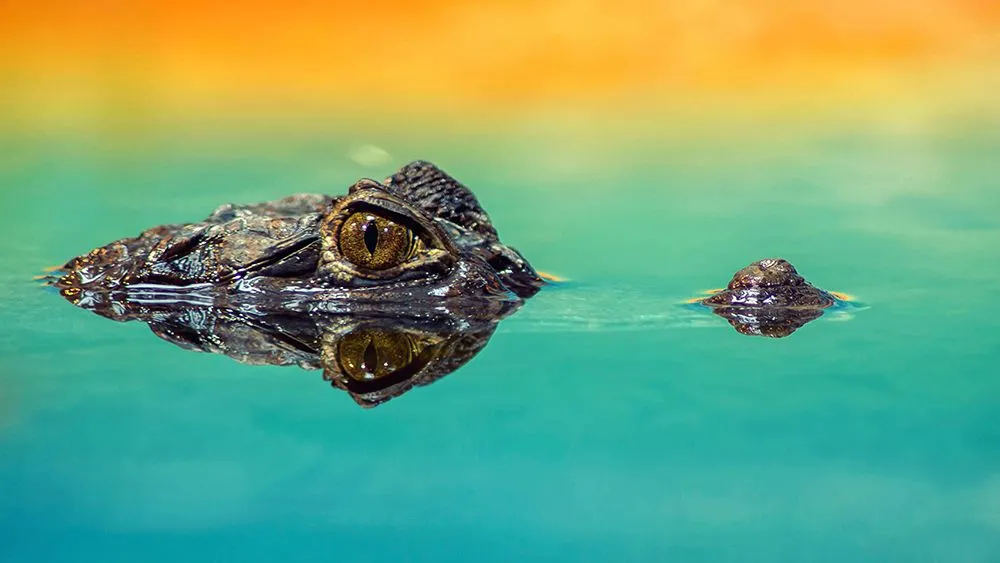
Also, we can’t forget the mighty crocodiles! They are like living fossils, proving that if you’ve got the survival skills, you can outlive pretty much anything!
Will Sharks Keep Ruling The Waves?
Now, you might be curious if sharks will always rule the seas. Despite surviving four major mass extinctions, they’re up against their most serious challenge, the one caused by humans. We’re the ones responsible for their recent and stark decline. Human activities like overfishing, hunting, pollution, and climate change lead to the death of an estimated 80 to 100 million sharks every year.
Sharks play an important role in the marine ecosystem, i.e., keeping the seas healthy and maintaining a natural balance. If they vanish, it will cause a negative ripple effect on everything else in the water. This is another reminder of how urgently we need to grow more mindful of our actions and stop messing with the balance of nature.
While movies like Jaws portray sharks as dangerous creatures, it’s actually humans who pose a far greater threat to sharks, not the other way around.
A Final Word
There you have it, the epic tale of sharks, the time-traveling predators of the deep. It’s due time to protect our ancient friends and guarantee their rule over the oceans for generations to come.
References (click to expand)
- Gates, T., Gorscak, E., & Makovicky, P. (2019). New sharks and other chondrichthyans from the latest Maastrichtian (Late Cretaceous) of North America. Journal of Paleontology, 93(3), 512-530. doi:10.1017/jpa.2018.92
- New Study Confirms Sharks' Ancient Ancestors.
- A Shark's Sixth Sense.
- Bazzi, M., Campione, N. E., Ahlberg, P. E., Blom, H., & Kear, B. P. (2021, August 10). Tooth morphology elucidates shark evolution across the end-Cretaceous mass extinction. (T. B. Quental, Ed.), PLOS Biology. Public Library of Science (PLoS).
- Shark evolution: a 450 million year timeline.
- Chondrichthyan (cartilaginous fish). Encyclopaedia Britannica.
- Oldest record of the Great White Shark (Lamnidae, Carcharodon; Miocene) in the Southern Atlantic. ScienceDirect.
- The Cretaceous-Paleogene Extinction. GEOL 104 lecture notes, University of Maryland.
- The Early Pliocene extinction of the mega-toothed shark Otodus megalodon. PeerJ / NCBI PMC.
- Why did the megalodon disappear? Florida International University (FIU News).